Showing posts with label Sauvignon Blanc. Show all posts

Saturday, June 14, 2014

Trione Winery Selections


Yet more wines I was sent a long time ago and am finally now getting around to reviewing. This review will be interesting though, because the Trione Vineyards wines I was sent all came in 50ml bottles. The company tastingroom.com bottled them way back in September 2012 and I am just now getting to taste each one. In total, I was sent six 50ml bottles, each of which is barely good enough for two pours.

Trione is another California winery with an excellent reputation. Their wines were a familiar sight in San Diego and I liked selling them because you always knew that they'd deliver at their price points. It's been nearly a decade though, so I was anxious to taste through the lineup and see if the wines were as I recalled.

As you read through the notes, please bear in mind that these are probably (hopefully) not the current releases from Trione, it's my fault for not getting to them sooner.

2010 Trione Sauvignon Blanc Russian River Valley
The nose shows tart gooseberry and green grass right away, very fresh. Behind that lurk some lime juice and herbaceous qualities. As it opened in my glass, I picked up a flinty minerality that was quite cool. On the palate I can tell that this is softened a little bit by age but it's still got ripping acidity and a linear minerality that I thoroughly enjoy. The fruit seems to be mostly in the background, with touches of grapefruit and papaya showing through. More bracing acidity cleans up the finish beautifully, readying your palate for the next bite. Surprisingly fresh and vibrant, this stuff is almost Muscadet-like. Color me impressed. 14.0% abv. Recommended.

2008 Trione Chardonnay Russian River Valley
It's rare that I get to taste California chardonnay with this much age on it. This one stays traditional, with lots of butter and oak rushing out of the glass. They aren't necessarily overpowering as much as dominating. With some air, I picked up aromas of golden apple, quince, and baking spices. A sip brought plenty of buttercream but a nice hit of acid too. There's enough apple and pear playing around with the vanilla oak and butter to make a really, really nice chardonnay. Acidity dries out the finish in a good way, making me think this needs some grilled sea bass or chicken kabobs. 14.3% abv.

2008 Trione Pinot Noir Russian River Valley
Again, it's rare to taste a RRV pinot with 6+ years of age, so I was looking forward to this one. Initially it's showing age, with notes of dried leather, furniture varnish, red cherry, and old wood. Still, it doesn't smell bad! There's still some acidity on the palate, barely holding together cherries, apple skin, baking spice and white pepper. Still-alive tannin is nicely integrated and I think this would pair well with more delicate meat, salmon and pork. It's not quite my cup of tea but still a really fun wine to taste. 14.2% abv.

2007 Trione Red Wine Alexander Valley
Shows a touch advanced, like it's just settling into some tertiary flavors. Similar to the pinot noir, this has a dusty, leathery element that is pretty interesting. Green herb, cassis, and cocoa powder come through with some swirling. Plenty of barrel spices too, maybe more than necessary. Sipping brings ample black fruit, good acid, and good tannin integration. Mostly cabernet, with merlot, petit verdot, and malbec thrown in. This looks, smells, and acts like a Bordeaux blend that's impeccably crafted. The balance between those advanced aromas and flavors versus the fresher blueberry, boysenberry, and red currant is excellent. If you see a 750ml of this, grab it. 14.5% abv. Highly Recommended.

2007 Trione Cabernet Sauvignon Alexander Valley
Fresher than the red blend, this is still showing plenty of primary fruit. Loads of sweet black cherry and blackcurrant framed by what smells like both French and American oak. That freshness carries over onto the palate too, with more cherries, firm tannin, and plenty of oak. Unfortunately it also gets really hot and sloppy, with perceptible alcohol through the mid-palate and finish. I don't think this is nearly as good as the above red blend. 14.5% abv.

2008 Trione Syrah Russian River Valley
This remained tight despite being open for almost two hours and getting vigorously swirled in my glass. I did manage to tease out notes of black tea, plum, and blackberry preserve. There's a bit of VA present too, which I found distracting. Also, like the cabernet, some alcoholic heat on the nose. On the palate this tastes young-ish, like a wine that is nearly in middle age. That and like it has a bit of brettanomyces. I picked up a distinct medicinal component on the mid-palate and the finish was hollow on the tongue, a big time indicator for brett. Behind the bretty, medicinal note lurked some firm tannins, dusty minerality, and muted fruit. Kind of a bummer because I was really looking forward to tasting this wine. 14.8% abv.

With these wines we batted .500, the sauvignon blanc, chardonnay, and red blend all being worthy of consideration. The other three, pinot noir, cabernet sauvignon, and syrah, had issues which I just can't overlook. Still, Trione clearly makes some very, very good wines and you should feel confident in purchasing (full size!) bottles of the wines I liked. Each promises to be good with food and have the ability to put on a bit of age to boot. I was pleased to find that I still enjoyed Trione after almost a decade of not tasting any of their releases.

The kit from tastingroom.com is really, really cool and gave me just enough wine to do a reasonably proper evaluation. They even include helpful information on how soon to drink the wines and how long they'll (most likely) remain fresh. I think more wineries that send out samples to bloggers might want to look into either this or bottle 375ml's for us, since it wastes far less wine.

These wines were samples for review purposes.

Beau Carufel

Saturday, May 31, 2014

Charles Krug Winery New Releases


The lovely folks at Charles Communications invited me once again to a live virtual tasting of wine, this time featuring four wines from Charles Krug Winery in Napa Valley. I'd recently participated in one featuring the Hourglass Vineyards wines and thought that the opportunity to taste more current release Napa Valley wines was too good to pass up. Also, I hadn't tasted Charles Krug wines since my days working in wine retail in San Diego.

The tasting format was similar to before, with me logging onto a website where a live stream was played for all of us bloggers. Peter Mondavi Jr. and winemaker Stacy Clark tasted along with us, answering questions and giving some great background on the history of both the winery and the Mondavi family's ownership. I highly recommend visiting the Charles Krug website for more detailed information.

Below are the four wines we all tasted:

2013 Charles Krug Limited Release Estate Sauvignon Blanc ($35 srp)
A very pretty opening with plenty of ripe tropical fruit, grass, and hints of jalapeno. Broad and expansie across the palate, showing sweet ripe tropical flavors mixed with spicy jalapeno, cut grass, and a leesy richness. The finish is all citrus, a mix of ruby grapefruit and lemon pith. I'm impressed, this is pretty serious sauvignon blanc but has a playful side too. I suggest pairing it with grilled scallops, pesto pizza, and fish tacos. 13.6% abv.

2011 Charles Krug Napa Valley Merlot ($25 srp)
Opens with bright, spicy red fruit before a rich vein of chocolate and blackberries come into play. Further swirling brings out a persistent but welcome note of green pepper, which acts as a foil to the ripe fruit. Smooth and rich on the palate, this brings a light touch that does a good job expressing merlot's feminine side. Plenty of ripe, red fruit and notes of coconut showcase the smart picking decision and American oak while a fine-grained tannin helps build character. Very, very drinkable merlot that begs for red meat or something hot off the grill. 13.7% abv.

2011 Charles Krug Family Reserve ‘Generations’ ($50 srp)
All sorts of subtlety going on here for me. Lots of green pepper initially, but as you get past that there's beautiful cassis and blackberry mixed with oak and baking chocolate. A hint of herb and fennel comes along too, followed by anise. Firm, with plenty of acidity and tannin, this has all the hallmarks of classic Napa cabernet. Blackberry, cherry, and cassis for the fruit. Herbs and bell pepper on the nose, all bound together with firm tannin and plenty of acidity. This wine toes the line between the old school, low alcohol Napa Valley and the newer, riper style that we've seen since the 90's. Impressive. 13.9% abv.

2011 Charles Krug Family Reserve ‘Howell Mountain’ Cabernet Sauvignon ($75 srp)
On the nose, I believe this could be served to people with the explanation that it is the typical high-end Napa cab aroma profile. Cassis, oak, blackberry, cocoa. They rush out of the glass, followed by black pepper and dried herb. The first word I thought of upon tasting this was "serious". As in, I think this is still a baby and needs several more years to show itself fully. Still, there's a depth and concentration on the palate that left me smiling. 13.7% abv.

Overall the wines were more to my palate than the Hourglass Vineyards selections, though some bloggers did have trouble with the green pepper notes. I welcomed them though, as a foil to the ripeness. Each wine was very well made, showing both balance and accessibility. They just had a rightness to them, a delicious, fulfilling component that I thoroughly enjoyed. Though these wines carry hefty price tags, I believe you do get what you pay for.

Charles Krug Facebook Page
Charles Krug Twitter Account

These wines were media samples.

Beau Carufel

Monday, May 26, 2014

Hourglass Vineyards Blueline Estate New Releases


I recently had the pleasure of tasting through the Hourglass wines, specifically from their Blueline estate vineyard, in a virtual tasting along with a handful of other bloggers. Charles Communications organized the tasting, sending us four 375ml bottles from Hourglass Vineyards. We were joined by Proprieter Jeff Smith and Winemaker Tony Biagi. Tony took over in 2012, so we tasted the 2012 reds and 2013 sauvignon blanc. They discussed the wines, their philosophy, and some Napa Valley history.

The wines we tasted were:

2013 Hourglass Estate Sauvignon Blanc (SRP $40)
Big, rich on the palate, plenty of acid too. Feels like a big wine, but one that is balanced. Tropical and citrus with a touch of pear. Maybe a touch of wood too, showing up as some vanilla notes. Several tastes had me smacking my lips in anticipation of a bite of food. There is a touch of heat on the finish but honestly I was expecting more booziness based on the 14.2% abv so it was a very pleasant surprise. Suggested pairings would be fish tacos, grilled halibut, bbq chicken salad.

2012 Hourglass Blueline Estate Merlot (SRP $75)
Showing tart red fruit, balsamic vinegar, oak, and plums. The VA is a bit distracting at this point, though I think there is enough fruit behind it to help. On the palate it shows very traditional Napa-merlot flavors, think blackberry, plum, buttressed by oak and nicely integrated tannin. I like the finish most of all, perhaps, because there's a dusty, spicy element that finishes very cleanly. 91% Merlot, 7% Cabernet Sauvignon, 2% Petit Verdot. 14.8% abv. Suggested pairings include hamburgers, ribs, and beef or lamb stew.

2012 Hourglass Blueline Estate Malbec (SRP $75)
Think smokey, meaty, blackberry and blueberries. That's this wine on the nose. I like the odd note of grapefruit pith too. It's plenty ripe, showing black fruit, dusty soil, and grippy tannins along with chocolate and a burst of red fruit on the finish. This wine makes me want a fancy bacon cheeseburger, it's also something like 25% petit verdot, so you know it tugs at my heartstrings! 75% Malbec, 25% Petit Verdot. 14.2% abv. Suggested pairings include bone-in steak, lamb, pork ribs.

2012 Hourglass Blueline Estate Cabernet Franc (SRP $135)
I thought of the word "big" right away. I like the richness on the nose, with aromas of violet, chocolate, coffee, blueberry, and cherry. Plenty of oak on the palate, which works with very ripe blue fruit, chocolate, black pepper, and firm tannins. Heat on the finish comes not as a surprise, and I think would be mitigated by food. This is lush, elegant, downright fancy wine. I would age this for years or serve it now after a long decant. If the malbec demands a fancy burger, this cabernet franc demands you serve it filet mignon. 83% Cabernet Franc, 11% Cabernet Sauvignon, 6% Petit Verdot. 14.8% abv.

Overall I liked tasting these wines because it gave me a bit of a glimpse into what is going on in Napa Valley right now. Each wine is unabashedly "Napa", meaning big flavor, structure, and ample concentration. That is not at all a knock though, because in the case of the malbec and cabernet franc, it works. I enjoyed the sauvignon blanc much more than I expected to, but just can't plop down $40 a bottle. Again, no knock on quality, rather, I seek out different examples for my own cellar.

I want to address one thing, as sort of a disclaimer. I don't drink a lot of Napa Valley wines and can probably count on one hand how many producers I actively buy. For this tasting, I tried my very best to taste with context. That is to say that I tasted each wine with the understanding of where it was from, the style which Napa Valley tends to produce, and the vintage. For my friends who love high acid, low alcohol wines with less fruit and more tertiary flavors, these are not for you. For my friends who love rich, concentrated, bigger wines that still have good acid (and plenty of alcohol), I recommend the Hourglass Vineyards spring releases.

These wines were media samples for review purposes.

Beau Carufel


Tuesday, August 6, 2013

Paul Dolan Vineyards Cabernet and Sauvignon Blanc

I've written about Paul Dolan Vineyards many times over the course of my blogging career. The wines are almost always excellent values while tasting freakin delicious! Certainly you could do a lot worse at their modest price points.

I confess though, that these wines have sat in the sample rack for damn near one year. It's my own fault so I feel bad. A big apology to Fineman PR for not getting to these sooner!

These wines are from Mendocino County, north of the more well-known Napa and Sonoma areas. Mendocino boasts conditions that are right for several different kinds of grapes, from pinot noir and syrah to sauvignon blanc and pinot grigio. As far as I know, all of their vineyards are either organic or biodynamic, and they even produce certified biodynamic wines. No small feat in this age of fertilizers and chemicals.

2011 Paul Dolan Sauvignon Blanc Potter Valley: I picked up a lot of citrus and melon notes right away, all nicely balanced and in tune with each other. Lively acidity carries the citrus notes across the palate while the summer melon flavor helps give some body. All in all, a clean, simple sauvignon blanc that would pair beautifully with fish and chicken in the summer. $17.99 SRP. 13.5% abv.


2010 Paul Dolan Vineyards Cabernet Sauvignon Mendocino County: Lots of herbs, soil, wood, and cassis aromas. While this smells young, it also has impressive complexity for a $25 California Cabernet. I like the firm, drying tannin and how it balances the ripe blueberry/blackberry flavors. More of the dusty soil flavors come through too, as well as a bittersweet chocolate thing. Needs time to open up but once it does, I think this will be a QPR winner. $25.99 SRP. 14.5% abv.


I think the Cabernet is my preferred wine of the two, it's showing more complexity and depth, and it's got such a similar flavor profile to the Paul Dolan wines I've tasted in the past. This is one you might want to consider stocking up on, as it will continue to drink well for the next ten years or so.

These wines were samples for review.

Beau Carufel

Saturday, December 29, 2012

Wines of Chile: Masterclass

(attribution: http://starchefs.com/cook/features/chilean-wines)
Earlier this year I participated in a fairly extensive tasting of wines from Chile, organized by the Wines of Chile trade group. I've done these virtual tastings before, with mixed results. Chile remains a bit of an enigma to me (and my palate) because often the wines seem insipid, or in other cases, just poorly made, but then I'll taste several that are outstanding. To discount the country entirely would be an error though, because I am often impressed with Chilean sauvignon blanc, syrah, and pinot noir.

This tasting consisted of three sauvignon blancs, three pinot noirs, three carmeneres, and three cabernet sauvignons. The latter two having wines that were also blends in the flight. Pricing ranged from around $13 all the way to $65 for one of Chile's most famous wines, the Los Vascos "Le Dix" Cabernet Sauvignon.

I'm not sure how the wines were selected or by whom, but I know that Master Sommelier Fred Dexheimer was once again our gregarious, energetic host. He's being paid by the Wines of Chile trade group to promote their member wineries throughout the United States. Fred also makes a mean Pisco Sour. Representatives from each winery in the tasting were also on hand (via satellite) to discuss the wines and answer any blogger questions.

Unfortunately I've lagged on finishing this blog post. Still, I'm glad to share with you a tasting of twelve wines, white and red, from all over Chile. Instead of assigning numbers or grades to the wines, look for a simple "recommended" or "not recommended" after each tasting note. To explain, if I recommend a wine here it's because I feel it represents good quality-to-price ratio (QPR), tastes delicious, and is (relatively) flaw-free.

With that, I present twelve wines from across Chile's varied growing regions:

Sauvignon Blanc
1. 2012 Vina Casablanca "Nimbus" Sauvignon Blanc Casablanca Valley: Plenty of grassy notes mixed with citrus come rushing up out of the glass. They persist on the palate too, helped by plenty of crisp acidity. There isn't a lot going on in this wine but what does exist is proportioned quite well. If you need a versatile food white, pick up a bottle and see for yourself, it will pair with most anything. All for only $13. Recommended.

2. 2011 San Pedro 1865 Sauvignon Blanc Leyda Valley: Amping up the aromatics and mouthfeel (as well as the price), this beautiful sipper brings the same green grass note as in the first wine, but it's restrained by more citrus and hints of tropical fruit, considerably brightening up things. Plenty of acidity helps the wine move along across your palate, but it veers into the "bitter wine face" a few too many times. That disjointed nature dooms this sauvignon blanc for me. Not recommended. $19 SRP.

3. 2011 Casa Silva Sauvignon Blanc Colchagua Valley: Things start to get really interesting with this wine, and they should for $25 a bottle. It had some hallmarks of Sancerre, with the mineral and lime notes, but also a beautiful undercurrent of tart pineapple and other tropical flavors. I was impressed with the complexity and kept coming back to it as the night went on. Some of the other bloggers weren't too keen on it, but I felt that Casa Silva nailed the flavor profile for a cool climate sauvignon blanc without going too far into the gooseberry/cat piss side. Highly recommended.

Pinot Noir
4. 2010 Emiliana Novas Pinot Noir Casablanca Valley: My tasting notes refer to lots of fruit on the nose, with red cherry, strawberry, and hints of spice. I like how straightforward and unassuming this pinot noir is, but wish for more complexity. At $19, it's not expensive at all but I could pull a lineup of $20 Oregon pinots out that would blow this pinot out of the water. The finish was a bit short as well, but I liked the sheer "yummy" factor. Simple wine, yet tasty. Still, not recommended.

5. 2009 Cono Sur 20 Barrels Pinot Noir Casablanca Valley: My first bottle was corked so the Wines of Chile folks kindly sent another. This big, 14.5 percent abv pinot has some "interesting" attributes. On the nose there is a bit of alcoholic heat coming through. Also present, aromas of vanilla, earth, and red fruit. Where this gets tasty is after you take a sip. Plenty of tannin (odd, no?) frames bright red fruit, dusty soil, black pepper, and baking spice. The finish is clean and taut, indicating that this is still a baby of a wine. Yes, it's $32 a bottle but it has a lot of potential! Recommended.

6. 2009 Morande Gran Reserva Pinot Noir Casablanca Valley: I couldn't figure this pinot out. Aromatically it was like a red cherry jolly rancher mixed with eucalyptus oil and dried-out pizza box. On the palate there was plenty of acidity to keep things light, but that weird cardboard thing kept showing up. The bright fruit was nice and the herbaceous flavors kept things interesting. The bottle wasn't corked or suffering from brettanomyces, as far as I could tell. Not recommended. $17.99 srp.

Carmenere
7. 2010 Concha y Toro Marques de Casa Concha Carmenere Cachapoal Valley: Weirdly enough, this bottle was also bad, with something happening after it was made and before I received it. Another bottle replaced. On the nose there was oak and buttered popcorn aromas (diacetyl) that overlaid secondary aromas of sliced jalapeno. After sitting for about an hour, the wine calmed down quite a bit. Nicely integrated tannin helped along by some vibrant acidity enfolded flavors of green pepper, dried herb, red berry fruit, and wood. This wine desperately needs food, if you buy it. $22 srp. Recommended.

8. 2010 Carmen Gran Reserva Carmenere Apalta Colchagua Valley: Thin to the point of being delicate on the nose. More of that green aroma and some wood influences, but also notes of plum and cranberry. I can't say this wine was a tour de force of carmenere but I did like how food-friendly it was. Good acidity that brought high toned red fruit and spices along for the ride. A clean, quick finish that readied the palate for another sip, and a very nice price point. Just wish for more interesting flavors! Still, $14 is hard to beat. Recommended.

9. 2009 Koyle Royale Carmenere Colchagua Valley: A blend of carmenere, petite verdot, and malbec. Some bloggers loved it, I felt it was a mess. Too much VA (volatile acidity) to make any sense of what was going on. The people tasting with me felt it was downright unpleasant to drink. $25.99 srp.

Cabernet Sauvignon
10. 2009 Ventisquero Grey Cabernet Sauvignon Maipo Valley: Six percent petite verdot, the rest cabernet sauvignon. Seemed a bit undeveloped and too soft. What I mean by that is there wasn't much in the way of flavor integration, and there was a perceptible lack of tannin. Also, the wine simply didn't bring much complexity to the table. I re-tasted it several hours later and it had not appreciably developed anything interesting. I'm not sure if it was over-oaked or from young vines or what. For $29, there are far better choices to spend your hard earned money on. Not recommended.

11. 2010 Maquis Caberent Sauvignon Colchagua Valley: I tasted this wine several times over the course of the night and felt it opened up beautifully. The nose revealed aromas of cassis, spices, dried herb, tobacco, and oak. The more I swirled, the better all those aromas integrated, creating a wonderful tapestry. On the palate it was equally impressive, with plenty of tannin surrounding flavors of plum and black currant, tar, leather, dried herb, and cocoa. The finish was a bit quick, but I think this is a young wine that will get better with another year or two in bottle. For only $19, it nails the QPR quotient. Recommended.

12. 2009 Los Vascos "Le Dix" Cabernet Sauvignon Colchagua Valley: Don't drink this right now if you go out and buy it. My notes say "lots of potential.......I think". The ingredients are here for a great wine. Lots of tannin, flavors of leather, plum skin, tobacco, and cassis. Sound like a Bordeaux? Lots of stylistic similarities to young Haut-Medoc wines. The only question is whether or not all those flavors will merge with the tannin and acid to form a complex, compelling wine, or continue to stick out in jagged edges and at rough angles to each other. At $65, and with this producer, it's a pretty safe bet that in several more years, things will take a turn for the glorious. Recommended.

There you have it, 12 Chilean reds and whites to consider. It was a great walk through some of the regions and a fun opportunity to taste how the Chilean wine industry is coming along. I think they have a long way to go to become truly "world class" but there are very encouraging signs of progress. For my palate, the most promising wines coming from Chile are still sauvignon blanc, pinot noir, and syrah.

What I'd like to see wineries down there do better is manage volatile acidity, keep their cellars free of brettanomyces, and make better picking decisions to keep the pyrazine levels lower. There is potential too in the Bordeaux-based wines, in part due to the varied growing areas of the country. Right now it seems as if the Chilean winegrowers are finding out which grapes grow the best at which sites. To that I say, keep up the good work!

Thanks to the Wines of Chile trade group and The Thomas Collective PR firm for inviting me to taste along with my fellow bloggers.

These wines were media samples.

Beau Carufel

Saturday, September 1, 2012

A Live Twitter Tasting with Kunde Winery

This post is admittedly tardy, and for that I apologize. Several months ago I participated in another virtual-Twitter-tasting with Kunde Family Estate, called KundeLive. My previous experience with the brand was positive, for the most part. I'd sold the Kunde wines in various retail settings going back nearly a decade and they have consistently represented good quality wines at very fair price points. Unfortunately the wines did tend to blend in with so many other California producers who also make good wine at reasonable prices.

Kunde has been around for a long time, with the fourth generation (Marcia and Jeff Kunde) taking the lead in a sort of re-branding effort. I suspect part of that involves some significant social media outreach, as evidenced by the Kunde Facebook Page and their very active Kunde Twitter Account. I should disclaim at this point that my friend Ed Thralls runs the social media for Kunde, among others.

The KundeLive event was led by Marcia and Jeff along with winemaker Zachary Long. A group of socially-active/influential bloggers got together virtually to taste and tweet about each wine while the Kundes and winemaker answered our questions.

In any case, the tasting was a success, and I think you'll see from my tasting notes that the wines were delicious and of high quality. If you spot any of these on the shelves of your local wine store, pick up a bottle or two and see for yourself.

2011 Kunde Sauvignon Blanc Sonoma County: 95% of this sauvignon blanc was fermented in steel tank, the rest in neutral French oak barrels. Aromas of tropical fruit, cut grass, and citrus are all there in the right proportions. It smells freakin' delicious. What's even better is that it tastes freakin' delicious too. Lots of bright acidity highlights the lemon/lime flavors that help to contrast against sweet tropical fruit - think papaya and hints of mango flowers. Perfect for summer and autumn sipping on these still-warm days. SRP $17. 13.7% abv.


2009 Kunde Red Dirt Red Sonoma Valley: This gem is a blend of 30% Barbera, 26% Petite Sirah, 22% Syrah, 15% Zinfandel, and 7% Sangiovese. Winemaker Zachary Long crafted a wine that literally smells like dirt, in the most awesome way. Lots of dark, red-earth aromas are paired with tart cherry, plum, and a dollop of black pepper. This was my favorite wine of the tasting because it had so much going on, and on day two, three, and four it was even more expressive. The Red Dirt Red practically begs to be paired with barbecue or a meat-lovers pizza. Make that two pizzas. SRP $30. 14.8% abv.


2009 Kunde Reserve Cabernet Sauvignon Sonoma Valley: The winemaker says: "This wine is the finest representation of what our Estate and Sonoma Valley is capable of." For all you California cabernet sauvignon fans, buy a bottle and see for yourself. It's pure California and pure hedonism. There is ample black fruit, dried herb, leather, and oak on the nose. This follows through to the palate, where a seriously delicious mocha note comes into play. The tannin is well integrated but this wine is young, give it a few more years and you're in for a treat! Bacon-wrapped filet mignon please. SRP $45. 14.7% abv.


Thanks to Ed and the folks at Kunde for inviting me. It was nice to reconnect with a familiar brand, and even nicer to see that the wines have gotten better. California is full of great brands, and I'm glad Kunde is now on my radar once more.

These wines were samples for media.

Beau Carufel

Wednesday, July 18, 2012

Trile Wines from WinePassionate.com

After writing about two fun Italian red wines for WinePassionate.com a few months ago, they sent me some inexpensive Chilean wines to try as well. Since I started this blog, I've been fortunate to sample a fair amount of Chilean wine and am continually impressed with the quality levels available at such low prices.

Both are around $12 a bottle and made without the use of oak, something which I was very excited to find out. If you haven't yet tried a red wine that's made without oak barrels or pellets/chips, I urge you to find one and give it a go. There's a certain freshness to the wine, a lively character that's hard for me to describe, but the red wines can take on this refreshing character. A good place to start looking for un-wooded red wines is Beaujolais, another place being the Loire Valley. Usually the prices are low, the quality high, and the wines, while different than their oak-aged brethren, retain a fresh drinkability that's easy to fall in love with.

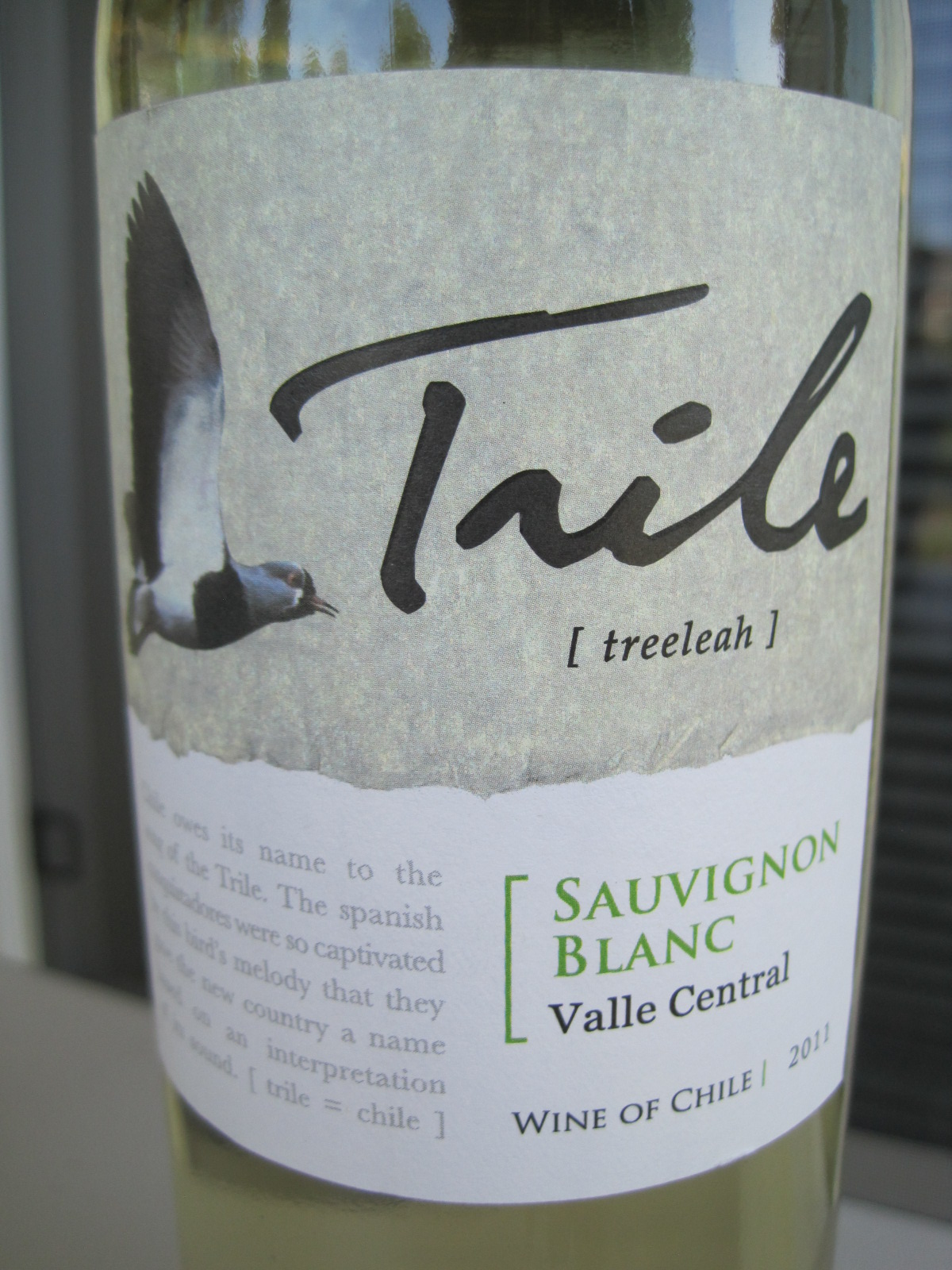
2010 Trile Sauvignon Blanc Valle Central Chile: I'm not sure what is going on with this wine. When I poured my glass and sniffed it, I smelled what can only be described as my old high school locker room. That kind of musty, gym-sock aroma that was very unpleasant. On the palate, all the flavors seemed muddled and masked. Tasting by a group of friends confirmed this, with everyone expressing dislike and confusion at what had happened. It's possible I got a bad bottle, with perhaps some bacterial contamination, so I won't post anything more on the matter. $35.00 on the website.


2010 Trile Cabernet Sauvignon Valle Central Chile: This pours a very pretty deep red, paling ever so slightly towards the rim of the glass. The primary aroma is green bell pepper, followed by an intriguing smokey, salted meat thing. I did get a hint of burning in my nostrils too, despite the listed alcohol being only 13%. On the palate it's pretty smooth cabernet, with green bell pepper flavors and more earthy, meaty flavors coming out. There may be some fruit lurking at the periphery but it was hard to find. This is a perfectly serviceable, simple cabernet to enjoy as that second or third bottle of the night. Drink now. $35.00 on the website.


**Editors Note: The pricing was recently changed on the Trile wines, from around $12 to $35. Apparently there was a pricing error from the winepassionate.com people.**

The question is whether these wines furthered the trend of high quality, inexpensive wines from Chile. I think the answer is yes. I suspect the sauvignon blanc is very fun and refreshing to drink, and that I just got a bad bottle. As for the cabernet, at only $12, it's a great wine to have on hand for those casual occasions when you've got multiple bottles open and a backyard full of friends. It's a bit green, with those bell pepper aromas indicating under-ripe fruit, but with a slight chill on the bottle, its perfectly quaffable.

If you haven't checked out the WinePassionate.com site lately, you should! Residents of California can get free shipping on any purchase of four or more bottles, which is a pretty great deal! To see my earlier post on Italian wines from WinePassionate.com, click the link.

These wines were media samples.

Beau Carufel

Friday, April 13, 2012

Tasting Chilean Chardonnay and Sauvignon Blanc With @DrinkChile

I was invited to taste again with the Wines of Chile trade group, with whom I had tasted a variety of Chilean wines last year. The format, using Master Sommelier Fred Dexheimer as the moderator of a tasting session with winemakers and bloggers, was unchanged. At the studio in New York, he had a chef preparing some delicious looking seafood recipes to showcase these white wines. We bloggers were sent these recipes, I chose to simply taste the wines though, in order not to fill my apartment with distracting aromas.


Our theme this time was Coast to Toast, featuring white wines from the coastal areas of Chile.

1. Casa Silva Cool Coast Sauvignon Blanc 2011 Colchagua Valley: At first I said this wine was trying to be a New Zealand sauvignon blanc, with its green grass, gooseberry, and lemon zest bouquet. I still think it is, but also has taken on a Chilean twist. There's a note of briny ocean air to go with the aforementioned bouquet. On the palate, lemon zest and more asparagus. A clean mineral profile adds depth and complexity but isn't enough to overcome the lack of interesting flavors. 13.0% abv. $25

2. Los Vascos Sauvignon Blanc 2011 Casablanca Valley: A wine that for me started out dull and insipid, but grew into something vastly more interesting. While this wine isn't an extraordinary experience, I respect the fact that it is unpretentious and very quaffable. The nose is mildly astringent with notes of grass, grapefruit, and stem. On the palate the Los Vascos is dry, clean, and simple. More of the citrus with hints of asparagus and a nice bit of minerality. The very definition of crowd-pleaser. 13.5% abv. $14

3. Cono Sur Visión Single Vineyard Sauvignon Blanc 2011 Casablanca Valley: Way more lime juice than initially detected, some three hours in. Hints of minerality and a strange, not unpleasant lettuce aroma. Barely-there tropical fruits too. On the palate, bursts Meyer lemon, pineapple, and light grassy flavors dominate. The finish is really evaporative though, which disappointed me. 13.0% abv. $15

4. Viña Casablanca Nimbus Single Vineyard Sauvignon Blanc 2011: Earlier during the tasting I said this wine started to gently veer towards a Sancerre, and it still does three hours later. That stated, there are more cut-grass aromas now, pushing out some of the stone fruit and limestone I picked up before. This isn't a bad thing though because it gives the bouquet nice complexity. The mouthfeel is great, acidic and cleansing. Nice citrus - lemon zest to me - along with a kick of pear help this wine achieve lofty status as the best QPR of the night. 13.8% abv. $13

5. Veramonte Ritual Sauvignon Blanc 2011 Casablanca Valley: I kind of dogged all these wines when I first opened them. There was a stunning amount of homogeneity, but then I re-tasted and this Veramonte is making me smile. The bouquet is still sauvignon blanc, redolent of limestone overlaid with grass that someone squeezed a ton of limes over. On the palate, there's a smoothness here, a depth from the subtle oak treatment. Anthropomorphically speaking, it's like a girl who's grown up from a saucy teenager to a classy, Ivy League educated 20something. 13.5% abv. $18

6. Santa Rita Medalla Real Chardonnay 2010 Leyda Valley: Aromatically pleasing, think wet rocks and buttered popcorn co-existing with a bowl of sliced pears and apples. On the palate, light and kind of sultry, somewhat unexpected. Pears really show through, that and some grassy notes, even a bit of granitic mineral quality. My only knock on this wine is that it fades away awfully quickly. 14.0% abv$18

7. De Martino Legado Reserva Chardonnay 2010 Limarí Valley: This wine was very interesting, but not necessarily in a good way. I tasted it right after opening, when it had some acidity and flavors of tropical fruit. About two hours later, when I smelled it, I thought of rotting grass. Decidedly unpleasant, and this sharp, pepper-like note also showed up. On the palate it's relatively simple, peach and golden apple notes, acidity, but more of the strange rotting grass type flavor. Could very well be a bad bottle. 13.5% abv. $16

8. Concha y Toro Marques de Casa Concha Chardonnay 2009 Limarí Valley: I like the bouquet here, green apples mixed with cinnamon-spiced wood. There's a pleasantness this chardonnay has that keeps drawing me in. On the palate it's creamy but also balanced, the acidity shows up as a lemon and apple flavor. There's also noticeable oak here but it isn't in a bad way. In between the oak and citrus, a hint of tropical fruit - think papaya - shines through. A sweet, mineral-laden finish continues the intrigue. This chardonnay begs for king crab legs dipped in garlic butter. 14% abv. $19

What can we take from this tasting? First off, the wines we tasted were all interesting and while none were world class, all but one were very drinkable. Out of the lineup I did enjoy the Veramonte and Vina Casablanca bottles, and two of three chardonnays exhibited some pleasant characteristics too. If you are out and about, looking for an inexpensive bottle of wine that will pair with seafood or appetizers, buy any of these with confidence. The quality levels are high (save for the De Martino) and the wines are easy drinking.


From an educational standpoint, each wine showcased an area of Chile that can clearly produce high quality wines. As the winemakers in Chile gain experience with their diverse micro-climates, the onus will shift to the consumer to educate himself or herself and seek out specific regions. Personally, I enjoy syrah and sauvignon blanc from the Colchauga and Casablanca valleys, respectively. Others might love Maipo cabernet sauvignon or Maule Valley carmenere. It's so important to keep exploring countries like Chile because they're constantly discovering new areas that are conducive to grape growing.

Visit the Wines of Chile website to find out more information about the wines we tasted tonight, including some helpful links for where to purchase each one. Follow @DrinkChile on Twitter to learn more about Chilean wine and tastings in your area.

These wines were media samples for review purposes.

Beau Carufel

Wednesday, March 28, 2012

Chateau Bonnet, Bordeaux, France.

Recently I sampled two wines from Chateau Bonnet, a producer Bordeaux, France. This is one of Andre Lurton's properties, a man who has been at the forefront of Bordeaux wines for a very, very long time. M. Lurton has involvement in seven different wineries throughout Bordeaux, which creates great opportunities to get the best fruit possible in each of the wines. Chateau Bonnet itself dates back to the 17th century, and is about 10 kilometers south of St. Emilion. The Lurtons took over this property in 1956.

(img src: http://www.wjdeutsch.com)

The white, from the Entre-Deux-Mers region, is a blend of 50% sauvignon blanc, 40% semillon, and 10% muscadelle. These are the three white varietals allowed in white Bordeaux wines but it's rare to see them all together in one bottling.

Aromatically, this shows influences of the semillon with it's perfumed honeysuckle and sea-air aromas. I liked the hints of citrus lurking in the background, like a fresh cut key lime. There's a lovely wet-gravel mineral element at play too, perhaps a result of the muscadelle. While not an explosive bouquet by any means, there's a nice bit of elegance and finesse for such a relatively inexpensive white wine.

Like most other white Bordeaux I've tasted this year, the 2010 Chateau Bonnet retains great acidity, due in part to the lack of oak treatment. This vintage spent 4 months on the lees, but in steel tanks versus oak barrels. That lee-treatment contributes to a nice, full mouthfeel without excessive flabby elements. I enjoyed the interplay between the washed-limestone and lime juice flavors along with a hint of stone fruit meandering throughout the palate. For around $10, the complexity is impressive and shows what a good deal the Chateau Bonnet is.

I think this wine begs for grilled, lemon-herb marinated chicken. You could also get away with doing pasta and a cream sauce because the acidity is so vibrant. B and a BUY recommendation. Another French overachiever graces my glass, very cool!

(img src: http://www.wjdeutsch.com)

The second wine from Chateau Bonnet was a rosé, their 2010. It's a 50/50 blend of cabernet sauvignon and merlot, coming in at all of 12.5% abv.

All sorts of delicious aromas waft up out of the glass, the predominant ones being strawberry, melon, and lime skin. There's a whiff of damp limestone at play too, along with some tart cranberry that also seems distant. Still, cutting through the flowery tasting notes, I can say that this wine smells delicious. It made my mouth water with every sniff and although I tasted on a cold Portland day, the aromas alone are indicative of spring and warm weather.

On the palate, lots of wild strawberry, cranberry, and limestone flavors dominate, with each of those contributing a deliciously acidic streak. This Bordeaux is light on its feet, and has just enough ripe fruit to create a flavor balance with the melon and limestone flavors. Texturally it is a lot of fun to explore, because a wine like this is one you feel on different parts of your palate at different times.

With that, at around $10 a bottle, it's a QPR winner. If you're into rosé, this is one to stock up on as we slowly move into spring. As you can tell, I enjoyed the flavor and texture in it, and think it would pair nicely with things like ceviche, grilled chicken salad, fish tacos, or even on its own.

Both the Chateau Bonnet white and rosé are available at New Seasons and other markets around the country. I did find them on wine.com too, but at $14 that's too much considering it's available for $9.99 at grocery stores. If you want your favorite wine store to carry them, the importer is W.J. Deutsch & Sons. Each one represents all that I love about simple, delicious French wines. They're quaffable, enjoyable, and perfect for sharing with your friends.

These wines were media samples for review purposes.

Beau Carufel

Sunday, March 25, 2012

Spring Wine Tasting Roundup

Since spring is on it's way, I wanted to post up some tasting notes from samples I've received over the past few months. There's something for everyone here, from a delicious sauvignon blanc from New Zealand, a couple of fun reds from California, and a wonderful Rioja at an unbeatable price point. A quick check on www.wine-searcher.com will help you find any of these wines, and most are available nationwide.

2010 Brancott B. Sauvignon Blanc Marlborough:
Aromas of grapefruit, cut grass, and wet rock immediately let you know it’s a New Zealand sauvignon blanc. There’s a whiff of passion fruit, ever so faint, weaving amongst the grassy bouquet.
There’s really nothing wrong with this wine, it’s clean with lots of acidity that shows up as more citrus elements intermixed with tropical fruit and a twist of minerality. A varietally honest sauvignon blanc, if one that’s somewhat generic. At the price, around $10 most places, it's a great everyday white wine for the spring weather.


2007 Brancott Terraces Pinot Noir Marlborough:
Lots of red fruit and wood initially, but the wood isn’t necessarily oak as much as tree bark. Notes of black tea, soil, and a red licorice component round out the bouquet. Interesting and enticing are the two words that sprung to mind.
Very clean flavors of cherry, raspberry, and forest floor are held together by an uplifting acidity that creates a very pleasant, light mouthfeel. The finish is airy but works well for this wine. Not an especially textured pinot noir by any means, but one that's very easy to drink and versatile.


2009 Francis Ford Coppola Director’s Cut Pinot Noir Sonoma Coast:
Nice bouquet of warm dark fruit, baking spice, vanilla, and a hint of wooden match. Seems a bit tight but it’s hard to imagine this wine needing age considering the price. I kept returning to the glass to smell it, because the way the baking spices and red fruit are integrated is quite alluring.
The palate is too light and uninteresting, with one dimensional notes of red fruit. The finish is evaporative and all too brief. I rarely say it, but this wine tastes cheap. A pity, since 2009 produced some exceptional pinot noir in California. After the wonderful bouquet, the mouthfeel is a huge letdown.


2009 La Follette Sangiacomo Vineyard Pinot Noir:
Smells of green herb, oak, but with pleasant notes of earth and spices. Not much fruit, and surprisingly no heat considering the labeled 15.5% abv.
Clunky acidity dominates the palate, with some raspberry and plum notes struggling to manifest. Bright, linear acidity traces a line through some forest-floor and vanilla flavors. I think this is a big pinot noir struggling to find it's place, and perhaps needs some age.


2006 Camp Viejo Reserva Rioja:
Strong aromas of sundried tomatoes, herbs, cherries, and dusty red soil. Very much what I would expect in a Rioja. Good complexity indicates the wine might be drinking near or at it’s peak. Some subtle smoked-meat is present but very faint, hopefully it would come through more after some time open.
Easy drinking, with a tannin framework surrounding flavors of dried cherry, soil, and dried herbs. Slightly rustic, in a charming way. Finishes cleanly, with some light acidity paving the way for another bite of food. A killer deal for under $10 in most markets. This is one to stock up on for those Wednesday night pizza sessions!


2009 Francis Ford Coppola Claret:
Black fruit, herbs, dusty soil and some woodsy aromas. Very straightforward and unoffensive. I did find a strange-ish campfire or barbecue aroma, it added to the bouquet, gave it a sense of uniqueness. Unfortunately the integration of the various grapes isn't happening as well as I'd like though, with disparate elements refusing to coexist.
Initially very expressive with black fruit and tannin, wood, and campfire but it quickly became a mess of sweet fruit. That jammy note stayed through till the finish, where a nice tannic streak came to the rescue. Although the finish was brief, I think the structure saved it. Tasted the next day with consistent notes.

2009 Mandolin Cabernet Sauvignon Central Coast:
Simple bouquet of red fruit, wood smoke, earth, and not much else. A bit disappointing, but for around $10 it's precisely what I would expect from a Central Coast cabernet at that price level.
On the palate, flavors of salted meat and cherries persist with flavors of sulfur (burnt match) and a leathery tannin component. Over time, the mouthfeel evolves nicely, lending some dried currant flavors that do wonders to make this wine more palatable. Tasted the next day, it was much more complete and enjoyable.


2009 Parlay “The Bookmaker” Red Table Wine California:
The bouquet is full of candied red fruit, herbs, and earth. Some funk is present, but it blows off quickly. Good complexity, and appealing scents kept drawing me back for more sniffs. There are a lot of grapes here including cabernet sauvignon, syrah, petite sirah, and petite verdot.
A very ripe, fruit-forward wine with lots of plum and black cherry. I noted a vanilla-wood taste as well, indicative of oak barrel aging (or oak chips). This is mouth-filling red that people who enjoy that style will probably love. Lacks acid for my palate though, and the finish is too sweet and ripe, needs to lighten up and taper off more gracefully. That said, for $20 it's a nice bottle of wine that delivers at the price point.
2009 Graffigna Centenario Reserve Malbec Mendoza:
Smokey baking spices, cherry preserve, and plums followed by oak-vanilla notes make up the bouquet. It's very typical for a low-priced malbec and smells delicious.
This wine is lush and soft, but goes nowhere with that. Rather insipid, and the tannin that builds through the mid palate essentially creates a framework for fruit that should be there but is nowhere to be found. Very disappointing. Tasted the next day with consistent notes.


2009 Mandolin Syrah Central Coast:
Stinky nose of sulfur and rotting wood. Very disappointing. Perhaps something went wrong during fermentation?
Overripe, gloppy fruit that is reminiscent of artificial plum flavoring. Hollow through to the finish where an acidic kick surprised me, but not in a good way. Expected a lot more from this wine considering how nice the cabernet sauvignon was.


The good, the bad, the ugly. With the prices of these wines ranging from $7 all the way up to almost $40, I should have expected nothing less. What struck me though was how "processed" some of these wines tasted. In winemaker-speak, they'd be called "heavily manipulated", to a wine geek they don't express any sense of place. Put more bluntly, most of the cheaper wines here tasted sterile, like they were designed to fit a preconceived notion of what the wine should taste like. That is the price we often pay for inexpensive wine though. I suppose though, that finding those rare gems that are at once inexpensive but also expressive is what makes them special.

All the wines in this feature were media samples for review purposes.


Beau Carufel

Wednesday, February 8, 2012

Brancott Sauvignon Blanc, Pinot Grigio, Pinot Noir New Releases

(img src: www.brancottestate.com)
Quick: How long as Brancott Estate been growing grapes and producing wine? You might be surprised to learn that the company now known as Brancott has been around since 1934, when the company (then known as Montana Wines) first start planting grape vines in New Zealand. Fast forward to 1975, when the first sauvignon blanc grapes were planted in Marlborough at the Brancott Vineyard. As we know today, that was the beginning of something big.

Now Brancott Estate is the largest producer and exporter of Marlborough sauvignon blanc in New Zealand. Their signature style of high acid, citrus-flavor themed white wines has been around since 1979 when the first vintage was released.Within a few years, Brancott sauvignon blanc was winning accolades all over the world. Here in the United States, a veritable wave of inexpensive sauvignon blanc washed over our shores, to be lapped up by a wine drinking public looking for light, friendly white wines at low prices.

I was recently sent the new releases from Brancott Estate, and sat down one day to taste through them in order to see if much has changed since my first Brancott wine, almost a decade ago. The wines remain true to form, as inexpensive, high quality, easy drinking whites and reds. I was once again pleased to find these New Zealand wines varietally honest and straightforward. It's no wonder that they are on so many restaurant wine lists, and on so many wine drinker's shopping lists.

(img source:  www.brancottestate.com)

2010 Brancott Pinot Grigio Marlborough: Pours as clear as Sprite into the glass. The bouquet is lightly grassy, complemented with lemon notes. Secondary aromas include summer flowers and a touch of pineapple. For such an inexpensive, high-production wine, the bouquet is impressively complex. In typical pinot grigio fashion, the citrus-themed acid notes approach fast and hard, coating the palate before giving way to a gentle mid-palate of tropical fruit and hints of pear. While simple and a bit disconnected from the complexity of the bouquet, the mouthfeel is good and refreshing. This New Zealand pinot grigio is more interesting than a lot of Italian bottles. For a good time, blind pour it for some wine-geek friends and ask them to guess. 13.2% abv. $10 suggested retail.

2011 Brancott Sauvignon Blanc Marlborough: A pale yellow color, if I was fancy I'd say "delicate straw" or some other banal term. The aromas are very nice, a mix of lime juice, grass, and kiwi fruit. Hints of pineapple peek out from around the lime-citrus edges. When tasted at proper temperature (hint: not straight from the fridge) I also detected a wonderfully ripe passion fruit aroma that helped temper the lime and grass. On the palate the acid screams out at me, leading to a procession of citrus, gooseberry, and pleasant minerality. The finish is quick, a touch more citrus and it's all over. I'd love this wine paired with grilled fish, scallops, or a salad with creamy ranch dressing. Even by itself, this is a nice, fun sauvignon blanc. In my opinion, there's no need to over-pay for a sauvignon blanc from Napa Valley when for under $10 you can drink this. 12.5% abv.

2010 Brancott Pinot Noir Marlborough: Dark red, bordering on garnet, all the way through. The nose is interesting, some forest-floor notes, a hint of funk (the good kind), and an undertone of dark berry fruit. On the palate the Brancott has a darker orientation as well, more black cherry, plum, and a hint of leather. I also feel the acidity is a bit harsher, not as nicely integrated as other New Zealand examples. Still, you could do a lot worse for around $10. Perhaps the biggest fault in the wine is the finish, it evaporates into nothingness far too soon, leaving a bitter, stemmy quality behind. Bottle age will help out with the flavor integration issues but again, at the $10 price point you can do far worse. I'd happily drink a glass of this with salmon or red meat.


The Brancott wines are often maligned by wine geeks (bloggers included) as being to homogenous, a familiar refrain being that they're not worth drinking because they are mass produced. What those out of touch people fail to realize is that Brancott is everywhere and at under $10, provides an excellent level of quality. Sure, production is high, but it's consistently a high-sales brand and therefore we can infer that Brancott's style appeals to many people.

For that reason, I recommend any of these wines to those of you looking for a consistent, reliable producer with a fun back-story and great availability. None of these wines will knock your socks off but as I said in the pinot noir review, you can sure do a lot worse for around $10.

These wines were media samples for review purposes.

Beau Carufel

Friday, January 20, 2012

TasteLive, December 20th.


In celebration of TasteLive moving into a new building in downtown Santa Rosa, they hosted an opening night party. Since I couldn't join the party in person, the great folks at TasteLive sent me and a selected few bloggers a sampling of wines that will be poured at the tasting room. During the festivities, Joel Quigley interviewed the winemakers and/or owners of each of these wines while we peppered them with questions. The venue was crowded and the atmosphere was great, I think each of us who viewed from afar really did wish we were there.

This month marks the official opening of The Wineyard, located at the Santa Rosa Vintners' Square. In its past life, the facility was a big strip mall. (Re)Construction began in 2011 on a new "urban wine village", and many of the materials used in outfitting each of the venues is recycled, be it barrel staves for decoration or even the bar in the tasting room. From what I can tell, the Santa Rosa Vintner's Square will be a pretty cool place to hang out at in 2012. The list of the wineries located there is listed below:
D'Argenzio Winery
Krutz Family Cellars
Sheldon Wines
Atascadero Creek Winery
Flocchini Winery
Jazz Cellars
Shone Farm Winery (The winery is part of Santa Rosa Junior College)

I liked the fact that this tasting didn't have any cabernet sauvignon or chardonnay, rather, some "back seat" varietals (and pinot noir) that may not get the coverage of the former two grapes but are just as important to California's wine industry.

Without further ado, here's the tasting notes for the wines we bloggers got to taste:

2010 Shone Farm Sauvignon Blanc: The label also says "Estate Grown, Block Seven, Russian River Valley, Sonoma County". Very precise, specific..and academic, no? No surprise then that this winery is part of Santa Rosa Junior College. Immediately this wine shows it's stripes as a sauvignon blanc. Unfortunately it appears to be made in the New Zealand style. And it's a bit under-ripe too, with lots of asparagus, whiffs of ammonia, and freshly cut grass on the nose. Hints of grapefruit hide behind those volatile methoxypyrazines, and a bit of minerality that you have to look hard to find. On the palate it's got some bittering notes, a green, stemmy quality, and the barest traces of grapefruit and lime juice. Refreshing due to it's acidity, but not something I'd want more than a glass of.

2006 Flocchini Andrea La Rue Pinot Noir Sonoma Coast: I didn't know what to expect from this pinot noir. All too often, Sonoma Coast pinots are over-oaked and juiced with syrah to pump up the flavors. Luckily that trend is falling by the wayside. This Flocchini doesn't taste like it has any syrah added and the oak treatment is minimal. The bouquet is a melange of cherry and strawberry, baking spice, campfire, and a dusty earth note. Flavors of red fruit mingle with earth and tannin to create a very nicely balanced wine that has benefited from four years in bottle. I was impressed with the acidity present too, it kept the body of this pinot light and balanced against the fruit and tannin.

2008 Atascadero Creek Zinfandel Russian River Valley: This zinfandel comes from the Haun Ranch, outside Healdsburg. There's 90% zin with a smattering of other red grapes, and the zinfandel vines go back to 1948. The bouquet is surprisingly complex, with notes of anise, mixed berry preserve, mint, and a touch of heat from the alcohol. I picked up a medicinal scent that seemed to meander throughout the bouquet too, but I couldn't pin it down. For people who like big, juicy zinfandels, this is your wine. The mixed berry comes through, as does that medicinal thing I picked up on the nose. Mild tannin, and a very nice smooth finish. At around $28 a bottle it's extremely well priced and something I would love to pair with barbecue.

2007 Jazz Cellars Las Madres Vineyard Carneros: I'm glad a syrah was included, especially a 2007. Carneros to me is a strange region, you see vineyards growing side by side that really shouldn't. For example, pinot noir, syrah, zinfandel, and sauvignon blanc. It's quite confusing. But a lot of the time, it just works. Like in this case, the team at Jazz Cellars put together a delicious syrah. Aromatically this 2007 Jazz is all smoked meat, black cherry, plum skin, and milk chocolate, with just a touch of a green stemmy quality and a tickle of alcohol. On the palate, well integrated fruit and oak, a touch of pepper, and some beef jerky notes all combine for a nice mouthfeel. Smooth, integrated tannin creates a nice framework for the fruit and savory notes. The alcohol is nearly imperceptible compared to the nose, which given the 15% listed, is impressive. At $34 a bottle it's certainly not cheap but the quality you get is wonderful.

Four wines, three of which were quite good and the sauvignon blanc just didn't do it for me. Still, guests at The Wineyard got to try some delicious wines and if this is indicative of the lineups that'll be poured each week, I predict much success for the Santa Rosa Vintners' Square going forward.

As always, I thank Cailyn McCauley and Joel Quigley for inviting me to participate. 2011 was my first year doing TasteLive events and I had a lot of fun. For those of you who follow me on Twitter, sorry for clogging up your Tweet-stream on multiple occasions! If you are a winery looking to do a TasteLive event, contact Cailyn or Joel at CreativeFurance Marketing.

These wines were media samples.

Beau Carufel

Tuesday, December 27, 2011

Hedges Family Estate, Red Mountain's Guardian


Hedges Family Estate. Do you know this producer, of Red Mountain, Washington? They've made a lot of waves lately for their adamant refusal to accept or deal with scores. Indeed, Hedges Family Estates first came to my attention through their vociferous opposal to assigning numerical scores to wines. Billing themselves as "The Guardians of Red Mountain", Hedges has been up on the mountain producing wine since the late 1980's. When you consider the relative modernity of Washington's wine production, the Hedges family might be called among the pioneers of Red Mountain.

The Hedges story is wonderful, full of romance, determination, dedication, love, respect, and more. The natural skeptic in me goes "this is too good to be true", but on some level, this is the story we all want to believe. It is the story of romance through a wine glass, a truly powerful concept that wine lovers all over the world can connect with. Romance and wine go hand in hand, and at the very least, when you read the Hedges website, you cannot help but get caught up in the aura of a family attempting to create a world class, important authentic, winery here in the Pacific Northwest.

During some discussions via Facebook, I was asked if I'd like to sample any of the Hedges wines. Wanting to see if they made wine that could stand up to the "no score" mantra, I eagerly accepted. A few weeks later, a bottle of their 2009 Hedges CMS Sauvignon Blanc and a 2008 Hedges Family Estate Red Mountain red wine were dropped off by my awesome UPS guy. After resting for about five weeks, I eagerly opened each to taste it and take some notes.


2009 Hedges CMS Sauvignon Blanc: A white blend, 77% sauvignon blanc, 20% chardonnay, and 3% marsanne,all from the Columbia Valley. This white blend saw no oak, with each wine fermented entirely in stainless steel. Pours a nice greenish-golden straw color with surprising vibrancy. The resulting blend is very interesting, with notes of perfume, green apple, pear, honeycomb, and melon. I thought the bouquet to be somewhat disjointed and too linear though, with aromatics battling each other for supremacy. On the palate the sauvignon blanc provides a steely acid and citrus note, the other grapes providing some pear, white peach, and floral elements. Just like the bouquet, the palate presence was clunky and the flavor transition could have been smoother. Still, for about $14, this is a very intersting, fun wine to drink and I recommend picking up a bottle or two. I plan on buying some to try pairing with roasted chicken or sushi. 13.5% abv, 10,400 cases produced.

2008 Hedges Family Estate Red Mountain: Each year this red blend is made up predominantly of cabernet sauvignon and merlot. The 2008 is 36% cabernet sauvignon, 33% merlot, 14% syrah, 11% cabernet franc, 6% malbec. Let me just state that for $25 it is very hard to find a wine this good. It pours an inky dark purple into the glass. The different varietals present form a bouquet of dark chocolate, graphite, tar, blackberry and cherry, and cigar box. I felt as if each whiff contained some new aroma. I expected a tannic monster, based on the blend, color, and age, yet this is a very smooth wine. Yes, the tannin is presenet but it's well integrated and not dominating. The acidity present does a great job holding the ripe core of black and red fruit in check. I liked the mid-palate tar and tobacco notes that transitioned into a dark chocolate streak right through the finish. Overall, a very impressive wine at a suitably impressive price.

Out of respect for what the Hedges family is trying to do with their anti-score position, I am not going to rate these wines. I will give them each a STRONG BUY recommendation and suggest you pick up multiple bottles of each to enjoy as we move into 2012.

You can connect with Hedges on Facebook and their Twitter account. To order these wines, visit the Hedges website or your local retailer.

The wines were sent as media samples from Hedges Family Estate.

Beau Carufel

Friday, November 11, 2011

Tudal Wine Group: Tractor Shed Red & Honker Blanc

This feature is about two wines from Tudal Family Winery, a producer I hadn't heard of, let alone tasted, ever. I was sent two samples, their entry level red blend and their sauvignon blanc. The red blend "Tractor Shed Red", is priced at $12 and the "Honker Blanc" is at a suggested retail of $14. From there, the price goes up (and so does the quality, we hope) for the Vineyard Series and Signature Series. Sadly, I was not sent those wines to taste.

Unfortunately, the Tudal website is pretty useless, not giving current pricing or even current releases. A quick check on cellartracker.com shows that the higher end bottlings are generally considered to be excellent, and the two bottles I was sent are considered to be good to very good. My tasting notes will follow, below the fold.

According to the backs of the bottles, the Tudal family has four generations of winemaking experience and have been making the Tractor Shed Red since 1997. These wines are made in St. Helena, at the actual Tudal winery..I think..It may have been branded as the Cerruti Cellars winery though, owned by the Tudal Group.Again, the website is rather useless so I was left to do research on my own.

Also on the back of the bottle are the words "Cellared & Bottled by Cerruti Cellars", so apparently this kitchen-sink of a red blend is produced under a different legal entity, from grapes that the Tudal family grows. The Honker Blanc has the same verbiage. More reading of the back label tells us that the "Tractor Shed Red" is an "Artful blending of noble Bordeaux and Italian-style varietals from each California harvest...". Unfortunately when I read that, I immediately conjure images of a $4 red blend from Trader Joe's. In other words, something that is utter crap.

(img src:http://cerruticellars.com/)


2010 Honker Blanc - 100% sauvignon blanc grown in Napa Valley. 13.8% abv, yes it's high but this is also Napa Valley. Aromatically pleasant, sweet melon, citrus, maybe a touch of apple. Where the Honker Blanc gets really sensational is across the palate. Vibrant acid, full of lime and lemon, green apple, a touch of sweet kiwi, and a hint of green jalapeno play extremely well together. Suffice it to say, I like finding wines at this QPR, especially with Napa Valley on the label. I didn't detect any alcoholic heat or out of balance flavors. Suggested pairings include citrus-glazed seabass, scallops and linguine, or pre-party nibbles. Well worth the $14. B, BUY recommendation. Bravo!

(img src:http://cerruticellars.com/)


2009 Tractor Shed Red - Now to the red blend, coming in at 14.2% abv. The Cerruti Cellars website reveals that the 2009 Tractor Shed Red is a blend of Cabernet Franc, Merlot, Sangiovese, and Zinfandel. Like I said, kitchen sink. I couldn't detect any heat on the nose, which was full of very ripe red fruit and some peppery spice. I suspect this saw some oak chip treatment, but it's not offensive by any means. There's a pleasant ripeness at play, which makes the Tractor Shed Red very easy to drink. It's not syrupy sweet, and the tannin are enough to balance out the wine nicely, especially on the finish. What stuck out was how this drank like a $25 red blend when it cost a lot less than that. A solid effort, easy to drink, and let's face it, cheap. This delivers above the $12 price point and is a wine to have around when you just want a pizza in the middle of the week. B- and a BUY recommendation.

Two good wines at good prices, worth seeking out. You can go to the Cerruti Cellars website and find out who carries them in your geographical area.

These wines were media samples for review purposes.

Beau Carufel