Showing posts with label Pinot Noir. Show all posts

Wednesday, August 20, 2014

Tasting Hyland Estates Current Releases

Once again I was invited to do a live Twitter tasting (shall we just call them LTt's?) but for a change, the winery featured is local to me. As many of you know, every Wednesday on Twitter, from 6-7pm PST you can use the hashtag #Winechat and see a passionate group of wine lovers chatting, usually with a fairly specific topic. It's a great way to learn about wine while connecting with people from around the world.


Hyland Estates, located in the McMinnville AVA, has vineyards dating back to 1971. There are several highly regarded wineries using the fruit too, and Hyland Estates is almost always comes up in discussion for premier grapes here in the Willamette Valley. My friend and Hyland Estates' Director of Marketing, April, invited me to participate along with fellow bloggers from around the USA.

From the press materials I received: "The initial planting is all self-rooted in volcanic Jory soil and has the largest planting of self-rooted Coury Clone Pinot Noir which was smuggled into the US presumably from Alsace by Charles Coury during the 1960’s. Hyland Estates is centered on old-vine, terroir-driven wines from the historic Hyland Vineyard located in the foothills of the Oregon Coastal Range near McMinnville. Originally planted in 1971, the 200 acres Hyland Vineyard showcases some of the best preserved self-rooted 40-plus year old plantings of Coury, Wädenswil, and Pommard clones in Oregon as well as some of the first Gewurztraminer, Riesling, and Chardonnay vines planted in the state. Since the purchase in 2007, Laurent Montalieu, Danielle Andrus Montalieu, and John Niemeyer have devoted their work to honoring its past through gentle stewardship of the land and terroir-driven grape production."

Pretty cool, right? Needless to say, I was looking forward to this tasting.

2012 Hyland Estates Riesling: Lots of ripe apple and spices on the nose, along with a hint of summer melon and citrus. Plenty of acidity kissed by just a touch (.8%) residual sugar. That helps show some more apple and spice tones along with a little bit of leesy richness. Overall this a clean, simple, easy to drink riesling that I really want to pair with some spicy Thai food. $25 srp. 13.0% abv.


2013 Hyland Estates Gewurztraminer: The nose is all lychee and peaches, how lovely! On the palate it's got a lot acidity, a good thing, as well as an interesting oiliness which makes it taste a little bit richer. Pear and peach work with the lychee on the palate to balance out the wine nicely. Another one that does need to be paired with food, and be sure not to taste it too cold! The aromatics are lovely as it warms up. $28 srp. 12.2% abv.


2011 Hyland Estates Pinot Noir McMinnville: I opened this about 2 hours prior to tasting. On nose it veers into darker territory, with more focused black cherry and cola notes. Some lovely summer strawberry aromas come through with air, along with a touch of balsamic and a kiss of oak. This is definitely bigger on the palate too, with broad-shouldered black fruit and cola. The acidity is quite compelling, and there are firm tannins. It's got a bit of heat on the finish, but that isn't too distracting from the overall quality of the wine. Bring on the cheeseburgers! 13.3% abv. srp $38.


2012 Hyland Estates Pinot Noir "Coury": Spicy black pepper, forest floor, black cherries. A bit reticent on the palate, despite a 2 hour decant, this is young but strangely not as exuberant as almost every other 2012 I've had. On the other hand, excellent mouthfeel, it's rich and full-bodied (for a pinot) but retains good acidity and finely integrated tannins. More oak comes through with swirling, which helps rather than hinders. There's black tea and cola on the rich, smooth finish. All in a all, a wine to drink now but also to have the luxury of cellaring for several years. 13.5% abv. srp $60.


Thanks again to April for inviting me to participate. I think the tasting notes tell the story and if you're interested in the wines, check out the Hyland Estates website or Hyland Estates on Facebook.

These wines were samples for tasting purposes.

Beau Carufel

Monday, August 4, 2014

Tasting Emeritus Pinot Noir Releases

A month ago I was scheduled to do a live tasting (I sure do a lot of them!) with Charles Communications and Brice Jones of Emeritus Vineyards. Unfortunately, life got kind of crazy for a time and I wasn't able to join in the small crew of bloggers invited to this exclusive tasting. Fortunately for me, the wines had arrived and the folks at Charles Comminucations were understanding of my absence.

Fast forward several weeks and things had calmed down, somewhat, so I was able to open and taste the wines, taking some notes along the way. We were sent two single vineyard pinot noirs, from Sonoma Coast and Russian River Valley AVA's, respectively. Also, a rosé made from 100% pinot noir, in the saignée method.

I'll spare you from an attempt at explaining the Emeritus Vineyards story and get straight to the wines, but you can scroll down to see a little bit of it and then click the link to find out more.


2013 Emeritus "Ruby Ruby" Saignée Rosé Russian River Valley:
Pours a candied red, gently paling towards the rim of the glass. On the nose I get some herbs and tart red berry, oak barrel, and alcoholic heat. At 14.0% abv (listed), this is about 2.5% higher than I usually go for with a rosé. On the palate there's that same nice mix of herbaceous and red fruit, like fresh red cherries. It's a touch sweet (perhaps from the alcohol) and tastes like it's seem some oak too, but I can't find any mention in the tech notes. I like the acidity because it helps restrain the exuberance of the fruit in this, whilst setting the wine up for pairing with summer foods. For those of you who enjoy more full-bodied rosé wines, this is right up your alley. $25 SRP.


2011 Emeritus William Wesley Pinot Noir Sonoma Coast:
Nice garnet in the glass, good depth, lightly pale at the edge. With some air, aromas of raspberry, strawberry, pie crust, and baking spice rush out. The mouthfeel is quite lovely, with great acidity and very fine tannins. I like how the flavors don't overload my palate, rather, they gently usher themselves in. Lots of tart strawberry and a touch of oak, spicy peppercorn, and licorice. There is a touch of heat on the finish but it's certainly not a big deal. I have to say I was impressed with this pinot, it's got all the elements in play and maybe just needs a touch more bottle age. $68 SRP. 14.0% abv. Recommended.

2011 Emeritus Hallberg Ranch Pinot Noir Russian River Valley:
Light purple going towards garnet at the edges of the glass. On the nose I get baked cherry pie, forest floor, mushrooms, and black peppercorns. With more swirling, these elements find an impressive balance. This is riper than the Sonoma Coast bottling, but still maintains nice acidity and balance. There is more sweet cherry pie going flavors here, which indicates ripe fruit and perhaps new French oak, along with a softer baking spice flavor that meanders across the palate. I think this is a bit young, it hasn't had time to develop any secondary flavors. The finish is excellent, a gentle tapering of flavor that cleanly disappears after a solid 15 seconds. $42 SRP. 14.0% abv. Highly Recommended.

I suggest surfing over to the Emeritus Vineyards website and checking out their story. Brice Jones has had a very cool life, from flying in the Air Force to starting Sonoma–Cutrer, then selling it and buying a large vineyard and devoting himself to producing premium Pinot Noir. He now has two sites, the two bottlings I tasted.

California Pinot Noir is not in abundance in my cellar but these two wines would certainly be welcome, that Russian River Valley bottling was excellent. It's priced fairly too, at $42. I preferred it to the Sonoma Coast, which is rare but always fun, because there seemed to be better acidity and a more interesting set of flavors. That said, either bottle will make pinot lovers happy and both will pair with food. I'd recommend salmon, duck, even marinated, grilled pork chops.

Visit Emeritus on the internet.
Emeritus Vineyards on Facebook

These wines were samples for review purposes.

Beau Carufel

Saturday, June 14, 2014

Trione Winery Selections


Yet more wines I was sent a long time ago and am finally now getting around to reviewing. This review will be interesting though, because the Trione Vineyards wines I was sent all came in 50ml bottles. The company tastingroom.com bottled them way back in September 2012 and I am just now getting to taste each one. In total, I was sent six 50ml bottles, each of which is barely good enough for two pours.

Trione is another California winery with an excellent reputation. Their wines were a familiar sight in San Diego and I liked selling them because you always knew that they'd deliver at their price points. It's been nearly a decade though, so I was anxious to taste through the lineup and see if the wines were as I recalled.

As you read through the notes, please bear in mind that these are probably (hopefully) not the current releases from Trione, it's my fault for not getting to them sooner.

2010 Trione Sauvignon Blanc Russian River Valley
The nose shows tart gooseberry and green grass right away, very fresh. Behind that lurk some lime juice and herbaceous qualities. As it opened in my glass, I picked up a flinty minerality that was quite cool. On the palate I can tell that this is softened a little bit by age but it's still got ripping acidity and a linear minerality that I thoroughly enjoy. The fruit seems to be mostly in the background, with touches of grapefruit and papaya showing through. More bracing acidity cleans up the finish beautifully, readying your palate for the next bite. Surprisingly fresh and vibrant, this stuff is almost Muscadet-like. Color me impressed. 14.0% abv. Recommended.

2008 Trione Chardonnay Russian River Valley
It's rare that I get to taste California chardonnay with this much age on it. This one stays traditional, with lots of butter and oak rushing out of the glass. They aren't necessarily overpowering as much as dominating. With some air, I picked up aromas of golden apple, quince, and baking spices. A sip brought plenty of buttercream but a nice hit of acid too. There's enough apple and pear playing around with the vanilla oak and butter to make a really, really nice chardonnay. Acidity dries out the finish in a good way, making me think this needs some grilled sea bass or chicken kabobs. 14.3% abv.

2008 Trione Pinot Noir Russian River Valley
Again, it's rare to taste a RRV pinot with 6+ years of age, so I was looking forward to this one. Initially it's showing age, with notes of dried leather, furniture varnish, red cherry, and old wood. Still, it doesn't smell bad! There's still some acidity on the palate, barely holding together cherries, apple skin, baking spice and white pepper. Still-alive tannin is nicely integrated and I think this would pair well with more delicate meat, salmon and pork. It's not quite my cup of tea but still a really fun wine to taste. 14.2% abv.

2007 Trione Red Wine Alexander Valley
Shows a touch advanced, like it's just settling into some tertiary flavors. Similar to the pinot noir, this has a dusty, leathery element that is pretty interesting. Green herb, cassis, and cocoa powder come through with some swirling. Plenty of barrel spices too, maybe more than necessary. Sipping brings ample black fruit, good acid, and good tannin integration. Mostly cabernet, with merlot, petit verdot, and malbec thrown in. This looks, smells, and acts like a Bordeaux blend that's impeccably crafted. The balance between those advanced aromas and flavors versus the fresher blueberry, boysenberry, and red currant is excellent. If you see a 750ml of this, grab it. 14.5% abv. Highly Recommended.

2007 Trione Cabernet Sauvignon Alexander Valley
Fresher than the red blend, this is still showing plenty of primary fruit. Loads of sweet black cherry and blackcurrant framed by what smells like both French and American oak. That freshness carries over onto the palate too, with more cherries, firm tannin, and plenty of oak. Unfortunately it also gets really hot and sloppy, with perceptible alcohol through the mid-palate and finish. I don't think this is nearly as good as the above red blend. 14.5% abv.

2008 Trione Syrah Russian River Valley
This remained tight despite being open for almost two hours and getting vigorously swirled in my glass. I did manage to tease out notes of black tea, plum, and blackberry preserve. There's a bit of VA present too, which I found distracting. Also, like the cabernet, some alcoholic heat on the nose. On the palate this tastes young-ish, like a wine that is nearly in middle age. That and like it has a bit of brettanomyces. I picked up a distinct medicinal component on the mid-palate and the finish was hollow on the tongue, a big time indicator for brett. Behind the bretty, medicinal note lurked some firm tannins, dusty minerality, and muted fruit. Kind of a bummer because I was really looking forward to tasting this wine. 14.8% abv.

With these wines we batted .500, the sauvignon blanc, chardonnay, and red blend all being worthy of consideration. The other three, pinot noir, cabernet sauvignon, and syrah, had issues which I just can't overlook. Still, Trione clearly makes some very, very good wines and you should feel confident in purchasing (full size!) bottles of the wines I liked. Each promises to be good with food and have the ability to put on a bit of age to boot. I was pleased to find that I still enjoyed Trione after almost a decade of not tasting any of their releases.

The kit from tastingroom.com is really, really cool and gave me just enough wine to do a reasonably proper evaluation. They even include helpful information on how soon to drink the wines and how long they'll (most likely) remain fresh. I think more wineries that send out samples to bloggers might want to look into either this or bottle 375ml's for us, since it wastes far less wine.

These wines were samples for review purposes.

Beau Carufel

Thursday, May 1, 2014

Rosé Me Away


Oregon has been having unseasonably warm weather, in the 70's and 80's this week. The day are bright, the skies clear, and the heat begs for a refreshing glass (or three) of wine. Rosé, sauvignon blanc, pinot gris, auxerrois, and plenty of other varieties are just the thing to help manage the heat. Light, acid-driven whites and pinks won't weigh you down like a hearty syrah or zinfandel might. Save those big reds for the barbecues and drink the rosé while you wait!

I'll focus on two rosé wines in this blog, from Teutonic Wine Company and Arnot-Roberts. Both are fantastic, small production, refreshing wines that are worth your time to seek out. Both are from producers who are passionate about making the best wines possible using the least amount of intervention. Non-intervention is a risky prospect in winemaking, the results can be exceptional or the wines can turn into stinky garbage. With Teutonic and Arnot-Roberts, we have two producers that consistently excel at turning their winemaking philosophies into great wine.

Starting first with the Teutonic Wine Company and then with the Arnot-Roberts I'll showcase two exceptional wines that match the weather and fare that warm springs call for.

2012 Teutonic Wine Company Laurel Vineyard Rosé: Made from 100% pinot noir and aged in neutral oak barrels, this $18 wine hits it out of the park with bright aromas of orange rind, sour cherry, fresh-cut grass, and green apple. On the palate the acidity screams out for food. Flavors of dusty orange, strawberry, limes, and a savory, salty finish keep me coming back for glass after glass. Rosé of this quality at only $18 is hard to find sometimes, the fact that a passionate small producer can deliver this much bang for the buck is a testament to just how great the winemaking climate is here in Oregon. 11.3% abv. $18 srp. HIGHLY RECOMMENDED


*Note* The 2013 Teutonic Rosé was just released to some markets but the 2012 is still available in distribution

2012 Arnot Roberts Touriga Luchsinger Vineyard Rosé: This is made from 80% Touriga Nacional and 20% Tinta Cao, and is the harder of these two wines to find. The easiest way to get them is to visit the Arnot-Roberts website and sign up for their mailing list. I am on that mailing list and take almost every single bottle of their wines that I'm allocated with each release. Paler than the Teutonic wine, this wine opens with loads of sour strawberry, lemons, green herb, and sea-spray. I love it. On the palate there's a huge dollop of acidity that supports a melange of lemon, strawberry, cherry, and raspberry. As the wine warmed up I also tasted herbs and cut grass. The balance is terrific and I kept wanting to pair this with chips and dip or some carnitas street tacos. 12.5% abv. $22 retail. HIGHLY RECOMMENDED


Both of these wines are worth your time to find and drink, though I must admit that the 2013 vintage is out for both too. I sometimes like to have rosé with an extra year of age on it because if the wine has enough acidity, you don't really lose any freshness and the flavors have more time to integrate, forming a beautiful tapestry of pure deliciousness. How's that for flowery bloggerspeak?

Buy both wines, I did. As someone who (now) has a small label of his own, the importance of supporting small producers takes on new meaning. While it may be easy to buy a rosé or any wine made by some big, corporate owned winery, it's more satisfying and fun to seek out new producers. You'll be glad you did, I promise.

Beau Carufel

Monday, February 17, 2014

Joseph Drouhin's La Foret Wines

A long time ago a nice, courteous PR professional pitched a blogger on some wines. These wines, French wines, were from a well known producer that many of us wine lovers hold in high esteem. What was particularly interesting about said wines was the pricing, much lower than this producers other offerings.

Maison Joseph Drouhin makes wines that cost $12 all the way to over $500. Here in Oregon, their Domaine Drouhin property is considered one of the states finest sites for great pinot noir and chardonnay. Winemaker Veronique Drouhin has redesigned the La Forets brand, more on that below.

As I read further into the pitch, I noted that these wines are designed for restaurants to pour by the glass. Perhaps the hottest category in on-premise wine programs, btg lists are fast becoming places not just to dump off cheap wines, but to also find unique, exciting, and delicious wines. American btg culture is changin, albeit slowly, into something far better than it was.

To taste these wines in approximately real world conditions, I took them to my fiancee's shop, Urban Decanter, and ate a meal with a glass of each wine. In between bites and sips, I took notes on what the wines were like. The food pairing was a meat and cheese plate to start, then one of Urban Decanter's famous paninis.


2012 Joseph Drouhin "La Foret" Bourgogne Chardonnay: Grass, butter, green apple, and fun! This just has a whimsical, happy element to it. When tasting, the word of the day is clean, clean, clean! It's so crisp and pure on the palate, with wonderful texture and a finish that's beautifully light and airy. For such an inexpensive chardonnay, this is firing on all cylinders. Recommended! $12.00 SRP.


2011 Joseph Drouhin "La Foret" Bourgogne Pinot Noir: Reminds me of macerated cherries, baking spice, wood, and tart strawberry. In other words, a perfectly normal set of aromas one finds in pinot noir from around the world. Soft and fruity on the palate, with a bit of acidity and tannin thrown in. Clean, easy-drinking, red Burgundy. Recommended! $12.00 SRP.


Wines like this on restaurant btg lists make a lot more sense than what is currently there. This goes doubly true for big chains like Landry's. If you're a wine lover and have ever looked at lists for places like McCormick's, El Gaucho, etc, you know that the list of high quality, unique wines is limited. It's mostly a bunch of boring stuff supplied by one of the mega distributors operating in the United States.

Ok, rant over.

These two wines are good and priced extremely well. If you see them on restaurant lists you can be assured they'll be food-friendly and of high quality. Should you see them on store shelves, I recommend considering each for that casual, Tuesday night bottle.

To find out more, visit the Drouhin La Forets website or the Maison Joseph Drouhin website.

These wines were samples for review purposes.

Beau Carufel

Wednesday, November 6, 2013

24 Knots Pinot Noir from Monterey County


Yes, just a single wine in this blog entry. I was sent this sample bottle from 24 Knots winery out of Greenfield, California.

The story behind the name goes like this: During the summer, winds come off of Monterey Bay and down the Salinas Valley at speeds of up to 24 knots. At that speed, they provide an essential cooling effect for the vines, allowing acids to stay higher while the sun still helps ripen the grapes. From what I understand, all the grapes come from Viento Vineyard, which of course is in Monterey County.

Ok, this is not going to be a long blog. One wine to taste and the desire to keep my notes concise and readable.

On opening this pinot has a funky aroma, so I tried to give it some time to blow off. While I don't think it did entirely blow off, after an hour I was able to smell things other than funk. I like the raspberry/strawberry scent, and it had an interesting pine thing going on too, along with typically-pinot aromas of baking spice. I think if the funky sulfurous aroma hadn't lain atop everything else like a wet beach towel, this could have been a really fun wine.

So I tried closing the screwcap and giving it the Dirty Sommelier, aka "shaking the ever living s&#@ out of the bottle", for about 30 seconds.

In an attempt to re-approach the wine, I retrieved a new, clean wine glass and poured another few ounces. Drat! The same thing! This time I went in for a taste, to see just how much the funk obscured. Ripe berries, wood smoke, peppery spices, and funk. It permeated everything and was nigh on impossible to ignore.

If the 24 Knots Pinot Noir didn't have the funk, it would be a damn good bottle of wine. It's pretty inexpensive too, something like $15 a bottle. So in conclusion, if you like your pinot noir on the funky side, I think you'll dig this. If you prefer clean, bright berry fruit, maybe pass on this one. I tend to prefer the latter, so I can't recommend this to you.

Of note, the winery sent two bottles and I tasted the second bottle about two months later, it exhibited basically the same characteristics. Both bottles were tasted over the course of about three days.

These wines were media samples for review purposes.

Beau Carufel

Thursday, September 5, 2013

Jacob's Creek Cabernet, Shiraz, and Pinot Noir

A quickie. I was sent some samples of Jacob's Creek wines to taste earlier this year and finally got around to opening during our hot summer here in Oregon. Without too much fluff, here are the tasting notes and my impressions on each of the three wines I was sent.

2010 Jacob's Creek Reserve Pinot Noir Adelaide Hills: I wasn't a big fan of this one, but some might enjoy it. Smells a bit like eucalyptus mixed with cherry cough drops. Some dusty earth manifests too, but it's definitely muted. The pinot character clearly shines through in this, with bright cherries and cranberries, mixing with herbaceous flavors. As the evening progressed, I re-tasted this several more times and it seemed to just fall apart. The cough syrup notes take over and it becomes disjointed on the palate. Pinot Noir is  hard to do on the cheap though. Buyer beware. 13.6% abv. $10 nationally.


2010 Jacob's Creek Reserve Cabernet Sauvignon Coonawarra: Smells dusty, dry, like the Outback. Notes of jalapeño pepper, green herb, dusty trail, and some red fruit. Drying on the palate, and rather soft for a young cabernet. Tart red fruits tend to dominate, but they're somewhat simple. I think this needs a cheeseburger to truly shine. After tasting this several more times through the evening, I concluded that it's a wine on the cusp of being tasty and fun, but it just doesn't get there. At the price point, you can find better.  13.9% abv. $10 nationally.


2010 Jacob's Creek Reserve Shiraz Barossa: Smokey, Barossa-y, spicy shiraz. I like this, especially for the price. It's got a really solid balance between ripe fruit - think plums and black cherry - and drying, astringent tannin. Definitely a wine to have with big foods like barbecued ribs. Easy to find nationally, well made, and very much a wine to drink year-round. Recommended. 14.1% abv. $10 nationally.


If you bat .300 or greater during a baseball career, you're pretty much guaranteed a Hall of Fame selection. Jacob's Creek did just that with these three wines. The shiraz is clearly the superior wine of the bunch and worth your consideration. I can't put my recommendation on the other two though, because while they may be inexpensive and easy to find, they're simply not wines I want you to drink.

These wines were samples for review purposes.

Beau Carufel

Monday, March 18, 2013

Selected Samples From The World Of Wine


Here are some of the wines I've been tasting lately, in no particular order. I don't usually do ratings, so instead of grades, you'll simply see a "recommended" or "not recommended" at the end of each tasting note. I try to link each wine title to the producer, importer, or distributor to make it easy to find locally, but if you have any trouble please don't hesitate to contact me. Enjoy!

NV Carnaval Moscato Brasil: A nose that's all muscat, with accompanying aromas of stale light beer. Peach blossom and tropical fruit dominate. It's plenty fizzy on the palate, as we would expect from the Charmat Method of sparkling. Flavors of Sweet Tart candy and citrus are all there is. 7.5% abv. $13 srp.

NV Carnaval Moscato Red: I wrote "smells like fizzy yellow soda..mountain dew and sprite mixed?". It tastes soapy, also with some flavors of red candy and a lot of sweetness. I bet this would sell like crazy. $13 srp. 7.5% abv.

2010 Tabali Pinot Noir Reserva Especial Limari Valley: Funky, but in a good way. Vigorious swirling helps the funk recede and allows aromas of red licorice, menthol, and earth to come out. It's a bit funky on the palate but I didn't mind because it adds a nice dimension to the otherwise straightforward flavors of red fruit and baking spices. The finish was appealing, medium length with a gentle taper. Firm tannin shows that this wine can stand up to some heartier fare. 13.5 abv. $20 srp. Recommended.

2009 Napa Cellars Stagecoach Vineyard Cabernet Sauvignon: Aromas of wood, spices, ripe black berry fruit, and wood smoke are immediately apparent. This wine needs some time in a decanter or several more years in the cellar. On the palate there is plenty of acidity and tannin, framing flavors of cassis, plum, spices, and saddle leather. A very straightforward, delicious Napa Valley Cabernet. 13.8% abv. $48 srp.

2009 Bayo Oscuro Syrah Casablanca Valley: Opens with a reductive nose that blows off to show smoked meat, red fruit, damp soil, and mushroom aromas. After settling down in my glass, this syrah reveals red fruit and dusty soil mingling with peppery spice. The tannins are outstanding, integrated yet firm. I thoroughly enjoyed the mouthfeel and feel that this is just now starting to ascend to its peak. 14.5% abv. Highly Recommended. $29 srp.

2009 Chamisal Grenache Edna Valley: A bit odd on the nose, subtle hints of red wine vinegar, strawberries, red soil, and a somewhat jarring medicinal note. This grenache was much better tasting though, with plenty of bright, ripe fruit - think cherries and cranberries, bound up in a mix of white pepper and oak. Lots of firm tannin held the wine together while a vein of acidity lent freshness and lift. Needs air, I suggest decanting for an hour or two. $38 srp. 14.8% abv.

2010 Concannon "Crimson & Clover" Livermore Valley: Tons of ripe red fruit rush out of the glass, followed by aromas of American oak, mint, and campfire. What it may lack in complexity, this Concannon makes up for in juicy drinkability. It's soft and smooth on the palate, with  flavors of strawberry, licorice, and red cherry. Clean, and simple, and very reasonably priced. 50% Petite Sirah, 25% Cabernet Sauvignon, 15% Syrah, and 10% Zinfandel. 13.7% abv. $18 srp.

2008 Somerston Wine Company Highflyer "Centerline" California: Another red blend from California, consisting of 81% Syrah, 12% Petite Sirah, 3% Zinfandel, and 4% Tempranillio. Baking chocolate, jammy black fruit, oak, and roasted meat aromas manifest quickly. There is a bit of heat from the 14.8% abv too. This is a big, hedonistic fruit bomb on the palate; jammy black fruit, tobacco, and peppery spice all show up in large quantities. Open a few hours before serving. $20 srp.

2010 Concannon Petite Sirah California: A straightforward nose of jammy cherries and blueberries, earth, and black pepper don't promise much beyond a fun, simple, barbecue red. This is big and soft, with more of that ripe, jammy fruit on the palate. Simple and easy drinking, I suggest opening this when you're all hanging out by a barbecue or fire pit. 13.8% abv. $11 srp. Recommended.

Stay tuned for the next samples list, (hopefully) coming soon!

These wines were received as samples for review purposes.

Beau Carufel

Wednesday, January 30, 2013

Exploring California Pinot Noir

This year, 2013, one of my resolutions was to explore more California Pinot Noir. That's not to say I am unfamiliar with pinot from California, I was afforded many tastes during the nine years I worked in the wine industry there. Most of the "cult" wines graced my glass at one point or another, and I even was on the mailing list for Radio Coteau and Sea Smoke over a period of several years.

As is wont to happen though, my tastes changed (I prefer "evolved"). Right around 2008/2009 I started seeking more pinot noir from Burgundy and Oregon. The typical reasons manifest in my story too; becoming tired with over-ripe and overly alcoholic wines, seeking something new, craving more acidity and red fruit orientation.

Now, with the successive cooler vintages in California, I am anxious to see what is coming from my former home. I hear breathless praise of higher-acid wines with structure and balance coming out of the usual suspects, and the wine forums are buzzing with ever present comparisons to Burgundy and even Oregon. The years 2009, 2010, and 2011 have all gotten praise from various quarters, and after enough of that hype, I decided I wanted to see for myself what was going on. As a blogger, I am enjoying tasting through all these wines, good and bad, and trying to present them to you, reader. Of note to any PR or marketing folks who read this blog, I am continuing to accept California Pinot Noir even as I scale back acceptance of other wines.

Here are some recently tasted examples of pinot noir from California:

2009 La Follette Sangiacomo Vineyard Pinot Noir: Big, brawny nose of tar, smoke, plum/blackberry, and black tea. Some alcoholic heat too. On the palate, very ripe with blackberries and cherries galore, anise, dark chocolate, and sweet plum flesh. Some pepper tickles the edges of the palate, thankfully reducing the abundance of fruit present. The finish is unfortunately a hot mess, literally. Alcoholic heat that stings as it goes down. Unfortunate, because without that, this is a pinot I can see a lot of people really enjoying. Pairs best with big flavors, like steak! $40 SRP. 15.5% abv.

2009 Gary Farrell Russian River Valley Pinot Noir: Muted nose with hints of forest floor, black cherry, and anise notes as a secondary aroma. Some wet-barrel smell came out with swirling. On the palate it's very light-bodied and somewhat bland, the strongest note is the anise. Subtle flavors of dried red currant, cherry, and pleasing minerality do show up eventually though. Nice acidity, keeping the body light and fresh. An easy drinking pinot noir but lacking in character. $32 SRP. 14.2% abv.

2009 Sojourn Pinot Noir Gap's Crown Vineyard Sonoma Coast: Nice red fruit on the nose, with raspberry, strawberry, and spices all balancing each other well. A hint of wood but not bad, as it enhanced the bouquet. There's a juiciness to the bouquet that I found very appealing, as if this wine is bursting with life. On the palate it's definitely young and still sorting itself out. More cherries and strawberries come out, some firm tannin, but a lack of acidity was somewhat disappointing to me. I was hoping for a more textural pinot, this one is smooth and soft, very easy to drink, but a little on the simple side. Still, I have a few more bottles so I'll check in with this again at a later date. $48 SRP.

2009 Sojourn Pinot Noir Russian River Valley: Opens with an intense, raspberry-preserve aroma that carries through to the palate. Hints of pepper try in vain to make themselves known but ultimately get washed out by the raspberry jam. The purity of fruit was itself exceptional, but that was pretty much the only thing going on in this wine. Acidity tarted up the back end but it felt tacked-on, and wasn't at all integrated. No subtlety or nuance here, just pure, hedonistic fruit. $42 SRP.

2010 Siduri Pinot Noir Santa Rita Hills: Shows some reduction on the nose but that blows off, revealing aromas of strawberry licorice, pepper, cherries, and spice. Very smooth on the palate with a fun, interesting savory note to temper the sweet red fruit. Flavors of cherry pie, baking spices, and bright red fruit. The finish is clean and tapers off gently. Overall this is a fun, delicious pinot noir from an excellent producer. $25 srp.

2011 Siduri Pinot Noir Sonoma County: Similarly showing a bit of reduction, which in this case blew off faster than in the Sta. Rita Hills bottling. Beyond that, plenty of deliciously tart red fruit, cherry Jolly Rancher, and a bit of wood. On the palate I found this somewhat plain but not lacking for sheer "yum" factor. Lots of flavors of ripe red fruit - think strawberry and raspberry - which themselves have great acidity. Beyond that though, there isn't much going on. $28 srp.

2011 Siduri Pinot Noir Russian River Valley: Very funky at first, showing cola and stem aromas mixed with black cherry and spices. Plenty of ripe fruit starts things on the palate but those flavors are quickly balanced out by some complex wood and spice notes, and an earthy black peppercorn flavor that I was thoroughly enjoying. Lots of funk shows on the palate too but not in a bad way, it fits into the complex nature of this wine. Delicious stuff for under $25 srp.

2011 Hahn Winery Nicky Hahn Pinot Noir California: Pours a beautifully vibrant ruby color in the glass, a testament to its youth. The nose is full of ripe, jammy cherry preserves, baking spice, some woodsy aromas, and a touch of earth. Cherry jam dominates the palate, providing a soft, rich mouthfeel. The baking spices come out to play a little bit on the finish, which in itself is nice if a bit short. 100% pinot noir, according to the data sheet I have. 14.5% abv. $14 retail.

2010 Garnet Vineyards Pinot Noir Carneros: Loads of raspberry and strawberry aromas followed by a bit of white pepper spices. I think there's a bit of funk here too, some nail-polish remover came out as the wine warmed up. I think this pinot is very varietally correct on the palate, with light red fruit, peppery spice, hints of earthy funk, and lots of acidity. The finish is medium length, tapering off nicely, however, the bottle was open about five hours before the finish got to be any reasonable length. It might need a bit of age or an hour in a decanter before it shows all its facets. 13.5% abv. $19 retail.

2009 High Flyer Pinot Noir Santa Lucia Highlands: Immediately I noticed the alcohol on this wine, which seems to fight with intense red fruit aromas and spice. There's a bit of volatile acidity but to me it adds an interetsing facet. Plenty of spicy red cherry and raspberry on the palate, along with a healthy dose of oak. I liked the finish here, after about four hours, because it was so smooth and gentle. Overall, a solid bottle of pinot noir from a producer I've never tasted. $36 srp.

The Siduri wines were the most complete out of any on this list, which just goes to prove that price doesn't always matter. I will contend though that it does matter to some extent whenever you deal with a grape as finicky as pinot noir. Still, the rest of the wines showed themselves quite well at their price points. Admittedly I struggled a little bit with the Sojourn wines, given their critical acclaim, but I suspect I need to get used to that style and perhaps better understand the regions which they come from.

If the above list is any indication, 2013 will be a fun year for me as I continue to explore California Pinot Noir. Keep checking back through the months as I will keep posting whenever I get a nice sample size of wines to taste.

Many of these wines were samples for review purposes.

Beau Carufel

Tuesday, January 15, 2013

Why So Quiet?

This blog has been quiet lately, with the blame falling squarely at my feet. After months of relative inactivity, punctuated by the occasional post, I decided it is time to talk a little bit about what has been keeping me busy as well as sapping my energy to post blog entries on a more regular basis.

This October, I started making wine for the first time. This is the real thing, and will be released as a commercially sale-able product when ready. I had initially picked roussanne and mourvedre to work with, but ended up with neither this year. The mourvedre was already allocated to people higher on the grower's customer list than I (typical and completely fair in this industry). The roussanne I so lusted after ended up being lost to Mother Nature, as the relentless summer sun caused the vineyard to lose around half its yield. What remained went to prior customers.

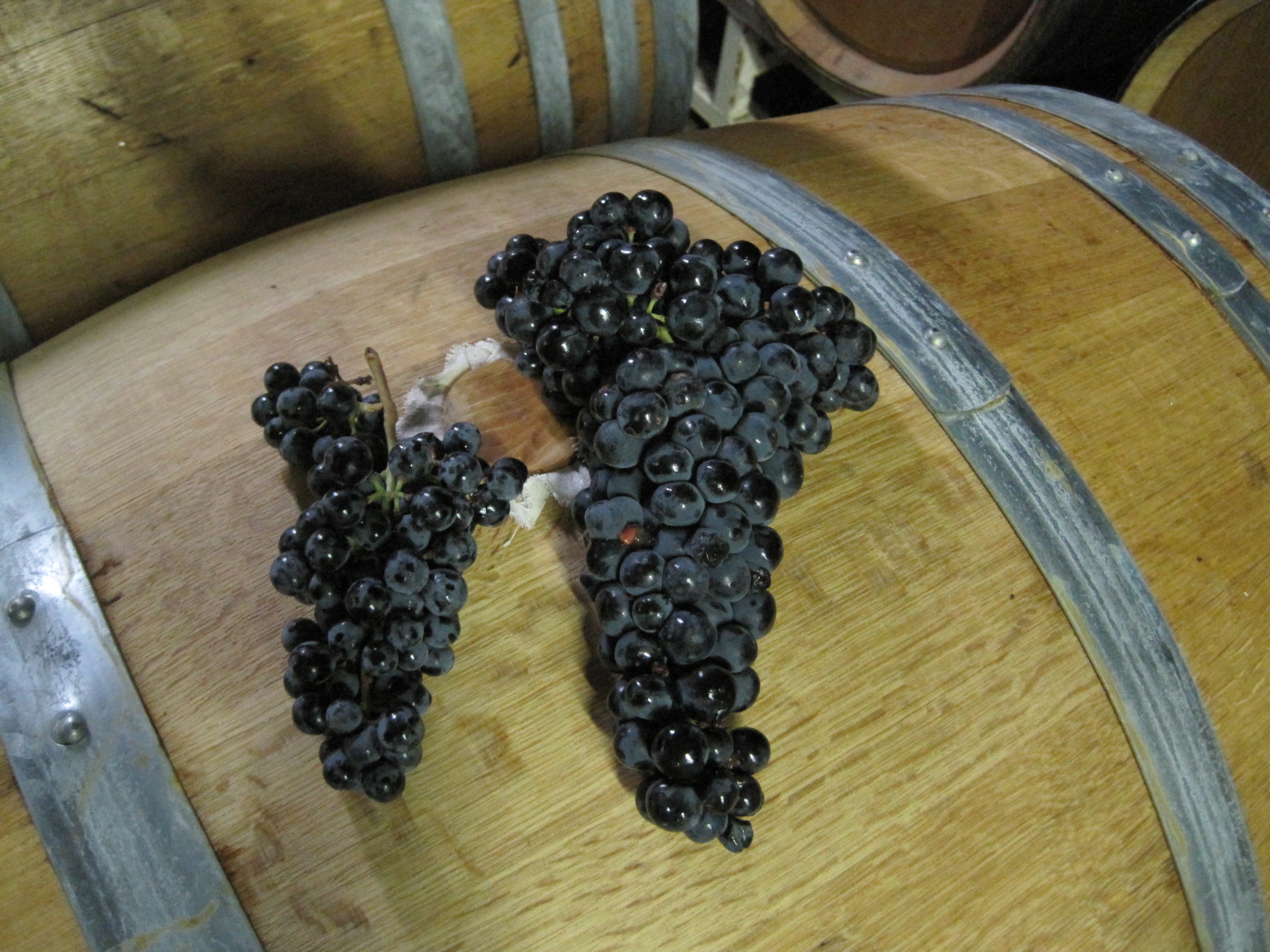
I ended up with petite verdot and tempranillo, two grapes I am thrilled to be working with. Total intake for 2012 was .82 tons of petite verdot and 1.1 tons of tempranillo from the Horse Heaven Hills AVA south of Prosser, Washington. The clusters on each were absolutely beautiful, with minimal raisining, no rot, and hardly any bugs!

Fortunately for me, I had a lot of assistance from the Kramers, especially Kim, in walking me through the process of selecting yeasts, must treatments (or lack thereof), barrels, and much more. The Kramers also helped with the nitty-gritty, punching down and pumping over the fermenting bins when I was away at my day job.

The day job. I began to look for another job in mid-July, when I realized I was not a good fit for Cathedral Ridge. To succeed in the wine business you must be passionate about the wines you are selling, and I simply couldn't find that passion. In September, I went to work for a distributor here in Oregon, working the Portland Metro area, selling Pacific Northwest wine and craft beers. The job is great in many ways, offering good compensation and benefits, while challenging me to see how far I truly want to go in sales. Each month I am amazed with what I've learned about selling for a distributor, and I'm taking away many things both good and bad from my experiences.

The last week of September saw me in Bordeaux with a group of wine bloggers including Jameson Fink and Joe Roberts. Balzac Communications and Planet Bordeaux were generous enough to include me on this trip, for whatever reason. I confess that despite the incredible experiences I had, I struggle to write about my time there. Whenever I begin to write about Bordeaux, I get frustrated that my writing skills aren't enough to suck you in, dear reader. You will see more Bordeaux posts from me in the future though.

2012 ended with a flurry of activity, and I proudly proclaim that in the last six to eight weeks of the year, I drank more Champagne than I ever have before. A rough guesstimate puts it at a case and a half. As you can tell, I am quite proud of this factoid.

What does 2013 promise then? The search for new grape sources. I haven't given up on my dream of working with grenache, and I may have a source for some of the finest domestic cabernet franc grapes, period. White wines also call to me, to that end I am actively seeking white Rhone varieties and sauvignon blanc. I hope that my Tempranillo will be released this fall, and that the petite verdot will be released in spring of 2014. Hope is just that, because as we know, the wines themselves will decide when they're ready to be released.

2013 also will bring some changes to this blog, when I move away from reviewing wine and more towards just talking about cool wines I drink. To my PR/Media friends, I'll still accept samples for review, but not nearly as many as before. I'm tired of all the crappy wines and Becky says they take up too much space in our house. She is right.

My personal journey with wine will see me buying more aged Bordeaux and Burgundies as well as continuing to explore Champagne, Alsace, and the Rhone Valley. Of perhaps some interest to my readers, I'm also embarking on a quest to find California Pinot Noir that my palate enjoys. After nearly a decade in California wine sales, I tasted most of the big name, "cult" pinot noirs, and can't stand them. The search is on for cooler climate, higher-acid, restrained examples of what the state can do. Of course, this will limit my search to more recent vintages, but that's ok.

Here now I ask you, did you make any wine resolutions this year? Did you have any wine epiphanies last year?

A toast to 2013, thank you for reading along!

Beau Carufel


Saturday, December 29, 2012

Wines of Chile: Masterclass

(attribution: http://starchefs.com/cook/features/chilean-wines)
Earlier this year I participated in a fairly extensive tasting of wines from Chile, organized by the Wines of Chile trade group. I've done these virtual tastings before, with mixed results. Chile remains a bit of an enigma to me (and my palate) because often the wines seem insipid, or in other cases, just poorly made, but then I'll taste several that are outstanding. To discount the country entirely would be an error though, because I am often impressed with Chilean sauvignon blanc, syrah, and pinot noir.

This tasting consisted of three sauvignon blancs, three pinot noirs, three carmeneres, and three cabernet sauvignons. The latter two having wines that were also blends in the flight. Pricing ranged from around $13 all the way to $65 for one of Chile's most famous wines, the Los Vascos "Le Dix" Cabernet Sauvignon.

I'm not sure how the wines were selected or by whom, but I know that Master Sommelier Fred Dexheimer was once again our gregarious, energetic host. He's being paid by the Wines of Chile trade group to promote their member wineries throughout the United States. Fred also makes a mean Pisco Sour. Representatives from each winery in the tasting were also on hand (via satellite) to discuss the wines and answer any blogger questions.

Unfortunately I've lagged on finishing this blog post. Still, I'm glad to share with you a tasting of twelve wines, white and red, from all over Chile. Instead of assigning numbers or grades to the wines, look for a simple "recommended" or "not recommended" after each tasting note. To explain, if I recommend a wine here it's because I feel it represents good quality-to-price ratio (QPR), tastes delicious, and is (relatively) flaw-free.

With that, I present twelve wines from across Chile's varied growing regions:

Sauvignon Blanc
1. 2012 Vina Casablanca "Nimbus" Sauvignon Blanc Casablanca Valley: Plenty of grassy notes mixed with citrus come rushing up out of the glass. They persist on the palate too, helped by plenty of crisp acidity. There isn't a lot going on in this wine but what does exist is proportioned quite well. If you need a versatile food white, pick up a bottle and see for yourself, it will pair with most anything. All for only $13. Recommended.

2. 2011 San Pedro 1865 Sauvignon Blanc Leyda Valley: Amping up the aromatics and mouthfeel (as well as the price), this beautiful sipper brings the same green grass note as in the first wine, but it's restrained by more citrus and hints of tropical fruit, considerably brightening up things. Plenty of acidity helps the wine move along across your palate, but it veers into the "bitter wine face" a few too many times. That disjointed nature dooms this sauvignon blanc for me. Not recommended. $19 SRP.

3. 2011 Casa Silva Sauvignon Blanc Colchagua Valley: Things start to get really interesting with this wine, and they should for $25 a bottle. It had some hallmarks of Sancerre, with the mineral and lime notes, but also a beautiful undercurrent of tart pineapple and other tropical flavors. I was impressed with the complexity and kept coming back to it as the night went on. Some of the other bloggers weren't too keen on it, but I felt that Casa Silva nailed the flavor profile for a cool climate sauvignon blanc without going too far into the gooseberry/cat piss side. Highly recommended.

Pinot Noir
4. 2010 Emiliana Novas Pinot Noir Casablanca Valley: My tasting notes refer to lots of fruit on the nose, with red cherry, strawberry, and hints of spice. I like how straightforward and unassuming this pinot noir is, but wish for more complexity. At $19, it's not expensive at all but I could pull a lineup of $20 Oregon pinots out that would blow this pinot out of the water. The finish was a bit short as well, but I liked the sheer "yummy" factor. Simple wine, yet tasty. Still, not recommended.

5. 2009 Cono Sur 20 Barrels Pinot Noir Casablanca Valley: My first bottle was corked so the Wines of Chile folks kindly sent another. This big, 14.5 percent abv pinot has some "interesting" attributes. On the nose there is a bit of alcoholic heat coming through. Also present, aromas of vanilla, earth, and red fruit. Where this gets tasty is after you take a sip. Plenty of tannin (odd, no?) frames bright red fruit, dusty soil, black pepper, and baking spice. The finish is clean and taut, indicating that this is still a baby of a wine. Yes, it's $32 a bottle but it has a lot of potential! Recommended.

6. 2009 Morande Gran Reserva Pinot Noir Casablanca Valley: I couldn't figure this pinot out. Aromatically it was like a red cherry jolly rancher mixed with eucalyptus oil and dried-out pizza box. On the palate there was plenty of acidity to keep things light, but that weird cardboard thing kept showing up. The bright fruit was nice and the herbaceous flavors kept things interesting. The bottle wasn't corked or suffering from brettanomyces, as far as I could tell. Not recommended. $17.99 srp.

Carmenere
7. 2010 Concha y Toro Marques de Casa Concha Carmenere Cachapoal Valley: Weirdly enough, this bottle was also bad, with something happening after it was made and before I received it. Another bottle replaced. On the nose there was oak and buttered popcorn aromas (diacetyl) that overlaid secondary aromas of sliced jalapeno. After sitting for about an hour, the wine calmed down quite a bit. Nicely integrated tannin helped along by some vibrant acidity enfolded flavors of green pepper, dried herb, red berry fruit, and wood. This wine desperately needs food, if you buy it. $22 srp. Recommended.

8. 2010 Carmen Gran Reserva Carmenere Apalta Colchagua Valley: Thin to the point of being delicate on the nose. More of that green aroma and some wood influences, but also notes of plum and cranberry. I can't say this wine was a tour de force of carmenere but I did like how food-friendly it was. Good acidity that brought high toned red fruit and spices along for the ride. A clean, quick finish that readied the palate for another sip, and a very nice price point. Just wish for more interesting flavors! Still, $14 is hard to beat. Recommended.

9. 2009 Koyle Royale Carmenere Colchagua Valley: A blend of carmenere, petite verdot, and malbec. Some bloggers loved it, I felt it was a mess. Too much VA (volatile acidity) to make any sense of what was going on. The people tasting with me felt it was downright unpleasant to drink. $25.99 srp.

Cabernet Sauvignon
10. 2009 Ventisquero Grey Cabernet Sauvignon Maipo Valley: Six percent petite verdot, the rest cabernet sauvignon. Seemed a bit undeveloped and too soft. What I mean by that is there wasn't much in the way of flavor integration, and there was a perceptible lack of tannin. Also, the wine simply didn't bring much complexity to the table. I re-tasted it several hours later and it had not appreciably developed anything interesting. I'm not sure if it was over-oaked or from young vines or what. For $29, there are far better choices to spend your hard earned money on. Not recommended.

11. 2010 Maquis Caberent Sauvignon Colchagua Valley: I tasted this wine several times over the course of the night and felt it opened up beautifully. The nose revealed aromas of cassis, spices, dried herb, tobacco, and oak. The more I swirled, the better all those aromas integrated, creating a wonderful tapestry. On the palate it was equally impressive, with plenty of tannin surrounding flavors of plum and black currant, tar, leather, dried herb, and cocoa. The finish was a bit quick, but I think this is a young wine that will get better with another year or two in bottle. For only $19, it nails the QPR quotient. Recommended.

12. 2009 Los Vascos "Le Dix" Cabernet Sauvignon Colchagua Valley: Don't drink this right now if you go out and buy it. My notes say "lots of potential.......I think". The ingredients are here for a great wine. Lots of tannin, flavors of leather, plum skin, tobacco, and cassis. Sound like a Bordeaux? Lots of stylistic similarities to young Haut-Medoc wines. The only question is whether or not all those flavors will merge with the tannin and acid to form a complex, compelling wine, or continue to stick out in jagged edges and at rough angles to each other. At $65, and with this producer, it's a pretty safe bet that in several more years, things will take a turn for the glorious. Recommended.

There you have it, 12 Chilean reds and whites to consider. It was a great walk through some of the regions and a fun opportunity to taste how the Chilean wine industry is coming along. I think they have a long way to go to become truly "world class" but there are very encouraging signs of progress. For my palate, the most promising wines coming from Chile are still sauvignon blanc, pinot noir, and syrah.

What I'd like to see wineries down there do better is manage volatile acidity, keep their cellars free of brettanomyces, and make better picking decisions to keep the pyrazine levels lower. There is potential too in the Bordeaux-based wines, in part due to the varied growing areas of the country. Right now it seems as if the Chilean winegrowers are finding out which grapes grow the best at which sites. To that I say, keep up the good work!

Thanks to the Wines of Chile trade group and The Thomas Collective PR firm for inviting me to taste along with my fellow bloggers.

These wines were media samples.

Beau Carufel

Tuesday, October 16, 2012

Finger Lakes Wine: Red Tail Ridge Whites and Reds

After my last experience tasting wine from New York's Finger Lakes region, one which was a disaster, I was approached by my friend and fellow wine blogger Lenn Thompson. Lenn is one of the wine blogging world's heavyweights, as the editor of the New York Cork Report. He saw my piece on the Finger Lakes Virtual Tasting and asked me if I was interested in participating in another tasting at some point in the future.

Despite my bad experience with the previous Finger Lakes wines, I told him I was interested but promptly forgot about it. Life has been crazy since February..or better yet, since I moved here in October of last year. When Lenn did reach out to me with a firm date, asking if I wanted to do another virtual tasting with a single producer's wines, I readily agreed and looked forward to another round with wines from the Finger Lakes.

This time, we were tasting the wines from Red Tail Ridge, a 32 acre vineyard and winery located close to Seneca Lake. Founded in 2004, Red Tail Ridge makes a lineup of wines using both common and uncommon varieties. Since the Finger Lakes region is un-constrained by the dogmatic adherence to cabernet, syrah, and chardonnay that Napa Valley is, the wine growers love to plant unique and sometimes crazy grape species.

Unfortunately, the day of the virtual tasting came and I still had no wine! It didn't show up until later in the afternoon, an hour or two before the tasting start. This seems to happen frequently in virtual tastings, and while I won't single out Red Tail Ridge, I'll say that it's almost worthless to send out wine samples and not allow at least two weeks for the wine to settle. PR and marketing people should take note, get your acts together and if you're going to send out samples for virtual tastings, do so sooner rather than later.

2010 Red Tail Ridge Dry Riesling: Notes of ripe apricot, white flowers, and tropical fruits are all nicely integrated into a fun, aromatic bouquet. The palate brings vibrant acidity that showcases flavors of lemon, summer melon, and baking spices. As far as rieslings go, this is utterly delicious, and one of those wines that is flat-out fun to drink. Only 12% alcohol too, and best enjoyed with a nice chill on it.


2010 Red Tail Ridge Pinot Noir Estate Grown: Notes of shoe leather, shoe polish, cranberry, raw peppercorn, and green herbs make up the bouquet. Some slight burning sensations come out too, can't figure out if it's unbalanced alcohol or ethyl acetate. An intriguing bouquet that's worlds better than the first night it was opened. On the palate this is somewhat rustic, with prickly acidity all over the place, a savory note, and more of the cranberries mixing with cherries. Vaguely reminiscent of a pinot noir from Alto Adige, yet retaining it's own fickle texture. Hardly any tannin and an evaporative, quick finish that's all angles and green herb flavor. I get the distinct sense that this pinot noir is very uncomfortable right now, but will settle with age. 13.8% abv.

2009 Red Tail Ridge Blaufrankisch: Aromas of soil, tar, spices, and lots of red berry fruit rush up out of the glass. At first, the tar scent dominates before giving way to the red berries and spices. I liked this even more on the second day. It's a zingy wine with nice acidity but hardly any tannin. Still, that works becasue there's enough spice and red fruit mixed with a smokey, salted meat flavor to keep things interesting. The finish is medium length, retaining enough of that savory-meat quality to make your palate thirst for the next sip. 12% abv.


NV Red Tail Ridge Dornfelder: I'll admit, this wine confused me. When I pulled the cork, I thought I smelled something akin to hot plastic, like one of those hospital oxygen masks left in the sun. Weird! As the wine sat in my glass though, it began to show lots of plum and spice notes, along with black cherry and wood. Sipping this wine was like eating a bowl full of mixed, red berry fruit with little pieces of smoked meat thrown in. There was also a pleasant minerality that I found very compelling, especially on the second day. Another thing that impressed me about this Dornfelder was the long finish, easily lasting about 30 seconds. 12% abv.


For my palate, Red Tail Ridge is producing some of the best red wines in New York. Unfortunately, I have to say that I haven't had many reds from my home state yet. Still, the wines I tasted were compelling and although young, showed great promise. I liked the Dornfelder, a blend of the 2009 and 2010 vintages, for its uniqueness. The pinot noir shows that good pinot can in fact come from the Finger Lakes, and the Blaufrankisch was absolutely delicious. Of course, the Riesling was a fun, friendly wine too.

Since the wines arrived on the day of the Twitter Tasting, I refused to open and taste them, save for the Pinot Noir, and therefore missed out on some insights from the winery's representatives whom were on hand to answer questions. I also forgot to get a good picture of the Pinot Noir. Hindsight being what it is, I am glad I waited several months for the wines to settle out, because they would have been tough to drink on that warm April night.

Thanks to Lenn Thompson and the people at Red Tail Ridge for putting this together and showing me some delicious wines from the Finger Lakes of New York.

Beau Carufel

Tuesday, August 14, 2012

Red Sancerre: Delightful Budget-Friendly Pinot Noir

Most of us know Sancerre to be perhaps the best region in the world to grow sauvignon blanc. With soil types ranging from white chalk to gravelly limestone, and vineyard elevations up to 1,300 feet, the grapes retain a great deal of acidity and mineral components. To balance that acid, the short, hot summer allows enough sugar formation to produce wines that also exhibit beautiful, perfumed aromas and flavors. Furthermore, the use of oak is very limited, and malolactic fermentation rarely is allowed to take place.

What you may not know is the region also producers pinot noir that consistently delivers outstanding quality for low prices. Though only about 20% of Sancerre's grape production is pinot noir, both the red and rose wines are well worth seeking out. While Sancerre lacks the cachet and indeed, the history of producing world class pinot noir that Burgundy has in spades, the region's wines are wonderfully accessible, often exhibiting aromas of rose petal, cherry, wild raspberry, and peppery spice.

A few days ago my friend Rory brought over a bottle of this wonderful Sancerre rouge to share. He works at The Friendly Vine, in Forest Grove and not coincidentally picked up this bottle while at work .At $21, the price point is very reasonable, especially considering the following facts; it's pinot noir, it's from France, and it's from a region currently in vogue.

2010 Les Hospices Sancerre Rouge:
We unscrewed the cap and poured some glasses. After the initial reductive funk blew off, the bouquet delighted us with zingy raspberry and pepper notes, hints of dusty gravel, and a subtle orange-peel aroma. A sip or two brought out bright red fruit mingling with herbs and forest floor/mushroom flavors. I enjoyed the mineral component on the palate because it helped create a wonderful textural sensation. The finish was brisk and racy, led by the acidity, and had a nice gentle tapering effect.

For $21, this is a cool climate, acid-loving, pinot fan's wine. I've only seen it at The Friendly Vine, so I'd recommend contacting them if you want a bottle or two. If you put it aside for a few years, I suspect the wine will get a bit better but it's not one designed for long term cellaring. As far as I can tell, it's a negotiant brand produced exclusively for Bronco Wine Company's Antares division. Yes, the same Bronco responsible for million of gallons of plonk. Just goes to show you!

Importer: Vinum Importing
Producer: Pierre Chainier for Bronco/Antares Wine Co.

Beau Carufel

Sunday, August 12, 2012

Wine Industry Technology Symposium Live Tasting With @WineTwits

During this year's Wine Industry Technology Symposium, a group of wine bloggers were sent four wines from California and invited to participate in a live, virtual wine tasting. Frequent readers (all four of you) might be familiar with this format, as I've posted recaps of these tastings fairly often over the past few years.

The way a "virtual tasting" works is by having bloggers around the country receive the same wines, then use Twitter and a specific hashtag to talk about each wine. Usually there's a moderator, in this case the fine folks behind the @WineTwits account and website. We talked (tweeted) about each wine over the course of about an hour, with the various participating wineries chiming in to answer questions and give data points.

I tend to enjoy some aspects of virtual tastings, especially when bloggers whose palates I trust are participating. We get to compare notes and really dive into what the wines are about. The other side of virtual tastings is that all too often we get bloggers who do nothing but tweet hyperbolic statements praising every wine. Not only do they look like idiots, it undermines our already-fragile credibility as a group.

Each wine selected has the benefit of being easy to find in grocery stores and BevMo-type outlets, being of high enough production to virtually guarantee nationwide distribution. The sole unfamiliar wine to me was the 2010 Garnet Vineyards Pinot Noir, the rest have all graced my wine glass at some point in the past few years.

2010 Wente Morning Fog Chardonnay Livermore Valley: The bouquet is full of lemon cream, tropical fruit, and popcorn butter aromas. To me it smells exactly like I'd expect a traditional California-style chardonnay to smell like. On the palate there's a nice bit of that tropical fruit, some more lemon notes, vanilla, and more of the buttery taste. The acidity is low, or at least, feels low due in part to the malolactic fermentation that this wine saw. Wente consistently makes drinkable wines, and if you're a fan of buttery California chardonnay, I think you'll really enjoy the Morning Fog bottling. 13.5% abv. $11 retail.


2011 Hahn Winery Nicky Hahn Pinot Noir California: Pours a beautifully vibrant ruby color in the glass, a testament to its youth. The nose is full of ripe, jammy cherry preserves, baking spice, some woodsy aromas, and a touch of earth. Cherry jam dominates the palate, providing a soft, rich mouthfeel. The baking spices come out to play a little bit on the finish, which in itself is nice if a bit short. 100% pinot noir, according to the data sheet I have. 14.5% abv. $14 retail.


2010 Garnet Vineyards Pinot Noir Carneros: Loads of raspberry and strawberry aromas followed by a bit of white pepper spices. I think there's a bit of funk here too, some nail-polish remover came out as the wine warmed up. I think this pinot is very varietally correct on the palate, with light red fruit, peppery spice, hints of earthy funk, and lots of acidity. The finish is medium length, tapering off nicely, however, the bottle was open about five hours before the finish got to be any reasonable length. It might need a bit of age or an hour in a decanter before it shows all its facets. 13.5% abv. $19 retail.


2008 Franciscan Magnificat Napa Valley: A blend of 69% cabernet sauvignon, 23% merlot, 6% petite verdot, and 2% malbec. This Meritage pours dark, almost opaque garnet. Pepper, wood smoke, cassis, and leather rush up out of the glass. There's a touch of alcoholic heat, nothing more. Lots of ripe black fruit mixed with oak form the primary flavors. Secondary flavors include smoked meat, cocoa dust, and dried spice leaves. A nice long finish shows earth and leather before disappearing in a burst of dried black cherry. This is a 2008, and it shows true to form as a very young wine. Lots of firm tannin that will soften and integrate with age. I tasted this again after six hour and it had mellowed out noticeably. 14.5% abv. $35 retail.


The wines we tasted were all interesting and well made. The Franciscan was very good, and the clear leader of the group. I re-tasted each wine about six hours after I opened them and save for the Meritage, they'd all begun to fall apart. Out of the latter three, the Wente chardonnay held together best, still retaining some acidity and complexity.

The WineTwits crew did a great job getting such a large group of bloggers together and keeping the discussion moving along, but weren't as active with the technical facts and winery-liaison work that I've seen from other virtual tasting hosts. Perhaps that will change in the future, should they do another tasting. Then again, it's not always necessary to constantly chime in if the discussion is flowing nicely.

You can find each winery on social media here:
@Wente and on Facebook at: https://www.facebook.com/WenteVineyards
@HahnWines and on Facebook at: https://www.facebook.com/HahnFamilyWines
@FranciscanWines and on Facebook at: https://www.facebook.com/FranciscanEstateWinery
@GarnetVineyards and on Facebook at: https://www.facebook.com/GarnetVineyards

and @WineTwits

Thanks for inviting me!

These wines were media samples.

Beau Carufel

Wednesday, June 6, 2012

Bruliam Pinot Noir, A Labor of Love

(img src: http://www.pinotfestival.com)
A couple of years ago, back when I still lived in San Diego, I met Kerith and Brian Overstreet. They are childhood friends of my buddy and fellow wine blogger Keith, over at www.brainwines.com. One day at a San Diego Wine Mafia meeting, the Overstreets were there and we got to chatting. I had no idea Kerith was a winemaker, and you know how I get when I meet winemakers (hint: I bug them with questions).

Kerith and her husband are the founders and owners of Bruliam Wines.

As we tasted some wines with the rest of the Mafia, I learned about the origin of their label, Bruliam Wines, and their focus on pinot noir and zinfandel. I think the story is much better told on the website, so I urge you to visit it and watch the cool video about how Bruliam came to be.

I always like to mention this as well; Bruliam wines gives back all their profits to charity. It gets better, because they donate to the charities that you, the wine lover, chooses. Pretty amazing, I agree!

Fast forward a few years and Brian emails me one day asking if I'd like to sample the 2010 pinot noirs they had recently released. Like he had to ask! In the fall of 2010 I tasted the 2009 Bruliam pinot noirs and wrote a feature on the wines, with each of them rating excellent to outstanding on my now-retired scale.

For 2010, Kerith and Brian sourced fruit from three different vineyards in Northern California. Each wine was nudged along in it's journey, emphasizing the place it was grown instead of the winemaker's hands. Since they don't own any vineyards, the fruit sources can change from year to year, making it all the more important to get your hands on these wines ASAP! Also I'll give a sneak peek here: For 2011, Bruliam has added the famous Gap's Crown Vineyard to their list of fruit sources. I can't wait to try that one..In 2014 of course.

Let's get on with my impressions of the wines then. These were all tasted at room temperature, about 30 minutes after being opened.

2010 Bruliam Deer Meadows Vineyard Anderson Valley Pinot Noir: I immediately noticed ripe black fruit, cherries and blackberries, warm baking spice, and cola on the nose.This pinot is big and smooth, at once lively yet with some peppery acidity. Good dark fruit flavor along with a subtle, herbaceous note. Some oak flavors, woodsy with a hint of dark chocolate. There is nicely integrated tannin, but it stops somewhat short on the finish. The acidity is firm, but this is a baby, and will better integrate with more time in bottle. If you're going to drink this now, decant for a few hours. $46 SRP.


2010 Bruliam Soberanes Vineyard Santa Lucia Highlands Pinot Noir: The bouquet has loads of baked cherry and rhubarb, black pepper, black tea, and spice. I loved the balance between the fruit and other aromas. I think this is very young, showing  restrained flavors of grape stem, black tea, wild raspberries, and black cherry. What flavors are showing right now are delicious and well integrated with a nice streak of acidity. I found a slightly perceptible alcoholic heat on the bouquet that carried over into the palate, but it should go away with age. The finish is a burst of spice and white pepper, something I love about great quality pinot noirs. $46 SRP.


2010 Bruliam Wildcat Mountain Vineyard Sonoma Coast: Aromas of bright, fresh strawberry and rhubarb, along with cola and cherry blossom. Pine sap provides a welcome element to contrast the fruit. On the palate I felt this was showing traditional Sonoma Coast flavors; it expressed ripe strawberry and baking spice along with a subtle earthiness. Also noted were touches of oak, black pepper, and grape stem. The strawberry persists through the finish, very impressive. Not much tannin noted, compared to the other Bruliam wines. This is the wine I'd drink now, while cellaring the other bottles for 5-10 years. $46 SRP.


After I wrote these reviews, I learned that Wine Enthusiast had shown some love to the Bruliam pinot noirs, giving the Wildcat Mountain an 89 points, the Deer Meadows 90 points, and the Soberanes Vineyard 93 points! That's convincing proof that the Overstreet's are doing something right, and should encourage you to buy up these wines before they're all gone.

To purchase the Bruliam wines, visit their website.

Tasting the Bruliam pinot noirs was great fun, I opened 10 pinot's from around the state that day and these three were the clear winners. If Kerith and Brian can maintain this level of quality, Bruliam Wines will continue it's upward trajectory into the rarefied ranks of California pinot noir producers showing restraint while creating texturally interesting, nuanced wines.

You can follow Bruliam on Twitter or visit the Bruliam Wines facebook page.

These wines were media samples.

Beau Carufel