Thursday, November 22, 2012

Bordeaux and the Millennial Wine Market

In the lead-up to my September trip to Bordeaux, I posted a brief note on Bordeaux wines' place in the United States. Throughout my stay in France, that question would pop into my head at various times and continues to do so on a regular basis.

I am fascinated by the stratification of the wine market in this country, how we have so many different levels of consumer spread across age, gender, education level, and income level. Overlaying my experiences in Bordeaux with this broad demographic map, I began to see where the wines could easily fit or conversely, not fit at all.


Often I would think more about the Millennial demographic because it's where I reside, and during my years in wine retail sales, I was always interested in the buying habits of my fellow 20-somethings. We're a fickle bunch, and even within our ranks there are multiple levels or layers of wine consumers. As all of this slowly percolated through my brain, the question became "where do Bordeaux wines fit in the Millennial market and what can the Bordelais do to capture our attention?".

To answer it, several things must be established first. We must accept that Bordeaux wines have a place here in on our tables (and in our glasses). We must also accept that there is a Millennial wine market. Current data puts the Millennials' purchasing power at over 170 billion dollars. Of course not all of that is spent on wine purchases, but we (sic) do make up (with over 80 million members) the second largest wine buying group in the country.

How can the wine producers of Bordeaux tap further into the Millennial market? Marketing of course works,  provided it's tailored to what we respond to. Packaging the wine in ways that appeal to us is also very important, perhaps more important for Millennials than any other generation. Understanding the preferred flavor profile my generation has will also help efforts to tap into our wallets. The increasing use of social media to generate conversations has been shown to enhance brand awareness and even drive a percentage of sales among Millennials.

Marketing:
Marketing to Millennials is slowly being shown as somewhat straightforward, especially for luxury goods and lifestyle image. We respect authenticity and a great story. Heritage is important to us, but we're loathe to be told to respect or admire something "just because it's old". We like being told what's new and hot, provided we are the ones who initiate that conversation. A Millennial wine buyer will respect the tradition and heritage of a region like Bordeaux provided that it's explained to him or her in a casual manner, where authenticity is stressed over things like price or exclusivity.


Packaging:
Multiple times throughout my time in Bordeaux, someone in our group pointed out how much the labels from producer to producer looked pretty much the same. To someone (like a Millennial) unversed in Old World wine labels, it gets confusing. If every label is white or some shade thereof, says "Chateau XYZ", then has a picture of the house on it, followed by the recognizable words "Bordeaux" or "Bordeaux Superieur", what's a person to do, especially one who has very little experience with the region (or the Old World labeling system in general)? Taking a page from New World producers and putting the grape varieties on labels has helped break down barriers. What's needed is a move towards more attention-grabbing labels though. To the right is a picture of a label at Chateau Feret-Lambert that I love. The color is eye catching and it's easy to read the writing. It sure doesn't hurt that the wine was wonderful too, a great introduction to Bordeaux Superieur.


Flavor Profile:
Often forgotten is that there is a large group of Millennials that have a different flavor preference than the Baby Boomers or Generation X. Yes, that's a generalization, but for now we will use it. Sometimes we're referred to as the "Juice Box Generation", that grew up drinking sweet fruit-based juices and nowadays tend to hold onto the sweet wine preferences a bit longer than previous generations. As such, wines with fruitier, sweeter flavor profiles can be more successful than wines with more acid and/or tannin. Yes, this Millennial is disappointed by that, but facts are facts. I'm not suggesting the Bordelais leave residual sugar in their wines, but considering working towards softer, fruitier reds might help turn Millennials on to Bordeaux. This can be relatively easy to accomplish too, with the creation of second labels or sub-brands. Before you crucify me, remember, almost all Millennials will graduate from those wines into more traditional reds (and whites).

Social Media:
It's no secret that the use of social media spans demographics, but how social media is used and how it influences buying habits are the core point I'm making. Within the Millennial market, use of social media as a purchasing aid is growing. Currently there is an incredibly limited presence among Bordeaux producers, whom instead rely on organizations (@PlanetBordeaux among others) to generate and drive conversations. This has to change, though there are some logistical hurdles. For one, the time difference can prevent instant replies (something more important on Twitter than Facebook). The culture in Bordeaux isn't one that promotes the most cutting edge marketing and outreach technologies. That may change though, given the younger generations' ascendance to control of the wine trade. These are just two issues though, and shouldn't be taken as a complete breakdown of social media in Bordeaux.

That's a 1959 Chateau Recougne. OLD!
I want my generation to experience Bordeaux wines and feel the way I do about them. The region, steeped in history and authenticity, produces some outstanding wines at great prices. The price range runs from around $5 for a generic, mass-produced Bordeaux to $2,000 for a First Growth. Within this huge area lie so many great wines that should be tasted and enjoyed, especially by Millennials. We have reason to pay attention to Bordeaux, and plenty of reasons to respect the heritage of the vines. It is my hope that producers in Bordeaux continue to expand their efforts at actively targeting the Millennial generation.

What are some other ways Bordeaux producers can target the Millennial market, educate us, and create loyalty?


For the numbers I sourced in this blog, I used this article from Millennier, this slide show on Millennial buying habits, and this slide show about expert opinions on Millennials.

Beau Carufel

Tuesday, November 13, 2012

Vinho Verde, Wine You Should Drink Often

Believe it or not people still ask me for wine recommendations, especially when the seasons change. While that might not make me a "Top 10" wine blogger or some other nonsensical crap, it does make me deeply appreciative of the opportunities I have to sample some unique, outstanding wines...Then turn around and recommend the ones I like to folks who trust my opinion.

(attribution: http://commons.wikimedia.org/wiki/User:Bourrichon)
Vinho Verde. Green wine, in Portuguese. The wine isn't green colored, but green in the sense of being young. Technically it has a tiny amount of bubbles, but not even enough to equal Moscato d'Asti from Italy. Some of the grapes used in vinho verde are Loureiro, Arinto, Trajadura, Avesso, and Azal.

Turning logic somewhat on its head, I recommend drinking vinho verde during the fall months in addition to those hot summer months. You might ask why, and would certainly be correct to do so. The key is acidity, perhaps the singularly most important component in making a wine food-friendly and versatile.

Think about it, around this time of the year we are (well, we in the northern states) having hearty fare, warm fare, food to survive on. We're also having holiday parties!

Holiday parties invariably involve alliteration..wait..no...that was an awful joke. Picture tables full of various finger foods, bodies packed into an overly heated room, and that weird guy taking pictures of his ass on a copy machine. And cake. Ring any bells? Do you really want to be drinking the 22 year old social media interns jungle juice? Is your company cool enough to spring for real Champagne at their parties?

A "no" answer to either question indicates you should try vinho verde at the office parties or other holiday gatherings. Lots of acidity, low alcohol (so you can drink a lot!), and the potential to look reasonably cool and sophisticated make this delightfully quaffable Portuguese sipper worthy of consideration. Oh and it's a massive crowd pleaser too.

Let's talk about some bottles of vinho verde then. Each of these wines is readily available in most major markets. Don't hesitate to email me if you need help finding one.

2010 Trajarinho Vinho Verde: A blend of 60% alvarinho, 40% trajadura. Bright nose of cut grass, flowers, green apple, and hints of apricot. Impressive complexity for such an inexpensive wine. On the palate a slight effervescence reveals more of the apples and flowers, sweet pear, and touches of green. Vibrant acidity creates a nice finish, clean and compact. I would happily pair this with fried foods, Mexican cuisine, or tapas plates. $9.  11.5% abv.

2010 Grinalda Vinho Verde: This was perhaps the most simple of the bunch, with aromas of citrus and sea breeze. It lacked the verve of the above wines, relying almost solely on a bright acidic streak through the center. Tasted later in the day, I suspect that this wine was just a simple, bulk vinho verde. 11.5% abv$14 SRP.

2011 Cruziero Branco Vinho Verde: This was a very interesting vinho verde for me, as it had this interesting, funky mineral note that struck me right out of the glass. Tertiary aromas of melon and stone fruit complemented a zingy lime juice core. None of that funk was on the palate though, as this wine is all about the acidity. Lots of sweet Meyer lemon and stone fruit go along with a briny, drying finish. Great fun at only 9% abv$12 SRP


2009 Adamado Vinho Verde: Made by a cooperative, this vinho verde seems all about the minerality and melon. There is also a subtle stone fruit aroma at play. It's softer on the palate than the Cruziero Branco, but equally fun to drink. I was particularly impressed by the clean, drying finish. By being a bit softer, I think this example is a better gateway to the region and wine than the previous two. 10% abv$8 SRP.


NV Casal Garcia Vinho Verde: Imagine wet gravel on a steel pan. Barely-ripe peaches and sliced limes surround the pan. This gem has a ton of acidity, keeping the palate very clean and focused. During warmer weather, it would be a fantastic sipper, one that you could drink a bottle of and be fine. It's a bit too light (taken in context) for the holiday smorgasbord though. Still, worth seeking out and enjoying on its own. 10.0% abv$8 SRP.

2011 Quinta de Gomariz QG Loureiro Colheita Seleccionada: Gorgeous notes of summer melon, citrus, sea breeze, and fruit blossom all come out on the nose of this wine. It had the most complex bouquet of all the vinho verdes I tasted. Also, it was perhaps the fizziest (is that a word?) out of the six here. Lots of melon and lime on the palate, ending in a burst of bubbles and acidity. 11.5% abv. $10 SRP.


2009 Casa de Vila Verde Alvarinho Minho: Fresh lemons and ocean breezes waft out of the glass in this wine made in a sub-region of vinho verde. Although there is a bit more alcohol, it helps lend weight to the tropical fruit and lemon flavors that come through on the palate. There is a slight bittering on the finish that distracts from what could be an excellent wine, and I felt that this might be past its peak already. Still, an interesting exercise into a tiny sub-region. 13.5% abv$11 SRP.


It's not often I get a chance to taste through this many wines from a single region, but taste I did! Some of these wines were still quite good on the second day, retaining that tiny bit of fizz and mouthwatering acidity. It's important that these wines be viewed for what they are, simple, tasty, and accessible. That's why I suggest them for the holidays. When you're cooking for a crowd and don't want to break out the Champagne but still need refreshing relief, why not a cheap, glug-worthy vinho verde?

These wines were samples for review purposes.

Beau Carufel

Friday, November 9, 2012

Three Years of Wine Blogging

Sometime late last month, this blog turned a whopping three years old. Still quite a baby in the wine blogosphere, I nevertheless take some measure of pride in (somewhat) consistently posting blog articles for three years. While the focus has strayed a bit and been perhaps too review-oriented, the very fact that I have a wine blog has opened so many doors and literally allowed me to pursue the life of my dreams. If I had not started a blog, I would not be a winemaker. I would not have experienced Navarra or Bordeaux, met some great friends, and tasted some incredible wines.

I went back and forth between marking the occasion or ignoring it until a bigger anniversary came up, but ultimately decided to post a blog with some advice I'd give the Beau who started this blog all those short years ago. Please chime in with comments below, I'd be interested to hear your thoughts!

1. Plan posts in advance, just a little. You'll soon get flooded with press releases, sample offers, tastings, and more. It helps to plan out a posting schedule, even in rough draft form, so that you can keep everything straight.

2. Write for yourself and your audience. Remember that this is your blog, but also that other people will read this blog and (hopefully) learn something! As an outgrowth of your passion for wine, it's vital that you keep your own distinct voice in each post, yet also pay heed to the knowledge levels of your readers.

3. Be picky with which samples you accept. Yes, it's tempting to accept everything, especially when so many notable bloggers either solicit or accept every bottle sent to them, but there is also some value in working with the (few) good PR firms to feature bottles you're actually interested in. Don't be afraid to say no!

4. Don't for a moment sell yourself short, especially on social media. Look around at all the bloggers proclaiming themselves experts, when hardly any of us are truly experts. Recognize you're not an expert, but that you do have a lot of knowledge to share with your fellow wine lovers.

5. Never stop reaching out to people you admire, respect, and want to know better. Social media is about being social, about creating relationships, and that's something that can make your journey in wine so much more rewarding.

6 Pictures can often tell a better story than your blabbering on about a wine. Pay attention to the pictures you're taking and what they can say, given the right context.

7. Remember how important it is to be honest with yourself and with your readers. Never be afraid to voice your opinions on your blog, but be sure that what you express is factually correct and valid.

8. Don't rate wines. Either recommend them and explain why, or don't recommend them and explain why. Reducing a wine to a number or letter-grade is taking the easy route. Encourage your readers to avoid checking scores too.

9. Be concise. Use six words instead of 16, if you can make the same point.

10. Write first, do something else, then come back and edit. Don't be in a hurry to rush out any posts just "because". Your readers will know, trust me.

My final advice to the Beau of the past would be this: Whatever you do, have fun, and if you need to take a break from blogging, do so!

Here's to three more years!

Beau Carufel

Wednesday, October 31, 2012

2005 Chateau Fontblanche: High Quality and Low Price

It's no secret that Bordeaux is home to many of the world's most expensive wines. The coveted "Grand Cru Classe" wines can cost over $1,000 a bottle. Though they receive most of the attention when it comes to Bordeaux wines, the "Classified Growths" make up a very small (10% or less) amount of the total production from the area. Just within the greater Bordeaux AOC, more wine is produced than from the entire state of California!

Bordeaux's "other side", that is, wines not made by Chateaux classified in the 1855 Official Wine Classification, is chock full of incredible values and hidden gems. The point of all my rambling is to point out yet another example of why you should be looking for Bordeaux and Bordeaux Superieur wines to put in your regular rotation.

Take the 2005 Chateau Fontblanche Bordeaux, imported here into Oregon by Mitchell Wines and available for around $15, assuming there's any left. I picked it up at The Friendly Vine, in Forest Grove, because I saw it was from an amazing vintage and priced very nicely.

Sometimes, one desires Bordeaux. Every human on earth gets cravings, mine show up for wine. One night it will be a Bordeaux, the next night I'm scouring my collection looking for an Oregon pinot blanc.

For around $15 this wine seriously over-delivers, as proof I present my note from cellartracker.com:
"Decanted for a couple of hours before tasting. A lot of dark cherry and cassis on the nose, along with some herb and soil aromas. Smells pretty good for a $12 bottle of wine. The palate is (to me) pure Bordeaux, with lots of tannin creating a structure for flavors of black cherry and blackberry, cassis, dried herb, and black pepper. There's a definite smoky, savory note too, and if it were a bit more developed I'd like this wine even more. There's a bit of volatile acidity here that can be distracting at times, but again, for $12 this is a very tasty Bordeaux. Drink within the next 2-4 years."

If I were still in the business of rating wines, I'd give this a B+ (87 points), as it drinks better than almost every domestic wine in the same price point that I can remember having.

One of the things I love about Bordeaux wines, be they from the right or left bank of the, is that they can have this amazing sense of soul. If you do some digging, it's easy to find wines like this, where the quality level is excellent for the price, and the wine is actually interesting.

I offer this advice to those of you just starting to explore Bordeaux and Bordeaux Superieur: look in the $9-19 price range and seek out wines made primarily with merlot, as they'll be more accessible right now. This 2005 Chateau Fontblanche was 80% merlot with equal parts cabernet sauvignon and malbec making up the difference. Also, don't be afraid of Bordeaux wines with some age on them! Often times even the merlot-based wines are tannic beasts when young, but with time the tannins mellow and the flavors integrate into a delicious palette of flavors.

Stay tuned for more observations on Bordeaux and the wines of Bordeaux, inspired by my September trip to the region as a guest of Planet Bordeaux.

Were I to see this wine for sale again somewhere, I'd stock up. It's that good.

Beau Carufel

Monday, October 29, 2012

#CabernetDay 2012, Graffigna, Jacob's Creek, and Owen Roe Come to Dinner

This past August, wine lovers around the world celebrated "Cabernet Day", as if one of the world's most popular grapes needed any more attention. It doesn't, but any excuse to drink cabernet-based wines is welcome. Up here in pinot noir country, I rarely get my hands on cabernet, though I've noticed an increasing thirst (see what I did there?) for cabs (to use wine-geek shorthand) of late. Perhaps my palate is getting burned out on pinot noir?

Rambling aside, Rick Bakas of..well..many things wine and food, started this two years ago to promote cabernet and cabernet-growing regions. Each year has seen the "buzz" grow, as well as more important metrics like the number of participants. I noticed tweets and Facebook posts coming from around the world as wine stores and wineries hosted special events, wine lovers hosted parties, and regular ol' wine geeks like me popped bottles of cabernet.

Participants communicated via Facebook, Google+, and Twitter, using the hashtag #CabernetDay. Of note, many people used the more traditional "face to face" method of communication. No, these weren't wine hipsters bent on being ironic, but wine lovers who realize the importance of sharing wine in person.

Like many bloggers, I was sent bottles as samples, with the hope that I would open and tweet about what I was having (and of course, use the #CabernetDay hashtag). Being a somewhat nice guy, I played along. It didn't hurt that the two samples I received were pretty tasty, or that the special bottle Becky and I opened was a stunning Washington cabernet from Owen Roe.


2009 Jacob's Creek Reserve Cabernet Sauvignon Coonawarra: A nicely priced Australian Cabernet Sauvignon. Jacob's Creek makes a lot of wine, so this one is easy to find. Priced between $7 and $13, I found this to be a nice value for the money, especially at the lower end. The bouquet was full of ripe red and black berry fruit, eucalyptus, and leather. Once tasted, I found notes of the aforementioned fruit, along with oak, mocha, menthol, and dusty soil. It was very pleasant and the complexity surprised me for the price.

2008 Graffigna Reserve Cabernet Sauvignon: An Argentine Cabernet with some age on it, now things are getting interesting. I was especially intriuged because I made the mistake of reading some previous reviews of this Cabernet Sauvignon before I got around to tasting it. Of those, Stephen Tanzer, whom I respect greatly, gave this an 88 points. To me, that's a fine score! After sitting open for several hours, I liked the black currant and cherry notes, leather, and wood smoke. It's a full-bodied wine, still drinking a bit young and unintegrated, but overall a fun, good quality cabernet. SRP $15.

2008 Owen Roe Cabernet Sauvignon 1973 Block Red Willow Vineyard: Becky brought this home to open, and we're glad we did! Here is my review from cellartracker.com: "Gorgeous wine. Absolutely gorgeous. The bouquet is full of anise, leather, mocha, and dusty mineral notes. On the palate it's rich and complex, showing plenty of black fruit, salted meat, and bittersweet chocolate flavors. Integrated tannin lends a supple structure, and a surprising amount of acidity helps keep the balance. I could see this wine improving for another10 years, easily. It needed a solid two hours in the decanter, but is now showing as one of the best domestic cabernets you can buy for under $100."


And there you have it, Cabernet Day 2012, as told from Forest Grove. Two fun, solid wines and one stunningly good expression of the grape.

The first two wines featured here were recived as media samples.

Beau Carufel

Tuesday, October 16, 2012

Finger Lakes Wine: Red Tail Ridge Whites and Reds

After my last experience tasting wine from New York's Finger Lakes region, one which was a disaster, I was approached by my friend and fellow wine blogger Lenn Thompson. Lenn is one of the wine blogging world's heavyweights, as the editor of the New York Cork Report. He saw my piece on the Finger Lakes Virtual Tasting and asked me if I was interested in participating in another tasting at some point in the future.

Despite my bad experience with the previous Finger Lakes wines, I told him I was interested but promptly forgot about it. Life has been crazy since February..or better yet, since I moved here in October of last year. When Lenn did reach out to me with a firm date, asking if I wanted to do another virtual tasting with a single producer's wines, I readily agreed and looked forward to another round with wines from the Finger Lakes.

This time, we were tasting the wines from Red Tail Ridge, a 32 acre vineyard and winery located close to Seneca Lake. Founded in 2004, Red Tail Ridge makes a lineup of wines using both common and uncommon varieties. Since the Finger Lakes region is un-constrained by the dogmatic adherence to cabernet, syrah, and chardonnay that Napa Valley is, the wine growers love to plant unique and sometimes crazy grape species.

Unfortunately, the day of the virtual tasting came and I still had no wine! It didn't show up until later in the afternoon, an hour or two before the tasting start. This seems to happen frequently in virtual tastings, and while I won't single out Red Tail Ridge, I'll say that it's almost worthless to send out wine samples and not allow at least two weeks for the wine to settle. PR and marketing people should take note, get your acts together and if you're going to send out samples for virtual tastings, do so sooner rather than later.

2010 Red Tail Ridge Dry Riesling: Notes of ripe apricot, white flowers, and tropical fruits are all nicely integrated into a fun, aromatic bouquet. The palate brings vibrant acidity that showcases flavors of lemon, summer melon, and baking spices. As far as rieslings go, this is utterly delicious, and one of those wines that is flat-out fun to drink. Only 12% alcohol too, and best enjoyed with a nice chill on it.


2010 Red Tail Ridge Pinot Noir Estate Grown: Notes of shoe leather, shoe polish, cranberry, raw peppercorn, and green herbs make up the bouquet. Some slight burning sensations come out too, can't figure out if it's unbalanced alcohol or ethyl acetate. An intriguing bouquet that's worlds better than the first night it was opened. On the palate this is somewhat rustic, with prickly acidity all over the place, a savory note, and more of the cranberries mixing with cherries. Vaguely reminiscent of a pinot noir from Alto Adige, yet retaining it's own fickle texture. Hardly any tannin and an evaporative, quick finish that's all angles and green herb flavor. I get the distinct sense that this pinot noir is very uncomfortable right now, but will settle with age. 13.8% abv.

2009 Red Tail Ridge Blaufrankisch: Aromas of soil, tar, spices, and lots of red berry fruit rush up out of the glass. At first, the tar scent dominates before giving way to the red berries and spices. I liked this even more on the second day. It's a zingy wine with nice acidity but hardly any tannin. Still, that works becasue there's enough spice and red fruit mixed with a smokey, salted meat flavor to keep things interesting. The finish is medium length, retaining enough of that savory-meat quality to make your palate thirst for the next sip. 12% abv.


NV Red Tail Ridge Dornfelder: I'll admit, this wine confused me. When I pulled the cork, I thought I smelled something akin to hot plastic, like one of those hospital oxygen masks left in the sun. Weird! As the wine sat in my glass though, it began to show lots of plum and spice notes, along with black cherry and wood. Sipping this wine was like eating a bowl full of mixed, red berry fruit with little pieces of smoked meat thrown in. There was also a pleasant minerality that I found very compelling, especially on the second day. Another thing that impressed me about this Dornfelder was the long finish, easily lasting about 30 seconds. 12% abv.


For my palate, Red Tail Ridge is producing some of the best red wines in New York. Unfortunately, I have to say that I haven't had many reds from my home state yet. Still, the wines I tasted were compelling and although young, showed great promise. I liked the Dornfelder, a blend of the 2009 and 2010 vintages, for its uniqueness. The pinot noir shows that good pinot can in fact come from the Finger Lakes, and the Blaufrankisch was absolutely delicious. Of course, the Riesling was a fun, friendly wine too.

Since the wines arrived on the day of the Twitter Tasting, I refused to open and taste them, save for the Pinot Noir, and therefore missed out on some insights from the winery's representatives whom were on hand to answer questions. I also forgot to get a good picture of the Pinot Noir. Hindsight being what it is, I am glad I waited several months for the wines to settle out, because they would have been tough to drink on that warm April night.

Thanks to Lenn Thompson and the people at Red Tail Ridge for putting this together and showing me some delicious wines from the Finger Lakes of New York.

Beau Carufel

Tuesday, October 2, 2012

Back From Bordeaux

I returned from Bordeaux on Friday, September 28th. Two days later, I started this article in the hopes of quickly putting together some thoughts from my trip. Unfortunately, the more I attempted to distill everything that happened into a concise account, the more a stray idea or remembered thought would intrude, filling valuable space in the story.

That said, I feel like I now have a better idea of what this post will be about. Prior to leaving, I posted a brief note, Bordeaux Bound, explaining some goals for this trip. I'm happy to report that the goals were fulfilled, and bringing the stories to you over the next several months is going to be a lot of fun. Right now however, I'd like to present some broader ideas that have germinated as a result of my time there.

Everywhere I looked in Bordeaux, there was and is history that stretches back hundreds, sometimes a thousand years. Simply assuming that the Grand Cru Classe producers have all the history is an error, for I visited and stayed at multiple Chateaux that were older than the United States. Growing wine grapes is Bordeaux, put simply. A thought occurred to me during the drive between wineries; that if the land wasn't right for grapes, no one would be growing them. For all the up and coming regions across the world and all the compelling wines from those regions, places like Bordeaux are where the inspiration originated.

Consider this: I heard multiple stories of sons and daughters returning to Bordeaux from careers across France just to pick up the familial tradition of winegrowing. Successful individuals (and their nuclear families) would leave places like Paris to return, living in the country, farming, and coaxing wine grapes from the land. Such is the people's connection to the land and their heritage.

Bordeaux wines, of the ones we tasted, all met a minimum baseline for quality. The quality of every wine was at the very least, acceptable for the price. This was encouraging, and while perhaps a nod to our curated list of places to visit, reassured me that the Bordelais do have their act together when it comes to quality control and proper winemaking technique.

To become a more important part of the American Wine Conversation, there must be a seismic change in how the wines are packaged. Good packaging can help tell a story, and in our image-obsessed culture, becomes as important as the story. As the Bordeaux and Bordeaux Superieur producers learn this, then implement changes, their wines will do better in our market.

Sommeliers who proudly proclaim that they do not carry and Bordeaux wines are doing their guests and themselves a disservice. I tasted multiple wines that would do wonderfully well as glass-pours at high-quality steakhouses across America. Diners today are seeking and expect greater choices than ever when they look at a menu, there is no reason good quality Bordeaux and Bordeaux Superieur wines shouldn't be on wine lists across the country.

White Bordeaux wines offer a welcome respite for those weary of New Zealand Sauvignon Blanc, Oregon Pinot Gris (blasphemy?!), and California god-knows-what. Producers of white Bordeaux had done the smart thing with prices too, keeping them in line with the aforementioned wines from other regions. Even after some oak-aging, many of the Bordeaux Blanc retained a freshness both aromatically and on the palate. They're worth seeking out!

Before I bore you further, I'll end this first-of-many Bordeaux posts with the idea that Bordeaux wines deserve a spot in our cellars and on our tables. Most of these wines are more than just a beverage, they're a communication medium, but you have to take a moment to listen.

This trip was sponsored by Planet Bordeaux and facilitated by Balzac Communications.

Beau Carufel
Saturday, September 22, 2012

Bordeaux Bound

(img src:  http://www.terroir-france.com/wine/bordeaux_map.htm )

I'm writing this from the airport here in Portland, awaiting my departure to Amsterdam and then Bordeaux. For the next six days I'll be in Bordeaux, courtesy of Balzac Communications and Planet Bordeaux. Since I cannot speak for my fellow bloggers (Joe Roberts and Jameson Fink), I'll say that my goals for this trip are perhaps more personal in nature.

Visiting Bordeaux and posting numerous tasting notes would be missing the point, because I've been fortunate to try quite a bit of wine from the region over the past couple of decades. What I want to find out now is where exactly Bordeaux wines fit in the American Wine Conversation. Can I accomplish such a lofty sounding goal in a mere 5.5 days? At this point I would say no, but I can maybe start to get an idea of  how we can talk about these wines in the greater context of continual exploration. By drinking more wine from the area (which is incredibly diverse, as the map above shows), the answer or answers to my question will become more apparent.

A peculiar region, Bordeaux. Nearly everyone agrees that the top-tier wines are incredible (thought not always worthy of the price), but what about the more reasonably priced tiers? Have you had a great $25 Bordeaux? I've had some stunning wine from Spain, Italy, France, Oregon, and California for $25, but never from Bordeaux specifically. Can the region, who's heritage rivals that of almost anywhere else in the world when it comes to wine production, produce compelling wines and stories? That's how I frame the question of where Bordeaux fits into the greater discussion now going on in the United States.

Stay tuned, I'm going to attempt to post while in-country, and of course will still post the tasting notes on any outstanding wines I discover. Our group will be traveling throughout Bordeaux, visiting many Chateaux as well as historical sights and even a little seaborne excursion. Similar to my trip in Navarra last September, this trip will be full of great food and wine, great people, and a great education. Am I excited? You bet!

Beau Carufel

Saturday, September 1, 2012

A Live Twitter Tasting with Kunde Winery

This post is admittedly tardy, and for that I apologize. Several months ago I participated in another virtual-Twitter-tasting with Kunde Family Estate, called KundeLive. My previous experience with the brand was positive, for the most part. I'd sold the Kunde wines in various retail settings going back nearly a decade and they have consistently represented good quality wines at very fair price points. Unfortunately the wines did tend to blend in with so many other California producers who also make good wine at reasonable prices.

Kunde has been around for a long time, with the fourth generation (Marcia and Jeff Kunde) taking the lead in a sort of re-branding effort. I suspect part of that involves some significant social media outreach, as evidenced by the Kunde Facebook Page and their very active Kunde Twitter Account. I should disclaim at this point that my friend Ed Thralls runs the social media for Kunde, among others.

The KundeLive event was led by Marcia and Jeff along with winemaker Zachary Long. A group of socially-active/influential bloggers got together virtually to taste and tweet about each wine while the Kundes and winemaker answered our questions.

In any case, the tasting was a success, and I think you'll see from my tasting notes that the wines were delicious and of high quality. If you spot any of these on the shelves of your local wine store, pick up a bottle or two and see for yourself.

2011 Kunde Sauvignon Blanc Sonoma County: 95% of this sauvignon blanc was fermented in steel tank, the rest in neutral French oak barrels. Aromas of tropical fruit, cut grass, and citrus are all there in the right proportions. It smells freakin' delicious. What's even better is that it tastes freakin' delicious too. Lots of bright acidity highlights the lemon/lime flavors that help to contrast against sweet tropical fruit - think papaya and hints of mango flowers. Perfect for summer and autumn sipping on these still-warm days. SRP $17. 13.7% abv.


2009 Kunde Red Dirt Red Sonoma Valley: This gem is a blend of 30% Barbera, 26% Petite Sirah, 22% Syrah, 15% Zinfandel, and 7% Sangiovese. Winemaker Zachary Long crafted a wine that literally smells like dirt, in the most awesome way. Lots of dark, red-earth aromas are paired with tart cherry, plum, and a dollop of black pepper. This was my favorite wine of the tasting because it had so much going on, and on day two, three, and four it was even more expressive. The Red Dirt Red practically begs to be paired with barbecue or a meat-lovers pizza. Make that two pizzas. SRP $30. 14.8% abv.


2009 Kunde Reserve Cabernet Sauvignon Sonoma Valley: The winemaker says: "This wine is the finest representation of what our Estate and Sonoma Valley is capable of." For all you California cabernet sauvignon fans, buy a bottle and see for yourself. It's pure California and pure hedonism. There is ample black fruit, dried herb, leather, and oak on the nose. This follows through to the palate, where a seriously delicious mocha note comes into play. The tannin is well integrated but this wine is young, give it a few more years and you're in for a treat! Bacon-wrapped filet mignon please. SRP $45. 14.7% abv.


Thanks to Ed and the folks at Kunde for inviting me. It was nice to reconnect with a familiar brand, and even nicer to see that the wines have gotten better. California is full of great brands, and I'm glad Kunde is now on my radar once more.

These wines were samples for media.

Beau Carufel

Friday, August 17, 2012

Summer Barbecue Wine Options

Summer is in full swing! It's time to barbecue as much as possible, to have your friends over at every opportunity, and to enjoy the sun whenever you can. To that end, I've lined up a slew of affordable reds and whites for you to pair with barbecued foods and backyard shindigs.

Keep in mind that these are all bigger, more full-bodied red wines Anytime you have big flavors from meat, you need to get big wines to stand up to what you're grilling. The addition of sauces, marinades, and rubs also adds intensity, further pushing palates away from pinot-land.

The white wines, on the other hand, are crisp, dry, and full of refreshing acidity. On a hot day the last thing most of us want is a big, heavy, oaky chardonnay weighing down our taste buds. To that end, I assembled a panel of well known producers' white wines to taste and talk about.

Here then are two lists, of whites and reds, for your consideration as you barbecue this summer:

White:
2010 Parducci Small Lot Blend Sauvignon Blanc: Despite the $11 suggested retail price, this is single vineyard sauvignon blanc, from Hildreth Farm in Mendocino County. Crisp notes of green apple, grass, and zesty citrus mix with summer melon to create a balanced, food-friendly wine. Very drinkable and at a great price. Pair this with ceviche, fish tacos, chicken salad, or solo on a hot day.

2010 Parducci Small Lot Blend Pinot Gris: I think it's telling that I tasted this and thought it might be a steel-tank-fermented, un-wooded, cheap chardonnay. 6% Muscat Canelli was added to the gris, creating an intersting, barely-off-dry citrus and melon set of flavors. If sauvignon blanc or 100% pinot gris is too dry for your friends, I bet they'd love this. Very pretty aromatics, so don't over chill it. $11 srp.


2011 St. Supery Sauvignon Blanc Napa Valley: Loads of tropical fruit beats down a touch of green grass that dares show itself. I like that though. Crisp acidity frames the melange of passion fruit, kiwi, and lime flavors. There is a subtle but welcome minerality at play, enhancing the texture. Pair this gem with grilled-shrimp quesadillas and fresh guacamole. $15 srp.


Red:

2009 Parducci Small Lot Blend Merlot: The bouquet is all red cherry and licorice, with a bit of a medicinal quality. On the palate it's spicy, cherry, and vanilla oak. This brings the easy-drinking flavors you expect from an inexpensive merlot. Give this one to your "I don't like red wine" crowd. SRP: $11. 13.5% abv.


2010 Hey Mambo "Sultry Red" Red Wine: An explosion of red fruit; think cherries and raspberries mixed together. It's sweet and easy-drinking, with ample ripe fruit flavors and a tease of vanilla-oak lurking in the background. The finish is just dry enough to stand up to bigger foods. Another "I don't like red wine" crowd pleaser. SRP: $10. 13.5% abv.


2010 Graffigna Centenario Malbec Reserve: This bouquet is all dark aromas, think baking chocolate, spices, and leather. Some black cherry and blueberry peek out too. More full-bodied than the previous two wines, the Graffigna has ample tannin to stand up to steak. Flavors of black fruit, herb, and bittersweet chocolate create a nice texture on the palate. Worth opening a few hours before your party. SRP: $15. 14% abv.


2008 Ash Hollow Headless Red: This one is intriguing, it smells a little reductive but revels aromas of maple and bacon, black fruit, and wood. 58% merlot, 26% cabernet sauvignon, 13% syrah, 3% malbec. There maybe some volatile acidity here too, but it's not a big deal. More maple flavor comes through on the palate, along with spices and black cherry. This one is smooth and easy to sip, while retaining enough tannin and acid to stand firm against a steak or summer sausage. 30 months spent in oak. 14.1% abv.


2009 Parducci Small Lot Blend Cabernet Sauvignon: When I first opened this bottle, I was walloped over the head with a bag of oak. The wine has settled down a lot, with the oak partially retreating and letting some warm red fruits, earthy funk, and green herb come out. Firm tannin restrain that red fruit on the palate, creating a simple yet effectively structured wine to pair with steak or ribs. It's more complex than expected, especially at the $11 price point. 14.0% abv.


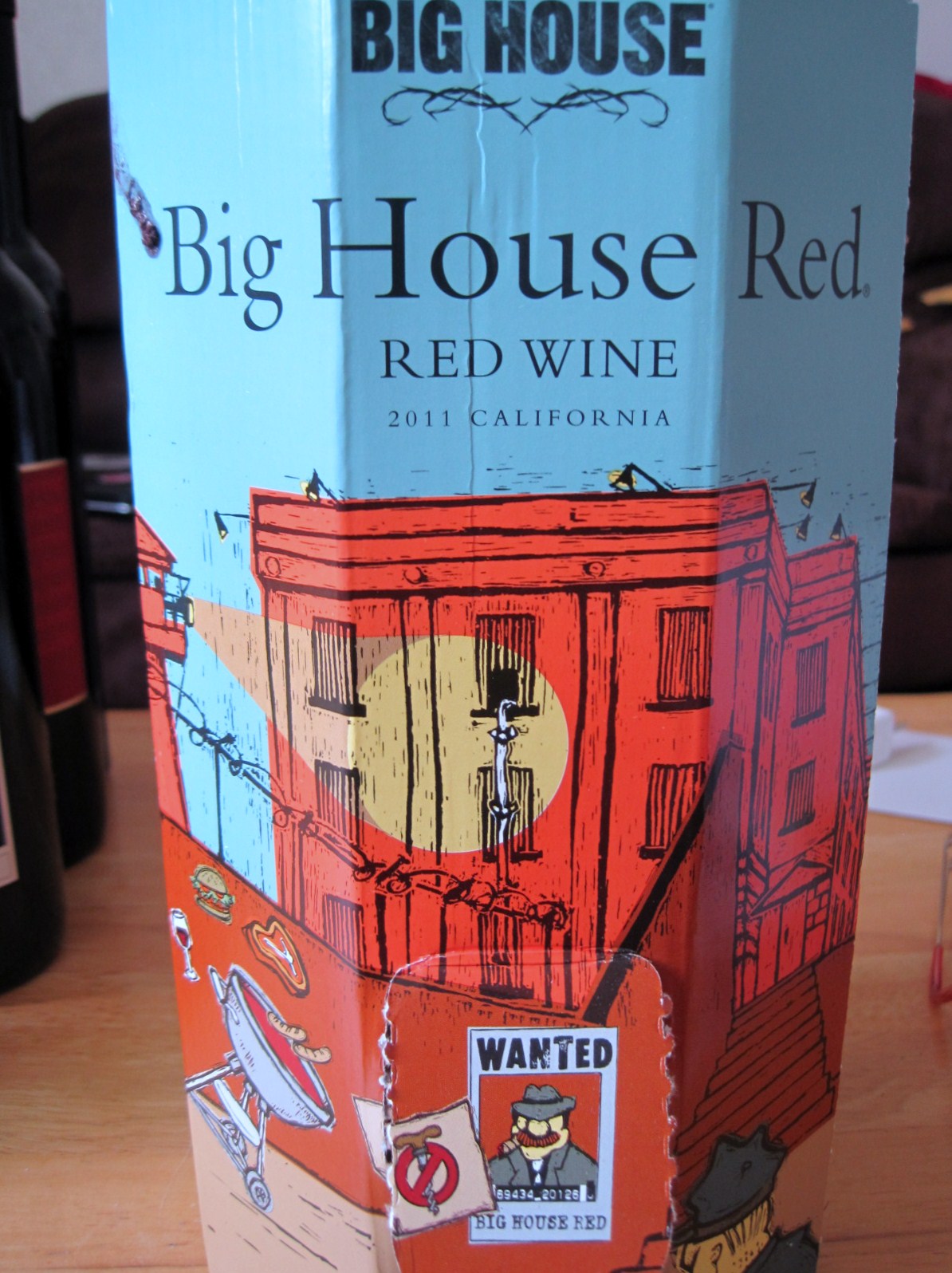
2011 Big House Red: The fact that this wine has over 15 different grape varieties should tell you something. My sample showed up in a 3L cask or bag-in-box, in an effort to prove that quality isn't lost. 3L is about four bottles, making this a $5.50 per-bottle red wine. The nose is an explosion of fruity aromas, think raspberry jam, strawberries, blackberries. It's no different on the palate, with jammy fruit leading the way, thankfully reined in by a bit of acidity. It'll go great during the summer when you're headed to a bbq party, and fits the very definition of "crowd pleaser". 13.0% abv.


2009 Ravenswood Sonoma County Old Vine Zinfandel: Joel Peterson consistently produces great wines at reasonable prices. This zinfandel, coming in around $15 a bottle, has all the hallmarks of old vines from warm climates. Aromas of wood smoke, tar, plum, and spices rush out of the glass. I like the complexity, especially at this price point. Lots of dark, intense red fruit to pair with ribs too, along with a wonderful peppery flavor that contrasts with some dark, dusty soil. A tight, clean package of deliciousness. 14.5% abv.


2009 Ravenswood Vintners Blend Petite Sirah: Imagine a bowl full of blueberries and blackberries sitting in a field of dark, earthy soil. Now imagine someone burning oak just a few hundred yards away. That's the nose of this petite sirah. It tastes spicy and rich, with lots of black fruit, dark chocolate, and firm tannin to restrain those two primary flavors. Practically begs for a thick steak, and is a really good deal at $7.99. 13.5% abv.


To test the wines out in more real-life conditions, I had them all open for a barbecue that several of our friends attended. Each wine was tasted along with the food, which included ribs and hot dogs, among other things. My personal favorites were the Ravenswood wines, and the Graffigna Malbec. The group did enjoy the Big House Red and Hey Mambo for what they were, big, fruity, easy-drinking reds.

Each of these wines is worth a pop 'n pour when you are grilling and want something to please a wide range of palates. Perhaps the best part is the pricing, all can be found for between $10 and $15, save for the Big House, but you get a lot of wine in that octagon!

These wines were media samples.

Beau Carufel