Showing posts with label Alsace. Show all posts

Tuesday, July 30, 2013

Alsatian Whites, The Perfect Summer Wines?

It's hot. Frankly, it's damn hot here in Oregon. Daytime highs are in the high 80's to low 90's. The weather is exhausting, and to rejuvenate my spirits, I turn to white wines. Not just any white wines either, in heat like this you need to drink white wines with high acidity and immense food friendliness.

Enter the white wines of Alsace. In this brief, I will explore examples of gewürztraminer and riesling that were sent as samples over the past few months.

(img src: http://en.wikipedia.org/wiki/File:Alsace_topo.png)
First though, let's discuss Alsace the place. We travel to France's far eastern border, tucked up against Germany. Historically this region has been part of a millennium-long tug-of-war between the two dominant powers on the Continent. Also historically, Alsace has made stunningly good wines, especially whites.

Focusing on those whites for our purposes, Alsace is known for riesling, gewürztraminer, and pinot gris. Also grown are sylvaner, chasselas, muscat, auxerrois, pinot blanc, chardonnay, and even savagnin. Unlike places such as Oregon or California, the Alsatian vignerons often blend their wines together, in the hopes of making a better finished wine.

Wine geeks might have noticed something by now, these whites are all grapes that do well in cooler climates. They thrive during warm days and cool nights, which allow naturally high levels of acidity. Most vineyards run along a narrow north-south strip of land that forms the lower part of the Vosges mountain range, at between 175-420 meters in height. There isn't a whole lot of rainfall either, and the soils are well drained, allowing good concentration of flavor and moderate amounts of vine stress.

With that brief primer on Alsace complete, let's taste the wines!

2011 Domaine Ostertag Riesling Vignoble d'E: Pretty aromas of citrus, oranges and tangerines. Stone fruit too, pear, perfumed floral tones. Very pretty. Very dry and crisp on the palate with ripe pear and citrus notes. The acidity was very nicely integrated, which helped showcase some delightful mineral/sandy loam component. Overall I liked this wine a lot, and highly recommend it. $25.


2011 Meyer-Fonne Riesling Reserve: A little muted on the nose, but shows nice sea air and fresh lemon. Subtle green apple but it seems to come and go with each sniff. On the palate I love this wine, it's textural because of the acid but packs a lot of flavor into a lean, mean frame. Absolutely outstanding wine, highly recommended. $20.


2010 Trimbach Riesling: Softer than the previous two wines, especially on the nose. Almost nothing going on. Shows a riper side of Alsace, with notes of petrol also manifesting after a vigorous swirl. The quality is evident on the palate though, with racy acidity framing apple and pear, stone fruit, and white flowers. $18.


2011 Domaine Weinbach Riesling Cuvee Theo: This threw me for a curve, it was showing something akin to oak at first. On the other hand, it showed lots of green apple, tropical fruit, and notes of pear. It's very complex and textural on the palate, with lots of acidity but a richness from either malo-lactic or oak. Still, I thoroughly enjoyed the wine and would love to pair it with food. Recommended. $28.


2010 Domaine Bechtold Gewurztraminer Silberberg: Crazy aromas of lychee fruit and spices, just WOW. Explodes out of the glass. A great mix of sweet fruit flavors and minerality. A great note of ginger comes through on the finish. One of the most food friendly wines I have tasted in 2013. Highly recommended. $23.


2010 Domaine Bott Geyl Gewurztraminer Les Elements: Like smelling lychees soaking in a ginger infusion. Throw in some river rock and golden apple too, the bouquet is very nice. On the palate it's a bit softer than the Bechtold, and I do wish it had more acidity. The sweetness can get a bit cloying especially on the mid palate. Luckily it cleans up on the finish, with a burst of baking spices. Absolutely lovely. $20.


I think it's fair to say that I really enjoyed each of these wines. The original question was whether these are the perfect summer wines. We paired each wine with various sushi rolls, some crab, others krab, shrimp, and spicy tuna. The wines, all of them, paired exceptionally well with each different roll. I can only conclude that these are just about the perfect wines for hot summer evenings and fresh sushi rolls.

The pricing on these wines had me surprised (in a good way) too, because the wines drink like they are more expensive. At around $28, the Weinbach was the priciest, yet I found it available in the mid-20's around the country.

Alsace is a region we should pay more attention to, especially when looking for QPR winners. Please also excuse the horrid quality of the pictures, my iPhone 4 isn't doing the job anymore.

These wines were samples for review purposes.

Beau Carufel

Tuesday, January 15, 2013

Why So Quiet?

This blog has been quiet lately, with the blame falling squarely at my feet. After months of relative inactivity, punctuated by the occasional post, I decided it is time to talk a little bit about what has been keeping me busy as well as sapping my energy to post blog entries on a more regular basis.

This October, I started making wine for the first time. This is the real thing, and will be released as a commercially sale-able product when ready. I had initially picked roussanne and mourvedre to work with, but ended up with neither this year. The mourvedre was already allocated to people higher on the grower's customer list than I (typical and completely fair in this industry). The roussanne I so lusted after ended up being lost to Mother Nature, as the relentless summer sun caused the vineyard to lose around half its yield. What remained went to prior customers.

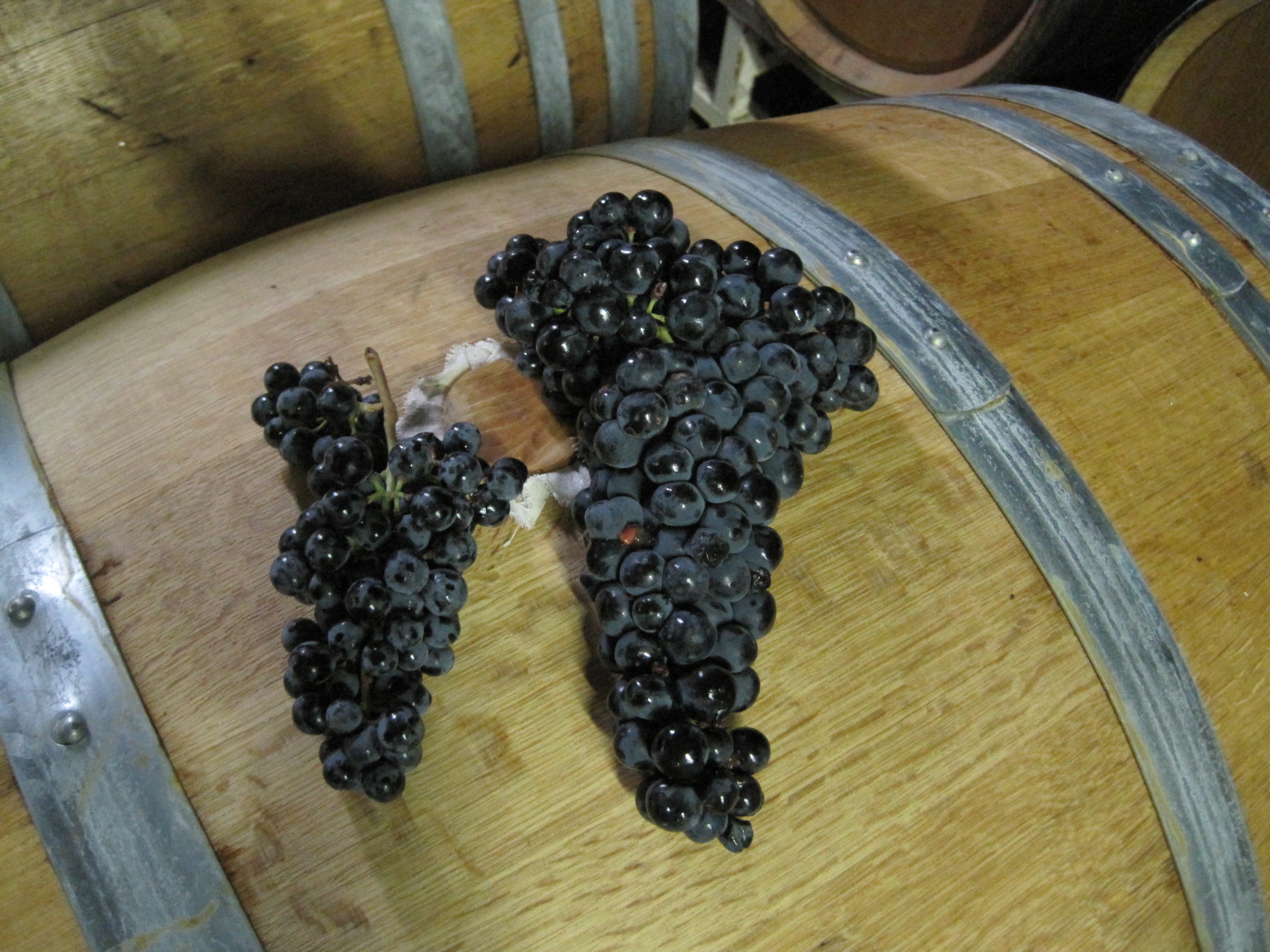
I ended up with petite verdot and tempranillo, two grapes I am thrilled to be working with. Total intake for 2012 was .82 tons of petite verdot and 1.1 tons of tempranillo from the Horse Heaven Hills AVA south of Prosser, Washington. The clusters on each were absolutely beautiful, with minimal raisining, no rot, and hardly any bugs!

Fortunately for me, I had a lot of assistance from the Kramers, especially Kim, in walking me through the process of selecting yeasts, must treatments (or lack thereof), barrels, and much more. The Kramers also helped with the nitty-gritty, punching down and pumping over the fermenting bins when I was away at my day job.

The day job. I began to look for another job in mid-July, when I realized I was not a good fit for Cathedral Ridge. To succeed in the wine business you must be passionate about the wines you are selling, and I simply couldn't find that passion. In September, I went to work for a distributor here in Oregon, working the Portland Metro area, selling Pacific Northwest wine and craft beers. The job is great in many ways, offering good compensation and benefits, while challenging me to see how far I truly want to go in sales. Each month I am amazed with what I've learned about selling for a distributor, and I'm taking away many things both good and bad from my experiences.

The last week of September saw me in Bordeaux with a group of wine bloggers including Jameson Fink and Joe Roberts. Balzac Communications and Planet Bordeaux were generous enough to include me on this trip, for whatever reason. I confess that despite the incredible experiences I had, I struggle to write about my time there. Whenever I begin to write about Bordeaux, I get frustrated that my writing skills aren't enough to suck you in, dear reader. You will see more Bordeaux posts from me in the future though.

2012 ended with a flurry of activity, and I proudly proclaim that in the last six to eight weeks of the year, I drank more Champagne than I ever have before. A rough guesstimate puts it at a case and a half. As you can tell, I am quite proud of this factoid.

What does 2013 promise then? The search for new grape sources. I haven't given up on my dream of working with grenache, and I may have a source for some of the finest domestic cabernet franc grapes, period. White wines also call to me, to that end I am actively seeking white Rhone varieties and sauvignon blanc. I hope that my Tempranillo will be released this fall, and that the petite verdot will be released in spring of 2014. Hope is just that, because as we know, the wines themselves will decide when they're ready to be released.

2013 also will bring some changes to this blog, when I move away from reviewing wine and more towards just talking about cool wines I drink. To my PR/Media friends, I'll still accept samples for review, but not nearly as many as before. I'm tired of all the crappy wines and Becky says they take up too much space in our house. She is right.

My personal journey with wine will see me buying more aged Bordeaux and Burgundies as well as continuing to explore Champagne, Alsace, and the Rhone Valley. Of perhaps some interest to my readers, I'm also embarking on a quest to find California Pinot Noir that my palate enjoys. After nearly a decade in California wine sales, I tasted most of the big name, "cult" pinot noirs, and can't stand them. The search is on for cooler climate, higher-acid, restrained examples of what the state can do. Of course, this will limit my search to more recent vintages, but that's ok.

Here now I ask you, did you make any wine resolutions this year? Did you have any wine epiphanies last year?

A toast to 2013, thank you for reading along!

Beau Carufel


Monday, July 2, 2012

Summer of Riesling and #Winechat, A Great Live Tasting

(img src: http://www.summerofriesling.com)

For riesling fans, this is again the "Summer of Riesling", a month-long festival celebrating one of the world's great grape varieties. I take this as a charge to evangelize about riesling, to educate wine drinkers that it isn't always sweet, as well as to recommend examples that riesling newbies might like. I'm far from an authority though, my own exploration of riesling has been somewhat late in starting.

Most of us have a riesling horror story or two, I'm no different. There are terrible examples of sweet, syrupy, low-quality riesling you can buy from grocery stores, those do a disservice to the grape though. Such wines are how I thought riesling always was, until I tried some "real" examples from Germany several years ago.

I'm lucky to have some riesling-geek friends here in Oregon, most notably Dan and Chas of Wine Is Serious Business, who've introduced me to great wines and great riesling evangelists around Portland.

Last week, during the weekly Twitter chat #winechat, a large group of riesling lovers got together to talk about the Summer of Riesling and of course, about the wines. I was fortunate to get some samples sent, of riesling from Alsace in France, Rheingau in Germany, and Wagram, Austria. I present them from dry to sweet.

2011 Fritsch Riesling Wagram (Austria): Aromas of stone fruit, white pepper, flowers, and wet gravel all combine to create an expressive, fun bouquet. The acidity is high, this riesling screams out of the glass and across your palate. I was able to detect citrus, stone fruit, and more of the firm mineral touch. Out of the three rieslings in the #winechat flight, this seemed to have the most acid and least residual sugar. I loved the texture of this wine, and how it begs for spicy food like curry. The finish is clean and tapers off nicely, lasting for an impressive length of time. $18 srp. 12.5% abv.


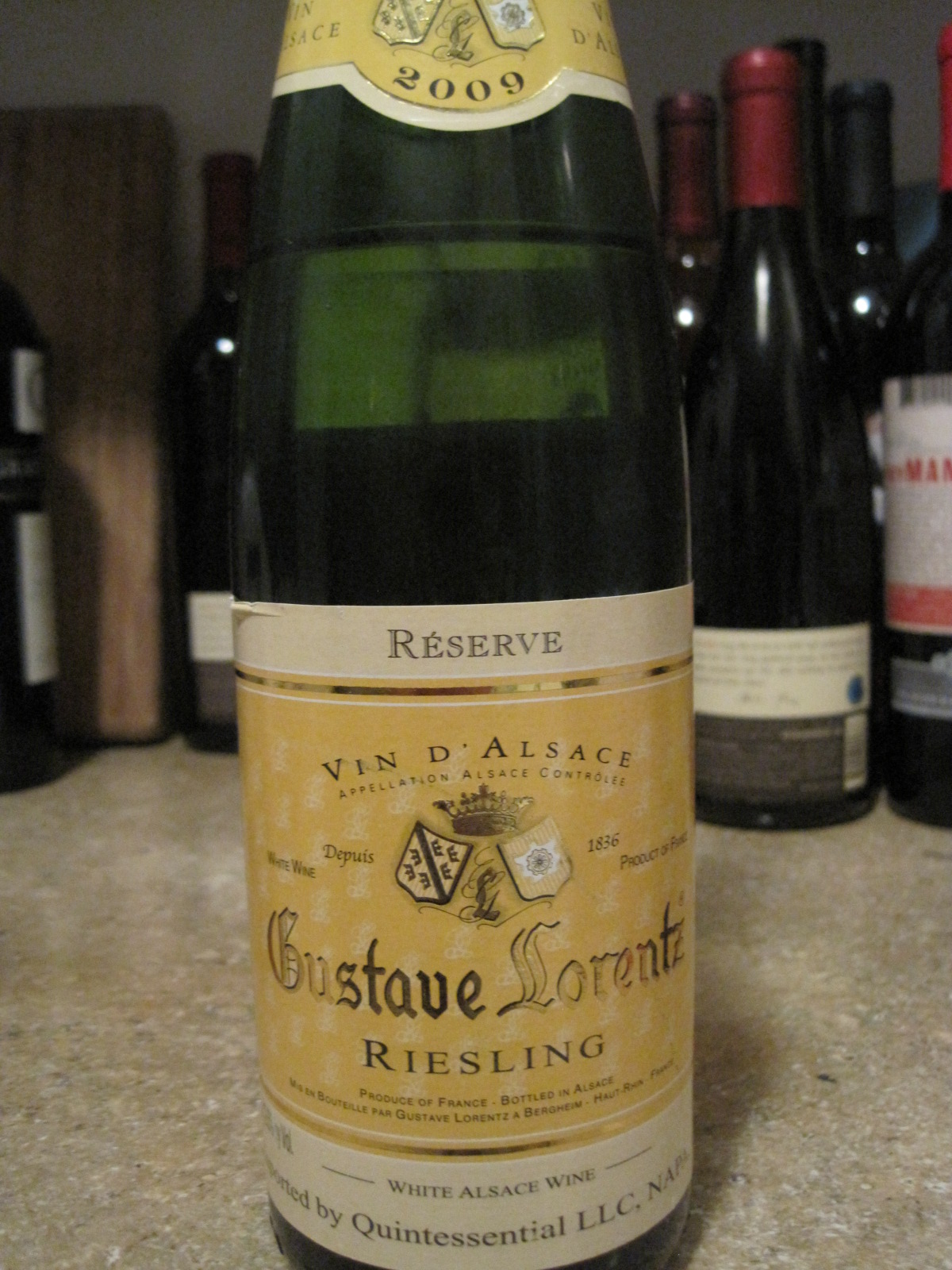
2009 Gustave Lorentz Riesling Alsace (France): Compared to the Austrian riesling I tasted first, this is a different wine entirely. The bouquet is much more expressive, showing aromas of honey, white flower, ripe stone fruit, and hints of petrol. I would say that this bouquet is closer to what I expect from a German riesling, it's got some of those familiar notes. The acidity here is much more integrated and less dominating than in the Fritsch, creating a wonderful textural experience. Flavors of nectarine, apricot, grass, and lime all contribute to a wonderful palate experience. A classic pairing would be spicy Thai food or even tempura sushi rolls. $25 srp. 12% abv.


2011 Schloss Schonborn Riesling Rheingau (Germany): As I swirled and sniffed the last riesling of the flight, I felt most "at home", this is the style of riesling I'm most familiar with. The bouquet screams (to me) that it's German, with beautiful notes of slate, lemon zest, honeysuckle, and intriguing white pepper. It tastes simply outstanding, with a perfectly tipped balance between sweet and tart, a tribute to the residual sugar and acidity both. There are some primary flavors of Meyer lemon, white pepper, subtle tropical fruit, and what I imagine a slab of slate would taste like. After you swallow, the finish lasts a good 20 seconds before gently fading away. I'd love to pair this with deep-fried foods, Thai cuisine, or anything with some heat to it. $54 srp. 11% abv.


These three rieslings were excellent, and worth every penny. While $54 or even $25 is a lot to spend on a bottle of wine you may be unfamiliar with, that $18 Fritsch bottle is well worth a little splurge. One sip and any notions you have of a sweet, syrupy concoction will be obliterated in a rush of fresh, clean fruit flavors and vibrant acidity. I'd recommend it (or any Austrian riesling) to people just starting to explore the grape, but who do love crisp, aromatic white wines already.

For more information on the recent #winechat with the Summer of Riesling, here's a good blog from the Austrian Wine USA's Constance Chamberlain. You can tweet with Summer of Riesling @SummerRiesling, or for more detailed information about specific regions, tweet at @AustrianWineUSA or @drinkAlsace.

The wines in this article were kindly provided as media samples.

Beau Carufel