It's no secret that Bordeaux is home to many of the world's most expensive wines. The coveted "Grand Cru Classe" wines can cost over $1,000 a bottle. Though they receive most of the attention when it comes to Bordeaux wines, the "Classified Growths" make up a very small (10% or less) amount of the total production from the area. Just within the greater Bordeaux AOC, more wine is produced than from the entire state of California!
Bordeaux's "other side", that is, wines not made by Chateaux classified in the 1855 Official Wine Classification, is chock full of incredible values and hidden gems. The point of all my rambling is to point out yet another example of why you should be looking for Bordeaux and Bordeaux Superieur wines to put in your regular rotation.
Take the 2005 Chateau Fontblanche Bordeaux, imported here into Oregon by Mitchell Wines and available for around $15, assuming there's any left. I picked it up at The Friendly Vine, in Forest Grove, because I saw it was from an amazing vintage and priced very nicely.
Sometimes, one desires Bordeaux. Every human on earth gets cravings, mine show up for wine. One night it will be a Bordeaux, the next night I'm scouring my collection looking for an Oregon pinot blanc.
For around $15 this wine seriously over-delivers, as proof I present my note from cellartracker.com:
"Decanted for a couple of hours before tasting. A lot of dark cherry and cassis on the nose, along with some herb and soil aromas. Smells pretty good for a $12 bottle of wine. The palate is (to me) pure Bordeaux, with lots of tannin creating a structure for flavors of black cherry and blackberry, cassis, dried herb, and black pepper. There's a definite smoky, savory note too, and if it were a bit more developed I'd like this wine even more. There's a bit of volatile acidity here that can be distracting at times, but again, for $12 this is a very tasty Bordeaux. Drink within the next 2-4 years."
If I were still in the business of rating wines, I'd give this a B+ (87 points), as it drinks better than almost every domestic wine in the same price point that I can remember having.
One of the things I love about Bordeaux wines, be they from the right or left bank of the, is that they can have this amazing sense of soul. If you do some digging, it's easy to find wines like this, where the quality level is excellent for the price, and the wine is actually interesting.
I offer this advice to those of you just starting to explore Bordeaux and Bordeaux Superieur: look in the $9-19 price range and seek out wines made primarily with merlot, as they'll be more accessible right now. This 2005 Chateau Fontblanche was 80% merlot with equal parts cabernet sauvignon and malbec making up the difference. Also, don't be afraid of Bordeaux wines with some age on them! Often times even the merlot-based wines are tannic beasts when young, but with time the tannins mellow and the flavors integrate into a delicious palette of flavors.
Stay tuned for more observations on Bordeaux and the wines of Bordeaux, inspired by my September trip to the region as a guest of Planet Bordeaux.
Were I to see this wine for sale again somewhere, I'd stock up. It's that good.
Beau Carufel
This blog is about wine and food, and my love for both of them. Thanks for reading!
Showing posts with label 2005. Show all posts
Wednesday, October 31, 2012
Sunday, May 20, 2012
Summer Syrah Sipping Suggestions
![]() |
| (img src: http://www.nysun.com) |
Here then are some domestic syrahs I was sent to sample. All are from California, and all were tasted blind first, then unmasked and re-tasted over the course of another day.
2009 Mandolin Syrah Central Coast: Aromas of wood, burnt match, ripe cherries, plums, and a sensation of alcoholic heat. As in the previous bottle of this I tried, I suspect there's a sulfides issue present. On the palate this syrah is somewhat thin and astringent, with none of the ripe, deep fruit character that I would expect. Rather, there's a simplistic red fruit that evaporates quickly. The acidity is nice but the overall impression I get is that of a hollow shell, or put more bluntly, a cheap wine. Disappointing, because the Central Coast of California can produce amazing syrah. 14.6% abv. $11 srp.
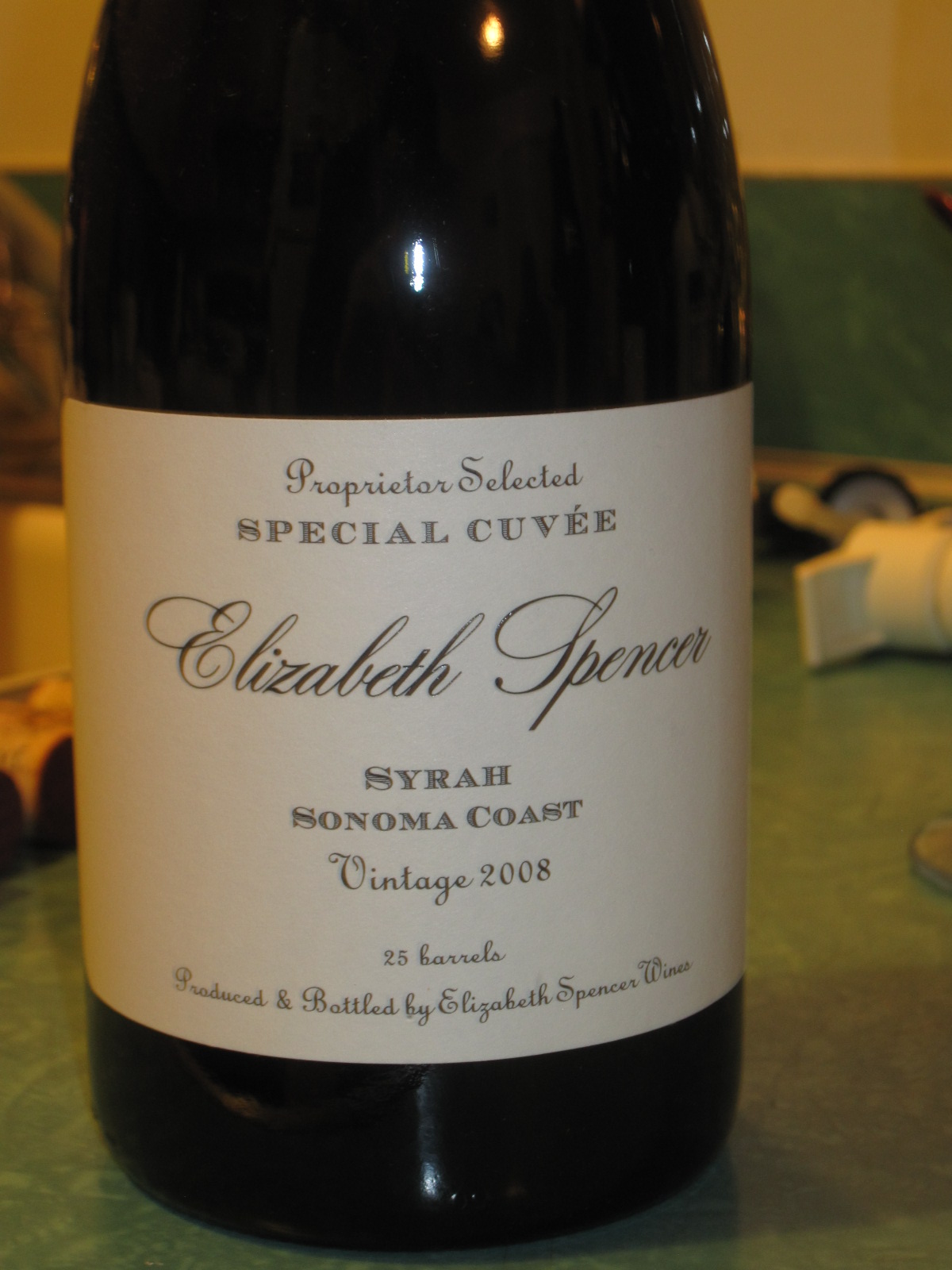
2008 Elizabeth Spencer Syrah "Special Cuvee" Sonoma Coast: A complex nose of fresh black fruit, molasses, baking spices, dried herbs, and wood are unfortunately held back by a subtle alcoholic burn. Still, I'd be lying if I denied that this syrah smells incredibly good. On the palate it's rich and mouth-coating, revealing flavors of blackberry, peppercorn, tar, and mocha. Chewy tannin give a wonderful structure to balance out the ripeness. The whole packages is closed out with an impressively long finish of herbs and dusty soil notes. I must say though, that I don't believe for one minute that this is truly 14.9% alcohol, I'd bet it's closer to 16.0%. $35 srp.
2006 James David Cellars Syrah Central Coast: Pours a very dark garnet, almost purple, in the glass. Aromas of Almond Joy candy, pencil lead, blackberry preserve, and fresh cut lumber. Definitely oaky, and there may be a an ethyl acetate issue forming due to the nail-polish remover burn. The palate is thin and drying, without much character other than alcoholic burn and grainy wood. With a listed alcohol of 15.7%, I suspect that could be a lot higher. I did notice the tannin, and if this wine had any lush, clean fruit flavors to show, that tannic structure would do a beautiful job creating balance. $N/A.
2005 James David Cellars Syrah Eaglepoint Ranch Mendocino: Pouring a much "redder" ruby into my glass, my first impressions of the bouquet were of garrigue and cherry preserves. There's a pleasant earthiness along with some nice mocha notes and a dollop of wood. There's some alcoholic heat too, but it isn't distracting. This style, for my palate, is what I love about California syrah. Balanced fruit, earth, and oak elements all play nicely together. There's some firm tannin at play, acting to nudge each element back into balance as they struggle to break out of the tannic pen. Red cherry and raspberry, herbs, and a dusty minerality compose a syrah I'd love to pair with a steak, or ribs. This 2006 is wearing its age with grace and class, as well as looking to improve with a few more years in bottle. 15.5% abv. $N/A.
Maybe the title of this post should be "The Good, The Bad, & The Ugly". On the one hand, the Mandolin was disappointing to me, again, despite it's generally good reviews from Steve Heimoff and Bev-X. I could chalk it up to bottle variation though, especially at such a low price point. The 2006 James David was way too big and alcoholic for me, but if you're into lush, rich syrah you will love this one. On the other hand, the 2005 James David Eaglepoint Ranch was delicious despite the high-ish alcohol, as was the Elizabeth Spencer.
Any of these wines would pair beautifully with grilled meat, pizza, lamb, lasagna, or on their own. Despite being a full-bodied wine, syrah is versatile, and each of these wines does showcase a certain stylistic take on the grape. As we move closer to summer, I hope to offer more syrah reviews so please don't hesitate to recommend examples to me!
These wines were media samples from their respective producers.
Beau Carufel
Wednesday, May 16, 2012
Domaine Carneros, by Taittinger
![]() |
| (img src: www.luxist.com) |
Allow me to clarify though, sparkling wine should be enjoyed year-round. It's always a good time for bubbles.
Fast forward several weeks and I had occasion to open the 2005 Domaine Carneros Le Reve Blanc de Blancs and NV Domaine Carneros Cuvee de la Pomadour.
Our good friends Lars and Dave were celebrating their wedding anniversary and stopped by on their way home to say hi and catch up. Seeing as we get together all too infrequently, I decided that we were going to open a special bottle of sparkling wine and chilled the Le Reve immediately. Knowing its provenance, I anticipated a wonderful experience for us on that special day.
Domaine Carneros is owned by the famous French Champagne house Taittinger, which was founded in 1734 in the city of Reims. Over the years it has established a reputation as one of the foremost Champagne producers in the world, so when the Taittinger family started Domaine Carneros in Napa Valley, there was considerable expectation put in place. That was back in 1987. Since then, the Taittinger family has always exerted a light touch, allowing CEO/Founding Winemaker Eileen Crane to go about her pursuit of great sparkling and still wines with considerable freedom.
The selection of Carneros in Napa Valley was no accident either, and the region is now home to many of California's most admired pinot noir and chardonnay vineyards. As of now, the estate produces six sparkling wines, all done in the methode champenoise style. Methode champenoise means that the wines are made the same way as in Champagne, with the wine undergoing its secondary fermentation (the one that produces the bubbles) inside the bottle. That's the quick way explain, but there are many other factors that make this method unique when compared to others such as carbon dioxide injection or the Charmat Method.
How were the wines, you might ask?
2005 Domaine Carneros "Le Reve" Blanc de Blancs:
Beautiful aromas of lemon peel, brioche, red apple, and bracing minerality. This is 99% chardonnay and 1% pinot blanc. On the palate it's creamy and smooth while retaining a pleasing lightness. Flavors of cake frosting, golden apple, spiced lemon slices, and a yeasty richness emerge from the bubbles. The complexity is what you'd expect from a wine with this provenance, in a word: impeccable. That said, I'm equally amazed with the integrated flavors, a testament to the vintage and time spent on the lees. After each sip I reflected on how much it felt like a complete experience, so good was the balance. One of the best California sparkling wines you can buy, period. $95 SRP.
NV Domaine Carneros Cuvee de la Pompadour Brut Rosé:
This wine pours a beautiful rosé color, and when held up to the sun it reminded me of bright, shiny copper reflecting the sunlight. A beautiful bouquet of flavors wafts out of the glass, among them strawberry, brioche, hints of orange zest, and a lovely, delicate potpourri. While not quite at level of the Le Reve, this rosé (58% pinot noir, 42% chardonnay) does have a fine bouquet. On the palate it's light and dry, with plenty of tart red fruit and citrus, lifted by vibrant acidity. Fine, delicate bubbles create a lovely textural sensation that only ends many seconds after you swallow. Again I found the balance of flavors to be excellent. For a brut rosé, this is a wine I'd happily pour for a group of Champagne lovers, blind. At a suggested retail of $45, but available at $35, it's half the price (or more!) of brut rosé Champagnes.
Both of these sparkling wines were excellent, and much to my delight, neither showed any signs of oxidation. This is a testament to good winemaking, as well as perhaps indicative of the committment the Taittinger family has to making Domaine Carneros the best sparkling wine producer in the United States. With wines like these, I suspect they're close to accomplishing that goal.
For the 2005 Le Reve, I'd suggest pairing almost anything with this wine, short of a steak. I'd have enjoyed some oysters, lobster, caviar, or even more humble fare like fried chicken and french fries. Honestly, the wine would have been amazing even with a pizza. For the Cuvee de la Pompadour, I'd have paired it with grilled shrimp or chicken, anything fried, or even some berry sorbet.
These wines were media samples for review purposes.
Beau Carufel
Tuesday, March 13, 2012
Chateau La Nerthe: Tasting the Southern Rhone Valley
In February I had the opportunity to taste the current releases of the Chateau la Nerthe family of wines. This Chateau, dating back over 800 years, produces wine throughout the southern Rhone Valley. Besides the Chateau La Nerthe label, they also produce the Domaine De La Renjarde, Prieure de Montezargues, and La Petite Fontaine wines. As such, La Nerthe is both a producer and negotiant. The portfolio of Chateau La Nerthe is imported by Pasternak Wine Imports of New York.
The tasting, held at Mitchell Wines in Portland, featured seminars by Christian Voeux, winemaker, and Christophe Bristiel, export manager. The first seminar was led my M. Bristiel, discussing the southern Rhone's history, soil types, grape varieties, and production levels. It was informative and hopefully people left the seminar with a greater appreciation for the diversity in the Rhone Valley and specifically, the southern part.
M. Voeux took the stage next and begun to discuss the wines we would be tasting that afternoon. The tasting was comprised of nine wines, ranging from a rosé to white Chateauneuf du Pape through to multiple vintages of the red Chateauneuf du Pape. A Gigondas was also thrown in by the folks at Mitchell, to give some context.
2011 Prieure de Montezargues Tavel Rosé:
Very fresh, off the boat that is. Beautiful pink tinge with a clear meniscus. This is comprised of white and red grenache, cinsault, clairette, syrah, mourvedre, and carignan. It's the proverbial kitchen-sink blend and in this package, the grapes harmoniously join to create a wonderful rosé. Aromas of wild raspberry and strawberry, bananas, and minerality carry through to the palate. Bracing acidity and the textural impact of grenache blanc create a delicious and refreshing wine. Why can't more domestic rosé be as deliciously refreshing as this?
2010 Chateau la Nerthe Chateauneuf du Pape Blanc:
This is the entry level white Chateauneuf du Pape, though at over $40 a bottle it's not cheap. White Chateauneuf du Pape accounts for only a fraction of the total production of the AOC, contributing to the higher prices compared to other white wines of France. This example is surprisingly pale, almost like a Sancerre. A blend of grenache blanc, roussanne, clairette, and bourbelenc. The bouquet erupts with pear, apple, and citrus peel scents along with a whiff of briny air and wet stone. At once both rich and drying, the Chateau La Nerthe is smooth and carries the flavors of pear, golden apple, and melon along for the ride.
2009 Chateau La Nerthe Clos de Beauvenir Chateauneuf du Pape Blanc:
I'll get right to the point: This is a stunningly good wine. Yes, it's over $110 a bottle, but the blend of roussanne and clairette blanc create a gorgeous bouquet of wood-tinged cream, honeysuckle, rocky minerality, and orange pith. The palate is focused with notes of oak, lees, peach skin, white flower, and a lifting acidity that tapers off exquisitely. Comparable in complexity to white Burgundies, this wine will only get better with age.
2010 La Petite Fontaine Cotes du Rhone:
There's a reason wine geeks eschew a lot of sub-$10 California red wines. It's because of wines like this. At around $10 a bottle, this blend of grenache, syrah, mourvedre, and carignan is jam-packed with aromas of spice, wood smoke, bramble, and mint leaf. It's a friendly, everyday red wine that has great notes of tar, black cherry, raspberries, and earth. Finishing with a clean, quick note of cedar and spice, I was left admiring what the French can do that California seemingly can't.
2009 Domaine de la Renjarde Cotes du Rhone Massif d'Ucheaux:
Hailing from the 250 hectare appellation of Massif d'Ucheaux, this is 50% grenache, 25% syrah, 15% cinsault, and 10% carignan. Slightly more expensive than the La Petite Fontaine, it brings focused aromas of berries and spice, pepper, and tar. The mouthfeel is medium, with some tannin framing black fruit, red licorice, and finishing with a burst of white pepper. At around $15-20 on store shelves, this too showcases the continued Old World charm of sub-$20 wines.
2007 Domaine Santa Duc "Les Garancieres" Gigondas:
Thrown in to give some context, this decidedly "rustic" blend of 80% grenache, 15% syrah, and 5% mourvedre reeked of Brettanomyces contamination. Major fail.
2008 Chateau La Nerthe Chateauneuf du Pape Rouge:
The first of two vintages of the base Chateauneuf, this from a cooler year. It pours a dark, inky garnet in the glass and unleashes a gorgeous bouquet of savory, dark red fruits, spices, and earth. The cooler year's effect on the palate doesn't go unnoticed, with this CdP veering towards riper red cherry and spice that's strangely restrained. The finish is quick and evaporative, leaving you wishing for more. I suspect this will improve with some aging, though it's a tough sell at over $40 per bottle.
2007 Chateau La Nerthe Chateauneuf du Pape Rouge:
This vintage is considered the better of the two, thanks in part to an Indian Summer around harvesttime. Similarly colored to the '08, a beautiful dark garnet. The nose is all spicy red fruit, green olive, and pepper, proportioned nicely and interwoven very well. Initially I was struck by the simplicity of the red fruit notes, but after a few seconds the tannin showed up along with a stony, spicy mix of flavors that carried through to the finish. I think this is drinking beautifully right now and will get better over the next five to ten years.
2005 Chateau La Nerthe Cuvee Cadettes Chateauneuf du Pape:
Talk about ending on a high note! From a 1.2 ton:acre farmed vineyard, this is a wine that is only made in the best years and always held back for additional barrel and bottle aging. It's well over $100 a bottle on store shelves and is one of those "collectible" French reds. A blend of grenache, mourvedre, and syrah, this is classic Chateauneuf. A whiff of Brettanomyces on the nose adds intrigue to the green olive, black cherry, baking spice, and dusty minerality present. The mouthfeel is deep and profound, seemingly never to end. More of the olive and Brett notes, pepper-dusted red cherry, flashes of oak, and a round, smooth tannin that creates a finish which lasts for a full minute. Outstanding wine, if you can find it. This will continue to get better for another 10-15 years.
Attending this tasting was a great experience for me, as most of my Rhone education has come relatively piecemeal up to now. Being able to listen to the winemaker, M. Voeux, discuss each wine was very educational and helped me understand each wine that much more. I have knocked the 2005+ Rhones for being too extravagant, too alcoholic, and too ripe. Tasting these wines reminded me that it's dangerous to make such generalizations, and wines with balance, power, AND finesse exist in every vintage.
Beau Carufel
The tasting, held at Mitchell Wines in Portland, featured seminars by Christian Voeux, winemaker, and Christophe Bristiel, export manager. The first seminar was led my M. Bristiel, discussing the southern Rhone's history, soil types, grape varieties, and production levels. It was informative and hopefully people left the seminar with a greater appreciation for the diversity in the Rhone Valley and specifically, the southern part.
M. Voeux took the stage next and begun to discuss the wines we would be tasting that afternoon. The tasting was comprised of nine wines, ranging from a rosé to white Chateauneuf du Pape through to multiple vintages of the red Chateauneuf du Pape. A Gigondas was also thrown in by the folks at Mitchell, to give some context.
2011 Prieure de Montezargues Tavel Rosé:
Very fresh, off the boat that is. Beautiful pink tinge with a clear meniscus. This is comprised of white and red grenache, cinsault, clairette, syrah, mourvedre, and carignan. It's the proverbial kitchen-sink blend and in this package, the grapes harmoniously join to create a wonderful rosé. Aromas of wild raspberry and strawberry, bananas, and minerality carry through to the palate. Bracing acidity and the textural impact of grenache blanc create a delicious and refreshing wine. Why can't more domestic rosé be as deliciously refreshing as this?
2010 Chateau la Nerthe Chateauneuf du Pape Blanc:
This is the entry level white Chateauneuf du Pape, though at over $40 a bottle it's not cheap. White Chateauneuf du Pape accounts for only a fraction of the total production of the AOC, contributing to the higher prices compared to other white wines of France. This example is surprisingly pale, almost like a Sancerre. A blend of grenache blanc, roussanne, clairette, and bourbelenc. The bouquet erupts with pear, apple, and citrus peel scents along with a whiff of briny air and wet stone. At once both rich and drying, the Chateau La Nerthe is smooth and carries the flavors of pear, golden apple, and melon along for the ride.
2009 Chateau La Nerthe Clos de Beauvenir Chateauneuf du Pape Blanc:
I'll get right to the point: This is a stunningly good wine. Yes, it's over $110 a bottle, but the blend of roussanne and clairette blanc create a gorgeous bouquet of wood-tinged cream, honeysuckle, rocky minerality, and orange pith. The palate is focused with notes of oak, lees, peach skin, white flower, and a lifting acidity that tapers off exquisitely. Comparable in complexity to white Burgundies, this wine will only get better with age.
2010 La Petite Fontaine Cotes du Rhone:
There's a reason wine geeks eschew a lot of sub-$10 California red wines. It's because of wines like this. At around $10 a bottle, this blend of grenache, syrah, mourvedre, and carignan is jam-packed with aromas of spice, wood smoke, bramble, and mint leaf. It's a friendly, everyday red wine that has great notes of tar, black cherry, raspberries, and earth. Finishing with a clean, quick note of cedar and spice, I was left admiring what the French can do that California seemingly can't.
2009 Domaine de la Renjarde Cotes du Rhone Massif d'Ucheaux:
Hailing from the 250 hectare appellation of Massif d'Ucheaux, this is 50% grenache, 25% syrah, 15% cinsault, and 10% carignan. Slightly more expensive than the La Petite Fontaine, it brings focused aromas of berries and spice, pepper, and tar. The mouthfeel is medium, with some tannin framing black fruit, red licorice, and finishing with a burst of white pepper. At around $15-20 on store shelves, this too showcases the continued Old World charm of sub-$20 wines.
2007 Domaine Santa Duc "Les Garancieres" Gigondas:
Thrown in to give some context, this decidedly "rustic" blend of 80% grenache, 15% syrah, and 5% mourvedre reeked of Brettanomyces contamination. Major fail.
2008 Chateau La Nerthe Chateauneuf du Pape Rouge:
The first of two vintages of the base Chateauneuf, this from a cooler year. It pours a dark, inky garnet in the glass and unleashes a gorgeous bouquet of savory, dark red fruits, spices, and earth. The cooler year's effect on the palate doesn't go unnoticed, with this CdP veering towards riper red cherry and spice that's strangely restrained. The finish is quick and evaporative, leaving you wishing for more. I suspect this will improve with some aging, though it's a tough sell at over $40 per bottle.
2007 Chateau La Nerthe Chateauneuf du Pape Rouge:
This vintage is considered the better of the two, thanks in part to an Indian Summer around harvesttime. Similarly colored to the '08, a beautiful dark garnet. The nose is all spicy red fruit, green olive, and pepper, proportioned nicely and interwoven very well. Initially I was struck by the simplicity of the red fruit notes, but after a few seconds the tannin showed up along with a stony, spicy mix of flavors that carried through to the finish. I think this is drinking beautifully right now and will get better over the next five to ten years.
2005 Chateau La Nerthe Cuvee Cadettes Chateauneuf du Pape:
Talk about ending on a high note! From a 1.2 ton:acre farmed vineyard, this is a wine that is only made in the best years and always held back for additional barrel and bottle aging. It's well over $100 a bottle on store shelves and is one of those "collectible" French reds. A blend of grenache, mourvedre, and syrah, this is classic Chateauneuf. A whiff of Brettanomyces on the nose adds intrigue to the green olive, black cherry, baking spice, and dusty minerality present. The mouthfeel is deep and profound, seemingly never to end. More of the olive and Brett notes, pepper-dusted red cherry, flashes of oak, and a round, smooth tannin that creates a finish which lasts for a full minute. Outstanding wine, if you can find it. This will continue to get better for another 10-15 years.
Attending this tasting was a great experience for me, as most of my Rhone education has come relatively piecemeal up to now. Being able to listen to the winemaker, M. Voeux, discuss each wine was very educational and helped me understand each wine that much more. I have knocked the 2005+ Rhones for being too extravagant, too alcoholic, and too ripe. Tasting these wines reminded me that it's dangerous to make such generalizations, and wines with balance, power, AND finesse exist in every vintage.
Beau Carufel
Monday, May 2, 2011
Domaine de Cantemerle Bordeaux Superieur, Buy It.
At long last, I come to the end of the Planet Bordeaux series of wines. I've chronicled the wines in the following posts:
2008 Chateau Pey La Tour
2006 Chateau Lestrille
2006 Costes Du Chateau Feret-Lambert
2009 Chateau La Freynelle Bordeaux Rosé
This, the final post, covers perhaps the best of the bunch, a 2005 Domaine de Cantemerle Bordeaux Superieur. 2005 was considered a superb year, much like 2003, 2009, 2010..Get the picture? Usually when I hear that the vintage has been declared "vintage of the century" by the critics, I roll my eyes. After all, isn't there supposedly only one, not five or more in the span of 15 years? I know and am comfortable with the fact that I'll most likely never taste or own any of the First Growths from these years, so these proclamations have no real effect on me. What does matter to my palate is that Bordeaux taste like Bordeaux, not some trumped up, high alcohol, bastardized attempt at making wines that taste like they're grown off of Highway 29. Let Bordeaux wines be expressive of Bordeaux, call me a minimalist!
Anyways, ranting aside, I was happy to "discover" this bottle of Bordeaux in my stash, seemingly forgotten during the inevitable movement of bottles between the wine fridge and my mouth. I then decided to open it up and see if this 2005 lived up to the momentous declarations of Suckling and Parker.
Well, it sure comes close. This is not a 98 point Pomerol, and nor should it be. Rather, it's classified a Bordeaux Superier, which often means exceptional quality at unexceptional prices. If I had to make a guess at the price, I'd say around $20 or so. At the end of this blog I'll find out the real price then we can compare.
Let's take a look at what I have in my glass then. The Cantemerle is dark in my glass, darker than a lot of Bordeaux I've had before. I'm reminded of a Cabernet from Napa Valley because the color veers towards purple instead of dark garnet. The wine is a blend of the five varietals allowed in Bordeaux. Merlot, cabernet sauvignon, cabernet franc, malbec and petit verdot all in one bottle.
Right away I can smell the Bordeaux here, it comes across as a dusty, herbaceous note with a bit of funk. Glorious! Beautiful notes of tobacco, spice, cocoa, and cassis too. One of those wines that you want to keep smelling because each whiff is a discovery. The aromas are subtle, nothing screams up out of the glass to beat at your nostrils with a rubber hose. In essence, the Cantemerle has class.
After suitable ooohing and aaahing, I'm ready to take some sips. The aromas match up well with the flavors I'm getting. Great drying tannins, some acidity on the finish and a very nice depth to the mid palate. I think the wine is hitting its stride right now and with a few hours in a decanter, will reward you with wonderful complexity and pleasing mouthfeel. In addition to the earth and herbs, there's a great vein of bittersweet chocolate and dried berry thing going on. This is why I love wine, the way flavors jump out and capture ones imagination!
What a great way to cap off the Planet Bordeaux series of wines, each one was wonderful and exceeded my expectations. They were all well made, very nicely priced, and a good foundation for someone looking to explore the Bordeaux region. After poking around a bit, I found the importer here in the United States, it's Lion Wines, so check them out and if you want this 2005, send them an email. I gave the 2005 Domaine de Cantemerle a B+ and a STRONG BUY recommendation. If you happen to see it online or at your favorite local wine shop, buy a couple of bottles. Oh and as far as the price goes, I found it on wine-searcher for about $19. So my prediction of $20 a bottle was almost dead on. I hope you're able to find this wine, it should be part of your collection.
This wine was sent as a sample for Planet Bordeaux via Balzac Communications.
Beau Carufel
2008 Chateau Pey La Tour
2006 Chateau Lestrille
2006 Costes Du Chateau Feret-Lambert
2009 Chateau La Freynelle Bordeaux Rosé
This, the final post, covers perhaps the best of the bunch, a 2005 Domaine de Cantemerle Bordeaux Superieur. 2005 was considered a superb year, much like 2003, 2009, 2010..Get the picture? Usually when I hear that the vintage has been declared "vintage of the century" by the critics, I roll my eyes. After all, isn't there supposedly only one, not five or more in the span of 15 years? I know and am comfortable with the fact that I'll most likely never taste or own any of the First Growths from these years, so these proclamations have no real effect on me. What does matter to my palate is that Bordeaux taste like Bordeaux, not some trumped up, high alcohol, bastardized attempt at making wines that taste like they're grown off of Highway 29. Let Bordeaux wines be expressive of Bordeaux, call me a minimalist!
Anyways, ranting aside, I was happy to "discover" this bottle of Bordeaux in my stash, seemingly forgotten during the inevitable movement of bottles between the wine fridge and my mouth. I then decided to open it up and see if this 2005 lived up to the momentous declarations of Suckling and Parker.
Well, it sure comes close. This is not a 98 point Pomerol, and nor should it be. Rather, it's classified a Bordeaux Superier, which often means exceptional quality at unexceptional prices. If I had to make a guess at the price, I'd say around $20 or so. At the end of this blog I'll find out the real price then we can compare.
Let's take a look at what I have in my glass then. The Cantemerle is dark in my glass, darker than a lot of Bordeaux I've had before. I'm reminded of a Cabernet from Napa Valley because the color veers towards purple instead of dark garnet. The wine is a blend of the five varietals allowed in Bordeaux. Merlot, cabernet sauvignon, cabernet franc, malbec and petit verdot all in one bottle.
Right away I can smell the Bordeaux here, it comes across as a dusty, herbaceous note with a bit of funk. Glorious! Beautiful notes of tobacco, spice, cocoa, and cassis too. One of those wines that you want to keep smelling because each whiff is a discovery. The aromas are subtle, nothing screams up out of the glass to beat at your nostrils with a rubber hose. In essence, the Cantemerle has class.
After suitable ooohing and aaahing, I'm ready to take some sips. The aromas match up well with the flavors I'm getting. Great drying tannins, some acidity on the finish and a very nice depth to the mid palate. I think the wine is hitting its stride right now and with a few hours in a decanter, will reward you with wonderful complexity and pleasing mouthfeel. In addition to the earth and herbs, there's a great vein of bittersweet chocolate and dried berry thing going on. This is why I love wine, the way flavors jump out and capture ones imagination!
What a great way to cap off the Planet Bordeaux series of wines, each one was wonderful and exceeded my expectations. They were all well made, very nicely priced, and a good foundation for someone looking to explore the Bordeaux region. After poking around a bit, I found the importer here in the United States, it's Lion Wines, so check them out and if you want this 2005, send them an email. I gave the 2005 Domaine de Cantemerle a B+ and a STRONG BUY recommendation. If you happen to see it online or at your favorite local wine shop, buy a couple of bottles. Oh and as far as the price goes, I found it on wine-searcher for about $19. So my prediction of $20 a bottle was almost dead on. I hope you're able to find this wine, it should be part of your collection.
This wine was sent as a sample for Planet Bordeaux via Balzac Communications.
Beau Carufel
Subscribe to:
Posts (Atom)