Showing posts with label Syrah. Show all posts

Tuesday, December 2, 2014

Tasting Dry Creek Valley Red Blends

It's that time again, where I recap another fun virtual tasting. This time it was with McCue Communications presenting the wines of the Dry Creek Valley. Once again it was a small group of bloggers participating, along with the winemakers from each of the three wineries. The wineries were a veritable who's who of Dry Creek producers, with histories stretching back through the decades.


The Dry Creek Valley AVA in Sonoma County, established in 1983, grows a wide variety of grapes. Grapes have been grown there since the late 1800's though, so the region is no stranger to high quality wines.

Chief among them are zinfandel and cabernet sauvignon. That said, a lot of wine geeks these days are interested in the Rhone varietals grown throughout the Valley. Syrah, cinsault, grenache, and mourvedre dominate the Rhone grapes, supported by carignan, petit sirah, marsanne, roussanne, and viognier.

Luckily, with over 50 wineries throughout the AVA, finding great wine is very easy. The three producers represented here all have rich histories and represent the authenticity that is so often lacking in other parts of California.

2006 Teldeschi Estate Reserve Terraluna Dry Creek Valley: Dark and smoky at first, lots of black plum, blackberry, oak and peppery spices. As it opens up, more tart red berry fruit comes out to balance that riper dark fruited element. I love the density on the palate, it's at once concentrated with red fruit and pepper yet retains a sense of lightness and excellent acidity. There's just a "pretty" quality to the wine that I absolutely loved. Carignane 40%, Valdigue 36%, Petite Sirah 24% 13.9% abv. Recommended.


2012 Amista "Tres" Dry Creek Valley: Opens with mild reduction that needs a few moments to blow off. That gives way to smoky/savory notes of jerky, red cherry, garrigue, and a fennel note on the end. Cool and grippy on the palate, this continues with the smoky/savory theme, buttressed by tart cherry and raspberry, oak, and hints of orange rind. With air, menthol and some barnyard starts to show up, but they're still subtle compared to the exuberant fruit. On the finish there's a dusty soil-plus mocha element that serves to clean up the palate. 34% Grenache, 33% Syrah, 33% Mourvèdre. 14.9% abv. Recommended.


2010 Frick Cotes du Dry Creek Dry Creek Valley: A dead ringer for Southern Rhone on the nose, with the grenache component going full speed ahead. It's all about bright cherries and strawberries, wild herbs, subtle oak, and dusty minerality. Cherry licorice comes through with some swirling. The aromas are so compelling that I actually held off tasting for a bit. Once I did, the firm tannins were a welcome foil to the bright, concentrated fruit. Again it echoes the southern Rhone Valley to me, because it's so fresh and pure. A tannic, drying finish cleans everything up, readying you for the next sip or bite. Syrah 40%, Grenache 40%, Cinsault 20%. 15.3% abv. Highly recommended.


At the end of this tasting I was struck by the high quality of each wine tasted. They expressed a very nice sense of place as well as their respective vintages. Each vintner was passionate about what they grow and produce, which left me feeling a connection to the wines as I tasted through them.

To buy any of these, visit the winery websites or better yet, the wineries themselves!

Teldeschi Winery Website
Amista Winery Website
Frick Winery Website

Thanks to McCue Communications for inviting me along and thanks to the winemakers for taking time to sit down and answer our questions.

These wines were samples received for this tasting.

Beau Carufel

Saturday, June 14, 2014

Trione Winery Selections


Yet more wines I was sent a long time ago and am finally now getting around to reviewing. This review will be interesting though, because the Trione Vineyards wines I was sent all came in 50ml bottles. The company tastingroom.com bottled them way back in September 2012 and I am just now getting to taste each one. In total, I was sent six 50ml bottles, each of which is barely good enough for two pours.

Trione is another California winery with an excellent reputation. Their wines were a familiar sight in San Diego and I liked selling them because you always knew that they'd deliver at their price points. It's been nearly a decade though, so I was anxious to taste through the lineup and see if the wines were as I recalled.

As you read through the notes, please bear in mind that these are probably (hopefully) not the current releases from Trione, it's my fault for not getting to them sooner.

2010 Trione Sauvignon Blanc Russian River Valley
The nose shows tart gooseberry and green grass right away, very fresh. Behind that lurk some lime juice and herbaceous qualities. As it opened in my glass, I picked up a flinty minerality that was quite cool. On the palate I can tell that this is softened a little bit by age but it's still got ripping acidity and a linear minerality that I thoroughly enjoy. The fruit seems to be mostly in the background, with touches of grapefruit and papaya showing through. More bracing acidity cleans up the finish beautifully, readying your palate for the next bite. Surprisingly fresh and vibrant, this stuff is almost Muscadet-like. Color me impressed. 14.0% abv. Recommended.

2008 Trione Chardonnay Russian River Valley
It's rare that I get to taste California chardonnay with this much age on it. This one stays traditional, with lots of butter and oak rushing out of the glass. They aren't necessarily overpowering as much as dominating. With some air, I picked up aromas of golden apple, quince, and baking spices. A sip brought plenty of buttercream but a nice hit of acid too. There's enough apple and pear playing around with the vanilla oak and butter to make a really, really nice chardonnay. Acidity dries out the finish in a good way, making me think this needs some grilled sea bass or chicken kabobs. 14.3% abv.

2008 Trione Pinot Noir Russian River Valley
Again, it's rare to taste a RRV pinot with 6+ years of age, so I was looking forward to this one. Initially it's showing age, with notes of dried leather, furniture varnish, red cherry, and old wood. Still, it doesn't smell bad! There's still some acidity on the palate, barely holding together cherries, apple skin, baking spice and white pepper. Still-alive tannin is nicely integrated and I think this would pair well with more delicate meat, salmon and pork. It's not quite my cup of tea but still a really fun wine to taste. 14.2% abv.

2007 Trione Red Wine Alexander Valley
Shows a touch advanced, like it's just settling into some tertiary flavors. Similar to the pinot noir, this has a dusty, leathery element that is pretty interesting. Green herb, cassis, and cocoa powder come through with some swirling. Plenty of barrel spices too, maybe more than necessary. Sipping brings ample black fruit, good acid, and good tannin integration. Mostly cabernet, with merlot, petit verdot, and malbec thrown in. This looks, smells, and acts like a Bordeaux blend that's impeccably crafted. The balance between those advanced aromas and flavors versus the fresher blueberry, boysenberry, and red currant is excellent. If you see a 750ml of this, grab it. 14.5% abv. Highly Recommended.

2007 Trione Cabernet Sauvignon Alexander Valley
Fresher than the red blend, this is still showing plenty of primary fruit. Loads of sweet black cherry and blackcurrant framed by what smells like both French and American oak. That freshness carries over onto the palate too, with more cherries, firm tannin, and plenty of oak. Unfortunately it also gets really hot and sloppy, with perceptible alcohol through the mid-palate and finish. I don't think this is nearly as good as the above red blend. 14.5% abv.

2008 Trione Syrah Russian River Valley
This remained tight despite being open for almost two hours and getting vigorously swirled in my glass. I did manage to tease out notes of black tea, plum, and blackberry preserve. There's a bit of VA present too, which I found distracting. Also, like the cabernet, some alcoholic heat on the nose. On the palate this tastes young-ish, like a wine that is nearly in middle age. That and like it has a bit of brettanomyces. I picked up a distinct medicinal component on the mid-palate and the finish was hollow on the tongue, a big time indicator for brett. Behind the bretty, medicinal note lurked some firm tannins, dusty minerality, and muted fruit. Kind of a bummer because I was really looking forward to tasting this wine. 14.8% abv.

With these wines we batted .500, the sauvignon blanc, chardonnay, and red blend all being worthy of consideration. The other three, pinot noir, cabernet sauvignon, and syrah, had issues which I just can't overlook. Still, Trione clearly makes some very, very good wines and you should feel confident in purchasing (full size!) bottles of the wines I liked. Each promises to be good with food and have the ability to put on a bit of age to boot. I was pleased to find that I still enjoyed Trione after almost a decade of not tasting any of their releases.

The kit from tastingroom.com is really, really cool and gave me just enough wine to do a reasonably proper evaluation. They even include helpful information on how soon to drink the wines and how long they'll (most likely) remain fresh. I think more wineries that send out samples to bloggers might want to look into either this or bottle 375ml's for us, since it wastes far less wine.

These wines were samples for review purposes.

Beau Carufel

Monday, March 18, 2013

Selected Samples From The World Of Wine


Here are some of the wines I've been tasting lately, in no particular order. I don't usually do ratings, so instead of grades, you'll simply see a "recommended" or "not recommended" at the end of each tasting note. I try to link each wine title to the producer, importer, or distributor to make it easy to find locally, but if you have any trouble please don't hesitate to contact me. Enjoy!

NV Carnaval Moscato Brasil: A nose that's all muscat, with accompanying aromas of stale light beer. Peach blossom and tropical fruit dominate. It's plenty fizzy on the palate, as we would expect from the Charmat Method of sparkling. Flavors of Sweet Tart candy and citrus are all there is. 7.5% abv. $13 srp.

NV Carnaval Moscato Red: I wrote "smells like fizzy yellow soda..mountain dew and sprite mixed?". It tastes soapy, also with some flavors of red candy and a lot of sweetness. I bet this would sell like crazy. $13 srp. 7.5% abv.

2010 Tabali Pinot Noir Reserva Especial Limari Valley: Funky, but in a good way. Vigorious swirling helps the funk recede and allows aromas of red licorice, menthol, and earth to come out. It's a bit funky on the palate but I didn't mind because it adds a nice dimension to the otherwise straightforward flavors of red fruit and baking spices. The finish was appealing, medium length with a gentle taper. Firm tannin shows that this wine can stand up to some heartier fare. 13.5 abv. $20 srp. Recommended.

2009 Napa Cellars Stagecoach Vineyard Cabernet Sauvignon: Aromas of wood, spices, ripe black berry fruit, and wood smoke are immediately apparent. This wine needs some time in a decanter or several more years in the cellar. On the palate there is plenty of acidity and tannin, framing flavors of cassis, plum, spices, and saddle leather. A very straightforward, delicious Napa Valley Cabernet. 13.8% abv. $48 srp.

2009 Bayo Oscuro Syrah Casablanca Valley: Opens with a reductive nose that blows off to show smoked meat, red fruit, damp soil, and mushroom aromas. After settling down in my glass, this syrah reveals red fruit and dusty soil mingling with peppery spice. The tannins are outstanding, integrated yet firm. I thoroughly enjoyed the mouthfeel and feel that this is just now starting to ascend to its peak. 14.5% abv. Highly Recommended. $29 srp.

2009 Chamisal Grenache Edna Valley: A bit odd on the nose, subtle hints of red wine vinegar, strawberries, red soil, and a somewhat jarring medicinal note. This grenache was much better tasting though, with plenty of bright, ripe fruit - think cherries and cranberries, bound up in a mix of white pepper and oak. Lots of firm tannin held the wine together while a vein of acidity lent freshness and lift. Needs air, I suggest decanting for an hour or two. $38 srp. 14.8% abv.

2010 Concannon "Crimson & Clover" Livermore Valley: Tons of ripe red fruit rush out of the glass, followed by aromas of American oak, mint, and campfire. What it may lack in complexity, this Concannon makes up for in juicy drinkability. It's soft and smooth on the palate, with  flavors of strawberry, licorice, and red cherry. Clean, and simple, and very reasonably priced. 50% Petite Sirah, 25% Cabernet Sauvignon, 15% Syrah, and 10% Zinfandel. 13.7% abv. $18 srp.

2008 Somerston Wine Company Highflyer "Centerline" California: Another red blend from California, consisting of 81% Syrah, 12% Petite Sirah, 3% Zinfandel, and 4% Tempranillio. Baking chocolate, jammy black fruit, oak, and roasted meat aromas manifest quickly. There is a bit of heat from the 14.8% abv too. This is a big, hedonistic fruit bomb on the palate; jammy black fruit, tobacco, and peppery spice all show up in large quantities. Open a few hours before serving. $20 srp.

2010 Concannon Petite Sirah California: A straightforward nose of jammy cherries and blueberries, earth, and black pepper don't promise much beyond a fun, simple, barbecue red. This is big and soft, with more of that ripe, jammy fruit on the palate. Simple and easy drinking, I suggest opening this when you're all hanging out by a barbecue or fire pit. 13.8% abv. $11 srp. Recommended.

Stay tuned for the next samples list, (hopefully) coming soon!

These wines were received as samples for review purposes.

Beau Carufel

Saturday, July 14, 2012

California Wine Club, Shipment Three

This is the final shipment I received during my review of the California Wine Club, this time with a distinct Rhone theme. Upon opening this latest shipment, I was thrilled to see these two bottles waiting for me. Over the past several years I've become increasingly excited at the potential of California's Rhone-style producers and the chance to try two new wines was very appealing.

The producer of the Trenza and Tangent wines is Niven Family Wine Estates, who also produce Baileyana and other California brands.

2009 Trenza Mourvedre Syrah Grenache: With fruit sourced from Santa Barbara County, I had high hopes for this domestic Rhone-style blend. The bouquet is nice, with cherry and leather notes at first, followed by more subtle garrigue and pepper. I think the grenache dominates to begin, showing as bright red fruit and pepper, before the syrah's earthy, black olive notes kick in. All of this is enclosed by the mourvedre's firm, chewy tannin. I wish for a little more fruit on the finish but it's still a nice wine, one that I would happily pair with barbecue all summer long. As the wine opened up, we all seemed to enjoy it more and more. 14.4% abv. $13.99 via the California Wine Club.


2010 Tangent Voignier: The fruit in this viognier was sourced from vineyards in San Luis Obispo, with some coming from cooler sites and others from warmer sites. It's a pretty wine, with notes of stone fruit and white flowers, along with a hint of minerality. One thing I did notice though was how it smelled somewhat dilute, perhaps an indication of young vines or watering back of the juice. On the palate the pretty stone fruit flavors came through but again tasted somewhat muted and diluted. This is a very, very drinkable wine for the price, around $11to re-order it. I like that it isn't sweet and peach-syrup oriented like a lot of other low-priced viognier's can be. 14.1% abv


In the first two California Wine Club reviews, I was pleased with one wine and not so pleased with the other, however this time I'm pleased with both selections. The Trenza is a fantastic deal at $14, and I would happily buy multiple bottles for the summer grilling season. I liked the Tangent viognier as well, and feel that it would be best when paired with food. For the $11 Wine Club price, it's a bargain sipper that takes you off the beaten path, but not dangerously so.

So, the California Wine Club went 2 for 2 this time. After three shipments, I can see the appeal and popularity of this club, it's a great way to find unique producers. I do think they over-sell a bit, because when you put in producers like Fess Parker and Tobin James, both of which are widely distributed across the country, that dilutes the message (implied or otherwise) of "small, family owned wineries". Still, the wines were of reasonable quality and definitely crowd-pleasers. I'd happily give thePremier Club as a gift to friends or family whom I know enjoy reasonably priced wines multiple times each week.

You can find the California Wine Club on Twitter as @cawineclub and The Boring Wine Guy as @boringwineguy. Bruce Boring is one half of the founding team behind this club, the other being his wife Pam. The California Wine Club Facebook Page is also full of activity and a good place to talk about your experiences. The Boring Wine Guy is also on Facebook. If you use the code "beau12" at checkout, you will get four bottles instead of two. That might be the best deal of the whole club!

This sample pack was made possible by Mom Spark Media.

Beau Carufel

Wednesday, June 27, 2012

Wine Club Review: California Wine Club Sends Tobin James Selections


I was sent the second in a series of three shipments from the California Wine Club recently. The first shipment was wines from Fess Parker, a very well known and respected winery in Central California. This time, another well known (and respected) producer called Tobin James Cellars was selected for us.

2010 Tobin James “Radiance” Monterey County Chardonnay: This chardonnay pours a pale gold in the glass, and you're immediately struck by a mish-mash of buttered popcorn, lemon, and tropical fruit aromas. Sourced from Lockwood Vineyard in Monterey County, only 4,000 cases were produced in 2010. On the palate it's got a lot of acid and no real trace of oak. Indeed, only 8% of the harvest was barrel-fermented. Lots of zesty citrus on the palate combines with some buttery texture to create a bit of an awkward mouthfeel though. The finish is medium-length and gently evaporates from the palate. Overall, a solid if unremarkable chardonnay that will probably please the masses. 13.8% abv. SRP: $18, CA Wine Club: $10.99


2008 Tobin James Titan Hills Vineyards “Fiasco”: This is something interesting, a wine made from grapes harvested over a 1.5 month period, from 20 vineyards. When I read the info sheet I scratched my head, but figured what's the worst that could happen? Mostly syrah (55%), with 25% zinfandel and 20% barbera thrown in to complete the blend. Alcohol is a rather large 14.9%, according to the label. I wouldn't be surprised if it was closer to 16% though. Loads of peppery spice, jammy black fruit, and wood smoke rush up out of the glass. Oh and alcohol too. The palate shows big, jammy black fruit, more wood smoke flavors, earth, and black pepper. Bring this one out during your barbecues and watch your non-wine-geek buddies lose their shit. SRP $21, CA Wine Club: $11.99.


As with the previous California Wine Club wines, this shipment was 1 for 2. The chardonnay wasn't that great, and to me it tasted like it cost $10 at a grocery store. On the other hand, I know a bunch of people who I'd love to have over to share the bottle of "Fiasco" with, while we grill up some thick steaks and burgers. If I paid $21 at a retail store I'd be ok with that, but I love the California Wine Club price of $11.99.

One final thought before I wrap this up; as I browsed the literature, I noticed both wines were released a while ago. In the case of the Radiance chardonnay, a year ago. The "Fiasco" was released way back in the summer of 2010. I would imagine that the 2011 Radiance chardonnay is about ready to be released, and the Fiasco too - if they've made another batch. That might explain why these are available at such a discount, the California Wine Club could have gotten them on a closeout, at lower prices.

You can find the California Wine Club on Twitter as @cawineclub and The Boring Wine Guy as @boringwineguy. Bruce Boring is one half of the founding team behind this club, the other being his wife Pam. The California Wine Club Facebook Page is also full of activity and a good place to talk about your experiences. The Boring Wine Guy is also on Facebook. If you use the code "beau12" at checkout, you will get four bottles instead of two. That might be the best deal of the whole club!

These wines were provided as media samples in collaboration with Mom Spark Media.

Beau Carufel

Sunday, May 20, 2012

Summer Syrah Sipping Suggestions


(img src: http://www.nysun.com)
I love syrah. As such, whenever I get a lineup of syrah to taste, my excitement level ramps up. The grape is criminally underappreciated here in the United States, perhaps as a result of [yellow tail] being foisted on naive palates. That under-appreciation helps to keep prices down (for the most part) on domestic syrah, which pleases me to no end. Considering how overpriced cabernet sauvignon and pinot noir are, finding refuge in syrah's intoxicating mix of ripe black fruit, dried herb, heady spices, and smooth tannin brings many a wine geek moments of sheer joy. There was even an "Occupy Syrah" day last year, which I wrote about while tasting some delicious wines.

Here then are some domestic syrahs I was sent to sample. All are from California, and all were tasted blind first, then unmasked and re-tasted over the course of another day.

2009 Mandolin Syrah Central Coast: Aromas of wood, burnt match, ripe cherries, plums, and a sensation of alcoholic heat. As in the previous bottle of this I tried, I suspect there's a sulfides issue present. On the palate this syrah is somewhat thin and astringent, with none of the ripe, deep fruit character that I would expect. Rather, there's a simplistic red fruit that evaporates quickly. The acidity is nice but the overall impression I get is that of a hollow shell, or put more bluntly, a cheap wine. Disappointing, because the Central Coast of California can produce amazing syrah. 14.6% abv. $11 srp.


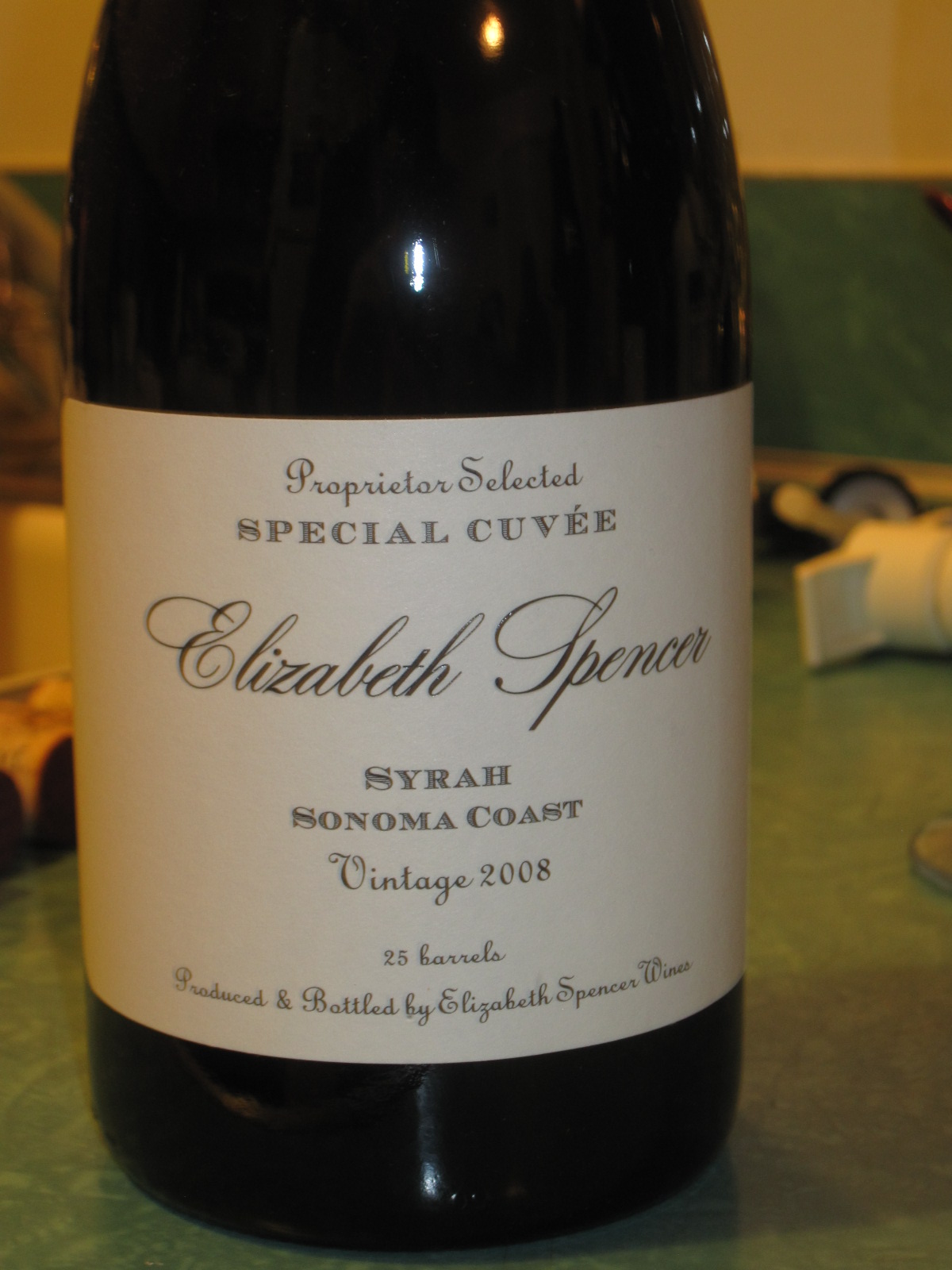
2008 Elizabeth Spencer Syrah "Special Cuvee" Sonoma Coast: A complex nose of fresh black fruit, molasses, baking spices, dried herbs, and wood are unfortunately held back by a subtle alcoholic burn. Still, I'd be lying if I denied that this syrah smells incredibly good. On the palate it's rich and mouth-coating, revealing flavors of blackberry, peppercorn, tar, and mocha. Chewy tannin give a wonderful structure to balance out the ripeness. The whole packages is closed out with an impressively long finish of herbs and dusty soil notes. I must say though, that I don't believe for one minute that this is truly 14.9% alcohol, I'd bet it's closer to 16.0%. $35 srp.


2006 James David Cellars Syrah Central Coast: Pours a very dark garnet, almost purple, in the glass. Aromas of Almond Joy candy, pencil lead, blackberry preserve, and fresh cut lumber. Definitely oaky, and there may be a an ethyl acetate issue forming due to the nail-polish remover burn. The palate is thin and drying, without much character other than alcoholic burn and grainy wood. With a listed alcohol of 15.7%, I suspect that could be a lot higher. I did notice the tannin, and if this wine had any lush, clean fruit flavors to show, that tannic structure would do a beautiful job creating balance. $N/A.


2005 James David Cellars Syrah Eaglepoint Ranch Mendocino: Pouring a much "redder" ruby into my glass, my first impressions of the bouquet were of garrigue and cherry preserves. There's a pleasant earthiness along with some nice mocha notes and a dollop of wood. There's some alcoholic heat too, but it isn't distracting. This style, for my palate, is what I love about California syrah. Balanced fruit, earth, and oak elements all play nicely together. There's some firm tannin at play, acting to nudge each element back into balance as they struggle to break out of the tannic pen. Red cherry and raspberry, herbs, and a dusty minerality compose a syrah I'd love to pair with a steak, or ribs. This 2006 is wearing its age with grace and class, as well as looking to improve with a few more years in bottle. 15.5% abv. $N/A.


Maybe the title of this post should be "The Good, The Bad, & The Ugly". On the one hand, the Mandolin was disappointing to me, again, despite it's generally good reviews from Steve Heimoff and Bev-X. I could chalk it up to bottle variation though, especially at such a low price point. The 2006 James David was way too big and alcoholic for me, but if you're into lush, rich syrah you will love this one. On the other hand, the 2005 James David Eaglepoint Ranch was delicious despite the high-ish alcohol, as was the Elizabeth Spencer.

Any of these wines would pair beautifully with grilled meat, pizza, lamb, lasagna, or on their own. Despite being a full-bodied wine, syrah is versatile, and each of these wines does showcase a certain stylistic take on the grape. As we move closer to summer, I hope to offer more syrah reviews so please don't hesitate to recommend examples to me!

These wines were media samples from their respective producers.

Beau Carufel


Sunday, April 8, 2012

Von Holt Wines Should Be On Your Radar

When a former Secret Service agent, having served for over 20 years, retires and starts making wine, people are going to notice. Having a unique story helps creates authenticity, which in turn helps garner respect. Of course it goes without saying that the wine (in this case) must also be good. Von Holt Wines, started by Chris Von Holt and Pamela Miller, is garnering respect, due in part to their authentic wines.


Von Holt Wines is a new player in San Francisco's urban winery scene. Chris sources grapes from the coolest regions of the Russian River Valley and Sonoma Coast with the goal of creating wines that are textured, compelling, and authentic. Sure, that sounds like old hat, every producer makes those claims, but not nearly as many follow through. I got the chance to see if the Von Holt lineup was truly living up to it's claims, and after the fold I'll explain my findings.

I was sent three bottles of the current Von Holt releases, a couple of 2008 syrahs from Hoppe-Kelly Vineyard and Old Lakeville Vineyards, respectively, as well as the 2009 Suacci Vineyard Pinot Noir. Hoppe-Kelly is located in the Russian River Valley and Old Lakeville is in the enormous Sonoma Coast appellations. Suacci Vineyard is also in the Sonoma Coast AVA. I should also note that those are the first ever releases from the Von Holt label.

To emphasize how small Von Holt Wines' production is, here are the numbers; in 2008, the Hoppe-Kelly syrah was at 75 cases, as was the 2008 Old Lakeville. The Suacci pinot noir was producer in greater numbers, all of 225 cases. Not a lot of wine, to say the least.

2009 Von Holt Suacci Vineyard Pinot Noir: From the much-heralded 2009 vintage, this pours a beautiful ruby color that lightens towards the edges of the glass. It's got a mouthwatering bouquet of strawberry Jolly Rancher, earth, baking spice, and black tea. I noticed that the more this pinot sat in my glass, the better it smelled. On the palate, the Von Holt impresses with it's balanced flavors of red fruit and earth. There is ample acidity, creating a beautiful structure that should support the wine over the next ten years. Perhaps one of the most enjoyable pinot noirs you can buy right now. 13.3% abv. Price: $42.

2008 Von Holt Hoppe-Kelly Vineyard Syrah: This vintage is often cited as a great one for thicker skinned grapes like syrah, cabernet sauvignon, and zinfandel. I couldn't agree more. This 2008 pours a ruby-garnet, paling towards the edges of the glass. The bouquet is typical cool-climate syrah, with lots of peppery spice and black fruit, tar, and oak that threatens to dominate. That said, the oak will recede with time in the glass and/or more bottle age. On the palate, a well balanced mix of ripe blackberry and blueberry flavors bounce off earth and pepper notes. There's acidity in abundance, helping restrain all that ripe fruit. This is really good California syrah, especially considering the price. 14.2% abv. Price: $20.

2008 Von Holt Old Lakewood Vineyard Syrah: Pours a more consistent dark-garnet in the glass compared to the Hoppe-Kelly Vineyard bottling. Aromas of fresh baked pie, oak, and black peppercorn. The palate is bursting with cherry and blackberries that only get pulled back by that effective cool-climate acidity. A fine-grained tannin is present but never becomes bothersome, rather, it integrates well with the finish, creating a nice tapering effect that I love. When people rag on California syrah, this is what I wish they'd drink. It's a mind-changer, with the balance needed to pair beautifully with food. 14.3% abv. Price: $30


After tasting through the Von Holt wines I was struck by how delicious they were, for one. Also, I noticed that the wines exhibited a sense of balance and completeness. To explain, that means that while the ripe fruit flavors are present, each bottling possess enough acidity to prevent them from developing into fruit bombs. This is especially appreciated in the syrahs, which too often are overripe, sweet concoctions. Each wine had it's own personality, lending further credibility to our question of authenticity.

By sourcing good fruit combined with the skills of winemaker John Fones and adviser Ed Kurtzman, Chris Von Holt and Pamela Miller have created some outstanding examples of cool climate California red wines. Each wine I reviewed gets my highest recommendation, and I urge you to act fast. When last talked to, Chris said that all three of these bottlings were running out quickly. That's not surprising though, given the level of quality.

Oh, and check out those alcohol levels. That, folks, is how you make wine that's both full flavored AND balanced.

Von Holt wines is on Twitter: @VonHoltWines and Facebook: https://www.facebook.com/vonholtwines

These wines were received as media samples.

Happy Easter!

Beau Carufel

Wednesday, April 4, 2012

Finger Lakes Red Wine, A Long Way To Go

Last month I was offered the chance to take part in a live, virtual tasting featuring the red wines of the Finger Lakes region in New York. I've done virtual tastings in the past and they've always been a great learning experience. Usually I get to explore a new (to me) region as well as further train my palate in wine evaluation. I jumped at the chance to participate in the Fingers Lakes Red Wines virtual tasting because I am intrigued by what is coming out of New York right now. The region is well known for its rieslings but less so for the reds.

There were eight of us from the media participating, along with a representative (usually the winemaker) from each winery also on hand to take questions. For an hour we media types were able to ask questions and learn about each wine while we tasted them one by one.


The wines we tasted are listed here:
2009 Lakewood Vineyards Lemberger
2009 Fox Run Vineyards Lemberger
2010 Anthony Road Wine Company Cabernet Franc/Lemberger
2010 Inspire Moore Winery Wisdom Cabernet Franc Reserve
2010 Damiani Wine Cellars Pinot Noir
2010 Three Brothers Wineries Barbera
2010 Billsboro Winery Syrah
2006 Shaw Vineyards Cabernet Sauvignon

We tasted in two flights, four wines a piece, with the first four listed above being in the first flight and the next four in the subsequent flight. I can see the reasoning behind this, since Lemberger is lighter than say syrah or cabernet sauvignon. Breaking up the eight wines also worked out for logistical reasons, but that's not really important to this blog.

At first I intended to post the tasting notes for each wine, but that was before the virtual tasting. Afterwards, I didn't really want to even write a post but feel obligated to do so.

Here's the problem: Out of those eight wines, one was enjoyable. The 2010 Billsboro Winery Syrah was pretty nice, and more importantly it was fault-free. Every other wine in the tasting had problems; volatile acidity, brettanomyces, baterial contamination, over-use of oak, and under-ripe flavors being chief among them. My impressions were echoed by other well known wine bloggers. Of course, there was the obligatory sample-whore praising every single wine, but those kinds of wine bloggers are in every tasting. Still, the fact that almost every wine was staggeringly difficult to drink really put a damper on the excitement.

Since I don't know much about New York wines, let alone the reds, I made some inquiries about why we got this lineup. One person I spoke to said: "The wines in this tasting don't necessarily represent the region's best reds. Not by a long shot.". Ouch. That's a strong indictment of the wines, said politely.

I tasted each wine over the course of three days and the Three Brothers Barbera improved a little bit. Therefore, along with the Billsboro Syrah, I found two (one and a half, really) in my first tasting experience of red wines from the Finger Lakes. To say that's an inauspicious start is an understatement.

There are many other producers in the Finger Lakes region and I am not drawing any conclusions as to the overall quality, because that would be unfair. Stylistically, I think I understand what the producers are going for, and in my opinion the flaws cover up what could be some very interesting flavor profiles. I also realize this article isn't going to win me any fans, but I feel compelled to write about my experience.

Beau Carufel

Sunday, March 25, 2012

Spring Wine Tasting Roundup

Since spring is on it's way, I wanted to post up some tasting notes from samples I've received over the past few months. There's something for everyone here, from a delicious sauvignon blanc from New Zealand, a couple of fun reds from California, and a wonderful Rioja at an unbeatable price point. A quick check on www.wine-searcher.com will help you find any of these wines, and most are available nationwide.
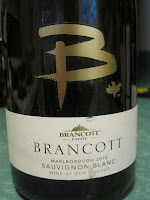
2010 Brancott B. Sauvignon Blanc Marlborough:
Aromas of grapefruit, cut grass, and wet rock immediately let you know it’s a New Zealand sauvignon blanc. There’s a whiff of passion fruit, ever so faint, weaving amongst the grassy bouquet.
There’s really nothing wrong with this wine, it’s clean with lots of acidity that shows up as more citrus elements intermixed with tropical fruit and a twist of minerality. A varietally honest sauvignon blanc, if one that’s somewhat generic. At the price, around $10 most places, it's a great everyday white wine for the spring weather.


2007 Brancott Terraces Pinot Noir Marlborough:
Lots of red fruit and wood initially, but the wood isn’t necessarily oak as much as tree bark. Notes of black tea, soil, and a red licorice component round out the bouquet. Interesting and enticing are the two words that sprung to mind.
Very clean flavors of cherry, raspberry, and forest floor are held together by an uplifting acidity that creates a very pleasant, light mouthfeel. The finish is airy but works well for this wine. Not an especially textured pinot noir by any means, but one that's very easy to drink and versatile.


2009 Francis Ford Coppola Director’s Cut Pinot Noir Sonoma Coast:
Nice bouquet of warm dark fruit, baking spice, vanilla, and a hint of wooden match. Seems a bit tight but it’s hard to imagine this wine needing age considering the price. I kept returning to the glass to smell it, because the way the baking spices and red fruit are integrated is quite alluring.
The palate is too light and uninteresting, with one dimensional notes of red fruit. The finish is evaporative and all too brief. I rarely say it, but this wine tastes cheap. A pity, since 2009 produced some exceptional pinot noir in California. After the wonderful bouquet, the mouthfeel is a huge letdown.
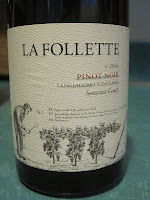


2009 La Follette Sangiacomo Vineyard Pinot Noir:
Smells of green herb, oak, but with pleasant notes of earth and spices. Not much fruit, and surprisingly no heat considering the labeled 15.5% abv.
Clunky acidity dominates the palate, with some raspberry and plum notes struggling to manifest. Bright, linear acidity traces a line through some forest-floor and vanilla flavors. I think this is a big pinot noir struggling to find it's place, and perhaps needs some age.


2006 Camp Viejo Reserva Rioja:
Strong aromas of sundried tomatoes, herbs, cherries, and dusty red soil. Very much what I would expect in a Rioja. Good complexity indicates the wine might be drinking near or at it’s peak. Some subtle smoked-meat is present but very faint, hopefully it would come through more after some time open.
Easy drinking, with a tannin framework surrounding flavors of dried cherry, soil, and dried herbs. Slightly rustic, in a charming way. Finishes cleanly, with some light acidity paving the way for another bite of food. A killer deal for under $10 in most markets. This is one to stock up on for those Wednesday night pizza sessions!


2009 Francis Ford Coppola Claret:
Black fruit, herbs, dusty soil and some woodsy aromas. Very straightforward and unoffensive. I did find a strange-ish campfire or barbecue aroma, it added to the bouquet, gave it a sense of uniqueness. Unfortunately the integration of the various grapes isn't happening as well as I'd like though, with disparate elements refusing to coexist.
Initially very expressive with black fruit and tannin, wood, and campfire but it quickly became a mess of sweet fruit. That jammy note stayed through till the finish, where a nice tannic streak came to the rescue. Although the finish was brief, I think the structure saved it. Tasted the next day with consistent notes.

2009 Mandolin Cabernet Sauvignon Central Coast:
Simple bouquet of red fruit, wood smoke, earth, and not much else. A bit disappointing, but for around $10 it's precisely what I would expect from a Central Coast cabernet at that price level.
On the palate, flavors of salted meat and cherries persist with flavors of sulfur (burnt match) and a leathery tannin component. Over time, the mouthfeel evolves nicely, lending some dried currant flavors that do wonders to make this wine more palatable. Tasted the next day, it was much more complete and enjoyable.


2009 Parlay “The Bookmaker” Red Table Wine California:
The bouquet is full of candied red fruit, herbs, and earth. Some funk is present, but it blows off quickly. Good complexity, and appealing scents kept drawing me back for more sniffs. There are a lot of grapes here including cabernet sauvignon, syrah, petite sirah, and petite verdot.
A very ripe, fruit-forward wine with lots of plum and black cherry. I noted a vanilla-wood taste as well, indicative of oak barrel aging (or oak chips). This is mouth-filling red that people who enjoy that style will probably love. Lacks acid for my palate though, and the finish is too sweet and ripe, needs to lighten up and taper off more gracefully. That said, for $20 it's a nice bottle of wine that delivers at the price point.
2009 Graffigna Centenario Reserve Malbec Mendoza:
Smokey baking spices, cherry preserve, and plums followed by oak-vanilla notes make up the bouquet. It's very typical for a low-priced malbec and smells delicious.
This wine is lush and soft, but goes nowhere with that. Rather insipid, and the tannin that builds through the mid palate essentially creates a framework for fruit that should be there but is nowhere to be found. Very disappointing. Tasted the next day with consistent notes.


2009 Mandolin Syrah Central Coast:
Stinky nose of sulfur and rotting wood. Very disappointing. Perhaps something went wrong during fermentation?
Overripe, gloppy fruit that is reminiscent of artificial plum flavoring. Hollow through to the finish where an acidic kick surprised me, but not in a good way. Expected a lot more from this wine considering how nice the cabernet sauvignon was.


The good, the bad, the ugly. With the prices of these wines ranging from $7 all the way up to almost $40, I should have expected nothing less. What struck me though was how "processed" some of these wines tasted. In winemaker-speak, they'd be called "heavily manipulated", to a wine geek they don't express any sense of place. Put more bluntly, most of the cheaper wines here tasted sterile, like they were designed to fit a preconceived notion of what the wine should taste like. That is the price we often pay for inexpensive wine though. I suppose though, that finding those rare gems that are at once inexpensive but also expressive is what makes them special.

All the wines in this feature were media samples for review purposes.


Beau Carufel

Friday, January 20, 2012

TasteLive, December 20th.


In celebration of TasteLive moving into a new building in downtown Santa Rosa, they hosted an opening night party. Since I couldn't join the party in person, the great folks at TasteLive sent me and a selected few bloggers a sampling of wines that will be poured at the tasting room. During the festivities, Joel Quigley interviewed the winemakers and/or owners of each of these wines while we peppered them with questions. The venue was crowded and the atmosphere was great, I think each of us who viewed from afar really did wish we were there.

This month marks the official opening of The Wineyard, located at the Santa Rosa Vintners' Square. In its past life, the facility was a big strip mall. (Re)Construction began in 2011 on a new "urban wine village", and many of the materials used in outfitting each of the venues is recycled, be it barrel staves for decoration or even the bar in the tasting room. From what I can tell, the Santa Rosa Vintner's Square will be a pretty cool place to hang out at in 2012. The list of the wineries located there is listed below:
D'Argenzio Winery
Krutz Family Cellars
Sheldon Wines
Atascadero Creek Winery
Flocchini Winery
Jazz Cellars
Shone Farm Winery (The winery is part of Santa Rosa Junior College)

I liked the fact that this tasting didn't have any cabernet sauvignon or chardonnay, rather, some "back seat" varietals (and pinot noir) that may not get the coverage of the former two grapes but are just as important to California's wine industry.

Without further ado, here's the tasting notes for the wines we bloggers got to taste:

2010 Shone Farm Sauvignon Blanc: The label also says "Estate Grown, Block Seven, Russian River Valley, Sonoma County". Very precise, specific..and academic, no? No surprise then that this winery is part of Santa Rosa Junior College. Immediately this wine shows it's stripes as a sauvignon blanc. Unfortunately it appears to be made in the New Zealand style. And it's a bit under-ripe too, with lots of asparagus, whiffs of ammonia, and freshly cut grass on the nose. Hints of grapefruit hide behind those volatile methoxypyrazines, and a bit of minerality that you have to look hard to find. On the palate it's got some bittering notes, a green, stemmy quality, and the barest traces of grapefruit and lime juice. Refreshing due to it's acidity, but not something I'd want more than a glass of.

2006 Flocchini Andrea La Rue Pinot Noir Sonoma Coast: I didn't know what to expect from this pinot noir. All too often, Sonoma Coast pinots are over-oaked and juiced with syrah to pump up the flavors. Luckily that trend is falling by the wayside. This Flocchini doesn't taste like it has any syrah added and the oak treatment is minimal. The bouquet is a melange of cherry and strawberry, baking spice, campfire, and a dusty earth note. Flavors of red fruit mingle with earth and tannin to create a very nicely balanced wine that has benefited from four years in bottle. I was impressed with the acidity present too, it kept the body of this pinot light and balanced against the fruit and tannin.

2008 Atascadero Creek Zinfandel Russian River Valley: This zinfandel comes from the Haun Ranch, outside Healdsburg. There's 90% zin with a smattering of other red grapes, and the zinfandel vines go back to 1948. The bouquet is surprisingly complex, with notes of anise, mixed berry preserve, mint, and a touch of heat from the alcohol. I picked up a medicinal scent that seemed to meander throughout the bouquet too, but I couldn't pin it down. For people who like big, juicy zinfandels, this is your wine. The mixed berry comes through, as does that medicinal thing I picked up on the nose. Mild tannin, and a very nice smooth finish. At around $28 a bottle it's extremely well priced and something I would love to pair with barbecue.

2007 Jazz Cellars Las Madres Vineyard Carneros: I'm glad a syrah was included, especially a 2007. Carneros to me is a strange region, you see vineyards growing side by side that really shouldn't. For example, pinot noir, syrah, zinfandel, and sauvignon blanc. It's quite confusing. But a lot of the time, it just works. Like in this case, the team at Jazz Cellars put together a delicious syrah. Aromatically this 2007 Jazz is all smoked meat, black cherry, plum skin, and milk chocolate, with just a touch of a green stemmy quality and a tickle of alcohol. On the palate, well integrated fruit and oak, a touch of pepper, and some beef jerky notes all combine for a nice mouthfeel. Smooth, integrated tannin creates a nice framework for the fruit and savory notes. The alcohol is nearly imperceptible compared to the nose, which given the 15% listed, is impressive. At $34 a bottle it's certainly not cheap but the quality you get is wonderful.

Four wines, three of which were quite good and the sauvignon blanc just didn't do it for me. Still, guests at The Wineyard got to try some delicious wines and if this is indicative of the lineups that'll be poured each week, I predict much success for the Santa Rosa Vintners' Square going forward.

As always, I thank Cailyn McCauley and Joel Quigley for inviting me to participate. 2011 was my first year doing TasteLive events and I had a lot of fun. For those of you who follow me on Twitter, sorry for clogging up your Tweet-stream on multiple occasions! If you are a winery looking to do a TasteLive event, contact Cailyn or Joel at CreativeFurance Marketing.

These wines were media samples.

Beau Carufel

Thursday, December 29, 2011

Two Shepherds' Wines Part Two: Tasting New Releases


Two Shepherds wines are a creation of William Allen, publisher of the Simple Hedonisms wine blog, among other things. In the first part of this two-part blog series, I interviewed William via email to get inside the bottle, so to speak. He explained his motivation, goals, and told us about the great support he got from friends and winemakers around California. For this second blog entry, I am posting my tasting notes on each of the wines I purchased from William.


2010 Two Shepherds Grenache Blanc Saarloos Vineyard: Nose of Asian spice, kiwi fruit, limestone, lemon zest, and pear. At room temperature I detected a little heat from the alcohol but it's not too distracting. Good intensity and a complex set of flavors create an expressive, vibrant bouquet. The palate opens with a burst of lively acid that gives way to a balanced mid-palate of ruby grapefruit, tangerine, limestone, and peppery spice. Great flavor integration that will only get better with time had me thinking this wine will last 5-7 years. More heat comes through on the finish but it's something that will go away when this grenache blanc is chilled. This is an impressive effort, well worth the $24 per bottle. I would suggest pairings of grilled chicken, fish & chips, and even pasta with cream sauce. 13.9% abv.


2010 Two Shepherds Viognier Russian River Valley: Beautiful nose of apricot blossom, yellow peach, and a touch of sweet cream. I was impressed with the aromas because they weren't too overly sweet, instead being in perfect harmony. The mouthfeel is rich and beautifully smooth, yet with some focused acidity to create a nice framework for the grapefruit, pear, yellow peach, and wet river rock. A lingering finish with hints of pine sap and grapefruit tapers off gently after almost 20 seconds. This is one to buy a full case of, it will get better and better with each passing year. As someone who frequently finds California viogniers too sweet and lacking structure, the Two Shepherds is a shift away from that, to a Condrieu-style expression. Pair with chicken tetrazzini, Indian cuisine, or even a simple chicken salad. $21. 13.78% abv.


2010 Two Shepherds MRV Saralee's Vineyard: A white Rhone-style blend of 47% marsanne, 47% roussanne, and 6% viognier. The bouquet is all mint leaf, sea air, hints of peach, and star fruit. Secondary aromas of golden apple and asian pear create a lively sensory experience. Impressive for such a young wine, I think this could pass for a white Cotes du Rhone in a blind tasting. The palate is composed of nicely integrated mint leaf, apple, English toffee, and pear notes. I really enjoyed the mineral character, which gave this white blend a round texture without being flabby. The flavors combine to build a nice crescendo before slowly tapering off to an elegant finish. Out of the three Two Shepherds white wines, this screams at me that it needs food. Pair with lobster or herbed chicken, a cheese plate, or grilled whitefish. $24 per bottle. 14.2% abv.


2010 Two Shepherds GSM California: A blend of 50% grenache, 25% syrah, and 25% mourvedre. The grenache and syrah are from Sonoma County and the mourvedre is from Alameda County. After being open for a few minutes, aromas of raspberry, strawberry, dried herb, and cola waft out of your glass. This is young but showing nice integration even at this point. Secondary aromas of cracked pepper and good minerality build an impressive background to support the red fruit. Upon tasting, you will notice the acid in this GSM is young and a touch raw, but is also the type to hold this wine together for several years. Right now it needs food, cheese and meat especially. Spicy raspberry and wild strawberry, cracked black peppercorn, tobacco, and just a touch of oak that ends the beautifully tapering finish. Although the palate is a bit disjointed, you get the sense of a dominant syrah right now, that's something that will evolve out. That said, the spice and pepper notes carry this wine beautifully. I'm going to be buying more. 13.8% abv. $32 per bottle.

Now before you accuse me of bias and all manner of unsavory things (most of which are probably true), I will state that these wines aren't perfect. That's a double edged sword though, because to be too perfect would rob William's wines of their garagiste-winemaker charm. If each of these wines was flawless, they would be a little less interesting. It's critical to keep in mind that these are Two Shepherds inaugural releases, and they all need some time to settle down.

My biggest gripe ($5 to the person who already guessed it!) is the relatively high alcohol on the Grenache Bland and the MRV. If I were to nitpick, I would also suggest that some of the more angular acidic edges could be refined, but that would be more to please the critics than my own palate. Bring on the angles, and just say no to flabby, boring white wine. The same goes for the Two Shepherds GSM, which will evolve beautifully over the next few years. I must note that it isn't quite available yet for the general public, but you'd best email William about any quantity you may desire, and email quickly.

After tasting through this lineup, I was pleased that they were all so good. My tasting partners agreed, and while they had some suggestions for improvements as well, our unanimous sentiment was that they were all very drinkable, high quality. For that, I raise a glass to William Allen and his Two Shepherds wines. It's great when a wine blogger starts making wine, and even better when the wines are delicious!

Two Shepherds on Facebook
Two Shepherds on Twitter
Two Shepherds on the web

Beau Carufel

Wednesday, December 28, 2011

Two Shepherds' Wine Part One: Interview With the Winemaker


This is the first blog of a two-part series introducing a new California wine producer. William Allen, a friend and fellow wine blogger, recently released wines under his Two Shepherds label for the first time. These wines express his passion for Rhone varieties as well as his belief that wine should be interesting, unique, and accessible. I support William and the Two Shepherds wines so I sent him ten questions, hoping to gain some insight into his motivations, goals, and dreams. William was kind enough to respond and I am posting his answers verbatim for you to read.

In the next blog installment, I will be tasting and sharing my thoughts on his three current white wines as well as an un-released red Rhone blend (hint: it's great!). For now, pour a glass of your favorite wine and get inside the bottle with Two Shepherds Vineyards.

1. What got you into Rhone varietals?

"As my palate progressed away from over extracted New World styles, to wines that were more subtle and nuanced, I fell in love with Rhones. Rhone wines and blends offer complexity more succinctly. Rhone varietals sing when blended, and each variety offers more unique contribution, then say, Bordeaux varietals. They also tend to be less tinkered with by wine producers. Rhone lovers are passionate about their wines and this category."

2. Why make your own wine?

"I have been a garagiste wine & beer maker for over ten years. Making wine in very small lots has its limits to what you can do. I really wanted to start making blends, which meant producing at least a barrel of each varietal. It turns out even that was too limited for the tools I wanted. I also wanted to put my money where my (wine writing) mouth was: after many years of tasting and writing, I felt I could bring wines to the world that would be enjoyable, and unique."

3. Biggest challenge in making these wines?

"Working with varietals I haven’t before, so not knowing how they are doing during each phase, and projecting how they would taste in the future, and if they would achieve the stylistic goal I clearly had in mind for each. Using techniques like broad scale use of native yeast. Triangulating the many inputs from other winemakers into the many decisions I had to make.
Ask 10 wine makers the same question, and you’ll get 7 answers back."

4. Did you model your wines on any particular producer or more of a regional style?

"It’s a combination of Old World focus, and wines that were epiphanies for me, like Kinero Grenache Blanc, that stylistically I loved. Certainly Tablas Creek blazes a bright trail for me. Successful small winemakers, in my opinion, make wines to their own palate and passion. I have been preaching about balanced, modest, distinct wines and rampaging against Parker-esque extracted styles for years. By sourcing varietals from cool climates, like the Russian River Valley, I was determined to make wines that were properly ripened, but lower in alcohol and higher in acidity."

5. Future plans for the label? Burgundy or Bordeaux varieties perhaps?

"The goal right now is Rhones, but never say never. Artistically I love to play, and its easy to chase shiny objects, but the marketer in me knows the importance of focus. That said, I will always be on the lookout for interesting varietals and vinification techniques. This year for example, I did two ‘orange wine’ projects, one from an obscure white, that could end up as a wine club offering. Two Shepherds is focused on bringing consumers interesting & unique wines."

6. Is there one thing you're most proud of with the current releases?

"That stylistically they expressed what I wanted, and have been so widely received by some very picky people, like the girl & the fig, the Bay area’s most Rhone focused cult restaurant, and Mike Jordan, a very picky wine buyer for K&L Wines, one of San Francisco’s best wine shops. I adore Grenache and I think the Grenache Blanc and Grenache based GSM are wonderful. I’d gladly drink every bottle if they didn’t sell, but they are flying off the shelves and I have already had to limit sales. Luckily, we boosted 2011 production from 175 cases, to ~500."

7. Why the name Two Shepherds?

"We struggled on the name for a long time, it actually delayed our launch by months. So many great names were taken, and wanted something that captured our old world philosophy. Our friends at Cartograph finally gave us the idea, commenting I was a shepherd for the local wine industry with my networking. It also fit my view of myself as a writer, trying to help and guide consumers on the voyage of wine exploration. The other Shepherd, or Shepherdess is Michelle my girlfriend, to whose creative talent we owe much of the design credit, as well as our brilliant label designer Nick McNeil at Agency Orange. Her last name is Berger, which is French for Shepherd. We ran the idea past a few people, and its been a big hit."

8. Any winemakers in particular whom helped you?

"Very many, including some coaching by none other than Randall Grahm. Anthony Yount in Paso Robles, of Denner & his own label Kinero. Alan Baker of Cartograph, the Sheldons. Many of my good friends offered advice. Direct supervision and consulting came from Darek Trowbridge (Old World Winery) and Kevin Hamel (Preston, many others) both known for the minimalist intervention focus. Jon Philips of Inspiration Vineyards, where we presently vinify at, was a huge asset during blending, bottling, and this tricky 2011 harvest."

9. What's the best bottle of wine you've ever tasted?

"That’s pretty tough one for someone who tastes a ridiculous amount of wine each year, wearing my blogger hat. The Sheldon 2009 Graciano comes first to mind."

10. Is there one thing in particular you want people to know about the Two Shepherds wines?

"More about our wine philosophy overall, than us. I want consumers to always be open minded, try new things, and push their palate. I hate when I hear things like “I don’t drink white wine” (try my Rhone winter white MRV blend), or "I hate chardonnay" (ever tried French?). I can’t stand that consumers have been trained to think that all red wine must be dark, or all whites clear. That’s like saying all cheese should come in single wrapped slices. The world produces hundreds of great varietals, and unique wines are finally coming into vogue. Open up, live a little, and try them."

We now have a more complete picture of the Two Shepherds label, and I will reiterate how cool it is to see a blogger put his money where his mouth is. Read the next blog post, Two Shepherds' Wines Part Two: Tasting New Releases, to see my tasting notes on the current releases.


To purchase the Two Shepherds wines, visit the website or email them direct. If you're in the Bay Area or don't mind having the wines shipped, K&L Wine Merchants also carries the Two Shepherds label. Tomorrow I will post the second part of my Two Shepherds blog series discusses each wine in more detail, along with tasting notes and some food pairings.

Two Shepherds on Facebook
Two Shepherds on Twitter
Two Shepherds on the web

Beau Carufel

Friday, December 23, 2011

Occupy Syrah Day, Building Awareness For an Under-Appreciated Grape

December 7th is an auspicious day, on it we Americans remember Pearl Harbor, the Japanese sneak attack on America that plunged us into World War II. This day is one for rememberance and hopefully, one for looking toward the future as a time when perhaps we won't be fighting each other anymore.

Fast forward 70 years later, and December 7th was the first ever "Occupy Syrah Day", founded in part by Bill from Cuvee Corner Wine Blog and Shawn from A Wandering Wino. Riffing off the "Occupy Wall Street" theme may not have been popular with some people, but they're party-poopers and not worthy of our time. The point here was to build awareness, through social media, for a grape that here in the United States at least, has a bad rap.

Syrah, once destined to be the "next big thing" according to such prestigious publications as Wine Spectator, never has lived up to those prognostications. Pinot noir came along and kicked over the proverbial sand castle, relegating a grape made famous in the Rhone Valley to something whispered about by wine geeks and pumped out as commercial grade plonk by the Australians. Luckily, the past several years has seen a resurgence, led domestically by outstanding examples in Washington and California. Overseas, Chile and France have come on strong (France..again) while Australia has languished in a sea of  cheap shiraz. Unfortunate, but things are finally starting to change in the land of the Kangaroo, as the two selections I was sent will attest to.


2006 James David Cellars Syrah Central Coast: Medium-dark purple in the glass. Right away, aromas of campfire and bacon fat followed by earth, black pepper, and blackberry/blueberry. This is a big, bruiser of a syrah with tons of pepper on the front palate, leading into a core of dark fruit flavors and oak through the mid palate. The finish brings more crushed pepper and a firm dollop of oak as the this syrah winds down. It's clear that the 55 months spent in oak barrels are influencing the wine. The spices come back on the finish too, it's like swallowing a teaspoon of ground peppercorns. Nothing subtle about this syrah, it means business. Best paired with very full-flavored foods. 15.7% abv. $NA.

2008 Wakefield Estate Shiraz Clare Valley: Pours a dark red-purple in the glass. On the nose, a touch of brettanomyces leads into a bouquet of bacon fat, blackberry, smoked meat, blueberry, and vanilla oak. The palate profile consists of ripe black cherry, blackberry, eucalyptus menthol, tobacco, some peppery spice, and more vanilla oak. I like the tannic structure and in particular, the nice finish. This would be a pretty tasty summertime barbecue wine to serve with all manner of charred red meat. $15 is a good price for a shiraz that has a bit more complexity than we expect from that price point. 14.7% abv.

2008 Plantagenet Shiraz Mt. Barker: Pours a very dark red in the glass. Aromas of smoked meat, campfire, red berries, white pepper, herb, and a touch of heat form a pleasing bouquet. Dried basil and thyme, red cherry, menthol, subtle oak notes, and a bit of tannin create an excellent suite of flavor and texture on the palate. I am very surprised at how good this shiraz is, perhaps $20 is the entry for quality Australian shiraz. The balance is something unexpected and the wood doesn't clobber you over the head, despite it enclosing the wine for 20 months. No need to cellar this wine any longer, it's drinking extremely well right now. 14.2% abv. $20.

Participating in the #OccupySyrah day was a lot of fun. While some people lack a sense of humor and were not enthusiastic about the name, I feel it was a lighthearted stab at a topic which we all are aware of. Bill and Shawn did a good job spreading the word and I was pleased to see multiple PR and marketing groups send samples out for bloggers to sample and share. In a small but important way, that was indicative of the power of social media.

For my part, I'm going to keep drinking syrah, be it domestic or imported. I love the complexity that's possible with a well-made syrah, where you truly can feel the power, restrained. In 2012, I hope more wine lovers take the time to explore syrah and share it with their friends.

The wines featured here were media samples.

Beau Carufel