Showing posts with label Malbec. Show all posts

Monday, May 26, 2014

Hourglass Vineyards Blueline Estate New Releases


I recently had the pleasure of tasting through the Hourglass wines, specifically from their Blueline estate vineyard, in a virtual tasting along with a handful of other bloggers. Charles Communications organized the tasting, sending us four 375ml bottles from Hourglass Vineyards. We were joined by Proprieter Jeff Smith and Winemaker Tony Biagi. Tony took over in 2012, so we tasted the 2012 reds and 2013 sauvignon blanc. They discussed the wines, their philosophy, and some Napa Valley history.

The wines we tasted were:

2013 Hourglass Estate Sauvignon Blanc (SRP $40)
Big, rich on the palate, plenty of acid too. Feels like a big wine, but one that is balanced. Tropical and citrus with a touch of pear. Maybe a touch of wood too, showing up as some vanilla notes. Several tastes had me smacking my lips in anticipation of a bite of food. There is a touch of heat on the finish but honestly I was expecting more booziness based on the 14.2% abv so it was a very pleasant surprise. Suggested pairings would be fish tacos, grilled halibut, bbq chicken salad.

2012 Hourglass Blueline Estate Merlot (SRP $75)
Showing tart red fruit, balsamic vinegar, oak, and plums. The VA is a bit distracting at this point, though I think there is enough fruit behind it to help. On the palate it shows very traditional Napa-merlot flavors, think blackberry, plum, buttressed by oak and nicely integrated tannin. I like the finish most of all, perhaps, because there's a dusty, spicy element that finishes very cleanly. 91% Merlot, 7% Cabernet Sauvignon, 2% Petit Verdot. 14.8% abv. Suggested pairings include hamburgers, ribs, and beef or lamb stew.

2012 Hourglass Blueline Estate Malbec (SRP $75)
Think smokey, meaty, blackberry and blueberries. That's this wine on the nose. I like the odd note of grapefruit pith too. It's plenty ripe, showing black fruit, dusty soil, and grippy tannins along with chocolate and a burst of red fruit on the finish. This wine makes me want a fancy bacon cheeseburger, it's also something like 25% petit verdot, so you know it tugs at my heartstrings! 75% Malbec, 25% Petit Verdot. 14.2% abv. Suggested pairings include bone-in steak, lamb, pork ribs.

2012 Hourglass Blueline Estate Cabernet Franc (SRP $135)
I thought of the word "big" right away. I like the richness on the nose, with aromas of violet, chocolate, coffee, blueberry, and cherry. Plenty of oak on the palate, which works with very ripe blue fruit, chocolate, black pepper, and firm tannins. Heat on the finish comes not as a surprise, and I think would be mitigated by food. This is lush, elegant, downright fancy wine. I would age this for years or serve it now after a long decant. If the malbec demands a fancy burger, this cabernet franc demands you serve it filet mignon. 83% Cabernet Franc, 11% Cabernet Sauvignon, 6% Petit Verdot. 14.8% abv.

Overall I liked tasting these wines because it gave me a bit of a glimpse into what is going on in Napa Valley right now. Each wine is unabashedly "Napa", meaning big flavor, structure, and ample concentration. That is not at all a knock though, because in the case of the malbec and cabernet franc, it works. I enjoyed the sauvignon blanc much more than I expected to, but just can't plop down $40 a bottle. Again, no knock on quality, rather, I seek out different examples for my own cellar.

I want to address one thing, as sort of a disclaimer. I don't drink a lot of Napa Valley wines and can probably count on one hand how many producers I actively buy. For this tasting, I tried my very best to taste with context. That is to say that I tasted each wine with the understanding of where it was from, the style which Napa Valley tends to produce, and the vintage. For my friends who love high acid, low alcohol wines with less fruit and more tertiary flavors, these are not for you. For my friends who love rich, concentrated, bigger wines that still have good acid (and plenty of alcohol), I recommend the Hourglass Vineyards spring releases.

These wines were media samples for review purposes.

Beau Carufel


Thursday, July 26, 2012

The Seeker, Wines From Around the World

Have you heard of the wine brand called "The Seeker"? I was sent samples of a few of their wines recently, and looked forward to evaluating them. This brand is seeming to grow in popularity with each month, and their Facebook and Twitter presence could certainly be emulated by others. Whomever manages the social media account does a good job engaging with the fan base, responding to comments, and creating discussion.

The Seeker, as far as I can gather, is another one of those made-up brands. Kobrand acts as negotiant, marketer, and distributor. They have sourced wine from all over the world to create five wines, with the featured three plus a sauvignon blanc and a pinot noir.

Each wine has a character to go along with it, and the story of each revolves around flying machines somewhere in the world. It's a bit cheesy, but still fun to read through each story. Therefore, we can't exactly say this brand has heritage or the authenticity that goes with heritage, but we can say some thought was put into the development. Ever the skeptic, I looked forward to tasting the wines but was wary of the "manufactured-brand effect", where someone comes along, starts a brand with a catchy, hip story, and tries to market the product (which may or may not be of good quality) to us Millennials. Keep reading to see if any thought was put into the actual wines.

2010 The Seeker Chardonnay California: Straightforward bouquet of citrus and tropical fruits along with a touch of butter (diacetyl). On the palate it's clean and smooth with balanced acidity that highlights flavors of lemon zest and tropical fruit. Some creamy, buttery notes are present as well, lending contrast to the acidity. The finish is nice and straightforward, gently tapering away after a few seconds. Serve chilled to enhance the acidity and citrus flavors, for as this wine warms up it becomes more buttery. 13.8% abv. $11 retail.


2009 The Seeker Malbec Mendoza Argentina: Lots of black and red fruit on the nose, also some peppery spice and a touch of alcoholic burn. Still, it's got more than your typical Argentine "blackberry/blueberry jam" nose, and that's to be commended. I liked the impressive tannic backbone which worked to keep the ripe fruit flavors in line, drying the palate out nicely. Also found were secondary flavors of char, black pepper, and earth. A medium length finish full of drying tannin and ripe black cherry flavors is the nice ending touch for this tasty malbec. Stainless steel tanks held the wine during fermentation before it spent a year in French barrels. 14.5% abv. $11 retail.


2010 The Seeker Cabernet Sauvignon Chile: Fruit is sourced from Colchagua and Maipo Valleys in Chile. The nose is typically Chilean, with some green pepper notes, plums, black pepper, and black currant. Soft and inviting on the palate, it showcases ripe blackberry and currant flavors surrounded by nicely integrated tannin. Secondary flavors of tar, tobacco leaf, and dark earth emerge after the wine gets some air. The finish is clean and simple, ending with drying tannin and dusty soil flavors. For an inexpensive cabernet, this is a solid bottle of wine. Aged in French and American barrels for five months. 13.5% abv. $11 retail.


Each of these wines, considering the price, is drinking very well. They certainly won't blow you away in terms of complexity and aren't worth aging, but for $11 a bottle you're getting wines that express a sense of place and varietal typicity. If I had bought them, I'd have no regrets whatsoever. My advice, buy a bottle of each, let the reds open up a bit and keep that chardonnay nice and cold. Serve them during the summer barbecues or casual nights with your buddies.

You fan find The Seeker Wines on Facebook, and follow them on Twitter.

These wines were media samples for review purposes.

Beau Carufel

Friday, July 6, 2012

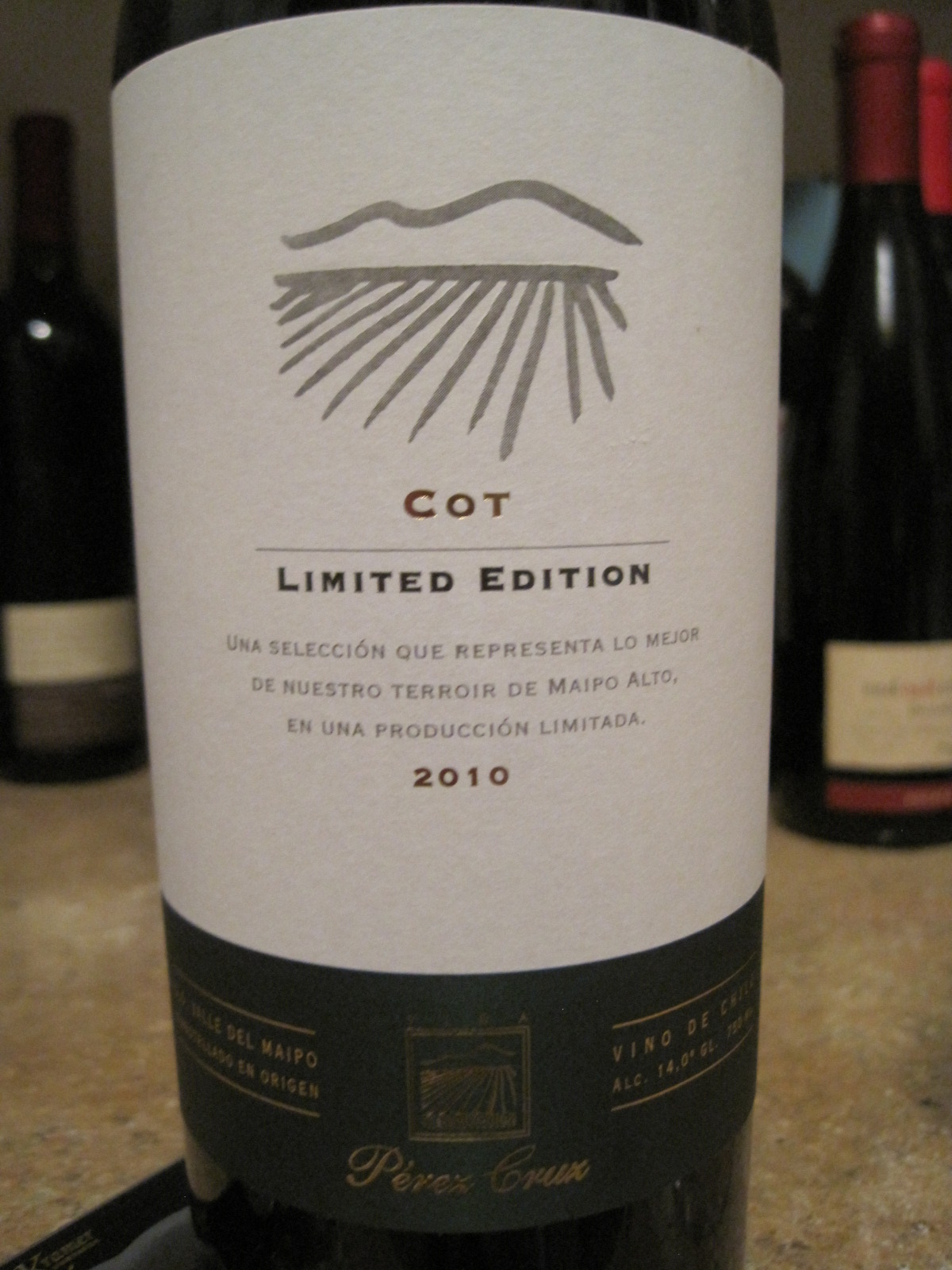
2010 Perez Cruz Côt (Malbec), Exploring Chile's Terroir

In an ongoing effort to explore the diverse soils and climates of Chile, I recently was sent a bottle of Côt (aka   malbec) by the Wines of Chile trade group. We'd been in contact since the most recent Wines of Chile Live Tasting that I blogged about, and I expressed interest in trying more Chilean red wines, especially those from unusual (to Chile) areas. They generously sent out a sample of the 2010 Perez Cruz Côt for me to try, and after waiting for about a month for it to settle down from shipping, I eagerly pulled the cork and dived in, so to speak.


2010 Perez Cruz Côt Limited Edition: While not 100% malbec,this is a blend of 93% Côt, 5% petit verdot, and 2% carmenere. Just goes to show you, Argentina isn't the only place outside of France for malbec anymore! The 2010 Perez Cruz pours a beautiful purple in the glass, that pales towards a nice ruby at the meniscus. The bouquet reveals itself after some vigorous swirls, offering notes of savory smoked meat, menthol, rosemary, and black fruit. I like this a lot better than the Argentine malbecs. On the palate it's offering flavors of leather, black cherry, more herbs, eucalyptus, and dark soil. The tannins are well integrated, holding the flavors together and creating a harmonious finish. 14.0% abv.

Based on the tasting notes, this isn't your typical jammy malbec from Mendoza, as you can tell. The Perez Cruz vineyards are located southeast of Santiago, right in the heart of Chile. From there, the warm, sunny days are mitigated by cool breezes which help rein in the sugar levels in the grapes while still allowing them to achieve phenolic ripeness. The region is called Maipo Alto.

At a suggested retail of $22, you get a very interesting malbec, with different characteristics from most New World examples. It's closer to a rustic Côt, from the Cahors region of France. For that alone, it's worth the purchase price. This would pair very nicely with steak, burgers, and Korean bbq. Look for savory foods to pair with this savory wine.

Here in the USA, it's imported and distributed by South American Wine Imports, so your local shop should be able to bring in a few bottles to try.

This was a sample from the Wines of Chile trade group.

Beau Carufel

Sunday, March 25, 2012

Spring Wine Tasting Roundup

Since spring is on it's way, I wanted to post up some tasting notes from samples I've received over the past few months. There's something for everyone here, from a delicious sauvignon blanc from New Zealand, a couple of fun reds from California, and a wonderful Rioja at an unbeatable price point. A quick check on www.wine-searcher.com will help you find any of these wines, and most are available nationwide.

2010 Brancott B. Sauvignon Blanc Marlborough:
Aromas of grapefruit, cut grass, and wet rock immediately let you know it’s a New Zealand sauvignon blanc. There’s a whiff of passion fruit, ever so faint, weaving amongst the grassy bouquet.
There’s really nothing wrong with this wine, it’s clean with lots of acidity that shows up as more citrus elements intermixed with tropical fruit and a twist of minerality. A varietally honest sauvignon blanc, if one that’s somewhat generic. At the price, around $10 most places, it's a great everyday white wine for the spring weather.


2007 Brancott Terraces Pinot Noir Marlborough:
Lots of red fruit and wood initially, but the wood isn’t necessarily oak as much as tree bark. Notes of black tea, soil, and a red licorice component round out the bouquet. Interesting and enticing are the two words that sprung to mind.
Very clean flavors of cherry, raspberry, and forest floor are held together by an uplifting acidity that creates a very pleasant, light mouthfeel. The finish is airy but works well for this wine. Not an especially textured pinot noir by any means, but one that's very easy to drink and versatile.


2009 Francis Ford Coppola Director’s Cut Pinot Noir Sonoma Coast:
Nice bouquet of warm dark fruit, baking spice, vanilla, and a hint of wooden match. Seems a bit tight but it’s hard to imagine this wine needing age considering the price. I kept returning to the glass to smell it, because the way the baking spices and red fruit are integrated is quite alluring.
The palate is too light and uninteresting, with one dimensional notes of red fruit. The finish is evaporative and all too brief. I rarely say it, but this wine tastes cheap. A pity, since 2009 produced some exceptional pinot noir in California. After the wonderful bouquet, the mouthfeel is a huge letdown.


2009 La Follette Sangiacomo Vineyard Pinot Noir:
Smells of green herb, oak, but with pleasant notes of earth and spices. Not much fruit, and surprisingly no heat considering the labeled 15.5% abv.
Clunky acidity dominates the palate, with some raspberry and plum notes struggling to manifest. Bright, linear acidity traces a line through some forest-floor and vanilla flavors. I think this is a big pinot noir struggling to find it's place, and perhaps needs some age.


2006 Camp Viejo Reserva Rioja:
Strong aromas of sundried tomatoes, herbs, cherries, and dusty red soil. Very much what I would expect in a Rioja. Good complexity indicates the wine might be drinking near or at it’s peak. Some subtle smoked-meat is present but very faint, hopefully it would come through more after some time open.
Easy drinking, with a tannin framework surrounding flavors of dried cherry, soil, and dried herbs. Slightly rustic, in a charming way. Finishes cleanly, with some light acidity paving the way for another bite of food. A killer deal for under $10 in most markets. This is one to stock up on for those Wednesday night pizza sessions!


2009 Francis Ford Coppola Claret:
Black fruit, herbs, dusty soil and some woodsy aromas. Very straightforward and unoffensive. I did find a strange-ish campfire or barbecue aroma, it added to the bouquet, gave it a sense of uniqueness. Unfortunately the integration of the various grapes isn't happening as well as I'd like though, with disparate elements refusing to coexist.
Initially very expressive with black fruit and tannin, wood, and campfire but it quickly became a mess of sweet fruit. That jammy note stayed through till the finish, where a nice tannic streak came to the rescue. Although the finish was brief, I think the structure saved it. Tasted the next day with consistent notes.

2009 Mandolin Cabernet Sauvignon Central Coast:
Simple bouquet of red fruit, wood smoke, earth, and not much else. A bit disappointing, but for around $10 it's precisely what I would expect from a Central Coast cabernet at that price level.
On the palate, flavors of salted meat and cherries persist with flavors of sulfur (burnt match) and a leathery tannin component. Over time, the mouthfeel evolves nicely, lending some dried currant flavors that do wonders to make this wine more palatable. Tasted the next day, it was much more complete and enjoyable.


2009 Parlay “The Bookmaker” Red Table Wine California:
The bouquet is full of candied red fruit, herbs, and earth. Some funk is present, but it blows off quickly. Good complexity, and appealing scents kept drawing me back for more sniffs. There are a lot of grapes here including cabernet sauvignon, syrah, petite sirah, and petite verdot.
A very ripe, fruit-forward wine with lots of plum and black cherry. I noted a vanilla-wood taste as well, indicative of oak barrel aging (or oak chips). This is mouth-filling red that people who enjoy that style will probably love. Lacks acid for my palate though, and the finish is too sweet and ripe, needs to lighten up and taper off more gracefully. That said, for $20 it's a nice bottle of wine that delivers at the price point.
2009 Graffigna Centenario Reserve Malbec Mendoza:
Smokey baking spices, cherry preserve, and plums followed by oak-vanilla notes make up the bouquet. It's very typical for a low-priced malbec and smells delicious.
This wine is lush and soft, but goes nowhere with that. Rather insipid, and the tannin that builds through the mid palate essentially creates a framework for fruit that should be there but is nowhere to be found. Very disappointing. Tasted the next day with consistent notes.


2009 Mandolin Syrah Central Coast:
Stinky nose of sulfur and rotting wood. Very disappointing. Perhaps something went wrong during fermentation?
Overripe, gloppy fruit that is reminiscent of artificial plum flavoring. Hollow through to the finish where an acidic kick surprised me, but not in a good way. Expected a lot more from this wine considering how nice the cabernet sauvignon was.


The good, the bad, the ugly. With the prices of these wines ranging from $7 all the way up to almost $40, I should have expected nothing less. What struck me though was how "processed" some of these wines tasted. In winemaker-speak, they'd be called "heavily manipulated", to a wine geek they don't express any sense of place. Put more bluntly, most of the cheaper wines here tasted sterile, like they were designed to fit a preconceived notion of what the wine should taste like. That is the price we often pay for inexpensive wine though. I suppose though, that finding those rare gems that are at once inexpensive but also expressive is what makes them special.

All the wines in this feature were media samples for review purposes.


Beau Carufel

Monday, May 2, 2011

Domaine de Cantemerle Bordeaux Superieur, Buy It.

At long last, I come to the end of the Planet Bordeaux series of wines. I've chronicled the wines in the following posts:
2008 Chateau Pey La Tour
2006 Chateau Lestrille
2006 Costes Du Chateau Feret-Lambert
2009 Chateau La Freynelle Bordeaux Rosé


This, the final post, covers perhaps the best of the bunch, a 2005 Domaine de Cantemerle Bordeaux Superieur. 2005 was considered a superb year, much like 2003, 2009, 2010..Get the picture? Usually when I hear that the vintage has been declared "vintage of the century" by the critics, I roll my eyes. After all, isn't there supposedly only one, not five or more in the span of 15 years? I know and am comfortable with the fact that I'll most likely never taste or own any of the First Growths from these years, so these proclamations have no real effect on me. What does matter to my palate is that Bordeaux taste like Bordeaux, not some trumped up, high alcohol, bastardized attempt at making wines that taste like they're grown off of Highway 29. Let Bordeaux wines be expressive of Bordeaux, call me a minimalist!

Anyways, ranting aside, I was happy to "discover" this bottle of Bordeaux in my stash, seemingly forgotten during the inevitable movement of bottles between the wine fridge and my mouth. I then decided to open it up and see if this 2005 lived up to the momentous declarations of Suckling and Parker.

Well, it sure comes close. This is not a 98 point Pomerol, and nor should it be. Rather, it's classified a Bordeaux Superier, which often means exceptional quality at unexceptional prices. If I had to make a guess at the price, I'd say around $20 or so. At the end of this blog I'll find out the real price then we can compare.


Let's take a look at what I have in my glass then. The Cantemerle is dark in my glass, darker than a lot of Bordeaux I've had before.  I'm reminded of a Cabernet from Napa Valley because the color veers towards purple instead of dark garnet. The wine is a blend of the five varietals allowed in Bordeaux. Merlot, cabernet sauvignon, cabernet franc, malbec and petit verdot all in one bottle.

Right away I can smell the Bordeaux here, it comes across as a dusty, herbaceous note with a bit of funk. Glorious! Beautiful notes of tobacco, spice, cocoa, and cassis too. One of those wines that you want to keep smelling because each whiff is a discovery. The aromas are subtle, nothing screams up out of the glass to beat  at your nostrils with a rubber hose. In essence, the Cantemerle has class.

After suitable ooohing and aaahing, I'm ready to take some sips. The aromas match up well with the flavors I'm getting. Great drying tannins, some acidity on the finish and a very nice depth to the mid palate. I think the wine is hitting its stride right now and with a few hours in a decanter, will reward you with wonderful complexity and pleasing mouthfeel. In addition to the earth and herbs, there's a great vein of bittersweet chocolate and dried berry thing going on. This is why I love wine, the way flavors jump out and capture ones imagination!

What a great way to cap off the Planet Bordeaux series of wines, each one was wonderful and exceeded my expectations. They were all well made, very nicely priced, and a good foundation for someone looking to explore the Bordeaux region. After poking around a bit, I found the importer here in the United States, it's Lion Wines, so check them out and if you want this 2005, send them an email. I gave the 2005 Domaine de Cantemerle a B+ and a STRONG BUY recommendation. If you happen to see it online or at your favorite local wine shop, buy a couple of bottles. Oh and as far as the price goes, I found it on wine-searcher for about $19. So my prediction of $20 a bottle was almost dead on. I hope you're able to find this wine, it should be part of your collection.

This wine was sent as a sample for Planet Bordeaux via Balzac Communications.

Beau Carufel