Showing posts with label Rhone. Show all posts

Tuesday, January 15, 2013

Why So Quiet?

This blog has been quiet lately, with the blame falling squarely at my feet. After months of relative inactivity, punctuated by the occasional post, I decided it is time to talk a little bit about what has been keeping me busy as well as sapping my energy to post blog entries on a more regular basis.

This October, I started making wine for the first time. This is the real thing, and will be released as a commercially sale-able product when ready. I had initially picked roussanne and mourvedre to work with, but ended up with neither this year. The mourvedre was already allocated to people higher on the grower's customer list than I (typical and completely fair in this industry). The roussanne I so lusted after ended up being lost to Mother Nature, as the relentless summer sun caused the vineyard to lose around half its yield. What remained went to prior customers.
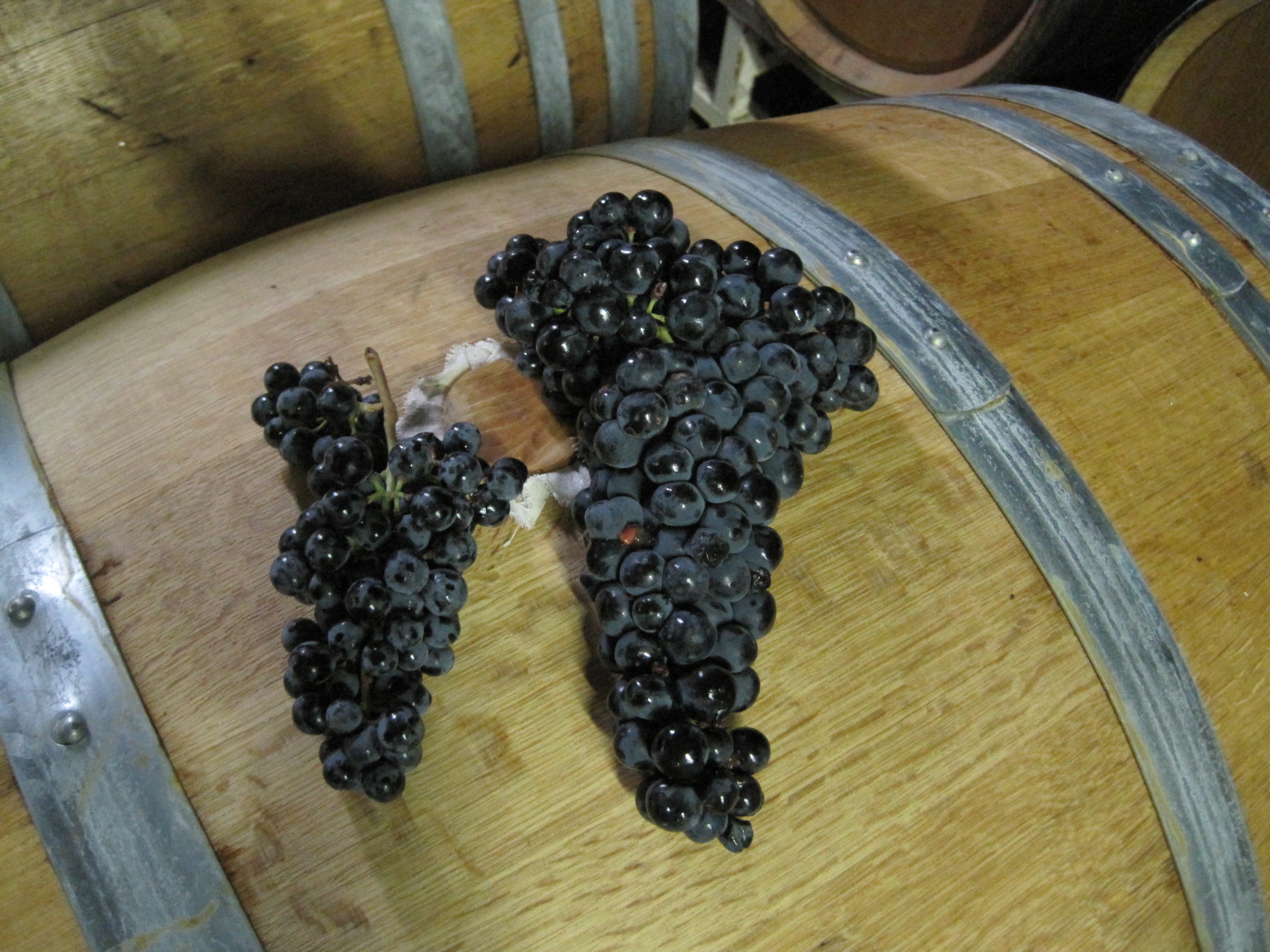
I ended up with petite verdot and tempranillo, two grapes I am thrilled to be working with. Total intake for 2012 was .82 tons of petite verdot and 1.1 tons of tempranillo from the Horse Heaven Hills AVA south of Prosser, Washington. The clusters on each were absolutely beautiful, with minimal raisining, no rot, and hardly any bugs!

Fortunately for me, I had a lot of assistance from the Kramers, especially Kim, in walking me through the process of selecting yeasts, must treatments (or lack thereof), barrels, and much more. The Kramers also helped with the nitty-gritty, punching down and pumping over the fermenting bins when I was away at my day job.

The day job. I began to look for another job in mid-July, when I realized I was not a good fit for Cathedral Ridge. To succeed in the wine business you must be passionate about the wines you are selling, and I simply couldn't find that passion. In September, I went to work for a distributor here in Oregon, working the Portland Metro area, selling Pacific Northwest wine and craft beers. The job is great in many ways, offering good compensation and benefits, while challenging me to see how far I truly want to go in sales. Each month I am amazed with what I've learned about selling for a distributor, and I'm taking away many things both good and bad from my experiences.

The last week of September saw me in Bordeaux with a group of wine bloggers including Jameson Fink and Joe Roberts. Balzac Communications and Planet Bordeaux were generous enough to include me on this trip, for whatever reason. I confess that despite the incredible experiences I had, I struggle to write about my time there. Whenever I begin to write about Bordeaux, I get frustrated that my writing skills aren't enough to suck you in, dear reader. You will see more Bordeaux posts from me in the future though.

2012 ended with a flurry of activity, and I proudly proclaim that in the last six to eight weeks of the year, I drank more Champagne than I ever have before. A rough guesstimate puts it at a case and a half. As you can tell, I am quite proud of this factoid.

What does 2013 promise then? The search for new grape sources. I haven't given up on my dream of working with grenache, and I may have a source for some of the finest domestic cabernet franc grapes, period. White wines also call to me, to that end I am actively seeking white Rhone varieties and sauvignon blanc. I hope that my Tempranillo will be released this fall, and that the petite verdot will be released in spring of 2014. Hope is just that, because as we know, the wines themselves will decide when they're ready to be released.

2013 also will bring some changes to this blog, when I move away from reviewing wine and more towards just talking about cool wines I drink. To my PR/Media friends, I'll still accept samples for review, but not nearly as many as before. I'm tired of all the crappy wines and Becky says they take up too much space in our house. She is right.

My personal journey with wine will see me buying more aged Bordeaux and Burgundies as well as continuing to explore Champagne, Alsace, and the Rhone Valley. Of perhaps some interest to my readers, I'm also embarking on a quest to find California Pinot Noir that my palate enjoys. After nearly a decade in California wine sales, I tasted most of the big name, "cult" pinot noirs, and can't stand them. The search is on for cooler climate, higher-acid, restrained examples of what the state can do. Of course, this will limit my search to more recent vintages, but that's ok.

Here now I ask you, did you make any wine resolutions this year? Did you have any wine epiphanies last year?

A toast to 2013, thank you for reading along!

Beau Carufel


Saturday, July 14, 2012

California Wine Club, Shipment Three

This is the final shipment I received during my review of the California Wine Club, this time with a distinct Rhone theme. Upon opening this latest shipment, I was thrilled to see these two bottles waiting for me. Over the past several years I've become increasingly excited at the potential of California's Rhone-style producers and the chance to try two new wines was very appealing.

The producer of the Trenza and Tangent wines is Niven Family Wine Estates, who also produce Baileyana and other California brands.

2009 Trenza Mourvedre Syrah Grenache: With fruit sourced from Santa Barbara County, I had high hopes for this domestic Rhone-style blend. The bouquet is nice, with cherry and leather notes at first, followed by more subtle garrigue and pepper. I think the grenache dominates to begin, showing as bright red fruit and pepper, before the syrah's earthy, black olive notes kick in. All of this is enclosed by the mourvedre's firm, chewy tannin. I wish for a little more fruit on the finish but it's still a nice wine, one that I would happily pair with barbecue all summer long. As the wine opened up, we all seemed to enjoy it more and more. 14.4% abv. $13.99 via the California Wine Club.


2010 Tangent Voignier: The fruit in this viognier was sourced from vineyards in San Luis Obispo, with some coming from cooler sites and others from warmer sites. It's a pretty wine, with notes of stone fruit and white flowers, along with a hint of minerality. One thing I did notice though was how it smelled somewhat dilute, perhaps an indication of young vines or watering back of the juice. On the palate the pretty stone fruit flavors came through but again tasted somewhat muted and diluted. This is a very, very drinkable wine for the price, around $11to re-order it. I like that it isn't sweet and peach-syrup oriented like a lot of other low-priced viognier's can be. 14.1% abv


In the first two California Wine Club reviews, I was pleased with one wine and not so pleased with the other, however this time I'm pleased with both selections. The Trenza is a fantastic deal at $14, and I would happily buy multiple bottles for the summer grilling season. I liked the Tangent viognier as well, and feel that it would be best when paired with food. For the $11 Wine Club price, it's a bargain sipper that takes you off the beaten path, but not dangerously so.

So, the California Wine Club went 2 for 2 this time. After three shipments, I can see the appeal and popularity of this club, it's a great way to find unique producers. I do think they over-sell a bit, because when you put in producers like Fess Parker and Tobin James, both of which are widely distributed across the country, that dilutes the message (implied or otherwise) of "small, family owned wineries". Still, the wines were of reasonable quality and definitely crowd-pleasers. I'd happily give thePremier Club as a gift to friends or family whom I know enjoy reasonably priced wines multiple times each week.

You can find the California Wine Club on Twitter as @cawineclub and The Boring Wine Guy as @boringwineguy. Bruce Boring is one half of the founding team behind this club, the other being his wife Pam. The California Wine Club Facebook Page is also full of activity and a good place to talk about your experiences. The Boring Wine Guy is also on Facebook. If you use the code "beau12" at checkout, you will get four bottles instead of two. That might be the best deal of the whole club!

This sample pack was made possible by Mom Spark Media.

Beau Carufel

Tuesday, March 13, 2012

Chateau La Nerthe: Tasting the Southern Rhone Valley

In February I had the opportunity to taste the current releases of the Chateau la Nerthe family of wines. This Chateau, dating back over 800 years, produces wine throughout the southern Rhone Valley. Besides the Chateau La Nerthe label, they also produce the Domaine De La Renjarde, Prieure de Montezargues, and La Petite Fontaine wines. As such, La Nerthe is both a producer and negotiant. The portfolio of Chateau La Nerthe is imported by Pasternak Wine Imports of New York.

The tasting, held at Mitchell Wines in Portland, featured seminars by Christian Voeux, winemaker, and Christophe Bristiel, export manager. The first seminar was led my M. Bristiel, discussing the southern Rhone's history, soil types, grape varieties, and production levels. It was informative and hopefully people left the seminar with a greater appreciation for the diversity in the Rhone Valley and specifically, the southern part.

M. Voeux took the stage next and begun to discuss the wines we would be tasting  that afternoon. The tasting was comprised of nine wines, ranging from a rosé to white Chateauneuf du Pape through to multiple vintages of the red Chateauneuf du Pape. A Gigondas was also thrown in by the folks at Mitchell, to give some context.

2011 Prieure de Montezargues Tavel Rosé:
Very fresh, off the boat that is. Beautiful pink tinge with a clear meniscus. This is comprised of white and red grenache, cinsault, clairette, syrah, mourvedre, and carignan. It's the proverbial kitchen-sink blend and in this package, the grapes harmoniously join to create a wonderful rosé. Aromas of wild raspberry and strawberry, bananas, and minerality carry through to the palate. Bracing acidity and the textural impact of grenache blanc create a delicious and refreshing wine. Why can't more domestic rosé be as deliciously refreshing as this?

2010 Chateau la Nerthe Chateauneuf du Pape Blanc:
This is the entry level white Chateauneuf du Pape, though at over $40 a bottle it's not cheap. White Chateauneuf du Pape accounts for only a fraction of the total production of the AOC, contributing to the higher prices compared to other white wines of France. This example is surprisingly pale, almost like a Sancerre. A blend of grenache blanc, roussanne, clairette, and bourbelenc. The bouquet erupts with pear, apple, and citrus peel scents along with a whiff of briny air and wet stone. At once both rich and drying, the Chateau La Nerthe is smooth and carries the flavors of pear, golden apple, and melon along for the ride.

2009 Chateau La Nerthe Clos de Beauvenir Chateauneuf du Pape Blanc:
I'll get right to the point: This is a stunningly good wine. Yes, it's over $110 a bottle, but the blend of roussanne and clairette blanc create a gorgeous bouquet of wood-tinged cream, honeysuckle, rocky minerality, and orange pith. The palate is focused with notes of oak, lees, peach skin, white flower, and a lifting acidity that tapers off exquisitely. Comparable in complexity to white Burgundies, this wine will only get better with age.

2010 La Petite Fontaine Cotes du Rhone:
There's a reason wine geeks eschew a lot of sub-$10 California red wines. It's because of wines like this. At around $10 a bottle, this blend of grenache, syrah, mourvedre, and carignan is jam-packed with aromas of spice, wood smoke, bramble, and mint leaf. It's a friendly, everyday red wine that has great notes of tar, black cherry, raspberries, and earth. Finishing with a clean, quick note of cedar and spice, I was left admiring what the French can do that California seemingly can't.

2009 Domaine de la Renjarde Cotes du Rhone Massif d'Ucheaux:
Hailing from the 250 hectare appellation of Massif d'Ucheaux, this is 50% grenache, 25% syrah, 15% cinsault, and 10% carignan. Slightly more expensive than the La Petite Fontaine, it brings focused aromas of berries and spice, pepper, and tar. The mouthfeel is medium, with some tannin framing black fruit, red licorice, and finishing with a burst of white pepper. At around $15-20 on store shelves, this too showcases the continued Old World charm of sub-$20 wines.

2007 Domaine Santa Duc "Les Garancieres" Gigondas:
Thrown in to give some context, this decidedly "rustic" blend of 80% grenache, 15% syrah, and 5% mourvedre reeked of Brettanomyces contamination. Major fail.

2008 Chateau La Nerthe Chateauneuf du Pape Rouge:
The first of two vintages of the base Chateauneuf, this from a cooler year. It pours a dark, inky garnet in the glass and unleashes a gorgeous bouquet of savory, dark red fruits, spices, and earth. The cooler year's effect on the palate doesn't go unnoticed, with this CdP veering towards riper red cherry and spice that's strangely restrained. The finish is quick and evaporative, leaving you wishing for more. I suspect this will improve with some aging, though it's a tough sell at over $40 per bottle.

2007 Chateau La Nerthe Chateauneuf du Pape Rouge:
This vintage is considered the better of the two, thanks in part to an Indian Summer around harvesttime. Similarly colored to the '08, a beautiful dark garnet. The nose is all spicy red fruit, green olive, and pepper, proportioned nicely and interwoven very well. Initially I was struck by the simplicity of the red fruit notes, but after a few seconds the tannin showed up along with a stony, spicy mix of flavors that carried through to the finish. I think this is drinking beautifully right now and will get better over the next five to ten years.

2005 Chateau La Nerthe Cuvee Cadettes Chateauneuf du Pape:
Talk about ending on a high note! From a 1.2 ton:acre farmed vineyard, this is a wine that is only made in the best years and always held back for additional barrel and bottle aging. It's well over $100 a bottle on store shelves and is one of those "collectible" French reds. A blend of grenache, mourvedre, and syrah, this is classic Chateauneuf. A whiff of Brettanomyces on the nose adds intrigue to the green olive, black cherry, baking spice, and dusty minerality present. The mouthfeel is deep and profound, seemingly never to end. More of the olive and Brett notes, pepper-dusted red cherry, flashes of oak, and a round, smooth tannin that creates a finish which lasts for a full minute. Outstanding wine, if you can find it. This will continue to get better for another 10-15 years.

Attending this tasting was a great experience for me, as most of my Rhone education has come relatively piecemeal up to now. Being able to listen to the winemaker, M. Voeux, discuss each wine was very educational and helped me understand each wine that much more. I have knocked the 2005+ Rhones for being too extravagant, too alcoholic, and too ripe. Tasting these wines reminded me that it's dangerous to make such generalizations, and wines with balance, power, AND finesse exist in every vintage.

Beau Carufel

Wednesday, December 28, 2011

Two Shepherds' Wine Part One: Interview With the Winemaker


This is the first blog of a two-part series introducing a new California wine producer. William Allen, a friend and fellow wine blogger, recently released wines under his Two Shepherds label for the first time. These wines express his passion for Rhone varieties as well as his belief that wine should be interesting, unique, and accessible. I support William and the Two Shepherds wines so I sent him ten questions, hoping to gain some insight into his motivations, goals, and dreams. William was kind enough to respond and I am posting his answers verbatim for you to read.

In the next blog installment, I will be tasting and sharing my thoughts on his three current white wines as well as an un-released red Rhone blend (hint: it's great!). For now, pour a glass of your favorite wine and get inside the bottle with Two Shepherds Vineyards.

1. What got you into Rhone varietals?

"As my palate progressed away from over extracted New World styles, to wines that were more subtle and nuanced, I fell in love with Rhones. Rhone wines and blends offer complexity more succinctly. Rhone varietals sing when blended, and each variety offers more unique contribution, then say, Bordeaux varietals. They also tend to be less tinkered with by wine producers. Rhone lovers are passionate about their wines and this category."

2. Why make your own wine?

"I have been a garagiste wine & beer maker for over ten years. Making wine in very small lots has its limits to what you can do. I really wanted to start making blends, which meant producing at least a barrel of each varietal. It turns out even that was too limited for the tools I wanted. I also wanted to put my money where my (wine writing) mouth was: after many years of tasting and writing, I felt I could bring wines to the world that would be enjoyable, and unique."

3. Biggest challenge in making these wines?

"Working with varietals I haven’t before, so not knowing how they are doing during each phase, and projecting how they would taste in the future, and if they would achieve the stylistic goal I clearly had in mind for each. Using techniques like broad scale use of native yeast. Triangulating the many inputs from other winemakers into the many decisions I had to make.
Ask 10 wine makers the same question, and you’ll get 7 answers back."

4. Did you model your wines on any particular producer or more of a regional style?

"It’s a combination of Old World focus, and wines that were epiphanies for me, like Kinero Grenache Blanc, that stylistically I loved. Certainly Tablas Creek blazes a bright trail for me. Successful small winemakers, in my opinion, make wines to their own palate and passion. I have been preaching about balanced, modest, distinct wines and rampaging against Parker-esque extracted styles for years. By sourcing varietals from cool climates, like the Russian River Valley, I was determined to make wines that were properly ripened, but lower in alcohol and higher in acidity."

5. Future plans for the label? Burgundy or Bordeaux varieties perhaps?

"The goal right now is Rhones, but never say never. Artistically I love to play, and its easy to chase shiny objects, but the marketer in me knows the importance of focus. That said, I will always be on the lookout for interesting varietals and vinification techniques. This year for example, I did two ‘orange wine’ projects, one from an obscure white, that could end up as a wine club offering. Two Shepherds is focused on bringing consumers interesting & unique wines."

6. Is there one thing you're most proud of with the current releases?

"That stylistically they expressed what I wanted, and have been so widely received by some very picky people, like the girl & the fig, the Bay area’s most Rhone focused cult restaurant, and Mike Jordan, a very picky wine buyer for K&L Wines, one of San Francisco’s best wine shops. I adore Grenache and I think the Grenache Blanc and Grenache based GSM are wonderful. I’d gladly drink every bottle if they didn’t sell, but they are flying off the shelves and I have already had to limit sales. Luckily, we boosted 2011 production from 175 cases, to ~500."

7. Why the name Two Shepherds?

"We struggled on the name for a long time, it actually delayed our launch by months. So many great names were taken, and wanted something that captured our old world philosophy. Our friends at Cartograph finally gave us the idea, commenting I was a shepherd for the local wine industry with my networking. It also fit my view of myself as a writer, trying to help and guide consumers on the voyage of wine exploration. The other Shepherd, or Shepherdess is Michelle my girlfriend, to whose creative talent we owe much of the design credit, as well as our brilliant label designer Nick McNeil at Agency Orange. Her last name is Berger, which is French for Shepherd. We ran the idea past a few people, and its been a big hit."

8. Any winemakers in particular whom helped you?

"Very many, including some coaching by none other than Randall Grahm. Anthony Yount in Paso Robles, of Denner & his own label Kinero. Alan Baker of Cartograph, the Sheldons. Many of my good friends offered advice. Direct supervision and consulting came from Darek Trowbridge (Old World Winery) and Kevin Hamel (Preston, many others) both known for the minimalist intervention focus. Jon Philips of Inspiration Vineyards, where we presently vinify at, was a huge asset during blending, bottling, and this tricky 2011 harvest."

9. What's the best bottle of wine you've ever tasted?

"That’s pretty tough one for someone who tastes a ridiculous amount of wine each year, wearing my blogger hat. The Sheldon 2009 Graciano comes first to mind."

10. Is there one thing in particular you want people to know about the Two Shepherds wines?

"More about our wine philosophy overall, than us. I want consumers to always be open minded, try new things, and push their palate. I hate when I hear things like “I don’t drink white wine” (try my Rhone winter white MRV blend), or "I hate chardonnay" (ever tried French?). I can’t stand that consumers have been trained to think that all red wine must be dark, or all whites clear. That’s like saying all cheese should come in single wrapped slices. The world produces hundreds of great varietals, and unique wines are finally coming into vogue. Open up, live a little, and try them."

We now have a more complete picture of the Two Shepherds label, and I will reiterate how cool it is to see a blogger put his money where his mouth is. Read the next blog post, Two Shepherds' Wines Part Two: Tasting New Releases, to see my tasting notes on the current releases.


To purchase the Two Shepherds wines, visit the website or email them direct. If you're in the Bay Area or don't mind having the wines shipped, K&L Wine Merchants also carries the Two Shepherds label. Tomorrow I will post the second part of my Two Shepherds blog series discusses each wine in more detail, along with tasting notes and some food pairings.

Two Shepherds on Facebook
Two Shepherds on Twitter
Two Shepherds on the web

Beau Carufel

Monday, August 1, 2011

M. Chapoutier Cotes du Rhone "Belleruche"

According to Michel Chapoutier, one of the most difficult tasks of a vineyardist is to make serious, high-quality wines that remain good values. In the 2009 Belleruche Blanc, he accomplishes just that. This was a sample sent to me a few weeks ago by the good folks at Terlato, owners of one of the more impressive wine portfolios in the business.

Michel Chapoutier is both winemaker and negotiant in the Rhone region of France. After inheriting his family's winery, he set about to change everything starting. The changes began back in 1989 and haven't stopped since. From biodynamic farming to modern equipment, Michel turned a languishing yet famous Rhone winery into a critically acclaimed, world famous label. During my research for this blog I learned that Chapoutier now owns vineyards in every major Rhone appellation, something no other producer has accomplished.

The 2009 M. Chapoutier Cotes du Rhone Belleruche Blanc is a blend, as are most Rhone wines. This vintage is a blend of 60% grenache blanc, 20% clairette, and 20% bourboulenc. Those aren't varietals seen in the United States much, outside Randall Graham's plantings of course, but in France they're all integral components of white wine from the Rhone Valley.

(img src:http://www.terlatowines.com/wines) 

The 2009 Belleruche is a wine geek's wine. With that blend of grapes and the relative scarcity of white Cotes du Rhone wines here in Southern California, it's something I was beyond excited to get. I've tasted some of the M. Chapoutier wines in the psat, during my previous life in wine retail, and always found them to be delicious, expressive, and well made. It goes without saying that I hope to sample more of the Chapoutier wines in the future.

I pulled the bottle from the fridge about an hour before tasting it. Pulled the cork, set it on the counter-top to gently warm up. While a lot of white wines (we can safely say "most white wines") are made to be consumed at low temperatures, I find that by allowing the wine to warm up slightly will do a lot to help me evaluate the balance, acid levels, and fruit profiles.

When I first smelled the 2009 Belleruche Blanc, I was struck by the beautiful golden apple and jasmine aromas. There was something else present too, an exotic fruit that was like a kiwi and pineapple smashed together, to make a kiwiapple. Secondary aromas included a touch of herb and a dash of wet rock, all things that I enjoy finding in white wines.

Tasting this Cotes du Rhone white wine is also a fun experience. It's rich and coats your palate, but also retains lots of acidity. I liked the apple and green herb flavors, a nice fat dollop of stone fruit was thrown in for good measure. There was a bit of an oily richness lending some body and allowing this wine to stand up to food, it would make a great foil to grilled fish or blackened chicken. One of the things that impressed me the most had to be the finish, very elegant and drawn out. The richness that held up the mid-palate carried over into the finish and helped ease my palate into the next sip.

In case you couldn't tell, I throughly enjoyed the 2009 Chaptoutier Belleruche. As I work to move beyond rating wines, I can say this is a highly recommended white wine, one of the more interesting wines I've tasted lately. Plenty of friendliness to play well with enough intrigue to make a wine geek happy. At a suggested retail of only $12.99 and a production of 20,000 cases, there's a lot to go around. Pick up a few bottles and give it a go next time you grill up some chicken breast.

This was a media sample for review purposes.

Beau Carufel

Saturday, July 16, 2011

Whole Foods Market's Top Ten Summer Wines

(img src: http://www.wholefoodsmarket.com)
Whole Foods Market is aiming to help us all with summer wine selections by highlighting wines with great quality and price throughout this summer. Called the "Top Ten Wines", there's actually a list of 12 wines split between six red and five white, with one sparkler in there for good measure. In June Whole Foods held a live, virtual tasting with some bloggers from around the country, unfortunately I wasn't able to participate that night but the awesome people at Whole Foods were kind enough to get me some samples anyways, so that I could check each wine out and feature them in this blog.

One of the things Whole Foods has done right is to feature wine from all over the world, the list contains bottles from France, Argentina, California, Greece, Italy, New Zealand, and Spain. Price wise, these run from between $6 and $20, offering a variety to choose from at prices that will play nice with your budget.

The Whole Foods wine people were kind enough to set me up with six selections off of their Summer Selections to taste through and comment on. Over the course of the past few weeks I've been opening and tasting each wine, jotting down impressions as I pair them with food or simply enjoy a glass on a warm (or cool) evening.

2010 Elios Mediterranean White
Ready for this? A white blend: 50% moschofilero, 30% chardonnay, 10% roditis, 10% savatiano. A Greek kitchen sink wine. Color-wise, not much there. It's almost like looking into a glass of Fresca, without the carbonation. I loved the nose of ripe melons, salt air, summer flowers and hints of lemon zest. While not overly complex, the Elios smelled delicious and appropriate for the 82 degree day on which I opened the bottle. The mouthfeel was light, helped by the acidity and citrus flavors of grapefruit and lime. Though the chardonnay lent weight through the mid-palate, it did muddle some of the stone fruit and grassy flavors, leaving me a trifle disappointed. For a food-friendly, inexpensive summer white wine though, this is damn good stuff. B-. BUY recommendation.

2010 Santa Julia Innovac!on Torrontes/Pinot Grigio Argentina
Palest of straw hues and 13% alcohol, a wine that combines two of my favorite white varietals from a region exploding onto the scene in the last decade. The Innovac!on smelled like a summer bouquet of orange blossom and Bartlett pear. Peach nectar mixed with a mango smoothie, perhaps?. On my palate, a very light wine, clean and nicely acidic, yet not at all what the bouquet promised. I struggled a little bit to find lemon peel and a bit of tropical fruit but that is about all there is to this wine. Not too interesting, nothing wrong with it though. C+. Pass.

2010 Presto Moscato Dolce
I like how Moscato is really exploding right now, one of the highest-growing categories of wine in the United States. It's the perfect gateway wine, getting people into wine and allowing them to have a solid base to jump into other grapes and styles. The Presto is a "dolce", meaning it's definitely got some sweetness to it. I opened this on a hot evening after chilling it for a few hours in the fridge and it hit the spot. At once sweet yet refreshing, it's no Cava or Champagne but at around $10 it isn't designed to be. The bubbles in the Presto Moscato seemed smaller and softer than in either of the aforementioned sparklers.  Soft notes of apple and sea breeze, a hint of sweet peach, and smiles all around. Very nice and a great change of pace. B. Buy recommendation.

2009 Perrin Nature Cotes du Rhone France
Perrin is a big, big producer in France's Rhone valley, hundreds of thousands of cases big. This is their "Nature" wine, made from organically grown grapes predominantly from the Southern Rhone river valley. It's another $10 value from a critically acclaimed vintage. The Perrin pours a dark purple with a bit of violet towards the edges, it looks very much alive and full of personality. I liked the whiffs of leather and crushed red fruit along with a good hit of bittersweet chocolate. I enjoyed the balanced ripeness, crushed white pepper, earth, and firm tannin. The word of the day for the 2009 Perrin Nature: "rustic".  Some rough edges yet a deliciously different $10 bottle of wine. B, BUY recommendation.

2009 Vitiano Cabernet Sauvignon/Sangiovese Italy
This is a Leonardo Locascio selection, Mr. Locascio being a guy who brings in a lot of good quality Italian wine. Clocking in at 13% abv, it's what I would term a "Super Tuscan" red wine. The color is dark, vibrant red that's nearly opaque, perhaps a tribute to the cabernet sauvignon in this blend. I smelled ripe cherries, almost overripe to the point of being like cough syrup. Cedar and spice, red licorice and a bit of brettanomyces to round out this rustic red. Very smooth initially with firm tannins carrying heavy red fruit through the entire taste. Barest hint of a snappy red currant too, but very easy drinking wine if somewhat simplistic. This is rustic Italian red wine, best enjoyed with grilled eggplant or a meat lovers pizza. Thin crust please. B-. Pass recommendation.

2009 Altovinum Evodia Old Vine Garnacha Spain
From 100 year old grenache vines comes a ripe, rich, big, fruit bomb of a wine. That is just what is needed on a summer day with your buddies, standing around a hot grill of awesomely charred meat. Evodia does age the wine in oak for a bit, tempering some of the acidity and tannin from the grenache, and enhancing the mouthfeel. I was assaulted (in a good way) by ripe plum, blackberry, and red currants, hints of cooking spice, a touch of green herbs and some warm oak. Perhaps my favorite of the Whole Foods Top Ten Wines lineup, the 2009 Altovinum Evodia is begging to be paired with a chunk of mancego cheese, or better yet, a thick burger with bacon and a chunk of mancego cheese! See where I'm going with this?! B, STRONG BUY recommendation.


During my exhaustive research, I tasted through each wine at least twice, over a minimum of two days, this helped me gain impressions that might not have been there on the first day. The exception to this was the NV Moscato, which had lost all it's bubbles after the first night and was rendered into sweet, gross, fermented grape juice rather quickly. As such, the notes on that wine are from the first day only.


For the red wines, I opened each one about two hours before I tasted them, then poured each red wine through a Vinturi. When I tasted the white wines, I removed them from the refrigerator about one hour before tasting, to allow each bottle a chance to warm up a few degrees and therefore allow the taster (me) a better idea of the wine's acid and sugar levels.


Before this blog gets longer, I will post my final thoughts and impressions. To be honest, I'd never considered Whole Foods Market as a place to buy wine before, but with this tasting, my opinion is beginning to change. The wines I tried were all interesting in their own right, while there were a couple of clunkers, none were actually bad wines. At Whole Foods, the wine buyers are doing a good job finding unique selections at varying price points, I admire them for that. As we continue through the summer months, I urge you to go check out your local Whole Foods Market and take a peek at their Top Ten Wines selections.. Chances are, you'll walk out of there with a few bottles of yummy wines.

Follow Whole Foods on Twitter, and send them a tweet asking for the account of your local store!

These wines were media samples for review purposes.

Beau Carufel

Thursday, May 5, 2011

Continuing With Rosé Wines, Here Comes the Rhone!

While a bunch of my Twitter/blogger friends were up at the annual Hospice du Rhone celebration in Paso Robles these past few days, those of us who didn't/couldn't go had to make do with what was in our own cellars. Since the weather has been beautiful and only promises to get better over the next week, today seemed like a wonderful day to open another rosé. I chose the 2009 Chateau de Nages from the Costieres de Nimes appellation in the Rhone Valley.


The 2009 Chateau de Nages was made with 70% grenache and 30% syrah, a fairly standard blend and proportion for Rhone rosé wines. Sometimes you'll see a bit of cinsault and counoise tucked in there too. If you happen to be a big fan of rosé then by all means keep your eyes open for wines from Tavel or Bandol, as they're reputed to produce the best examples on the planet. I don't disagree..

First off I look at the color, it's like a piece of fresh salmon, absolutely gorgeous! Not light like a Silverbrite, but dark like Coho or King Salmon. Why, you ask, might I know about fish coloration? It's where I work that does this to me. Granted, it also drives me to drink..The workplace, not the fish coloration..

Anyways! On to the "sniffy-sniff" as Gary Vaynerchuk calls it. Nice bit of herb, red berries, river stone, grapefruit, and a hint of fresh melon. Before sipping the 09 Chateau de Nages, I predict it'll have some bright acidity and be very dry. Or am I projecting my desires onto this wine? You tell me!

Well I was right..sort of..Bright acidity pops right away, lip-smackin' good..The ripe strawberries and melon come along right behind that opening volley of acid, to give the wine a sense of depth and structure. I picked up a dollop of ruby red grapefruit too, so that balance of sweet and acid is there throughout the wine. This is very good, each flavor is blending together seamlessly for me. There's a sense of depth and weight here but it leaves so quickly that you retain the refreshing quality which makes rosé so alluring. At 13.5% alcohol, it sure isn't a lightweight for a rosé but that's hidden fairly nicely. You get a bit of heat through the finish but it's barely there. I would say that it prevents this wine from getting an A-, truth be told. On a warm, sunny day like today, this is something to enjoy while sitting on your patio reading or hanging out with your friends.

I gave 2009 Chateau de Nages a B+ and a STRONG BUY especially since it lists at under $15, but I bought it for $7 at San Diego Wine Company. Are you freakin' kidding me?! $6.99 to be precise, and it's worth every single penny. I'm going back to buy more bottles. You should too, especially if you live in San Diego.

Beau Carufel