It's that time again, where I recap another fun virtual tasting. This time it was with McCue Communications presenting the wines of the Dry Creek Valley. Once again it was a small group of bloggers participating, along with the winemakers from each of the three wineries. The wineries were a veritable who's who of Dry Creek producers, with histories stretching back through the decades.
The Dry Creek Valley AVA in Sonoma County, established in 1983, grows a wide variety of grapes. Grapes have been grown there since the late 1800's though, so the region is no stranger to high quality wines.
Chief among them are zinfandel and cabernet sauvignon. That said, a lot of wine geeks these days are interested in the Rhone varietals grown throughout the Valley. Syrah, cinsault, grenache, and mourvedre dominate the Rhone grapes, supported by carignan, petit sirah, marsanne, roussanne, and viognier.
Luckily, with over 50 wineries throughout the AVA, finding great wine is very easy. The three producers represented here all have rich histories and represent the authenticity that is so often lacking in other parts of California.
2006 Teldeschi Estate Reserve Terraluna Dry Creek Valley: Dark and smoky at first, lots of black plum, blackberry, oak and peppery spices. As it opens up, more tart red berry fruit comes out to balance that riper dark fruited element. I love the density on the palate, it's at once concentrated with red fruit and pepper yet retains a sense of lightness and excellent acidity. There's just a "pretty" quality to the wine that I absolutely loved. Carignane 40%, Valdigue 36%, Petite Sirah 24% 13.9% abv. Recommended.
2012 Amista "Tres" Dry Creek Valley: Opens with mild reduction that needs a few moments to blow off. That gives way to smoky/savory notes of jerky, red cherry, garrigue, and a fennel note on the end. Cool and grippy on the palate, this continues with the smoky/savory theme, buttressed by tart cherry and raspberry, oak, and hints of orange rind. With air, menthol and some barnyard starts to show up, but they're still subtle compared to the exuberant fruit. On the finish there's a dusty soil-plus mocha element that serves to clean up the palate. 34% Grenache, 33% Syrah, 33% Mourvèdre. 14.9% abv. Recommended.
2010 Frick Cotes du Dry Creek Dry Creek Valley: A dead ringer for Southern Rhone on the nose, with the grenache component going full speed ahead. It's all about bright cherries and strawberries, wild herbs, subtle oak, and dusty minerality. Cherry licorice comes through with some swirling. The aromas are so compelling that I actually held off tasting for a bit. Once I did, the firm tannins were a welcome foil to the bright, concentrated fruit. Again it echoes the southern Rhone Valley to me, because it's so fresh and pure. A tannic, drying finish cleans everything up, readying you for the next sip or bite. Syrah 40%, Grenache 40%, Cinsault 20%. 15.3% abv. Highly recommended.
At the end of this tasting I was struck by the high quality of each wine tasted. They expressed a very nice sense of place as well as their respective vintages. Each vintner was passionate about what they grow and produce, which left me feeling a connection to the wines as I tasted through them.
To buy any of these, visit the winery websites or better yet, the wineries themselves!
Teldeschi Winery Website
Amista Winery Website
Frick Winery Website
Thanks to McCue Communications for inviting me along and thanks to the winemakers for taking time to sit down and answer our questions.
These wines were samples received for this tasting.
Beau Carufel
This blog is about wine and food, and my love for both of them. Thanks for reading!
Showing posts with label 2006. Show all posts
Tuesday, December 2, 2014
Friday, January 18, 2013
Hawk and Horse Vineyards, a Lake County Producer
Every so often I'm sent samples that truly pique my curiosity No grocery-store red blends or cheap California plonk, but real, small production wines from tiny producers in up and coming regions. Hawk and Horse Vineyards is one of those, hailing from the Red Hills AVA of Lake County. Currently there are 18 acres under vine with the majority being cabernet sauvignon planted in 2001. The property is situated on the rolling slopes of Lake County, at elevations ranging from 1,800 to 2,200 feet.
Hawk and Horse Vineyards has been Demeter Certified since 2008 and California Certified Organic (CCOF) since 2004. Both new and used French Oak barrels are used, and production hovers around 1,150 cases of cabernet sauvignon.
Confession: I was sent the 2007 Cabernet and 2006 Latigo a long time ago, but they became lost in the samples shuffle and move to Oregon. I dug them out for our July 4th celebrations (last year), figuring that the cabernet would pair well with Becky's ribs and the dessert wine would be a pleasing accompaniment to the fireworks. The cabernet did pair quite well with Becky's ribs, by the way.
Some months later, I was sent the 2008 Cabernet to taste, and decided to post up a review of all three wines at once, in order to better offer a view of this producer.
2007 Hawk and Horse Cabernet Sauvignon Red Hills: Smelling this makes me picture dry, hilly vineyards full of green-leafed vines stretching to the horizon. The day is cool but carries with it the scent of the land. Moutain herbs, black fruit, and soil all show themselves almost reluctantly on the bouquet. Unfortunately there's a touch of ethyl acetate at play too, manifesting as nail-polish. Once past that, I found this to be wound up very tightly on the palate. The firm, integrated tannin holds within it a beautiful savory blackberry and spice flavor. Roasted coffee mixes with cassis and dried rosemary in the background, bowing before the impressive tannic strength. I think this cabernet has 5-10 years before the tannin settles down. If you choose to drink now, a healthy session in a decanter will loosen the strings. SRP: $65. 14.1% abv.
2006 Hawk and Horse Latigo: This is the dessert wine - made with cabernet sauvignon grapes - that Hawk and Horse produces. According to the label, these are biodynamically farmed organic grapes. I'm not sure what that means though. The Latigo smells like oxidized cabernet sauvignon. Maybe a comparison would be Madeira from an old bottle you've had open for a few months. Don't let that turn you off though, because taken in context, this is an interesting wine. Roasted nuts, dried red cherry, and dark chocolate make up the expressive bouquet. I liked the intense mix of cherry, spices, and chocolate that compose the flavor palette. It's at once sweet yet balanced, and doesn't show any of the 16% alcohol. If you can get past the nose, you'll be doing just fine, and I suggest pairing this with an after-dinner cheese course. $45 srp (375ml).
2008 Hawk and Horse Cabernet Sauvignon Red Hills: Another big, tannic beast of a cabernet sauvignon. That's not a bad thing though, as this wine has a lot to offer if you give it time to settle. Plenty of dark fruit, dusty soil, baking chocolate, and oak make up the complex bouquet. The tannin is firm and drying across the palate, delivering a wave of bittersweet chocolate, dried herb, and ripe black fruit flavors. The most glaring fault was how hollow this wine felt on the mid-palate, but luckily that fills in when you have it with food. If you must drink now, several hours in a decanter will work wonders, as will a thick, medium rare cut of steak. $65 srp. 14.1% abv.
Hawk & Horse Vineyards produce a cabernet that I think you should try, if solely to understand what kind of cabernet is possible outside of Napa Valley. Then again, trying a wine solely for that reason strikes me as missing the point, especially the point of wines like this. They're wines of the land, baring their souls as rugged, strong wines from a distinctly rugged place.
The impressive structure and sheer age-worthiness of these wines excite me. They're a bit rustic around the edges to be sure, and I think could benefit from maybe a bit more intervention in the wine-making process, but there is also a sense of beauty to each wine. Both the 2007 and 2008 beg for more time in bottle, and if you grant them such time, you'll be rewarded.
Even the Latigo, that strange beast of a dessert wine, offers a peek into the Hawkins' philosophy of life and vitality. I can't help but be impressed with this.
These wines were samples for review purposes.
Beau Carufel
Hawk and Horse Vineyards has been Demeter Certified since 2008 and California Certified Organic (CCOF) since 2004. Both new and used French Oak barrels are used, and production hovers around 1,150 cases of cabernet sauvignon.
Confession: I was sent the 2007 Cabernet and 2006 Latigo a long time ago, but they became lost in the samples shuffle and move to Oregon. I dug them out for our July 4th celebrations (last year), figuring that the cabernet would pair well with Becky's ribs and the dessert wine would be a pleasing accompaniment to the fireworks. The cabernet did pair quite well with Becky's ribs, by the way.
Some months later, I was sent the 2008 Cabernet to taste, and decided to post up a review of all three wines at once, in order to better offer a view of this producer.
2007 Hawk and Horse Cabernet Sauvignon Red Hills: Smelling this makes me picture dry, hilly vineyards full of green-leafed vines stretching to the horizon. The day is cool but carries with it the scent of the land. Moutain herbs, black fruit, and soil all show themselves almost reluctantly on the bouquet. Unfortunately there's a touch of ethyl acetate at play too, manifesting as nail-polish. Once past that, I found this to be wound up very tightly on the palate. The firm, integrated tannin holds within it a beautiful savory blackberry and spice flavor. Roasted coffee mixes with cassis and dried rosemary in the background, bowing before the impressive tannic strength. I think this cabernet has 5-10 years before the tannin settles down. If you choose to drink now, a healthy session in a decanter will loosen the strings. SRP: $65. 14.1% abv.
2006 Hawk and Horse Latigo: This is the dessert wine - made with cabernet sauvignon grapes - that Hawk and Horse produces. According to the label, these are biodynamically farmed organic grapes. I'm not sure what that means though. The Latigo smells like oxidized cabernet sauvignon. Maybe a comparison would be Madeira from an old bottle you've had open for a few months. Don't let that turn you off though, because taken in context, this is an interesting wine. Roasted nuts, dried red cherry, and dark chocolate make up the expressive bouquet. I liked the intense mix of cherry, spices, and chocolate that compose the flavor palette. It's at once sweet yet balanced, and doesn't show any of the 16% alcohol. If you can get past the nose, you'll be doing just fine, and I suggest pairing this with an after-dinner cheese course. $45 srp (375ml).
2008 Hawk and Horse Cabernet Sauvignon Red Hills: Another big, tannic beast of a cabernet sauvignon. That's not a bad thing though, as this wine has a lot to offer if you give it time to settle. Plenty of dark fruit, dusty soil, baking chocolate, and oak make up the complex bouquet. The tannin is firm and drying across the palate, delivering a wave of bittersweet chocolate, dried herb, and ripe black fruit flavors. The most glaring fault was how hollow this wine felt on the mid-palate, but luckily that fills in when you have it with food. If you must drink now, several hours in a decanter will work wonders, as will a thick, medium rare cut of steak. $65 srp. 14.1% abv.
Hawk & Horse Vineyards produce a cabernet that I think you should try, if solely to understand what kind of cabernet is possible outside of Napa Valley. Then again, trying a wine solely for that reason strikes me as missing the point, especially the point of wines like this. They're wines of the land, baring their souls as rugged, strong wines from a distinctly rugged place.
The impressive structure and sheer age-worthiness of these wines excite me. They're a bit rustic around the edges to be sure, and I think could benefit from maybe a bit more intervention in the wine-making process, but there is also a sense of beauty to each wine. Both the 2007 and 2008 beg for more time in bottle, and if you grant them such time, you'll be rewarded.
Even the Latigo, that strange beast of a dessert wine, offers a peek into the Hawkins' philosophy of life and vitality. I can't help but be impressed with this.
These wines were samples for review purposes.
Beau Carufel
Sunday, May 20, 2012
Summer Syrah Sipping Suggestions
![]() |
| (img src: http://www.nysun.com) |
Here then are some domestic syrahs I was sent to sample. All are from California, and all were tasted blind first, then unmasked and re-tasted over the course of another day.
2009 Mandolin Syrah Central Coast: Aromas of wood, burnt match, ripe cherries, plums, and a sensation of alcoholic heat. As in the previous bottle of this I tried, I suspect there's a sulfides issue present. On the palate this syrah is somewhat thin and astringent, with none of the ripe, deep fruit character that I would expect. Rather, there's a simplistic red fruit that evaporates quickly. The acidity is nice but the overall impression I get is that of a hollow shell, or put more bluntly, a cheap wine. Disappointing, because the Central Coast of California can produce amazing syrah. 14.6% abv. $11 srp.
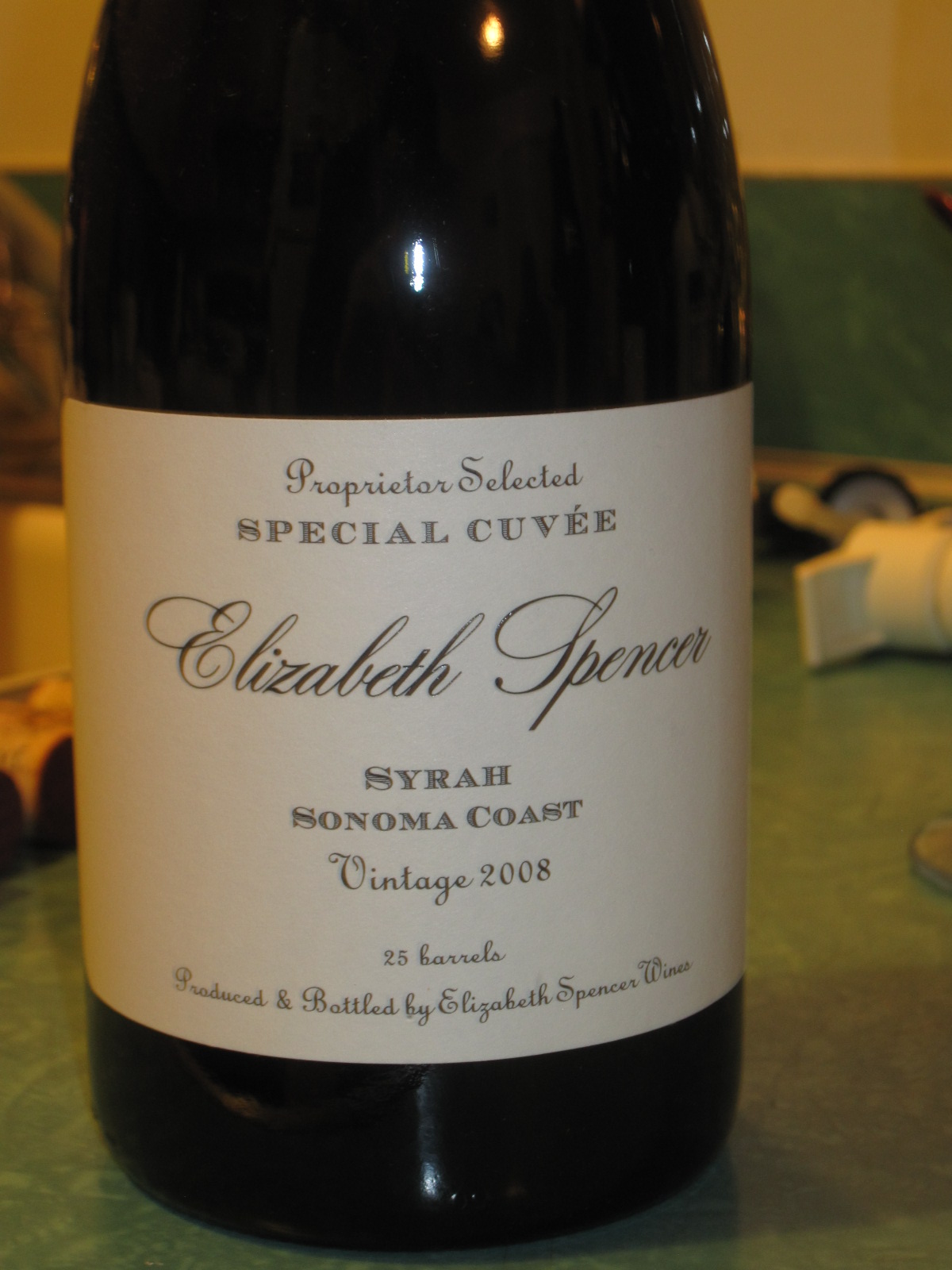
2008 Elizabeth Spencer Syrah "Special Cuvee" Sonoma Coast: A complex nose of fresh black fruit, molasses, baking spices, dried herbs, and wood are unfortunately held back by a subtle alcoholic burn. Still, I'd be lying if I denied that this syrah smells incredibly good. On the palate it's rich and mouth-coating, revealing flavors of blackberry, peppercorn, tar, and mocha. Chewy tannin give a wonderful structure to balance out the ripeness. The whole packages is closed out with an impressively long finish of herbs and dusty soil notes. I must say though, that I don't believe for one minute that this is truly 14.9% alcohol, I'd bet it's closer to 16.0%. $35 srp.
2006 James David Cellars Syrah Central Coast: Pours a very dark garnet, almost purple, in the glass. Aromas of Almond Joy candy, pencil lead, blackberry preserve, and fresh cut lumber. Definitely oaky, and there may be a an ethyl acetate issue forming due to the nail-polish remover burn. The palate is thin and drying, without much character other than alcoholic burn and grainy wood. With a listed alcohol of 15.7%, I suspect that could be a lot higher. I did notice the tannin, and if this wine had any lush, clean fruit flavors to show, that tannic structure would do a beautiful job creating balance. $N/A.
2005 James David Cellars Syrah Eaglepoint Ranch Mendocino: Pouring a much "redder" ruby into my glass, my first impressions of the bouquet were of garrigue and cherry preserves. There's a pleasant earthiness along with some nice mocha notes and a dollop of wood. There's some alcoholic heat too, but it isn't distracting. This style, for my palate, is what I love about California syrah. Balanced fruit, earth, and oak elements all play nicely together. There's some firm tannin at play, acting to nudge each element back into balance as they struggle to break out of the tannic pen. Red cherry and raspberry, herbs, and a dusty minerality compose a syrah I'd love to pair with a steak, or ribs. This 2006 is wearing its age with grace and class, as well as looking to improve with a few more years in bottle. 15.5% abv. $N/A.
Maybe the title of this post should be "The Good, The Bad, & The Ugly". On the one hand, the Mandolin was disappointing to me, again, despite it's generally good reviews from Steve Heimoff and Bev-X. I could chalk it up to bottle variation though, especially at such a low price point. The 2006 James David was way too big and alcoholic for me, but if you're into lush, rich syrah you will love this one. On the other hand, the 2005 James David Eaglepoint Ranch was delicious despite the high-ish alcohol, as was the Elizabeth Spencer.
Any of these wines would pair beautifully with grilled meat, pizza, lamb, lasagna, or on their own. Despite being a full-bodied wine, syrah is versatile, and each of these wines does showcase a certain stylistic take on the grape. As we move closer to summer, I hope to offer more syrah reviews so please don't hesitate to recommend examples to me!
These wines were media samples from their respective producers.
Beau Carufel
Wednesday, April 4, 2012
Finger Lakes Red Wine, A Long Way To Go
Last month I was offered the chance to take part in a live, virtual tasting featuring the red wines of the Finger Lakes region in New York. I've done virtual tastings in the past and they've always been a great learning experience. Usually I get to explore a new (to me) region as well as further train my palate in wine evaluation. I jumped at the chance to participate in the Fingers Lakes Red Wines virtual tasting because I am intrigued by what is coming out of New York right now. The region is well known for its rieslings but less so for the reds.
There were eight of us from the media participating, along with a representative (usually the winemaker) from each winery also on hand to take questions. For an hour we media types were able to ask questions and learn about each wine while we tasted them one by one.
The wines we tasted are listed here:
2009 Lakewood Vineyards Lemberger
2009 Fox Run Vineyards Lemberger
2010 Anthony Road Wine Company Cabernet Franc/Lemberger
2010 Inspire Moore Winery Wisdom Cabernet Franc Reserve
2010 Damiani Wine Cellars Pinot Noir
2010 Three Brothers Wineries Barbera
2010 Billsboro Winery Syrah
2006 Shaw Vineyards Cabernet Sauvignon
We tasted in two flights, four wines a piece, with the first four listed above being in the first flight and the next four in the subsequent flight. I can see the reasoning behind this, since Lemberger is lighter than say syrah or cabernet sauvignon. Breaking up the eight wines also worked out for logistical reasons, but that's not really important to this blog.
At first I intended to post the tasting notes for each wine, but that was before the virtual tasting. Afterwards, I didn't really want to even write a post but feel obligated to do so.
Here's the problem: Out of those eight wines, one was enjoyable. The 2010 Billsboro Winery Syrah was pretty nice, and more importantly it was fault-free. Every other wine in the tasting had problems; volatile acidity, brettanomyces, baterial contamination, over-use of oak, and under-ripe flavors being chief among them. My impressions were echoed by other well known wine bloggers. Of course, there was the obligatory sample-whore praising every single wine, but those kinds of wine bloggers are in every tasting. Still, the fact that almost every wine was staggeringly difficult to drink really put a damper on the excitement.
Since I don't know much about New York wines, let alone the reds, I made some inquiries about why we got this lineup. One person I spoke to said: "The wines in this tasting don't necessarily represent the region's best reds. Not by a long shot.". Ouch. That's a strong indictment of the wines, said politely.
I tasted each wine over the course of three days and the Three Brothers Barbera improved a little bit. Therefore, along with the Billsboro Syrah, I found two (one and a half, really) in my first tasting experience of red wines from the Finger Lakes. To say that's an inauspicious start is an understatement.
There are many other producers in the Finger Lakes region and I am not drawing any conclusions as to the overall quality, because that would be unfair. Stylistically, I think I understand what the producers are going for, and in my opinion the flaws cover up what could be some very interesting flavor profiles. I also realize this article isn't going to win me any fans, but I feel compelled to write about my experience.
Beau Carufel
There were eight of us from the media participating, along with a representative (usually the winemaker) from each winery also on hand to take questions. For an hour we media types were able to ask questions and learn about each wine while we tasted them one by one.
The wines we tasted are listed here:
2009 Lakewood Vineyards Lemberger
2009 Fox Run Vineyards Lemberger
2010 Anthony Road Wine Company Cabernet Franc/Lemberger
2010 Inspire Moore Winery Wisdom Cabernet Franc Reserve
2010 Damiani Wine Cellars Pinot Noir
2010 Three Brothers Wineries Barbera
2010 Billsboro Winery Syrah
2006 Shaw Vineyards Cabernet Sauvignon
We tasted in two flights, four wines a piece, with the first four listed above being in the first flight and the next four in the subsequent flight. I can see the reasoning behind this, since Lemberger is lighter than say syrah or cabernet sauvignon. Breaking up the eight wines also worked out for logistical reasons, but that's not really important to this blog.
At first I intended to post the tasting notes for each wine, but that was before the virtual tasting. Afterwards, I didn't really want to even write a post but feel obligated to do so.
Here's the problem: Out of those eight wines, one was enjoyable. The 2010 Billsboro Winery Syrah was pretty nice, and more importantly it was fault-free. Every other wine in the tasting had problems; volatile acidity, brettanomyces, baterial contamination, over-use of oak, and under-ripe flavors being chief among them. My impressions were echoed by other well known wine bloggers. Of course, there was the obligatory sample-whore praising every single wine, but those kinds of wine bloggers are in every tasting. Still, the fact that almost every wine was staggeringly difficult to drink really put a damper on the excitement.
Since I don't know much about New York wines, let alone the reds, I made some inquiries about why we got this lineup. One person I spoke to said: "The wines in this tasting don't necessarily represent the region's best reds. Not by a long shot.". Ouch. That's a strong indictment of the wines, said politely.
I tasted each wine over the course of three days and the Three Brothers Barbera improved a little bit. Therefore, along with the Billsboro Syrah, I found two (one and a half, really) in my first tasting experience of red wines from the Finger Lakes. To say that's an inauspicious start is an understatement.
There are many other producers in the Finger Lakes region and I am not drawing any conclusions as to the overall quality, because that would be unfair. Stylistically, I think I understand what the producers are going for, and in my opinion the flaws cover up what could be some very interesting flavor profiles. I also realize this article isn't going to win me any fans, but I feel compelled to write about my experience.
Beau Carufel
Sunday, March 25, 2012
Spring Wine Tasting Roundup
Since spring is on it's way, I wanted to post up some tasting notes from samples I've received over the past few months. There's something for everyone here, from a delicious sauvignon blanc from New Zealand, a couple of fun reds from California, and a wonderful Rioja at an unbeatable price point. A quick check on www.wine-searcher.com will help you find any of these wines, and most are available nationwide.
2010 Brancott B. Sauvignon Blanc Marlborough:
Aromas of grapefruit, cut grass, and wet rock immediately let you know it’s a New Zealand sauvignon blanc. There’s a whiff of passion fruit, ever so faint, weaving amongst the grassy bouquet.
There’s really nothing wrong with this wine, it’s clean with lots of acidity that shows up as more citrus elements intermixed with tropical fruit and a twist of minerality. A varietally honest sauvignon blanc, if one that’s somewhat generic. At the price, around $10 most places, it's a great everyday white wine for the spring weather.

2007 Brancott Terraces Pinot Noir Marlborough:
Lots of red fruit and wood initially, but the wood isn’t necessarily oak as much as tree bark. Notes of black tea, soil, and a red licorice component round out the bouquet. Interesting and enticing are the two words that sprung to mind.
Very clean flavors of cherry, raspberry, and forest floor are held together by an uplifting acidity that creates a very pleasant, light mouthfeel. The finish is airy but works well for this wine. Not an especially textured pinot noir by any means, but one that's very easy to drink and versatile.

2009 Francis Ford Coppola Director’s Cut Pinot Noir Sonoma Coast:
Nice bouquet of warm dark fruit, baking spice, vanilla, and a hint of wooden match. Seems a bit tight but it’s hard to imagine this wine needing age considering the price. I kept returning to the glass to smell it, because the way the baking spices and red fruit are integrated is quite alluring.
The palate is too light and uninteresting, with one dimensional notes of red fruit. The finish is evaporative and all too brief. I rarely say it, but this wine tastes cheap. A pity, since 2009 produced some exceptional pinot noir in California. After the wonderful bouquet, the mouthfeel is a huge letdown.
2009 La Follette Sangiacomo Vineyard Pinot Noir:
Smells of green herb, oak, but with pleasant notes of earth and spices. Not much fruit, and surprisingly no heat considering the labeled 15.5% abv.
Clunky acidity dominates the palate, with some raspberry and plum notes struggling to manifest. Bright, linear acidity traces a line through some forest-floor and vanilla flavors. I think this is a big pinot noir struggling to find it's place, and perhaps needs some age.

2006 Camp Viejo Reserva Rioja:
Strong aromas of sundried tomatoes, herbs, cherries, and dusty red soil. Very much what I would expect in a Rioja. Good complexity indicates the wine might be drinking near or at it’s peak. Some subtle smoked-meat is present but very faint, hopefully it would come through more after some time open.
Easy drinking, with a tannin framework surrounding flavors of dried cherry, soil, and dried herbs. Slightly rustic, in a charming way. Finishes cleanly, with some light acidity paving the way for another bite of food. A killer deal for under $10 in most markets. This is one to stock up on for those Wednesday night pizza sessions!

2009 Francis Ford Coppola Claret:
Black fruit, herbs, dusty soil and some woodsy aromas. Very straightforward and unoffensive. I did find a strange-ish campfire or barbecue aroma, it added to the bouquet, gave it a sense of uniqueness. Unfortunately the integration of the various grapes isn't happening as well as I'd like though, with disparate elements refusing to coexist.
Initially very expressive with black fruit and tannin, wood, and campfire but it quickly became a mess of sweet fruit. That jammy note stayed through till the finish, where a nice tannic streak came to the rescue. Although the finish was brief, I think the structure saved it. Tasted the next day with consistent notes.
2009 Mandolin Cabernet Sauvignon Central Coast:
Simple bouquet of red fruit, wood smoke, earth, and not much else. A bit disappointing, but for around $10 it's precisely what I would expect from a Central Coast cabernet at that price level.
On the palate, flavors of salted meat and cherries persist with flavors of sulfur (burnt match) and a leathery tannin component. Over time, the mouthfeel evolves nicely, lending some dried currant flavors that do wonders to make this wine more palatable. Tasted the next day, it was much more complete and enjoyable.

2009 Parlay “The Bookmaker” Red Table Wine California:
The bouquet is full of candied red fruit, herbs, and earth. Some funk is present, but it blows off quickly. Good complexity, and appealing scents kept drawing me back for more sniffs. There are a lot of grapes here including cabernet sauvignon, syrah, petite sirah, and petite verdot.
A very ripe, fruit-forward wine with lots of plum and black cherry. I noted a vanilla-wood taste as well, indicative of oak barrel aging (or oak chips). This is mouth-filling red that people who enjoy that style will probably love. Lacks acid for my palate though, and the finish is too sweet and ripe, needs to lighten up and taper off more gracefully. That said, for $20 it's a nice bottle of wine that delivers at the price point.
2009 Graffigna Centenario Reserve Malbec Mendoza:
Smokey baking spices, cherry preserve, and plums followed by oak-vanilla notes make up the bouquet. It's very typical for a low-priced malbec and smells delicious.
This wine is lush and soft, but goes nowhere with that. Rather insipid, and the tannin that builds through the mid palate essentially creates a framework for fruit that should be there but is nowhere to be found. Very disappointing. Tasted the next day with consistent notes.

2009 Mandolin Syrah Central Coast:
Stinky nose of sulfur and rotting wood. Very disappointing. Perhaps something went wrong during fermentation?
Overripe, gloppy fruit that is reminiscent of artificial plum flavoring. Hollow through to the finish where an acidic kick surprised me, but not in a good way. Expected a lot more from this wine considering how nice the cabernet sauvignon was.
The good, the bad, the ugly. With the prices of these wines ranging from $7 all the way up to almost $40, I should have expected nothing less. What struck me though was how "processed" some of these wines tasted. In winemaker-speak, they'd be called "heavily manipulated", to a wine geek they don't express any sense of place. Put more bluntly, most of the cheaper wines here tasted sterile, like they were designed to fit a preconceived notion of what the wine should taste like. That is the price we often pay for inexpensive wine though. I suppose though, that finding those rare gems that are at once inexpensive but also expressive is what makes them special.
All the wines in this feature were media samples for review purposes.
Beau Carufel
Aromas of grapefruit, cut grass, and wet rock immediately let you know it’s a New Zealand sauvignon blanc. There’s a whiff of passion fruit, ever so faint, weaving amongst the grassy bouquet.
There’s really nothing wrong with this wine, it’s clean with lots of acidity that shows up as more citrus elements intermixed with tropical fruit and a twist of minerality. A varietally honest sauvignon blanc, if one that’s somewhat generic. At the price, around $10 most places, it's a great everyday white wine for the spring weather.
2007 Brancott Terraces Pinot Noir Marlborough:
Lots of red fruit and wood initially, but the wood isn’t necessarily oak as much as tree bark. Notes of black tea, soil, and a red licorice component round out the bouquet. Interesting and enticing are the two words that sprung to mind.
Very clean flavors of cherry, raspberry, and forest floor are held together by an uplifting acidity that creates a very pleasant, light mouthfeel. The finish is airy but works well for this wine. Not an especially textured pinot noir by any means, but one that's very easy to drink and versatile.
2009 Francis Ford Coppola Director’s Cut Pinot Noir Sonoma Coast:
Nice bouquet of warm dark fruit, baking spice, vanilla, and a hint of wooden match. Seems a bit tight but it’s hard to imagine this wine needing age considering the price. I kept returning to the glass to smell it, because the way the baking spices and red fruit are integrated is quite alluring.
The palate is too light and uninteresting, with one dimensional notes of red fruit. The finish is evaporative and all too brief. I rarely say it, but this wine tastes cheap. A pity, since 2009 produced some exceptional pinot noir in California. After the wonderful bouquet, the mouthfeel is a huge letdown.
2009 La Follette Sangiacomo Vineyard Pinot Noir:
Smells of green herb, oak, but with pleasant notes of earth and spices. Not much fruit, and surprisingly no heat considering the labeled 15.5% abv.
Clunky acidity dominates the palate, with some raspberry and plum notes struggling to manifest. Bright, linear acidity traces a line through some forest-floor and vanilla flavors. I think this is a big pinot noir struggling to find it's place, and perhaps needs some age.
2006 Camp Viejo Reserva Rioja:
Strong aromas of sundried tomatoes, herbs, cherries, and dusty red soil. Very much what I would expect in a Rioja. Good complexity indicates the wine might be drinking near or at it’s peak. Some subtle smoked-meat is present but very faint, hopefully it would come through more after some time open.
Easy drinking, with a tannin framework surrounding flavors of dried cherry, soil, and dried herbs. Slightly rustic, in a charming way. Finishes cleanly, with some light acidity paving the way for another bite of food. A killer deal for under $10 in most markets. This is one to stock up on for those Wednesday night pizza sessions!
2009 Francis Ford Coppola Claret:
Black fruit, herbs, dusty soil and some woodsy aromas. Very straightforward and unoffensive. I did find a strange-ish campfire or barbecue aroma, it added to the bouquet, gave it a sense of uniqueness. Unfortunately the integration of the various grapes isn't happening as well as I'd like though, with disparate elements refusing to coexist.
Initially very expressive with black fruit and tannin, wood, and campfire but it quickly became a mess of sweet fruit. That jammy note stayed through till the finish, where a nice tannic streak came to the rescue. Although the finish was brief, I think the structure saved it. Tasted the next day with consistent notes.
Simple bouquet of red fruit, wood smoke, earth, and not much else. A bit disappointing, but for around $10 it's precisely what I would expect from a Central Coast cabernet at that price level.
On the palate, flavors of salted meat and cherries persist with flavors of sulfur (burnt match) and a leathery tannin component. Over time, the mouthfeel evolves nicely, lending some dried currant flavors that do wonders to make this wine more palatable. Tasted the next day, it was much more complete and enjoyable.
2009 Parlay “The Bookmaker” Red Table Wine California:
The bouquet is full of candied red fruit, herbs, and earth. Some funk is present, but it blows off quickly. Good complexity, and appealing scents kept drawing me back for more sniffs. There are a lot of grapes here including cabernet sauvignon, syrah, petite sirah, and petite verdot.
A very ripe, fruit-forward wine with lots of plum and black cherry. I noted a vanilla-wood taste as well, indicative of oak barrel aging (or oak chips). This is mouth-filling red that people who enjoy that style will probably love. Lacks acid for my palate though, and the finish is too sweet and ripe, needs to lighten up and taper off more gracefully. That said, for $20 it's a nice bottle of wine that delivers at the price point.
2009 Graffigna Centenario Reserve Malbec Mendoza:
Smokey baking spices, cherry preserve, and plums followed by oak-vanilla notes make up the bouquet. It's very typical for a low-priced malbec and smells delicious.
This wine is lush and soft, but goes nowhere with that. Rather insipid, and the tannin that builds through the mid palate essentially creates a framework for fruit that should be there but is nowhere to be found. Very disappointing. Tasted the next day with consistent notes.
2009 Mandolin Syrah Central Coast:
Stinky nose of sulfur and rotting wood. Very disappointing. Perhaps something went wrong during fermentation?
Overripe, gloppy fruit that is reminiscent of artificial plum flavoring. Hollow through to the finish where an acidic kick surprised me, but not in a good way. Expected a lot more from this wine considering how nice the cabernet sauvignon was.
The good, the bad, the ugly. With the prices of these wines ranging from $7 all the way up to almost $40, I should have expected nothing less. What struck me though was how "processed" some of these wines tasted. In winemaker-speak, they'd be called "heavily manipulated", to a wine geek they don't express any sense of place. Put more bluntly, most of the cheaper wines here tasted sterile, like they were designed to fit a preconceived notion of what the wine should taste like. That is the price we often pay for inexpensive wine though. I suppose though, that finding those rare gems that are at once inexpensive but also expressive is what makes them special.
All the wines in this feature were media samples for review purposes.
Beau Carufel
Labels:
2006,
2007,
2009,
2010,
Cabernet Sauvignon,
Claret,
Malbec,
Pinot Noir,
Rioja,
Sauvignon Blanc,
Syrah
Tuesday, February 21, 2012
Oregon Pinot Noir Blind Tasting
A few weeks ago Becky and I took part in a blind pinot noir tasting with her parents friends. They are part of a tasting group that meets once a month and we were fortunate enough to be invited, perhaps due to our good behavior the previous time..perhaps... While the theme was Oregon pinot noir, due to a misunderstanding I thought the theme was just pinot noir, and therefore brought along an international sample that I hoped would wow the rest of the tasters. More on that later.
This was what I'd term a "loose-blind" tasting because the only knowns were that we were tasting pinot noir and it was (supposedly) from Oregon. The vintage spread was 2001-2010, in my mind a great thing because it forced us all to think about each wine and dredge up previous tasting experiences. I always tell people looking to learn more about wine that blind tasting is one of the most effective tools you can use. Reading books is great, so is visiting tasting rooms and large events, but blind tasting engages the brain's memory centers in a powerful way, teaching us to evaluate and retain the characteristics of wines we taste.
Below is a list of the wines we tasted, put in order from first to last according to my rankings that night. It's important to note that this only represents how the wine tasted to me that night, and isn't necessarily an indicator of overall quality. I am presenting my tasting notes raw and unedited, save for spelling corrections, so that you might get the most accurate possible view of what I smelled and tasted.
1. 2010 Willamette Valley Vineyards Whole Cluster Pinot Noir Willamette Valley:
Nose: Candy (jolly rancher), strawberries, vanilla..oak, clean and fresh. Green notes..stemmy even, partial whole-cluster fermented? Good stuff, I like how intense the bouquet is without veering into jam territory.
Palate: Light, uplifting fruit, red cherries and wild strawberries. Green, stemmy notes add texture. Some tannin, grippy, but not overwhelming. Impressive balance, light yet intense and full. YUM.
2. 2009 Craggy Range "Te Muna Road" Pinot Noir Martinborough:
Nose: Zippy raspberry, rose petal, hints of baking spice, and a touch of oak. Beautifully aromatic, reminds me of the best of CA and OR pinot's. 2006/7Oregon pinot?
Palate: Ripe red berry, oak, spices, raspberry jam, taut acidity that refreshes the palate. Great structure. Impressive! **Note: I later threw this result out because the wine was not from Oregon.**
3. 2009 Montinore Estate Reserve Pinot Noir Willamette Valley:
Nose: Oregon funk, bright fruit, woody. Nice minerality, it's a dusty, earthy kind. Balanced nose, I like the interplay between the fruit and forest floor notes.
Palate: Nice acidity, keeps the mouthfeel light and fun. Red fruit...cherry and raspberry, good proportions of each. Well-integrated tannin, this is so approachable and friendly right now. Young, 2009 or 2010 maybe?
4. 2001 Panther Creek Cellars Bednarik Vineyard Pinot Noir Willamette Valley:
Nose: Very light, with red fruit and a hint of green stems. Some earth and Oregon funk that's and muted. Seems graceful, could be an older vintage?
Palate: Very smooth approach brings some fruit, spice, and a touch of oak. There's some alcohol on the finish but it's not too harsh. Nice flavor integration, seems kind of simple though, lacking any "wow" factor.
5. 2006 Oak Knoll Red Hill Vineyard Pinot Noir Willamette Valley:
Nose: Loads of bacon-y meat, teriyaki, dark fruits, and brown sugar. Interesting savory notes, could it be Brettanomyces? Not much fruit or Oregon funk pushing through, hard to figure what this is.
Palate: Oaky, like really oaky. Sweet baking spices, cured meats, but here are some bright red fruits finally coming out. Very mellow palate presence, smooth and soft despite the spice and oak. Uninspiring though.
6. 2008 Johan Nils Reserve Pinot Noir Willamette Valley:
Nose: Tons of oak, like a vanilla-soaked bag of wood chips. Behind the oak lie ripe red cherry and herb aromas, but it's disappointingly oaky compared to the others. Very light bit of funk, almost completely washed out by the wood.
Palate: Sweet oak and cherry preserves dominate, the acidity feels beaten down. May be a young pinot but right now it's just too heavy and clunky to enjoy. Hopefully not the wine I brought! Sticks out for the wrong reasons.
What, if any, conclusions can I draw from this tasting?
A lot, actually: I have much to learn about Oregon pinot noir, for starters. Also I realized that I've got to learn how to blind-taste better. In this case, I let myself get distracted and I think my notes showed that. My distrust of what my palate tells me is another thing to work on, and I think it's something a lot of us do. Often what our gut (or palate) tells us right away is invaluable and attention must be paid to those "hunches".
The poor showing by the Johan Nils Reserve was a shock, since Johan is one of my favorite Oregon producers and I am always touting them to my friends and family. I think the Nils will get better with age though, it's going through a "dumb" phase. Willamette Valley Vineyards shocked me with their Whole Cluster pinot, it was so good and so cheap, around $20! Montinore's wines impressed me last time I visited and it was good to see that it wasn't a fluke. The group really enjoyed the Estate Reserve pinot noir, and at around $25 it's a bargain for the quality level.
While I had to discard the wonderful Craggy Range Te Muna Road from the final standings, it really held up against Oregon's array, further proof that New Zealand has come into their own as a pinot noir producer. In the interests of full disclosure, it was a sample sent to me for review purposes.
I suppose tastings like these serve to remind us all that wine is dynamic, ever-changing, and learning about it is a task you will never finish. It could be worse though, because educating yourself about wine is perhaps one of the most fun activities you can do.
Beau Carufel
This was what I'd term a "loose-blind" tasting because the only knowns were that we were tasting pinot noir and it was (supposedly) from Oregon. The vintage spread was 2001-2010, in my mind a great thing because it forced us all to think about each wine and dredge up previous tasting experiences. I always tell people looking to learn more about wine that blind tasting is one of the most effective tools you can use. Reading books is great, so is visiting tasting rooms and large events, but blind tasting engages the brain's memory centers in a powerful way, teaching us to evaluate and retain the characteristics of wines we taste.
Below is a list of the wines we tasted, put in order from first to last according to my rankings that night. It's important to note that this only represents how the wine tasted to me that night, and isn't necessarily an indicator of overall quality. I am presenting my tasting notes raw and unedited, save for spelling corrections, so that you might get the most accurate possible view of what I smelled and tasted.
1. 2010 Willamette Valley Vineyards Whole Cluster Pinot Noir Willamette Valley:
Nose: Candy (jolly rancher), strawberries, vanilla..oak, clean and fresh. Green notes..stemmy even, partial whole-cluster fermented? Good stuff, I like how intense the bouquet is without veering into jam territory.
Palate: Light, uplifting fruit, red cherries and wild strawberries. Green, stemmy notes add texture. Some tannin, grippy, but not overwhelming. Impressive balance, light yet intense and full. YUM.
2. 2009 Craggy Range "Te Muna Road" Pinot Noir Martinborough:
Nose: Zippy raspberry, rose petal, hints of baking spice, and a touch of oak. Beautifully aromatic, reminds me of the best of CA and OR pinot's. 2006/7Oregon pinot?
Palate: Ripe red berry, oak, spices, raspberry jam, taut acidity that refreshes the palate. Great structure. Impressive! **Note: I later threw this result out because the wine was not from Oregon.**
3. 2009 Montinore Estate Reserve Pinot Noir Willamette Valley:
Nose: Oregon funk, bright fruit, woody. Nice minerality, it's a dusty, earthy kind. Balanced nose, I like the interplay between the fruit and forest floor notes.
Palate: Nice acidity, keeps the mouthfeel light and fun. Red fruit...cherry and raspberry, good proportions of each. Well-integrated tannin, this is so approachable and friendly right now. Young, 2009 or 2010 maybe?
4. 2001 Panther Creek Cellars Bednarik Vineyard Pinot Noir Willamette Valley:
Nose: Very light, with red fruit and a hint of green stems. Some earth and Oregon funk that's and muted. Seems graceful, could be an older vintage?
Palate: Very smooth approach brings some fruit, spice, and a touch of oak. There's some alcohol on the finish but it's not too harsh. Nice flavor integration, seems kind of simple though, lacking any "wow" factor.
5. 2006 Oak Knoll Red Hill Vineyard Pinot Noir Willamette Valley:
Nose: Loads of bacon-y meat, teriyaki, dark fruits, and brown sugar. Interesting savory notes, could it be Brettanomyces? Not much fruit or Oregon funk pushing through, hard to figure what this is.
Palate: Oaky, like really oaky. Sweet baking spices, cured meats, but here are some bright red fruits finally coming out. Very mellow palate presence, smooth and soft despite the spice and oak. Uninspiring though.
6. 2008 Johan Nils Reserve Pinot Noir Willamette Valley:
Nose: Tons of oak, like a vanilla-soaked bag of wood chips. Behind the oak lie ripe red cherry and herb aromas, but it's disappointingly oaky compared to the others. Very light bit of funk, almost completely washed out by the wood.
Palate: Sweet oak and cherry preserves dominate, the acidity feels beaten down. May be a young pinot but right now it's just too heavy and clunky to enjoy. Hopefully not the wine I brought! Sticks out for the wrong reasons.
What, if any, conclusions can I draw from this tasting?
A lot, actually: I have much to learn about Oregon pinot noir, for starters. Also I realized that I've got to learn how to blind-taste better. In this case, I let myself get distracted and I think my notes showed that. My distrust of what my palate tells me is another thing to work on, and I think it's something a lot of us do. Often what our gut (or palate) tells us right away is invaluable and attention must be paid to those "hunches".
The poor showing by the Johan Nils Reserve was a shock, since Johan is one of my favorite Oregon producers and I am always touting them to my friends and family. I think the Nils will get better with age though, it's going through a "dumb" phase. Willamette Valley Vineyards shocked me with their Whole Cluster pinot, it was so good and so cheap, around $20! Montinore's wines impressed me last time I visited and it was good to see that it wasn't a fluke. The group really enjoyed the Estate Reserve pinot noir, and at around $25 it's a bargain for the quality level.
While I had to discard the wonderful Craggy Range Te Muna Road from the final standings, it really held up against Oregon's array, further proof that New Zealand has come into their own as a pinot noir producer. In the interests of full disclosure, it was a sample sent to me for review purposes.
I suppose tastings like these serve to remind us all that wine is dynamic, ever-changing, and learning about it is a task you will never finish. It could be worse though, because educating yourself about wine is perhaps one of the most fun activities you can do.
Beau Carufel
Friday, January 20, 2012
TasteLive, December 20th.
In celebration of TasteLive moving into a new building in downtown Santa Rosa, they hosted an opening night party. Since I couldn't join the party in person, the great folks at TasteLive sent me and a selected few bloggers a sampling of wines that will be poured at the tasting room. During the festivities, Joel Quigley interviewed the winemakers and/or owners of each of these wines while we peppered them with questions. The venue was crowded and the atmosphere was great, I think each of us who viewed from afar really did wish we were there.
This month marks the official opening of The Wineyard, located at the Santa Rosa Vintners' Square. In its past life, the facility was a big strip mall. (Re)Construction began in 2011 on a new "urban wine village", and many of the materials used in outfitting each of the venues is recycled, be it barrel staves for decoration or even the bar in the tasting room. From what I can tell, the Santa Rosa Vintner's Square will be a pretty cool place to hang out at in 2012. The list of the wineries located there is listed below:
D'Argenzio Winery
Krutz Family Cellars
Sheldon Wines
Atascadero Creek Winery
Flocchini Winery
Jazz Cellars
Shone Farm Winery (The winery is part of Santa Rosa Junior College)
I liked the fact that this tasting didn't have any cabernet sauvignon or chardonnay, rather, some "back seat" varietals (and pinot noir) that may not get the coverage of the former two grapes but are just as important to California's wine industry.
Without further ado, here's the tasting notes for the wines we bloggers got to taste:
2010 Shone Farm Sauvignon Blanc: The label also says "Estate Grown, Block Seven, Russian River Valley, Sonoma County". Very precise, specific..and academic, no? No surprise then that this winery is part of Santa Rosa Junior College. Immediately this wine shows it's stripes as a sauvignon blanc. Unfortunately it appears to be made in the New Zealand style. And it's a bit under-ripe too, with lots of asparagus, whiffs of ammonia, and freshly cut grass on the nose. Hints of grapefruit hide behind those volatile methoxypyrazines, and a bit of minerality that you have to look hard to find. On the palate it's got some bittering notes, a green, stemmy quality, and the barest traces of grapefruit and lime juice. Refreshing due to it's acidity, but not something I'd want more than a glass of.
2006 Flocchini Andrea La Rue Pinot Noir Sonoma Coast: I didn't know what to expect from this pinot noir. All too often, Sonoma Coast pinots are over-oaked and juiced with syrah to pump up the flavors. Luckily that trend is falling by the wayside. This Flocchini doesn't taste like it has any syrah added and the oak treatment is minimal. The bouquet is a melange of cherry and strawberry, baking spice, campfire, and a dusty earth note. Flavors of red fruit mingle with earth and tannin to create a very nicely balanced wine that has benefited from four years in bottle. I was impressed with the acidity present too, it kept the body of this pinot light and balanced against the fruit and tannin.
2008 Atascadero Creek Zinfandel Russian River Valley: This zinfandel comes from the Haun Ranch, outside Healdsburg. There's 90% zin with a smattering of other red grapes, and the zinfandel vines go back to 1948. The bouquet is surprisingly complex, with notes of anise, mixed berry preserve, mint, and a touch of heat from the alcohol. I picked up a medicinal scent that seemed to meander throughout the bouquet too, but I couldn't pin it down. For people who like big, juicy zinfandels, this is your wine. The mixed berry comes through, as does that medicinal thing I picked up on the nose. Mild tannin, and a very nice smooth finish. At around $28 a bottle it's extremely well priced and something I would love to pair with barbecue.
2007 Jazz Cellars Las Madres Vineyard Carneros: I'm glad a syrah was included, especially a 2007. Carneros to me is a strange region, you see vineyards growing side by side that really shouldn't. For example, pinot noir, syrah, zinfandel, and sauvignon blanc. It's quite confusing. But a lot of the time, it just works. Like in this case, the team at Jazz Cellars put together a delicious syrah. Aromatically this 2007 Jazz is all smoked meat, black cherry, plum skin, and milk chocolate, with just a touch of a green stemmy quality and a tickle of alcohol. On the palate, well integrated fruit and oak, a touch of pepper, and some beef jerky notes all combine for a nice mouthfeel. Smooth, integrated tannin creates a nice framework for the fruit and savory notes. The alcohol is nearly imperceptible compared to the nose, which given the 15% listed, is impressive. At $34 a bottle it's certainly not cheap but the quality you get is wonderful.
Four wines, three of which were quite good and the sauvignon blanc just didn't do it for me. Still, guests at The Wineyard got to try some delicious wines and if this is indicative of the lineups that'll be poured each week, I predict much success for the Santa Rosa Vintners' Square going forward.
As always, I thank Cailyn McCauley and Joel Quigley for inviting me to participate. 2011 was my first year doing TasteLive events and I had a lot of fun. For those of you who follow me on Twitter, sorry for clogging up your Tweet-stream on multiple occasions! If you are a winery looking to do a TasteLive event, contact Cailyn or Joel at CreativeFurance Marketing.
These wines were media samples.
Beau Carufel
Thursday, January 12, 2012
L'Oca Ciuca Brunello di Montalcino, Drunken Goose Wine
One of my resolutions for 2012 was to get out and taste more Italian wines, so getting this sample from the folks at winechateau.com was a great way to kick things off. Every few months, they send me a bottle of something fun and interesting to taste and blog about, usually imported, and always at a really good price. This time I was given the option of this 2006 L'Oca Ciuca Brunello di Montalcino or a 2006 Tenuta Rocca Barolo, both wines which received high scores from Wine Spectator.
I chose the Brunello because it would be more approachable right now, compared to the Barolo which will probably be a tannic beast for the forseeable future. Don't go grabbing your torches and pitchforks yet though, I am well aware that Brunello di Montalcino wines also need a lot of age, often over ten years before they start truly showing the magnificent angles and nuances that sangiovese can produce.
What is Brunello di Montalcino then? Brunello is the regional (in Montalcino) name for the sangiovese grosso species of grape. In the regional dialect, Brunello means "little dark one", a reference to the size and color of the grapes. A wine bearing the DOCG stamp from the region can only contain sangiovese and must follow strict barrel and bottle aging requirements. Montalcino is a warm, dry region in Tuscany, a region also home to Chianti. Vineyards in Montalcino are planted in varied soils including limestone, clay, volcanic soil, schist, and a crumbly marl known as galestro. Vineyard elevation is between 500 and 1,500 feet.
Now let's talk about this Brunello, a 2006 called L'Oca Ciuca, or "Drunken Goose".
After being passed through a vinturi into my glass for about two hours, I figure it was time to give the L'Oca Ciuca a proper evaluation. The 2006 vintage has been getting some great press lately, with the print media critics calling it a superb, balanced year.
The L'Oca Ciuca Brunello has a beautifully aromatic nose full of dark cherries, spice, saddle leather, and a whiff of sweet plum. The secondary flavors manifest as a dusty, brown soil component as well as a hint of thyme. The aromatic complexity of good Brunello never fails to put a smile on my face. I'd even be so bold as to state this is a wine, when sniffed, that you will instinctively know is great. Not good, fine, decent, okay, but a great bottle of wine.
The palate presence gives away this wine's age, but it has already developed a silky, beautiful texture. There's the ever-present sangiovese acidic snap, enveloping gorgeous black cherry and plum flavors. As the wine continues to unfold, an earthy note reaches through the tannic mid-palate, beckoning you towards a finish of dried herb, oak, tar, and more silky smooth tannin. There's a soulful depth to this wine, like Etta James singing "At Last", where you cannot help but be touched by the magic at play. Like the song's rise and fall, the flavors rise and fall in intensity, leaving you with the sense that you've just experienced something special.
I highly recommend buying a few bottles of the 2006 L'Oca Ciuca, and Winechateau.com is selling it for $29.97, versus the regular price of $65. You can visit their site and purchase some to drink, but I recommend a few more years of rest for this Brunello. After 2015, you'll be rewarded with even more flavor integration and silky texture.
This wine was a sample for review purposes from WineChateau.com
Beau Carufel
I chose the Brunello because it would be more approachable right now, compared to the Barolo which will probably be a tannic beast for the forseeable future. Don't go grabbing your torches and pitchforks yet though, I am well aware that Brunello di Montalcino wines also need a lot of age, often over ten years before they start truly showing the magnificent angles and nuances that sangiovese can produce.
What is Brunello di Montalcino then? Brunello is the regional (in Montalcino) name for the sangiovese grosso species of grape. In the regional dialect, Brunello means "little dark one", a reference to the size and color of the grapes. A wine bearing the DOCG stamp from the region can only contain sangiovese and must follow strict barrel and bottle aging requirements. Montalcino is a warm, dry region in Tuscany, a region also home to Chianti. Vineyards in Montalcino are planted in varied soils including limestone, clay, volcanic soil, schist, and a crumbly marl known as galestro. Vineyard elevation is between 500 and 1,500 feet.
Now let's talk about this Brunello, a 2006 called L'Oca Ciuca, or "Drunken Goose".
After being passed through a vinturi into my glass for about two hours, I figure it was time to give the L'Oca Ciuca a proper evaluation. The 2006 vintage has been getting some great press lately, with the print media critics calling it a superb, balanced year.
The L'Oca Ciuca Brunello has a beautifully aromatic nose full of dark cherries, spice, saddle leather, and a whiff of sweet plum. The secondary flavors manifest as a dusty, brown soil component as well as a hint of thyme. The aromatic complexity of good Brunello never fails to put a smile on my face. I'd even be so bold as to state this is a wine, when sniffed, that you will instinctively know is great. Not good, fine, decent, okay, but a great bottle of wine.
The palate presence gives away this wine's age, but it has already developed a silky, beautiful texture. There's the ever-present sangiovese acidic snap, enveloping gorgeous black cherry and plum flavors. As the wine continues to unfold, an earthy note reaches through the tannic mid-palate, beckoning you towards a finish of dried herb, oak, tar, and more silky smooth tannin. There's a soulful depth to this wine, like Etta James singing "At Last", where you cannot help but be touched by the magic at play. Like the song's rise and fall, the flavors rise and fall in intensity, leaving you with the sense that you've just experienced something special.
I highly recommend buying a few bottles of the 2006 L'Oca Ciuca, and Winechateau.com is selling it for $29.97, versus the regular price of $65. You can visit their site and purchase some to drink, but I recommend a few more years of rest for this Brunello. After 2015, you'll be rewarded with even more flavor integration and silky texture.
This wine was a sample for review purposes from WineChateau.com
Beau Carufel
Friday, December 30, 2011
Christmas Wine, A Cautionary Tale
This Christmas, I brought wine to the Kramer household. For Thanksgiving and now Christmas, I revel in the opportunity to serve bottles I wouldn't normally open, bottles that are suitable for the occasion. It's not that the Kramers don't have enough wine, but that I seek a somewhat perverse satisfaction in presenting wines to them and gauging my palate based off their reactions. As much as I preach "trust your palate", often I am just as guilty of second guessing myself as the next person.
This is the lineup, a set of wines that represent some of my favorite regions around the world. The four are:
2008 A Tribute to Grace Grenache from the Santa Barbara Highlands AVA.
2008 Leonetti Cabernet Sauvignon from the Walla Wall Valley AVA.
2006 Robert Groffier Burgundy from the Passetoutgrains AOC
1999 Chateau Simard Saint-Emilion AOC
Each of these had been acquired over the past year or two via the internet or local wine shops. The prices ranged from around $20 all the way up to $100. With the exception of the grenache, I had not tasted any of these wines before, but have had other examples from either the producer or region.
First though, some sparkling wine from the Willamette Valley. This Elk Cove beauty was picked up by Kim Kramer a few days ago when we went tasting up and down the Willamette. The base wine was made in 1999 and bottled in 2000. In 2010 it was first disgorged, and when it's gone, it's gone. To my knowledge, Elk Cove hasn't made any more vintages of sparkling wine since.
How is it? In a word: wonderful. Although it's not as yeasty or doughy as a lot of Champagnes, it retains a bright crispness and layers of apple, pear, lemon zest, and a hint of apricot. Despite sitting on the lees for a decade, there isn't a lot of creamy weight to the wine, something both Kim and I found very interesting. The bubbles are small and uplifting, just like in a real Champagne, providing excellent mouthfeel. For about $30, this is one of the tastier domestic sparkling wines I've had in 2011. Only 200 cases were made, so it's best to purchase some now before it's all gone.
Moving on to the wines we had with the meal:
2008 A Tribute to Grace Grenache Santa Barbara Highlands: Already on my list of top wines I tasted in 2011, this grenache didn't disappoint. Sourced from vineyards over 2,500 feet high, the wine is the color of fresh-pressed strawberry juice. It's moderately opaque too, indicating it's unfined and unfiltered. The nose is redolent of raspberry sorbet, rose petal, wild strawberry, and black peppercorn. Initially there's a burst of acidity layered with raspberry, that recedes quickly into cracked pepper that sweeps the insides of your palate. Strawberries, wild and a touch green, bring the mid-palate through to a sour-cherry laden finish. All the ripeness is tempered by the acidity, balancing this wine out perfectly. My only regret is that this was my last bottle of the 2008.
2008 Leonetti Cabernet Sauvignon Walla Walla Valley: I bought some bottles of this in the Fall, intent on aging them for many years, but I also reasoned that a bottle of wine that routinely goes for $100 should be pretty awesome right now. This is one of Washington's cult wineries, and the cabernet is routinely awarded huge scores from the print rags. 2008's Leonetti cab is a blend of 77% cabernet sauvignon, 16% merlot, 4% carmenere, 3% malbec. I decanted this for several hours, reasoning that despite it's youth, a decanter would help bring out some great flavors. I was wrong. Aromatically pleasing with notes of tobacco, cassis, tar, and black fruits built anticipating for an equally complex palate presence. Sadly, this wine was flat out boring to drink. Lots of sloppy black fruit up front, a somewhat hollow mid-palate, as if the wine evaporated, and a finish so oaky that it felt like someone dragged a vanilla-soaked cedar plank across the back of my tongue. If this is something that gets high scores, it's a mystery as to how. I'll probably age the other bottle I have for a few years but this is a lesson: don't always believe the hype.
1999 Chateau Simard Saint-Emilion: I paid $20 for this wine at San Diego Wine Company back during the summer, so I had appropriate expectations. However, there was an undercurrent of excitement that I cannot deny feeling, since most of my Bordeaux are far younger and not yet ready to drink. The chateau dates back to the 17th century, and the current ownership ages their wines for around 10 years before releasing them. According to my research, this is 70% merlot and 30% cabernet franc. It opened up nicely in the glass, with an earthy, cherry and bittersweet chocolate nose that also had some spices and a whiff of brettanomyces. Some call that terroir, others a flaw, but it wasn't horribly overwhelming to me. On the palate I picked up the cabernt franc's tannin structure, framing a cherry/leather/herbal/raspberry flavor profile. It had very nice mouthfeel and I suspect it could even age longer, perhaps till 2015 or so. I'm pleased with this purchase.
2006 Robert Groffier Bourgogne Passetoutgrains: I should have figured an '06 could be over the hill. Passetoutgrains from Burgundy contain pinot noir and gamay and are usually meant to be consumed within two years of production. I took a gamble, read on to find out how I got burned. The volatile acidity was powerful, almost smothering an undercurrent of cherry-soaked minerality and some barnyard funk. Beyond the VA issues, a dollop of ripe red cherry sat squarely in the mid palate, bounded by a little bit of (good) acidity. More of the barnyard came through, but compared to the VA problems it wasn't bad at all. A somewhat clean finish was laden with chalky minerality and sour cherry notes. Unimpressive wine and at $26, also overpriced. It went down the drain.
Strictly speaking, I went 1 for 4, batting a whopping .250 on Christmas Day. That's not exactly where I want to be. I still struggle to wrap my head around the Ch. Simard because it was interesting wine, just a little boring. Good Bordeaux has a certain palate presence, one that Bordeaux lovers immediately know. While this Saint-Emilion was good, it could have been more smile-inducing. While I would buy the it again, I wouldn't pay over $25 for it.
The Leonetti does confound me as well, it's just so atypical of what I expect from a high-scoring Washington wine. I know my palate is different than Paul Gregutt's, as well as all those who criticized me on Twitter for not loving the wine, giving it enough aging time, or other "helpful" advice. On the day I tasted it, the 2008 Leonetti cabernet was not very interesting wine. Winemakers can do a lot with heavy extraction techniques and oak barrels, as well as acid addition and tannin manipulation. What they cannot do is create a wine with soul, one that touches your palate.
I could wax poetic about the A Tribute to Grace, but what's the point? You can't find it anywhere and as far as I know, the last magnum was snapped up a couple of days ago. Don't ask me how I know that, of course. Luckily the 2009 is available and you should buy as much as you can. One of the best wines I tasted in 2011.
The Passetoutgrains was shit, plain and simple. It didn't hurt my feelings for Burgundy though, just reminded me that even self-important wine bloggers occasionally get burned.
With that, I wish you all a Happy New Year, see you in 2012! Let's drink some great wine together!
Beau Carufel
This is the lineup, a set of wines that represent some of my favorite regions around the world. The four are:
2008 A Tribute to Grace Grenache from the Santa Barbara Highlands AVA.
2008 Leonetti Cabernet Sauvignon from the Walla Wall Valley AVA.
2006 Robert Groffier Burgundy from the Passetoutgrains AOC
1999 Chateau Simard Saint-Emilion AOC
Each of these had been acquired over the past year or two via the internet or local wine shops. The prices ranged from around $20 all the way up to $100. With the exception of the grenache, I had not tasted any of these wines before, but have had other examples from either the producer or region.
First though, some sparkling wine from the Willamette Valley. This Elk Cove beauty was picked up by Kim Kramer a few days ago when we went tasting up and down the Willamette. The base wine was made in 1999 and bottled in 2000. In 2010 it was first disgorged, and when it's gone, it's gone. To my knowledge, Elk Cove hasn't made any more vintages of sparkling wine since.
How is it? In a word: wonderful. Although it's not as yeasty or doughy as a lot of Champagnes, it retains a bright crispness and layers of apple, pear, lemon zest, and a hint of apricot. Despite sitting on the lees for a decade, there isn't a lot of creamy weight to the wine, something both Kim and I found very interesting. The bubbles are small and uplifting, just like in a real Champagne, providing excellent mouthfeel. For about $30, this is one of the tastier domestic sparkling wines I've had in 2011. Only 200 cases were made, so it's best to purchase some now before it's all gone.
Moving on to the wines we had with the meal:
2008 A Tribute to Grace Grenache Santa Barbara Highlands: Already on my list of top wines I tasted in 2011, this grenache didn't disappoint. Sourced from vineyards over 2,500 feet high, the wine is the color of fresh-pressed strawberry juice. It's moderately opaque too, indicating it's unfined and unfiltered. The nose is redolent of raspberry sorbet, rose petal, wild strawberry, and black peppercorn. Initially there's a burst of acidity layered with raspberry, that recedes quickly into cracked pepper that sweeps the insides of your palate. Strawberries, wild and a touch green, bring the mid-palate through to a sour-cherry laden finish. All the ripeness is tempered by the acidity, balancing this wine out perfectly. My only regret is that this was my last bottle of the 2008.
2008 Leonetti Cabernet Sauvignon Walla Walla Valley: I bought some bottles of this in the Fall, intent on aging them for many years, but I also reasoned that a bottle of wine that routinely goes for $100 should be pretty awesome right now. This is one of Washington's cult wineries, and the cabernet is routinely awarded huge scores from the print rags. 2008's Leonetti cab is a blend of 77% cabernet sauvignon, 16% merlot, 4% carmenere, 3% malbec. I decanted this for several hours, reasoning that despite it's youth, a decanter would help bring out some great flavors. I was wrong. Aromatically pleasing with notes of tobacco, cassis, tar, and black fruits built anticipating for an equally complex palate presence. Sadly, this wine was flat out boring to drink. Lots of sloppy black fruit up front, a somewhat hollow mid-palate, as if the wine evaporated, and a finish so oaky that it felt like someone dragged a vanilla-soaked cedar plank across the back of my tongue. If this is something that gets high scores, it's a mystery as to how. I'll probably age the other bottle I have for a few years but this is a lesson: don't always believe the hype.
1999 Chateau Simard Saint-Emilion: I paid $20 for this wine at San Diego Wine Company back during the summer, so I had appropriate expectations. However, there was an undercurrent of excitement that I cannot deny feeling, since most of my Bordeaux are far younger and not yet ready to drink. The chateau dates back to the 17th century, and the current ownership ages their wines for around 10 years before releasing them. According to my research, this is 70% merlot and 30% cabernet franc. It opened up nicely in the glass, with an earthy, cherry and bittersweet chocolate nose that also had some spices and a whiff of brettanomyces. Some call that terroir, others a flaw, but it wasn't horribly overwhelming to me. On the palate I picked up the cabernt franc's tannin structure, framing a cherry/leather/herbal/raspberry flavor profile. It had very nice mouthfeel and I suspect it could even age longer, perhaps till 2015 or so. I'm pleased with this purchase.
2006 Robert Groffier Bourgogne Passetoutgrains: I should have figured an '06 could be over the hill. Passetoutgrains from Burgundy contain pinot noir and gamay and are usually meant to be consumed within two years of production. I took a gamble, read on to find out how I got burned. The volatile acidity was powerful, almost smothering an undercurrent of cherry-soaked minerality and some barnyard funk. Beyond the VA issues, a dollop of ripe red cherry sat squarely in the mid palate, bounded by a little bit of (good) acidity. More of the barnyard came through, but compared to the VA problems it wasn't bad at all. A somewhat clean finish was laden with chalky minerality and sour cherry notes. Unimpressive wine and at $26, also overpriced. It went down the drain.
Strictly speaking, I went 1 for 4, batting a whopping .250 on Christmas Day. That's not exactly where I want to be. I still struggle to wrap my head around the Ch. Simard because it was interesting wine, just a little boring. Good Bordeaux has a certain palate presence, one that Bordeaux lovers immediately know. While this Saint-Emilion was good, it could have been more smile-inducing. While I would buy the it again, I wouldn't pay over $25 for it.
The Leonetti does confound me as well, it's just so atypical of what I expect from a high-scoring Washington wine. I know my palate is different than Paul Gregutt's, as well as all those who criticized me on Twitter for not loving the wine, giving it enough aging time, or other "helpful" advice. On the day I tasted it, the 2008 Leonetti cabernet was not very interesting wine. Winemakers can do a lot with heavy extraction techniques and oak barrels, as well as acid addition and tannin manipulation. What they cannot do is create a wine with soul, one that touches your palate.
I could wax poetic about the A Tribute to Grace, but what's the point? You can't find it anywhere and as far as I know, the last magnum was snapped up a couple of days ago. Don't ask me how I know that, of course. Luckily the 2009 is available and you should buy as much as you can. One of the best wines I tasted in 2011.
The Passetoutgrains was shit, plain and simple. It didn't hurt my feelings for Burgundy though, just reminded me that even self-important wine bloggers occasionally get burned.
With that, I wish you all a Happy New Year, see you in 2012! Let's drink some great wine together!
Beau Carufel
Friday, December 23, 2011
Occupy Syrah Day, Building Awareness For an Under-Appreciated Grape
December 7th is an auspicious day, on it we Americans remember Pearl Harbor, the Japanese sneak attack on America that plunged us into World War II. This day is one for rememberance and hopefully, one for looking toward the future as a time when perhaps we won't be fighting each other anymore.
Fast forward 70 years later, and December 7th was the first ever "Occupy Syrah Day", founded in part by Bill from Cuvee Corner Wine Blog and Shawn from A Wandering Wino. Riffing off the "Occupy Wall Street" theme may not have been popular with some people, but they're party-poopers and not worthy of our time. The point here was to build awareness, through social media, for a grape that here in the United States at least, has a bad rap.
Syrah, once destined to be the "next big thing" according to such prestigious publications as Wine Spectator, never has lived up to those prognostications. Pinot noir came along and kicked over the proverbial sand castle, relegating a grape made famous in the Rhone Valley to something whispered about by wine geeks and pumped out as commercial grade plonk by the Australians. Luckily, the past several years has seen a resurgence, led domestically by outstanding examples in Washington and California. Overseas, Chile and France have come on strong (France..again) while Australia has languished in a sea of cheap shiraz. Unfortunate, but things are finally starting to change in the land of the Kangaroo, as the two selections I was sent will attest to.
2006 James David Cellars Syrah Central Coast: Medium-dark purple in the glass. Right away, aromas of campfire and bacon fat followed by earth, black pepper, and blackberry/blueberry. This is a big, bruiser of a syrah with tons of pepper on the front palate, leading into a core of dark fruit flavors and oak through the mid palate. The finish brings more crushed pepper and a firm dollop of oak as the this syrah winds down. It's clear that the 55 months spent in oak barrels are influencing the wine. The spices come back on the finish too, it's like swallowing a teaspoon of ground peppercorns. Nothing subtle about this syrah, it means business. Best paired with very full-flavored foods. 15.7% abv. $NA.
2008 Wakefield Estate Shiraz Clare Valley: Pours a dark red-purple in the glass. On the nose, a touch of brettanomyces leads into a bouquet of bacon fat, blackberry, smoked meat, blueberry, and vanilla oak. The palate profile consists of ripe black cherry, blackberry,eucalyptus menthol, tobacco, some peppery spice, and more vanilla oak. I like the tannic structure and in particular, the nice finish. This would be a pretty tasty summertime barbecue wine to serve with all manner of charred red meat. $15 is a good price for a shiraz that has a bit more complexity than we expect from that price point. 14.7% abv.
2008 Plantagenet Shiraz Mt. Barker: Pours a very dark red in the glass. Aromas of smoked meat, campfire, red berries, white pepper, herb, and a touch of heat form a pleasing bouquet. Dried basil and thyme, red cherry, menthol, subtle oak notes, and a bit of tannin create an excellent suite of flavor and texture on the palate. I am very surprised at how good this shiraz is, perhaps $20 is the entry for quality Australian shiraz. The balance is something unexpected and the wood doesn't clobber you over the head, despite it enclosing the wine for 20 months. No need to cellar this wine any longer, it's drinking extremely well right now. 14.2% abv. $20.
Participating in the #OccupySyrah day was a lot of fun. While some people lack a sense of humor and were not enthusiastic about the name, I feel it was a lighthearted stab at a topic which we all are aware of. Bill and Shawn did a good job spreading the word and I was pleased to see multiple PR and marketing groups send samples out for bloggers to sample and share. In a small but important way, that was indicative of the power of social media.
For my part, I'm going to keep drinking syrah, be it domestic or imported. I love the complexity that's possible with a well-made syrah, where you truly can feel the power, restrained. In 2012, I hope more wine lovers take the time to explore syrah and share it with their friends.
The wines featured here were media samples.
Beau Carufel
Fast forward 70 years later, and December 7th was the first ever "Occupy Syrah Day", founded in part by Bill from Cuvee Corner Wine Blog and Shawn from A Wandering Wino. Riffing off the "Occupy Wall Street" theme may not have been popular with some people, but they're party-poopers and not worthy of our time. The point here was to build awareness, through social media, for a grape that here in the United States at least, has a bad rap.
Syrah, once destined to be the "next big thing" according to such prestigious publications as Wine Spectator, never has lived up to those prognostications. Pinot noir came along and kicked over the proverbial sand castle, relegating a grape made famous in the Rhone Valley to something whispered about by wine geeks and pumped out as commercial grade plonk by the Australians. Luckily, the past several years has seen a resurgence, led domestically by outstanding examples in Washington and California. Overseas, Chile and France have come on strong (France..again) while Australia has languished in a sea of cheap shiraz. Unfortunate, but things are finally starting to change in the land of the Kangaroo, as the two selections I was sent will attest to.
2006 James David Cellars Syrah Central Coast: Medium-dark purple in the glass. Right away, aromas of campfire and bacon fat followed by earth, black pepper, and blackberry/blueberry. This is a big, bruiser of a syrah with tons of pepper on the front palate, leading into a core of dark fruit flavors and oak through the mid palate. The finish brings more crushed pepper and a firm dollop of oak as the this syrah winds down. It's clear that the 55 months spent in oak barrels are influencing the wine. The spices come back on the finish too, it's like swallowing a teaspoon of ground peppercorns. Nothing subtle about this syrah, it means business. Best paired with very full-flavored foods. 15.7% abv. $NA.
2008 Wakefield Estate Shiraz Clare Valley: Pours a dark red-purple in the glass. On the nose, a touch of brettanomyces leads into a bouquet of bacon fat, blackberry, smoked meat, blueberry, and vanilla oak. The palate profile consists of ripe black cherry, blackberry,
2008 Plantagenet Shiraz Mt. Barker: Pours a very dark red in the glass. Aromas of smoked meat, campfire, red berries, white pepper, herb, and a touch of heat form a pleasing bouquet. Dried basil and thyme, red cherry, menthol, subtle oak notes, and a bit of tannin create an excellent suite of flavor and texture on the palate. I am very surprised at how good this shiraz is, perhaps $20 is the entry for quality Australian shiraz. The balance is something unexpected and the wood doesn't clobber you over the head, despite it enclosing the wine for 20 months. No need to cellar this wine any longer, it's drinking extremely well right now. 14.2% abv. $20.
Participating in the #OccupySyrah day was a lot of fun. While some people lack a sense of humor and were not enthusiastic about the name, I feel it was a lighthearted stab at a topic which we all are aware of. Bill and Shawn did a good job spreading the word and I was pleased to see multiple PR and marketing groups send samples out for bloggers to sample and share. In a small but important way, that was indicative of the power of social media.
For my part, I'm going to keep drinking syrah, be it domestic or imported. I love the complexity that's possible with a well-made syrah, where you truly can feel the power, restrained. In 2012, I hope more wine lovers take the time to explore syrah and share it with their friends.
The wines featured here were media samples.
Beau Carufel
Tuesday, April 19, 2011
2006 Mischief & Mayhem Pinot Noir Bourgogne
My friend Monica raves about this wine. She stole a comparison I make between elegant, classy, sexy wines and actress Grace Kelly. Besides using my awesome comparison excessively, she swears up and down this wine is a Grace Kelly wine. Love ya Monica!!
I was thirsty this evening, as often happens when I feel that writing is in order. Leaving my recent bout of writer's block behind along with my nasty bleeding ulcer and gastritis, I decided to open a red wine and just say "to hell with how I feel later, I want a glass!"
First let's talk a wee bit about the Mischief and Mayhem. They're a negotiant based in Burgundy and make a bunch of different wines from many sub-appellations in the region. This is their entry-level Burgundy, made with grapes sourced from the entire region. Monica bought some from a retailer on the East Coast and was kind enough to give me a bottle. For more information on the Mischief and Mayhem 2006 Bourgogne, click this link.
2006 Mischief and Mayhem Bourgogne Pinot Noir
I love the color, it's something I think anyone will notice right away. Palest ruby, clear to the point of looking like a dark rosé. Under the light, the color grabs your eyes and refuses to let go. My imagination conjured up words like: "elegant, delicate, nuanced, classical", and "yay" to describe what I saw.
Sticking your nose in the glass reveals this is no California pinot noir, syrah-added or otherwise! Bright acidity jumps out in the form of a fresh sour cherry aroma. From there, baking spices and a hint of rhubarb even. Whenever I smell a Burgundy, without fail I detect a beautiful earth component. Some may call it minerality, for me that aroma is evocative of damp, freshly turned dark brown soil.
Finally after the hemming and hawing over the color and aromatics, I get to taste the 2006 Mischief and Mayhem Bourgogne. Right away, lots of acidity that is very well integrated with red berry flavors, a ghostly hint of oak and beautiful spice elements. There are some silky smooth tannins present, manifesting all around the sides of my mouth. Like the acidity, they fit well, enhancing the mouthfeel of the wine rather than distracting me from other flavors. One of the few knocks on the wine was the all-too-quick finish, I was hoping and expecting something longer, more drawn out considering the wine's origins. Not a huge knock, but obviously I noticed this enough to feel like I had to comment on it.
Ok I admit, it's hard not to like this wine. The fine people at Mischief and Mayhem did a great job in a solid vintage, producing a delicious pinot noir. For those who aren't familiar with Burgundy and the style of pinot noir produced there, this is a nice, inexpensive introduction. At about $25 the 2006 Mischief and Mayhem certainly won't break the bank, yet it has quality written all over the bottle. Well not really, more metaphorically I mean. I easily give this wine a B+ and a STRONG BUY recommendation. A note of caution, I'd use Wine-Searcher.com to find any of the Mischief and Mayhem wines, as they don't seem to make it to the West Coast in any quantity.
Beau Carufel
I was thirsty this evening, as often happens when I feel that writing is in order. Leaving my recent bout of writer's block behind along with my nasty bleeding ulcer and gastritis, I decided to open a red wine and just say "to hell with how I feel later, I want a glass!"
First let's talk a wee bit about the Mischief and Mayhem. They're a negotiant based in Burgundy and make a bunch of different wines from many sub-appellations in the region. This is their entry-level Burgundy, made with grapes sourced from the entire region. Monica bought some from a retailer on the East Coast and was kind enough to give me a bottle. For more information on the Mischief and Mayhem 2006 Bourgogne, click this link.
2006 Mischief and Mayhem Bourgogne Pinot Noir
I love the color, it's something I think anyone will notice right away. Palest ruby, clear to the point of looking like a dark rosé. Under the light, the color grabs your eyes and refuses to let go. My imagination conjured up words like: "elegant, delicate, nuanced, classical", and "yay" to describe what I saw.
Sticking your nose in the glass reveals this is no California pinot noir, syrah-added or otherwise! Bright acidity jumps out in the form of a fresh sour cherry aroma. From there, baking spices and a hint of rhubarb even. Whenever I smell a Burgundy, without fail I detect a beautiful earth component. Some may call it minerality, for me that aroma is evocative of damp, freshly turned dark brown soil.
Finally after the hemming and hawing over the color and aromatics, I get to taste the 2006 Mischief and Mayhem Bourgogne. Right away, lots of acidity that is very well integrated with red berry flavors, a ghostly hint of oak and beautiful spice elements. There are some silky smooth tannins present, manifesting all around the sides of my mouth. Like the acidity, they fit well, enhancing the mouthfeel of the wine rather than distracting me from other flavors. One of the few knocks on the wine was the all-too-quick finish, I was hoping and expecting something longer, more drawn out considering the wine's origins. Not a huge knock, but obviously I noticed this enough to feel like I had to comment on it.
Ok I admit, it's hard not to like this wine. The fine people at Mischief and Mayhem did a great job in a solid vintage, producing a delicious pinot noir. For those who aren't familiar with Burgundy and the style of pinot noir produced there, this is a nice, inexpensive introduction. At about $25 the 2006 Mischief and Mayhem certainly won't break the bank, yet it has quality written all over the bottle. Well not really, more metaphorically I mean. I easily give this wine a B+ and a STRONG BUY recommendation. A note of caution, I'd use Wine-Searcher.com to find any of the Mischief and Mayhem wines, as they don't seem to make it to the West Coast in any quantity.
Beau Carufel
Wednesday, March 16, 2011
A Bit of a Rarity, 2006 Foris Cabernet Sauvignon From Oregon!
I love veering off the beaten path on my wine journey. Exploring new varietals and regions excites wine geeks like nothing else. Except sex. Duh. Being able to explore a familiar varietal from an unfamiliar region makes a lot of sense. If you, the wine geek, have already tasted a lot of cabernet sauvignon from all over the world, your palate has something like a baseline for the grape. I've been fortunate to taste cabernet from a lot of countries and regions, when I bought this 2006 Foris Cabernet from Oregon though, it was perhaps the first time I've ever had an example from one of my favorite wine regions in the world.
A few months back, Foris Winery partnered with Deals From the Vines, a Facebook-based flash sales group to offer some of their wines at ridiculously good prices. I selected their cabernet sauvignon, cabernet franc and pinot noir and ordered six bottles. So far I've only had the pinot and cabernet sauvignon and both have surpassed my expectations.
Foris sources their cabernet sauvignon, cabernet franc, and merlot from the Bear Creek Valley, which lies to the east of their estate and vineyards. The appellation is called Rogue Valley and overall is considered a great place to plant Alsatian varieties like riesling and gewurztraminer as well as pinot noir chardonnay. After they picked their cabernet sauvignon back on October 7, 2006, it spent 20 months in French oak barrels then another two years in bottle before being released.
Stop and think back, what were you doing in October of 2006? Someone was up in the vineyards of Bear Creek Valley picking cabernet grapes that would eventually end up in my glass right now. In October of 2006 I was finishing up my Finance degree at San Diego State and working in a wine retail store. I had a little experience with Oregon wines and no knowledge whatsoever of Foris, Rogue Valley or Deals From The Vines. Just four and a half years ago, I was utterly oblivious to the liquid I gaze at now.
Some of the nitty-gritty details; 13.8% alcohol, unfined and unfiltered, and the grapes were harvested at 23.4 brix.
Colored like a young claret, a beautiful ruby that I can see through. The color seems to invite me to explore more, drawing me in like a moth to a flame. Wine lovers know the allure of the ruby liquid, how it is tantalizing, full of promise and even a bit dangerous.
I like how I smell wood bark and dark chocolate, neither of which are too strong. There's also some kind of savory note, like smelling an empty bag of beef jerky. Try as I might, I can get just brief hints of berry fruits, nothing at all like so many California cabernets. The Foris is very nicely balanced, its like each scent fits together with the rest, a jigsaw puzzle in your nose.
Foris states in their cabernet tech sheet that they aim for a Claret style here. To me that means a more restrained, tannin-oriented cabernet. Claret is an English name for red wine from Bordeaux and stylistically they differ from California cabernets by having more nuanced structure and lighter weight on the palate. It is entirely possible though to make Bordeaux wines similar to California cabernets and vice versa. I'm merely making a generalization to illustrate a point.
With that in mind, the Foris takes forever to open up, I put it through a Vinturi three times and it finally started unfolding. I'd say if you can, wait a few more years before opening any 2006 you might have. In all honesty this wine can go for 10+ years in the cellar. Right now though it's full of dark flavors like cocoa, cassis, leather and earth. The mouthfeel is wonderful, silky smooth but also firm and spicy. Words like classy, subtle, nuanced and Old World kept creeping into my brain. What a lovely wine!
The 2006 Foris Cabernet lists at $17 from the website. Utterly ridiculous if you ask me, because I'm hard pressed to think of a California example this good at the same price. Sure they are out there, and I hope to taste some soon but this is a well made, delicious wine at a superb price. Keeping price out of the grade, I give the 2006 Foris an A- and a STRONG BUY recommendation. Please do yourself a favor and pick up a few bottles. Some food pairings include meatloaf, lasagna, dry aged steak and pot roast. Foris hit a home run way back in 2006 when they picked and vinified this cabernet sauvignon. I'm glad I bought some but wish I'd bought more.
Beau Carufel
A few months back, Foris Winery partnered with Deals From the Vines, a Facebook-based flash sales group to offer some of their wines at ridiculously good prices. I selected their cabernet sauvignon, cabernet franc and pinot noir and ordered six bottles. So far I've only had the pinot and cabernet sauvignon and both have surpassed my expectations.Foris sources their cabernet sauvignon, cabernet franc, and merlot from the Bear Creek Valley, which lies to the east of their estate and vineyards. The appellation is called Rogue Valley and overall is considered a great place to plant Alsatian varieties like riesling and gewurztraminer as well as pinot noir chardonnay. After they picked their cabernet sauvignon back on October 7, 2006, it spent 20 months in French oak barrels then another two years in bottle before being released.
Stop and think back, what were you doing in October of 2006? Someone was up in the vineyards of Bear Creek Valley picking cabernet grapes that would eventually end up in my glass right now. In October of 2006 I was finishing up my Finance degree at San Diego State and working in a wine retail store. I had a little experience with Oregon wines and no knowledge whatsoever of Foris, Rogue Valley or Deals From The Vines. Just four and a half years ago, I was utterly oblivious to the liquid I gaze at now.
Some of the nitty-gritty details; 13.8% alcohol, unfined and unfiltered, and the grapes were harvested at 23.4 brix.
Colored like a young claret, a beautiful ruby that I can see through. The color seems to invite me to explore more, drawing me in like a moth to a flame. Wine lovers know the allure of the ruby liquid, how it is tantalizing, full of promise and even a bit dangerous.
I like how I smell wood bark and dark chocolate, neither of which are too strong. There's also some kind of savory note, like smelling an empty bag of beef jerky. Try as I might, I can get just brief hints of berry fruits, nothing at all like so many California cabernets. The Foris is very nicely balanced, its like each scent fits together with the rest, a jigsaw puzzle in your nose.
Foris states in their cabernet tech sheet that they aim for a Claret style here. To me that means a more restrained, tannin-oriented cabernet. Claret is an English name for red wine from Bordeaux and stylistically they differ from California cabernets by having more nuanced structure and lighter weight on the palate. It is entirely possible though to make Bordeaux wines similar to California cabernets and vice versa. I'm merely making a generalization to illustrate a point.
With that in mind, the Foris takes forever to open up, I put it through a Vinturi three times and it finally started unfolding. I'd say if you can, wait a few more years before opening any 2006 you might have. In all honesty this wine can go for 10+ years in the cellar. Right now though it's full of dark flavors like cocoa, cassis, leather and earth. The mouthfeel is wonderful, silky smooth but also firm and spicy. Words like classy, subtle, nuanced and Old World kept creeping into my brain. What a lovely wine!
The 2006 Foris Cabernet lists at $17 from the website. Utterly ridiculous if you ask me, because I'm hard pressed to think of a California example this good at the same price. Sure they are out there, and I hope to taste some soon but this is a well made, delicious wine at a superb price. Keeping price out of the grade, I give the 2006 Foris an A- and a STRONG BUY recommendation. Please do yourself a favor and pick up a few bottles. Some food pairings include meatloaf, lasagna, dry aged steak and pot roast. Foris hit a home run way back in 2006 when they picked and vinified this cabernet sauvignon. I'm glad I bought some but wish I'd bought more.
Beau Carufel
Saturday, February 19, 2011
Surprise In a Glass, 2006 Waterstone Cabernet
You might be thinking "great, like the world needs another $25 Napa Valley cabernet"..There is no fault in such sentiment, because the market is awash with wines around this price. Unfortunately, a lot of those wines have quality issues, leaving the drinker disappointed. The flip side is that the economic downturn has reduced prices on wine (and grapes) allowing the wine drinker more choice at his or her desired price level.
Critics are gushing over the 2007 vintage up in Napa and Sonoma, well Bob Parker and Jim Laube are at least. Wines from that vintage don't seem to have much trouble moving, especially when the (sadly ignorant) consumer sees a 92 point Parker or WineSpeculator Spectator score. This is all relative to price and market segment, of course. Don't want any anal retentive readers frothing at the mouth just yet! A compelling argument against the "points are dead!!!!" crowd not withstanding.
A few weeks back I was sent a sample of 2006 Waterstone Cabernet Sauvignon, from Napa Valley. This isn't pure cabernet though, with 17% merlot and 4% cabernet franc rounding out the blend. While the alcohol varies from 14.5%-14.9% depending on whether you look at the bottle or the website, that's still too high in my opinion. My now-familiar refrain about lower alcohol levels is old hat, yet I will gladly continue to shout it from the rooftops.
Great cabernet color in my glass, very dark ruby that gets a touch pale at the outer edges. There isn't anything crazy or unique about the color, which might as well be taken as a good sign. That said, I've resolved to get better at examining color since red wines seem to me to be varying shades of purple or garnet/ruby, without much variation. Then again, such a generic color profile might be more indicative of the wines I've been drinking lately.
With that little evaluation out of the way I can focus on what this 2006 cabernet smells like. Lots of cedar, earth, sweet berries and some hints of baking chocolate slathered onto an oak plank. I like the complexity and effect of a few primary scents that tend to dominate, yet are in fact restrained by the secondary aromas.
A taste brings a rollicking good time with big tannins making the entrance, paving the way for herbs, cassis, a plummy vanilla note, and oak. Nice finish too, doesn't last too long and is only marred by some alcoholic heat that tickles the back of my throat. The 2006 Waterstone is one of the more food-friendly cabernets that I have tasted lately. Wonderful body across the entire range of flavors, I honestly believe the only knock against this wine is that alcoholic finish.
At a suggested retail of $26, the 2006 Waterstone is not bad at all and drinks a lot better than some $50+ cabs I have tasted in the past year. When I searched around on google, I was able to find this wine for less than $20, which makes it a real keeper. I'd like to pick up another bottle and taste it against some other Napa cabernets like the 2007 Franciscan, 2007 Chateau St. Jean, and 2007 JAQK Cellars. Seeing how a slightly-under-the-radar wine like this would do is the kind of thing that gets wine geeks all tingly. I give this wine a B and a BUY recommendation. Deliciously tasty juice at a very affordable price. I wish these guys much success down the road. Decant or open three hours before serving to let that alcohol blow off and then enjoy!
This wine was a media sample.
Beau Carufel
Critics are gushing over the 2007 vintage up in Napa and Sonoma, well Bob Parker and Jim Laube are at least. Wines from that vintage don't seem to have much trouble moving, especially when the (sadly ignorant) consumer sees a 92 point Parker or Wine
A few weeks back I was sent a sample of 2006 Waterstone Cabernet Sauvignon, from Napa Valley. This isn't pure cabernet though, with 17% merlot and 4% cabernet franc rounding out the blend. While the alcohol varies from 14.5%-14.9% depending on whether you look at the bottle or the website, that's still too high in my opinion. My now-familiar refrain about lower alcohol levels is old hat, yet I will gladly continue to shout it from the rooftops.
(img via: http://www.brix26.com/images/products/waterstone_2006_cab.jpg)
With that little evaluation out of the way I can focus on what this 2006 cabernet smells like. Lots of cedar, earth, sweet berries and some hints of baking chocolate slathered onto an oak plank. I like the complexity and effect of a few primary scents that tend to dominate, yet are in fact restrained by the secondary aromas.
A taste brings a rollicking good time with big tannins making the entrance, paving the way for herbs, cassis, a plummy vanilla note, and oak. Nice finish too, doesn't last too long and is only marred by some alcoholic heat that tickles the back of my throat. The 2006 Waterstone is one of the more food-friendly cabernets that I have tasted lately. Wonderful body across the entire range of flavors, I honestly believe the only knock against this wine is that alcoholic finish.
At a suggested retail of $26, the 2006 Waterstone is not bad at all and drinks a lot better than some $50+ cabs I have tasted in the past year. When I searched around on google, I was able to find this wine for less than $20, which makes it a real keeper. I'd like to pick up another bottle and taste it against some other Napa cabernets like the 2007 Franciscan, 2007 Chateau St. Jean, and 2007 JAQK Cellars. Seeing how a slightly-under-the-radar wine like this would do is the kind of thing that gets wine geeks all tingly. I give this wine a B and a BUY recommendation. Deliciously tasty juice at a very affordable price. I wish these guys much success down the road. Decant or open three hours before serving to let that alcohol blow off and then enjoy!
This wine was a media sample.
Beau Carufel
Subscribe to:
Posts (Atom)