This past August, wine lovers around the world celebrated "Cabernet Day", as if one of the world's most popular grapes needed any more attention. It doesn't, but any excuse to drink cabernet-based wines is welcome. Up here in pinot noir country, I rarely get my hands on cabernet, though I've noticed an increasing thirst (see what I did there?) for cabs (to use wine-geek shorthand) of late. Perhaps my palate is getting burned out on pinot noir?
Rambling aside, Rick Bakas of..well..many things wine and food, started this two years ago to promote cabernet and cabernet-growing regions. Each year has seen the "buzz" grow, as well as more important metrics like the number of participants. I noticed tweets and Facebook posts coming from around the world as wine stores and wineries hosted special events, wine lovers hosted parties, and regular ol' wine geeks like me popped bottles of cabernet.
Participants communicated via Facebook, Google+, and Twitter, using the hashtag #CabernetDay. Of note, many people used the more traditional "face to face" method of communication. No, these weren't wine hipsters bent on being ironic, but wine lovers who realize the importance of sharing wine in person.
Like many bloggers, I was sent bottles as samples, with the hope that I would open and tweet about what I was having (and of course, use the #CabernetDay hashtag). Being a somewhat nice guy, I played along. It didn't hurt that the two samples I received were pretty tasty, or that the special bottle Becky and I opened was a stunning Washington cabernet from Owen Roe.
2009 Jacob's Creek Reserve Cabernet Sauvignon Coonawarra: A nicely priced Australian Cabernet Sauvignon. Jacob's Creek makes a lot of wine, so this one is easy to find. Priced between $7 and $13, I found this to be a nice value for the money, especially at the lower end. The bouquet was full of ripe red and black berry fruit, eucalyptus, and leather. Once tasted, I found notes of the aforementioned fruit, along with oak, mocha, menthol, and dusty soil. It was very pleasant and the complexity surprised me for the price.
2008 Graffigna Reserve Cabernet Sauvignon: An Argentine Cabernet with some age on it, now things are getting interesting. I was especially intriuged because I made the mistake of reading some previous reviews of this Cabernet Sauvignon before I got around to tasting it. Of those, Stephen Tanzer, whom I respect greatly, gave this an 88 points. To me, that's a fine score! After sitting open for several hours, I liked the black currant and cherry notes, leather, and wood smoke. It's a full-bodied wine, still drinking a bit young and unintegrated, but overall a fun, good quality cabernet. SRP $15.
2008 Owen Roe Cabernet Sauvignon 1973 Block Red Willow Vineyard: Becky brought this home to open, and we're glad we did! Here is my review from cellartracker.com: "Gorgeous wine. Absolutely gorgeous. The bouquet is full of anise, leather, mocha, and dusty mineral notes. On the palate it's rich and complex, showing plenty of black fruit, salted meat, and bittersweet chocolate flavors. Integrated tannin lends a supple structure, and a surprising amount of acidity helps keep the balance. I could see this wine improving for another10 years, easily. It needed a solid two hours in the decanter, but is now showing as one of the best domestic cabernets you can buy for under $100."
And there you have it, Cabernet Day 2012, as told from Forest Grove. Two fun, solid wines and one stunningly good expression of the grape.
The first two wines featured here were recived as media samples.
Beau Carufel
This blog is about wine and food, and my love for both of them. Thanks for reading!
Showing posts with label Argentina. Show all posts
Monday, October 29, 2012
Friday, August 17, 2012
Summer Barbecue Wine Options
Summer is in full swing! It's time to barbecue as much as possible, to have your friends over at every opportunity, and to enjoy the sun whenever you can. To that end, I've lined up a slew of affordable reds and whites for you to pair with barbecued foods and backyard shindigs.
Keep in mind that these are all bigger, more full-bodied red wines Anytime you have big flavors from meat, you need to get big wines to stand up to what you're grilling. The addition of sauces, marinades, and rubs also adds intensity, further pushing palates away from pinot-land.
The white wines, on the other hand, are crisp, dry, and full of refreshing acidity. On a hot day the last thing most of us want is a big, heavy, oaky chardonnay weighing down our taste buds. To that end, I assembled a panel of well known producers' white wines to taste and talk about.
Here then are two lists, of whites and reds, for your consideration as you barbecue this summer:
White:
2010 Parducci Small Lot Blend Sauvignon Blanc: Despite the $11 suggested retail price, this is single vineyard sauvignon blanc, from Hildreth Farm in Mendocino County. Crisp notes of green apple, grass, and zesty citrus mix with summer melon to create a balanced, food-friendly wine. Very drinkable and at a great price. Pair this with ceviche, fish tacos, chicken salad, or solo on a hot day.
2010 Parducci Small Lot Blend Pinot Gris: I think it's telling that I tasted this and thought it might be a steel-tank-fermented, un-wooded, cheap chardonnay. 6% Muscat Canelli was added to the gris, creating an intersting, barely-off-dry citrus and melon set of flavors. If sauvignon blanc or 100% pinot gris is too dry for your friends, I bet they'd love this. Very pretty aromatics, so don't over chill it. $11 srp.
2011 St. Supery Sauvignon Blanc Napa Valley: Loads of tropical fruit beats down a touch of green grass that dares show itself. I like that though. Crisp acidity frames the melange of passion fruit, kiwi, and lime flavors. There is a subtle but welcome minerality at play, enhancing the texture. Pair this gem with grilled-shrimp quesadillas and fresh guacamole. $15 srp.
Red:
2009 Parducci Small Lot Blend Merlot: The bouquet is all red cherry and licorice, with a bit of a medicinal quality. On the palate it's spicy, cherry, and vanilla oak. This brings the easy-drinking flavors you expect from an inexpensive merlot. Give this one to your "I don't like red wine" crowd. SRP: $11. 13.5% abv.
2010 Hey Mambo "Sultry Red" Red Wine: An explosion of red fruit; think cherries and raspberries mixed together. It's sweet and easy-drinking, with ample ripe fruit flavors and a tease of vanilla-oak lurking in the background. The finish is just dry enough to stand up to bigger foods. Another "I don't like red wine" crowd pleaser. SRP: $10. 13.5% abv.
2010 Graffigna Centenario Malbec Reserve: This bouquet is all dark aromas, think baking chocolate, spices, and leather. Some black cherry and blueberry peek out too. More full-bodied than the previous two wines, the Graffigna has ample tannin to stand up to steak. Flavors of black fruit, herb, and bittersweet chocolate create a nice texture on the palate. Worth opening a few hours before your party. SRP: $15. 14% abv.
2008 Ash Hollow Headless Red: This one is intriguing, it smells a little reductive but revels aromas of maple and bacon, black fruit, and wood. 58% merlot, 26% cabernet sauvignon, 13% syrah, 3% malbec. There maybe some volatile acidity here too, but it's not a big deal. More maple flavor comes through on the palate, along with spices and black cherry. This one is smooth and easy to sip, while retaining enough tannin and acid to stand firm against a steak or summer sausage. 30 months spent in oak. 14.1% abv.
2009 Parducci Small Lot Blend Cabernet Sauvignon: When I first opened this bottle, I was walloped over the head with a bag of oak. The wine has settled down a lot, with the oak partially retreating and letting some warm red fruits, earthy funk, and green herb come out. Firm tannin restrain that red fruit on the palate, creating a simple yet effectively structured wine to pair with steak or ribs. It's more complex than expected, especially at the $11 price point. 14.0% abv.
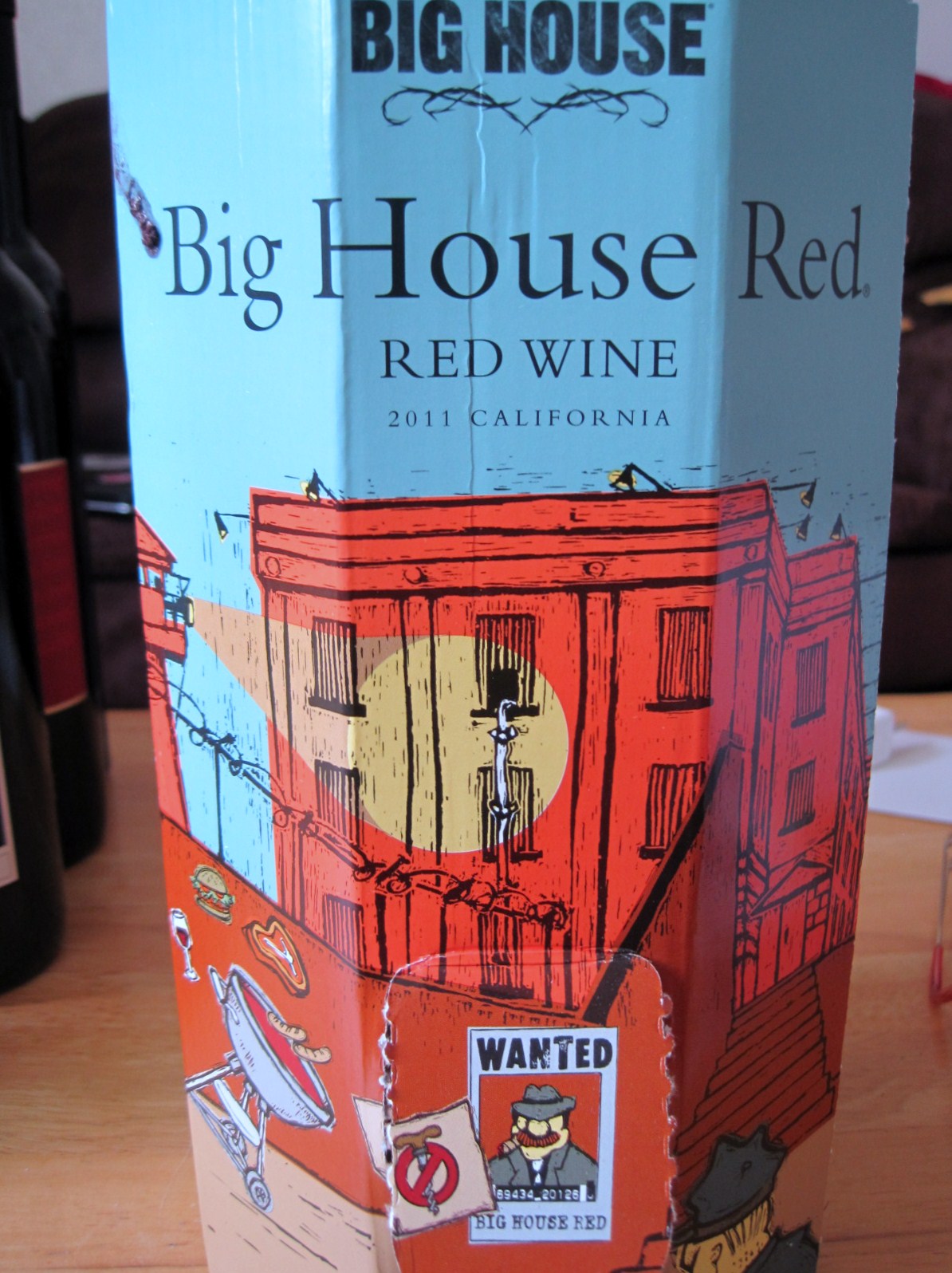
2011 Big House Red: The fact that this wine has over 15 different grape varieties should tell you something. My sample showed up in a 3L cask or bag-in-box, in an effort to prove that quality isn't lost. 3L is about four bottles, making this a $5.50 per-bottle red wine. The nose is an explosion of fruity aromas, think raspberry jam, strawberries, blackberries. It's no different on the palate, with jammy fruit leading the way, thankfully reined in by a bit of acidity. It'll go great during the summer when you're headed to a bbq party, and fits the very definition of "crowd pleaser". 13.0% abv.
2009 Ravenswood Sonoma County Old Vine Zinfandel: Joel Peterson consistently produces great wines at reasonable prices. This zinfandel, coming in around $15 a bottle, has all the hallmarks of old vines from warm climates. Aromas of wood smoke, tar, plum, and spices rush out of the glass. I like the complexity, especially at this price point. Lots of dark, intense red fruit to pair with ribs too, along with a wonderful peppery flavor that contrasts with some dark, dusty soil. A tight, clean package of deliciousness. 14.5% abv.

2009 Ravenswood Vintners Blend Petite Sirah: Imagine a bowl full of blueberries and blackberries sitting in a field of dark, earthy soil. Now imagine someone burning oak just a few hundred yards away. That's the nose of this petite sirah. It tastes spicy and rich, with lots of black fruit, dark chocolate, and firm tannin to restrain those two primary flavors. Practically begs for a thick steak, and is a really good deal at $7.99. 13.5% abv.
To test the wines out in more real-life conditions, I had them all open for a barbecue that several of our friends attended. Each wine was tasted along with the food, which included ribs and hot dogs, among other things. My personal favorites were the Ravenswood wines, and the Graffigna Malbec. The group did enjoy the Big House Red and Hey Mambo for what they were, big, fruity, easy-drinking reds.
Each of these wines is worth a pop 'n pour when you are grilling and want something to please a wide range of palates. Perhaps the best part is the pricing, all can be found for between $10 and $15, save for the Big House, but you get a lot of wine in that octagon!
These wines were media samples.
Beau Carufel
Keep in mind that these are all bigger, more full-bodied red wines Anytime you have big flavors from meat, you need to get big wines to stand up to what you're grilling. The addition of sauces, marinades, and rubs also adds intensity, further pushing palates away from pinot-land.
The white wines, on the other hand, are crisp, dry, and full of refreshing acidity. On a hot day the last thing most of us want is a big, heavy, oaky chardonnay weighing down our taste buds. To that end, I assembled a panel of well known producers' white wines to taste and talk about.
Here then are two lists, of whites and reds, for your consideration as you barbecue this summer:
White:
2010 Parducci Small Lot Blend Sauvignon Blanc: Despite the $11 suggested retail price, this is single vineyard sauvignon blanc, from Hildreth Farm in Mendocino County. Crisp notes of green apple, grass, and zesty citrus mix with summer melon to create a balanced, food-friendly wine. Very drinkable and at a great price. Pair this with ceviche, fish tacos, chicken salad, or solo on a hot day.
2010 Parducci Small Lot Blend Pinot Gris: I think it's telling that I tasted this and thought it might be a steel-tank-fermented, un-wooded, cheap chardonnay. 6% Muscat Canelli was added to the gris, creating an intersting, barely-off-dry citrus and melon set of flavors. If sauvignon blanc or 100% pinot gris is too dry for your friends, I bet they'd love this. Very pretty aromatics, so don't over chill it. $11 srp.
2011 St. Supery Sauvignon Blanc Napa Valley: Loads of tropical fruit beats down a touch of green grass that dares show itself. I like that though. Crisp acidity frames the melange of passion fruit, kiwi, and lime flavors. There is a subtle but welcome minerality at play, enhancing the texture. Pair this gem with grilled-shrimp quesadillas and fresh guacamole. $15 srp.
Red:
2009 Parducci Small Lot Blend Merlot: The bouquet is all red cherry and licorice, with a bit of a medicinal quality. On the palate it's spicy, cherry, and vanilla oak. This brings the easy-drinking flavors you expect from an inexpensive merlot. Give this one to your "I don't like red wine" crowd. SRP: $11. 13.5% abv.
2010 Hey Mambo "Sultry Red" Red Wine: An explosion of red fruit; think cherries and raspberries mixed together. It's sweet and easy-drinking, with ample ripe fruit flavors and a tease of vanilla-oak lurking in the background. The finish is just dry enough to stand up to bigger foods. Another "I don't like red wine" crowd pleaser. SRP: $10. 13.5% abv.
2010 Graffigna Centenario Malbec Reserve: This bouquet is all dark aromas, think baking chocolate, spices, and leather. Some black cherry and blueberry peek out too. More full-bodied than the previous two wines, the Graffigna has ample tannin to stand up to steak. Flavors of black fruit, herb, and bittersweet chocolate create a nice texture on the palate. Worth opening a few hours before your party. SRP: $15. 14% abv.
2008 Ash Hollow Headless Red: This one is intriguing, it smells a little reductive but revels aromas of maple and bacon, black fruit, and wood. 58% merlot, 26% cabernet sauvignon, 13% syrah, 3% malbec. There maybe some volatile acidity here too, but it's not a big deal. More maple flavor comes through on the palate, along with spices and black cherry. This one is smooth and easy to sip, while retaining enough tannin and acid to stand firm against a steak or summer sausage. 30 months spent in oak. 14.1% abv.
2009 Parducci Small Lot Blend Cabernet Sauvignon: When I first opened this bottle, I was walloped over the head with a bag of oak. The wine has settled down a lot, with the oak partially retreating and letting some warm red fruits, earthy funk, and green herb come out. Firm tannin restrain that red fruit on the palate, creating a simple yet effectively structured wine to pair with steak or ribs. It's more complex than expected, especially at the $11 price point. 14.0% abv.
2011 Big House Red: The fact that this wine has over 15 different grape varieties should tell you something. My sample showed up in a 3L cask or bag-in-box, in an effort to prove that quality isn't lost. 3L is about four bottles, making this a $5.50 per-bottle red wine. The nose is an explosion of fruity aromas, think raspberry jam, strawberries, blackberries. It's no different on the palate, with jammy fruit leading the way, thankfully reined in by a bit of acidity. It'll go great during the summer when you're headed to a bbq party, and fits the very definition of "crowd pleaser". 13.0% abv.
2009 Ravenswood Sonoma County Old Vine Zinfandel: Joel Peterson consistently produces great wines at reasonable prices. This zinfandel, coming in around $15 a bottle, has all the hallmarks of old vines from warm climates. Aromas of wood smoke, tar, plum, and spices rush out of the glass. I like the complexity, especially at this price point. Lots of dark, intense red fruit to pair with ribs too, along with a wonderful peppery flavor that contrasts with some dark, dusty soil. A tight, clean package of deliciousness. 14.5% abv.
2009 Ravenswood Vintners Blend Petite Sirah: Imagine a bowl full of blueberries and blackberries sitting in a field of dark, earthy soil. Now imagine someone burning oak just a few hundred yards away. That's the nose of this petite sirah. It tastes spicy and rich, with lots of black fruit, dark chocolate, and firm tannin to restrain those two primary flavors. Practically begs for a thick steak, and is a really good deal at $7.99. 13.5% abv.
To test the wines out in more real-life conditions, I had them all open for a barbecue that several of our friends attended. Each wine was tasted along with the food, which included ribs and hot dogs, among other things. My personal favorites were the Ravenswood wines, and the Graffigna Malbec. The group did enjoy the Big House Red and Hey Mambo for what they were, big, fruity, easy-drinking reds.
Each of these wines is worth a pop 'n pour when you are grilling and want something to please a wide range of palates. Perhaps the best part is the pricing, all can be found for between $10 and $15, save for the Big House, but you get a lot of wine in that octagon!
These wines were media samples.
Beau Carufel
Labels:
2008,
2009,
2010,
2011,
Argentina,
Ash Hollow,
Big House,
California,
Graffigna,
Hey Mambo,
Mendocino,
Parducci,
Ravenswood,
Sonoma,
St. Supery
Thursday, July 26, 2012
The Seeker, Wines From Around the World
Have you heard of the wine brand called "The Seeker"? I was sent samples of a few of their wines recently, and looked forward to evaluating them. This brand is seeming to grow in popularity with each month, and their Facebook and Twitter presence could certainly be emulated by others. Whomever manages the social media account does a good job engaging with the fan base, responding to comments, and creating discussion.
The Seeker, as far as I can gather, is another one of those made-up brands. Kobrand acts as negotiant, marketer, and distributor. They have sourced wine from all over the world to create five wines, with the featured three plus a sauvignon blanc and a pinot noir.
Each wine has a character to go along with it, and the story of each revolves around flying machines somewhere in the world. It's a bit cheesy, but still fun to read through each story. Therefore, we can't exactly say this brand has heritage or the authenticity that goes with heritage, but we can say some thought was put into the development. Ever the skeptic, I looked forward to tasting the wines but was wary of the "manufactured-brand effect", where someone comes along, starts a brand with a catchy, hip story, and tries to market the product (which may or may not be of good quality) to us Millennials. Keep reading to see if any thought was put into the actual wines.
2010 The Seeker Chardonnay California: Straightforward bouquet of citrus and tropical fruits along with a touch of butter (diacetyl). On the palate it's clean and smooth with balanced acidity that highlights flavors of lemon zest and tropical fruit. Some creamy, buttery notes are present as well, lending contrast to the acidity. The finish is nice and straightforward, gently tapering away after a few seconds. Serve chilled to enhance the acidity and citrus flavors, for as this wine warms up it becomes more buttery. 13.8% abv. $11 retail.
2009 The Seeker Malbec Mendoza Argentina: Lots of black and red fruit on the nose, also some peppery spice and a touch of alcoholic burn. Still, it's got more than your typical Argentine "blackberry/blueberry jam" nose, and that's to be commended. I liked the impressive tannic backbone which worked to keep the ripe fruit flavors in line, drying the palate out nicely. Also found were secondary flavors of char, black pepper, and earth. A medium length finish full of drying tannin and ripe black cherry flavors is the nice ending touch for this tasty malbec. Stainless steel tanks held the wine during fermentation before it spent a year in French barrels. 14.5% abv. $11 retail.
2010 The Seeker Cabernet Sauvignon Chile: Fruit is sourced from Colchagua and Maipo Valleys in Chile. The nose is typically Chilean, with some green pepper notes, plums, black pepper, and black currant. Soft and inviting on the palate, it showcases ripe blackberry and currant flavors surrounded by nicely integrated tannin. Secondary flavors of tar, tobacco leaf, and dark earth emerge after the wine gets some air. The finish is clean and simple, ending with drying tannin and dusty soil flavors. For an inexpensive cabernet, this is a solid bottle of wine. Aged in French and American barrels for five months. 13.5% abv. $11 retail.
Each of these wines, considering the price, is drinking very well. They certainly won't blow you away in terms of complexity and aren't worth aging, but for $11 a bottle you're getting wines that express a sense of place and varietal typicity. If I had bought them, I'd have no regrets whatsoever. My advice, buy a bottle of each, let the reds open up a bit and keep that chardonnay nice and cold. Serve them during the summer barbecues or casual nights with your buddies.
You fan find The Seeker Wines on Facebook, and follow them on Twitter.
These wines were media samples for review purposes.
Beau Carufel
The Seeker, as far as I can gather, is another one of those made-up brands. Kobrand acts as negotiant, marketer, and distributor. They have sourced wine from all over the world to create five wines, with the featured three plus a sauvignon blanc and a pinot noir.
Each wine has a character to go along with it, and the story of each revolves around flying machines somewhere in the world. It's a bit cheesy, but still fun to read through each story. Therefore, we can't exactly say this brand has heritage or the authenticity that goes with heritage, but we can say some thought was put into the development. Ever the skeptic, I looked forward to tasting the wines but was wary of the "manufactured-brand effect", where someone comes along, starts a brand with a catchy, hip story, and tries to market the product (which may or may not be of good quality) to us Millennials. Keep reading to see if any thought was put into the actual wines.
2010 The Seeker Chardonnay California: Straightforward bouquet of citrus and tropical fruits along with a touch of butter (diacetyl). On the palate it's clean and smooth with balanced acidity that highlights flavors of lemon zest and tropical fruit. Some creamy, buttery notes are present as well, lending contrast to the acidity. The finish is nice and straightforward, gently tapering away after a few seconds. Serve chilled to enhance the acidity and citrus flavors, for as this wine warms up it becomes more buttery. 13.8% abv. $11 retail.
2009 The Seeker Malbec Mendoza Argentina: Lots of black and red fruit on the nose, also some peppery spice and a touch of alcoholic burn. Still, it's got more than your typical Argentine "blackberry/blueberry jam" nose, and that's to be commended. I liked the impressive tannic backbone which worked to keep the ripe fruit flavors in line, drying the palate out nicely. Also found were secondary flavors of char, black pepper, and earth. A medium length finish full of drying tannin and ripe black cherry flavors is the nice ending touch for this tasty malbec. Stainless steel tanks held the wine during fermentation before it spent a year in French barrels. 14.5% abv. $11 retail.
2010 The Seeker Cabernet Sauvignon Chile: Fruit is sourced from Colchagua and Maipo Valleys in Chile. The nose is typically Chilean, with some green pepper notes, plums, black pepper, and black currant. Soft and inviting on the palate, it showcases ripe blackberry and currant flavors surrounded by nicely integrated tannin. Secondary flavors of tar, tobacco leaf, and dark earth emerge after the wine gets some air. The finish is clean and simple, ending with drying tannin and dusty soil flavors. For an inexpensive cabernet, this is a solid bottle of wine. Aged in French and American barrels for five months. 13.5% abv. $11 retail.
Each of these wines, considering the price, is drinking very well. They certainly won't blow you away in terms of complexity and aren't worth aging, but for $11 a bottle you're getting wines that express a sense of place and varietal typicity. If I had bought them, I'd have no regrets whatsoever. My advice, buy a bottle of each, let the reds open up a bit and keep that chardonnay nice and cold. Serve them during the summer barbecues or casual nights with your buddies.
You fan find The Seeker Wines on Facebook, and follow them on Twitter.
These wines were media samples for review purposes.
Beau Carufel
Thursday, July 28, 2011
2009 Bodega Tamari Torrontes
I rarely sample torrontes, but during the hot summer months it remains high up on my list of wines that pair well with the weather. Tonight, I decided to cook up some chicken, rice, and broccoli, in part due to the hot weather we've had here in San Diego. Needing and wanting a dry, clean white wine led me to the 2009 Bodgea Tamari torrontes, a sample that I received several weeks ago.
If chardonnay is California's white grape, sauvignon blanc is New Zealand's, then torrontes is by far what Argentinian white wines are known for. While there are test vineyards of everything from riesling to pinot blanc in the country, the overwhelming amount of white grape acreage is devoted to torrontes. It's frequently referred to as one of the more aromatic white varietals and I can't help but agree.
With that in mind, a simple dinner of marinated chicken, rice, and veggies figures to pair very well with the '09 Tamari. Since I didn't have any light marinades at home, I had to make my own using olive oil, garlic, lemon zest, Provencal herbs, and champagne muscat vinegar. Add a touch of smoked salt and the marinade smelled heavenly. My organic chicken breasts needed about an hour or so to macerate and absorb as much flavor as possible, leaving me time to uncork and sample the wine.
Pouring a beautiful yellowish-green into my glass, I recalled one of my favorite things about looking at torrontes: it's always beautifully colored while sitting in a wine glass.
Aromatics are a big part of tasting wines, and if that's all I went on for this torrontes, it would be a dynamite wine. Bright, rich tropical fruit notes came at me almost immediately, followed closely by rose petal, grapefruit, and tangerine. There is a brief hint of jasmine too, offering a nice foil to the ripe citrus and tropical aromas that are so strong here. At a few degrees below room temperature, smelling the Tamari is like smelling a cornucopia of your favorite summertime scents. Well, almost. Some of my favorite summertime scents also include bacon, grilled meat, and the ocean. None of which were present here but that's ok.
Tasting the 2009 Tamari torrontes further reinforced why I like this varietal so much. It offers clean acidity, a lush mid-palate of passion fruit and white peach, barest hints of white pepper, and a zingy serving of lemon pith to finish things off. Utterly delightful and in balance. There's no sense of sweetness because the acid restrains everything, creating a harmonious blend of flavors.
At a suggested retail of $15 (real world retail is close to $10), this is a solid white for the entire summer. If you like sipping riesling, vinho verde, and sauvignon blanc during the hot months, give torrontes a try and seek out the 2009 Bodega Tamari torrontes. This wine makes clear why torrontes is such a popular grape in Argentina. 13.3% abv. 7,000 cases produced. Highly Recommended!
This was a sample for review purposes.
Beau Carufel
If chardonnay is California's white grape, sauvignon blanc is New Zealand's, then torrontes is by far what Argentinian white wines are known for. While there are test vineyards of everything from riesling to pinot blanc in the country, the overwhelming amount of white grape acreage is devoted to torrontes. It's frequently referred to as one of the more aromatic white varietals and I can't help but agree.
With that in mind, a simple dinner of marinated chicken, rice, and veggies figures to pair very well with the '09 Tamari. Since I didn't have any light marinades at home, I had to make my own using olive oil, garlic, lemon zest, Provencal herbs, and champagne muscat vinegar. Add a touch of smoked salt and the marinade smelled heavenly. My organic chicken breasts needed about an hour or so to macerate and absorb as much flavor as possible, leaving me time to uncork and sample the wine.
Pouring a beautiful yellowish-green into my glass, I recalled one of my favorite things about looking at torrontes: it's always beautifully colored while sitting in a wine glass.
Aromatics are a big part of tasting wines, and if that's all I went on for this torrontes, it would be a dynamite wine. Bright, rich tropical fruit notes came at me almost immediately, followed closely by rose petal, grapefruit, and tangerine. There is a brief hint of jasmine too, offering a nice foil to the ripe citrus and tropical aromas that are so strong here. At a few degrees below room temperature, smelling the Tamari is like smelling a cornucopia of your favorite summertime scents. Well, almost. Some of my favorite summertime scents also include bacon, grilled meat, and the ocean. None of which were present here but that's ok.
Tasting the 2009 Tamari torrontes further reinforced why I like this varietal so much. It offers clean acidity, a lush mid-palate of passion fruit and white peach, barest hints of white pepper, and a zingy serving of lemon pith to finish things off. Utterly delightful and in balance. There's no sense of sweetness because the acid restrains everything, creating a harmonious blend of flavors.
At a suggested retail of $15 (real world retail is close to $10), this is a solid white for the entire summer. If you like sipping riesling, vinho verde, and sauvignon blanc during the hot months, give torrontes a try and seek out the 2009 Bodega Tamari torrontes. This wine makes clear why torrontes is such a popular grape in Argentina. 13.3% abv. 7,000 cases produced. Highly Recommended!
This was a sample for review purposes.
Beau Carufel
Saturday, July 16, 2011
Whole Foods Market's Top Ten Summer Wines
![]() |
| (img src: http://www.wholefoodsmarket.com) |
One of the things Whole Foods has done right is to feature wine from all over the world, the list contains bottles from France, Argentina, California, Greece, Italy, New Zealand, and Spain. Price wise, these run from between $6 and $20, offering a variety to choose from at prices that will play nice with your budget.
The Whole Foods wine people were kind enough to set me up with six selections off of their Summer Selections to taste through and comment on. Over the course of the past few weeks I've been opening and tasting each wine, jotting down impressions as I pair them with food or simply enjoy a glass on a warm (or cool) evening.
2010 Elios Mediterranean White
Ready for this? A white blend: 50% moschofilero, 30% chardonnay, 10% roditis, 10% savatiano. A Greek kitchen sink wine. Color-wise, not much there. It's almost like looking into a glass of Fresca, without the carbonation. I loved the nose of ripe melons, salt air, summer flowers and hints of lemon zest. While not overly complex, the Elios smelled delicious and appropriate for the 82 degree day on which I opened the bottle. The mouthfeel was light, helped by the acidity and citrus flavors of grapefruit and lime. Though the chardonnay lent weight through the mid-palate, it did muddle some of the stone fruit and grassy flavors, leaving me a trifle disappointed. For a food-friendly, inexpensive summer white wine though, this is damn good stuff. B-. BUY recommendation.
2010 Santa Julia Innovac!on Torrontes/Pinot Grigio Argentina
Palest of straw hues and 13% alcohol, a wine that combines two of my favorite white varietals from a region exploding onto the scene in the last decade. The Innovac!on smelled like a summer bouquet of orange blossom and Bartlett pear. Peach nectar mixed with a mango smoothie, perhaps?. On my palate, a very light wine, clean and nicely acidic, yet not at all what the bouquet promised. I struggled a little bit to find lemon peel and a bit of tropical fruit but that is about all there is to this wine. Not too interesting, nothing wrong with it though. C+. Pass.
2010 Presto Moscato Dolce
I like how Moscato is really exploding right now, one of the highest-growing categories of wine in the United States. It's the perfect gateway wine, getting people into wine and allowing them to have a solid base to jump into other grapes and styles. The Presto is a "dolce", meaning it's definitely got some sweetness to it. I opened this on a hot evening after chilling it for a few hours in the fridge and it hit the spot. At once sweet yet refreshing, it's no Cava or Champagne but at around $10 it isn't designed to be. The bubbles in the Presto Moscato seemed smaller and softer than in either of the aforementioned sparklers. Soft notes of apple and sea breeze, a hint of sweet peach, and smiles all around. Very nice and a great change of pace. B. Buy recommendation.
2009 Perrin Nature Cotes du Rhone France
Perrin is a big, big producer in France's Rhone valley, hundreds of thousands of cases big. This is their "Nature" wine, made from organically grown grapes predominantly from the Southern Rhone river valley. It's another $10 value from a critically acclaimed vintage. The Perrin pours a dark purple with a bit of violet towards the edges, it looks very much alive and full of personality. I liked the whiffs of leather and crushed red fruit along with a good hit of bittersweet chocolate. I enjoyed the balanced ripeness, crushed white pepper, earth, and firm tannin. The word of the day for the 2009 Perrin Nature: "rustic". Some rough edges yet a deliciously different $10 bottle of wine. B, BUY recommendation.
2009 Vitiano Cabernet Sauvignon/Sangiovese Italy
This is a Leonardo Locascio selection, Mr. Locascio being a guy who brings in a lot of good quality Italian wine. Clocking in at 13% abv, it's what I would term a "Super Tuscan" red wine. The color is dark, vibrant red that's nearly opaque, perhaps a tribute to the cabernet sauvignon in this blend. I smelled ripe cherries, almost overripe to the point of being like cough syrup. Cedar and spice, red licorice and a bit of brettanomyces to round out this rustic red. Very smooth initially with firm tannins carrying heavy red fruit through the entire taste. Barest hint of a snappy red currant too, but very easy drinking wine if somewhat simplistic. This is rustic Italian red wine, best enjoyed with grilled eggplant or a meat lovers pizza. Thin crust please. B-. Pass recommendation.
2009 Altovinum Evodia Old Vine Garnacha Spain
From 100 year old grenache vines comes a ripe, rich, big, fruit bomb of a wine. That is just what is needed on a summer day with your buddies, standing around a hot grill of awesomely charred meat. Evodia does age the wine in oak for a bit, tempering some of the acidity and tannin from the grenache, and enhancing the mouthfeel. I was assaulted (in a good way) by ripe plum, blackberry, and red currants, hints of cooking spice, a touch of green herbs and some warm oak. Perhaps my favorite of the Whole Foods Top Ten Wines lineup, the 2009 Altovinum Evodia is begging to be paired with a chunk of mancego cheese, or better yet, a thick burger with bacon and a chunk of mancego cheese! See where I'm going with this?! B, STRONG BUY recommendation.
During my exhaustive research, I tasted through each wine at least twice, over a minimum of two days, this helped me gain impressions that might not have been there on the first day. The exception to this was the NV Moscato, which had lost all it's bubbles after the first night and was rendered into sweet, gross, fermented grape juice rather quickly. As such, the notes on that wine are from the first day only.
For the red wines, I opened each one about two hours before I tasted them, then poured each red wine through a Vinturi. When I tasted the white wines, I removed them from the refrigerator about one hour before tasting, to allow each bottle a chance to warm up a few degrees and therefore allow the taster (me) a better idea of the wine's acid and sugar levels.
Follow Whole Foods on Twitter, and send them a tweet asking for the account of your local store!
These wines were media samples for review purposes.
Beau Carufel
Subscribe to:
Posts (Atom)