Saturday, September 22, 2012

Bordeaux Bound

(img src:  http://www.terroir-france.com/wine/bordeaux_map.htm )

I'm writing this from the airport here in Portland, awaiting my departure to Amsterdam and then Bordeaux. For the next six days I'll be in Bordeaux, courtesy of Balzac Communications and Planet Bordeaux. Since I cannot speak for my fellow bloggers (Joe Roberts and Jameson Fink), I'll say that my goals for this trip are perhaps more personal in nature.

Visiting Bordeaux and posting numerous tasting notes would be missing the point, because I've been fortunate to try quite a bit of wine from the region over the past couple of decades. What I want to find out now is where exactly Bordeaux wines fit in the American Wine Conversation. Can I accomplish such a lofty sounding goal in a mere 5.5 days? At this point I would say no, but I can maybe start to get an idea of  how we can talk about these wines in the greater context of continual exploration. By drinking more wine from the area (which is incredibly diverse, as the map above shows), the answer or answers to my question will become more apparent.

A peculiar region, Bordeaux. Nearly everyone agrees that the top-tier wines are incredible (thought not always worthy of the price), but what about the more reasonably priced tiers? Have you had a great $25 Bordeaux? I've had some stunning wine from Spain, Italy, France, Oregon, and California for $25, but never from Bordeaux specifically. Can the region, who's heritage rivals that of almost anywhere else in the world when it comes to wine production, produce compelling wines and stories? That's how I frame the question of where Bordeaux fits into the greater discussion now going on in the United States.

Stay tuned, I'm going to attempt to post while in-country, and of course will still post the tasting notes on any outstanding wines I discover. Our group will be traveling throughout Bordeaux, visiting many Chateaux as well as historical sights and even a little seaborne excursion. Similar to my trip in Navarra last September, this trip will be full of great food and wine, great people, and a great education. Am I excited? You bet!

Beau Carufel

Saturday, September 1, 2012

A Live Twitter Tasting with Kunde Winery

This post is admittedly tardy, and for that I apologize. Several months ago I participated in another virtual-Twitter-tasting with Kunde Family Estate, called KundeLive. My previous experience with the brand was positive, for the most part. I'd sold the Kunde wines in various retail settings going back nearly a decade and they have consistently represented good quality wines at very fair price points. Unfortunately the wines did tend to blend in with so many other California producers who also make good wine at reasonable prices.

Kunde has been around for a long time, with the fourth generation (Marcia and Jeff Kunde) taking the lead in a sort of re-branding effort. I suspect part of that involves some significant social media outreach, as evidenced by the Kunde Facebook Page and their very active Kunde Twitter Account. I should disclaim at this point that my friend Ed Thralls runs the social media for Kunde, among others.

The KundeLive event was led by Marcia and Jeff along with winemaker Zachary Long. A group of socially-active/influential bloggers got together virtually to taste and tweet about each wine while the Kundes and winemaker answered our questions.

In any case, the tasting was a success, and I think you'll see from my tasting notes that the wines were delicious and of high quality. If you spot any of these on the shelves of your local wine store, pick up a bottle or two and see for yourself.

2011 Kunde Sauvignon Blanc Sonoma County: 95% of this sauvignon blanc was fermented in steel tank, the rest in neutral French oak barrels. Aromas of tropical fruit, cut grass, and citrus are all there in the right proportions. It smells freakin' delicious. What's even better is that it tastes freakin' delicious too. Lots of bright acidity highlights the lemon/lime flavors that help to contrast against sweet tropical fruit - think papaya and hints of mango flowers. Perfect for summer and autumn sipping on these still-warm days. SRP $17. 13.7% abv.


2009 Kunde Red Dirt Red Sonoma Valley: This gem is a blend of 30% Barbera, 26% Petite Sirah, 22% Syrah, 15% Zinfandel, and 7% Sangiovese. Winemaker Zachary Long crafted a wine that literally smells like dirt, in the most awesome way. Lots of dark, red-earth aromas are paired with tart cherry, plum, and a dollop of black pepper. This was my favorite wine of the tasting because it had so much going on, and on day two, three, and four it was even more expressive. The Red Dirt Red practically begs to be paired with barbecue or a meat-lovers pizza. Make that two pizzas. SRP $30. 14.8% abv.


2009 Kunde Reserve Cabernet Sauvignon Sonoma Valley: The winemaker says: "This wine is the finest representation of what our Estate and Sonoma Valley is capable of." For all you California cabernet sauvignon fans, buy a bottle and see for yourself. It's pure California and pure hedonism. There is ample black fruit, dried herb, leather, and oak on the nose. This follows through to the palate, where a seriously delicious mocha note comes into play. The tannin is well integrated but this wine is young, give it a few more years and you're in for a treat! Bacon-wrapped filet mignon please. SRP $45. 14.7% abv.


Thanks to Ed and the folks at Kunde for inviting me. It was nice to reconnect with a familiar brand, and even nicer to see that the wines have gotten better. California is full of great brands, and I'm glad Kunde is now on my radar once more.

These wines were samples for media.

Beau Carufel

Friday, August 17, 2012

Summer Barbecue Wine Options

Summer is in full swing! It's time to barbecue as much as possible, to have your friends over at every opportunity, and to enjoy the sun whenever you can. To that end, I've lined up a slew of affordable reds and whites for you to pair with barbecued foods and backyard shindigs.

Keep in mind that these are all bigger, more full-bodied red wines Anytime you have big flavors from meat, you need to get big wines to stand up to what you're grilling. The addition of sauces, marinades, and rubs also adds intensity, further pushing palates away from pinot-land.

The white wines, on the other hand, are crisp, dry, and full of refreshing acidity. On a hot day the last thing most of us want is a big, heavy, oaky chardonnay weighing down our taste buds. To that end, I assembled a panel of well known producers' white wines to taste and talk about.

Here then are two lists, of whites and reds, for your consideration as you barbecue this summer:

White:
2010 Parducci Small Lot Blend Sauvignon Blanc: Despite the $11 suggested retail price, this is single vineyard sauvignon blanc, from Hildreth Farm in Mendocino County. Crisp notes of green apple, grass, and zesty citrus mix with summer melon to create a balanced, food-friendly wine. Very drinkable and at a great price. Pair this with ceviche, fish tacos, chicken salad, or solo on a hot day.

2010 Parducci Small Lot Blend Pinot Gris: I think it's telling that I tasted this and thought it might be a steel-tank-fermented, un-wooded, cheap chardonnay. 6% Muscat Canelli was added to the gris, creating an intersting, barely-off-dry citrus and melon set of flavors. If sauvignon blanc or 100% pinot gris is too dry for your friends, I bet they'd love this. Very pretty aromatics, so don't over chill it. $11 srp.


2011 St. Supery Sauvignon Blanc Napa Valley: Loads of tropical fruit beats down a touch of green grass that dares show itself. I like that though. Crisp acidity frames the melange of passion fruit, kiwi, and lime flavors. There is a subtle but welcome minerality at play, enhancing the texture. Pair this gem with grilled-shrimp quesadillas and fresh guacamole. $15 srp.


Red:

2009 Parducci Small Lot Blend Merlot: The bouquet is all red cherry and licorice, with a bit of a medicinal quality. On the palate it's spicy, cherry, and vanilla oak. This brings the easy-drinking flavors you expect from an inexpensive merlot. Give this one to your "I don't like red wine" crowd. SRP: $11. 13.5% abv.


2010 Hey Mambo "Sultry Red" Red Wine: An explosion of red fruit; think cherries and raspberries mixed together. It's sweet and easy-drinking, with ample ripe fruit flavors and a tease of vanilla-oak lurking in the background. The finish is just dry enough to stand up to bigger foods. Another "I don't like red wine" crowd pleaser. SRP: $10. 13.5% abv.


2010 Graffigna Centenario Malbec Reserve: This bouquet is all dark aromas, think baking chocolate, spices, and leather. Some black cherry and blueberry peek out too. More full-bodied than the previous two wines, the Graffigna has ample tannin to stand up to steak. Flavors of black fruit, herb, and bittersweet chocolate create a nice texture on the palate. Worth opening a few hours before your party. SRP: $15. 14% abv.


2008 Ash Hollow Headless Red: This one is intriguing, it smells a little reductive but revels aromas of maple and bacon, black fruit, and wood. 58% merlot, 26% cabernet sauvignon, 13% syrah, 3% malbec. There maybe some volatile acidity here too, but it's not a big deal. More maple flavor comes through on the palate, along with spices and black cherry. This one is smooth and easy to sip, while retaining enough tannin and acid to stand firm against a steak or summer sausage. 30 months spent in oak. 14.1% abv.


2009 Parducci Small Lot Blend Cabernet Sauvignon: When I first opened this bottle, I was walloped over the head with a bag of oak. The wine has settled down a lot, with the oak partially retreating and letting some warm red fruits, earthy funk, and green herb come out. Firm tannin restrain that red fruit on the palate, creating a simple yet effectively structured wine to pair with steak or ribs. It's more complex than expected, especially at the $11 price point. 14.0% abv.


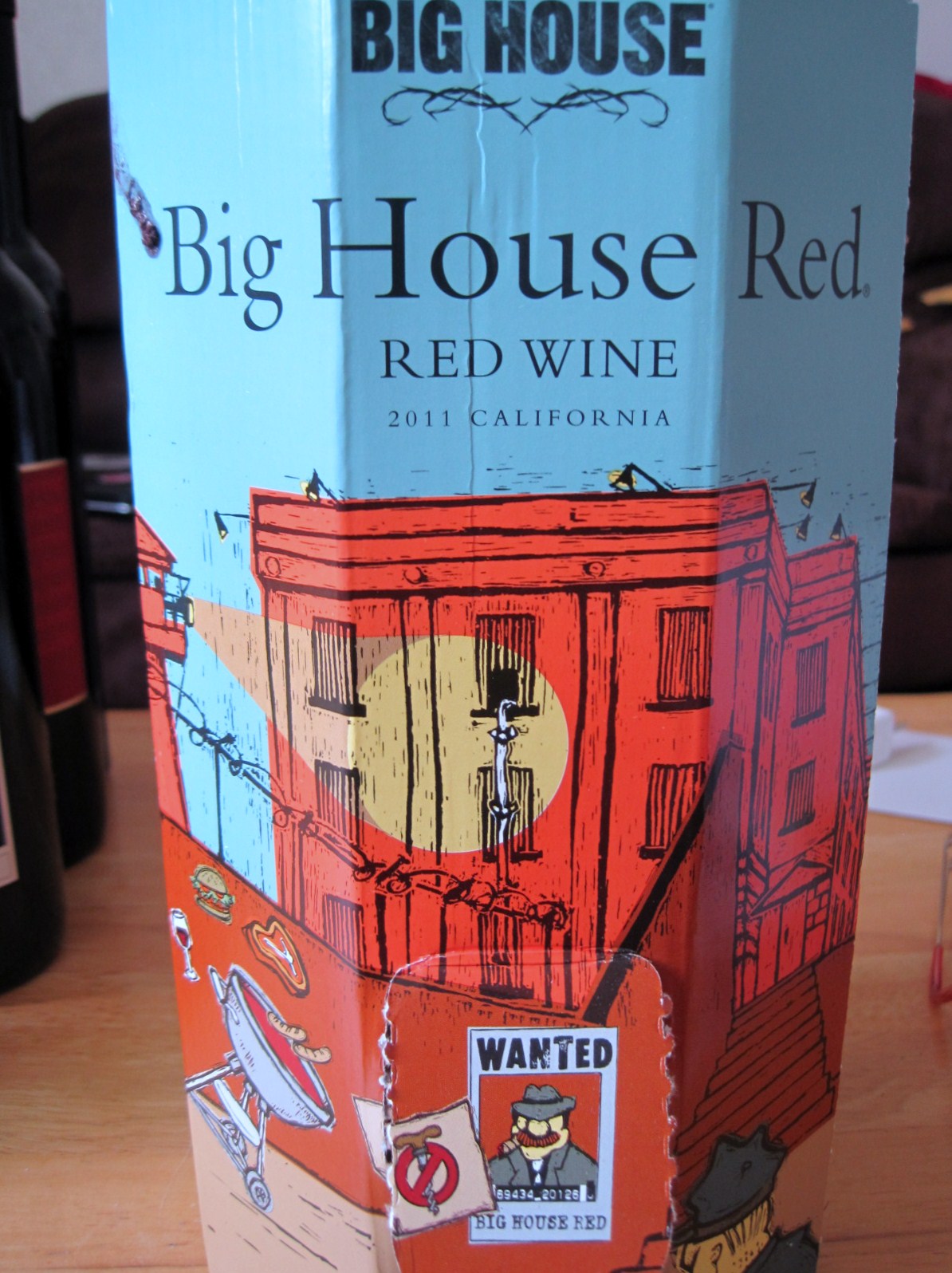
2011 Big House Red: The fact that this wine has over 15 different grape varieties should tell you something. My sample showed up in a 3L cask or bag-in-box, in an effort to prove that quality isn't lost. 3L is about four bottles, making this a $5.50 per-bottle red wine. The nose is an explosion of fruity aromas, think raspberry jam, strawberries, blackberries. It's no different on the palate, with jammy fruit leading the way, thankfully reined in by a bit of acidity. It'll go great during the summer when you're headed to a bbq party, and fits the very definition of "crowd pleaser". 13.0% abv.


2009 Ravenswood Sonoma County Old Vine Zinfandel: Joel Peterson consistently produces great wines at reasonable prices. This zinfandel, coming in around $15 a bottle, has all the hallmarks of old vines from warm climates. Aromas of wood smoke, tar, plum, and spices rush out of the glass. I like the complexity, especially at this price point. Lots of dark, intense red fruit to pair with ribs too, along with a wonderful peppery flavor that contrasts with some dark, dusty soil. A tight, clean package of deliciousness. 14.5% abv.


2009 Ravenswood Vintners Blend Petite Sirah: Imagine a bowl full of blueberries and blackberries sitting in a field of dark, earthy soil. Now imagine someone burning oak just a few hundred yards away. That's the nose of this petite sirah. It tastes spicy and rich, with lots of black fruit, dark chocolate, and firm tannin to restrain those two primary flavors. Practically begs for a thick steak, and is a really good deal at $7.99. 13.5% abv.


To test the wines out in more real-life conditions, I had them all open for a barbecue that several of our friends attended. Each wine was tasted along with the food, which included ribs and hot dogs, among other things. My personal favorites were the Ravenswood wines, and the Graffigna Malbec. The group did enjoy the Big House Red and Hey Mambo for what they were, big, fruity, easy-drinking reds.

Each of these wines is worth a pop 'n pour when you are grilling and want something to please a wide range of palates. Perhaps the best part is the pricing, all can be found for between $10 and $15, save for the Big House, but you get a lot of wine in that octagon!

These wines were media samples.

Beau Carufel

Tuesday, August 14, 2012

Red Sancerre: Delightful Budget-Friendly Pinot Noir

Most of us know Sancerre to be perhaps the best region in the world to grow sauvignon blanc. With soil types ranging from white chalk to gravelly limestone, and vineyard elevations up to 1,300 feet, the grapes retain a great deal of acidity and mineral components. To balance that acid, the short, hot summer allows enough sugar formation to produce wines that also exhibit beautiful, perfumed aromas and flavors. Furthermore, the use of oak is very limited, and malolactic fermentation rarely is allowed to take place.

What you may not know is the region also producers pinot noir that consistently delivers outstanding quality for low prices. Though only about 20% of Sancerre's grape production is pinot noir, both the red and rose wines are well worth seeking out. While Sancerre lacks the cachet and indeed, the history of producing world class pinot noir that Burgundy has in spades, the region's wines are wonderfully accessible, often exhibiting aromas of rose petal, cherry, wild raspberry, and peppery spice.

A few days ago my friend Rory brought over a bottle of this wonderful Sancerre rouge to share. He works at The Friendly Vine, in Forest Grove and not coincidentally picked up this bottle while at work .At $21, the price point is very reasonable, especially considering the following facts; it's pinot noir, it's from France, and it's from a region currently in vogue.

2010 Les Hospices Sancerre Rouge:
We unscrewed the cap and poured some glasses. After the initial reductive funk blew off, the bouquet delighted us with zingy raspberry and pepper notes, hints of dusty gravel, and a subtle orange-peel aroma. A sip or two brought out bright red fruit mingling with herbs and forest floor/mushroom flavors. I enjoyed the mineral component on the palate because it helped create a wonderful textural sensation. The finish was brisk and racy, led by the acidity, and had a nice gentle tapering effect.

For $21, this is a cool climate, acid-loving, pinot fan's wine. I've only seen it at The Friendly Vine, so I'd recommend contacting them if you want a bottle or two. If you put it aside for a few years, I suspect the wine will get a bit better but it's not one designed for long term cellaring. As far as I can tell, it's a negotiant brand produced exclusively for Bronco Wine Company's Antares division. Yes, the same Bronco responsible for million of gallons of plonk. Just goes to show you!

Importer: Vinum Importing
Producer: Pierre Chainier for Bronco/Antares Wine Co.

Beau Carufel

Sunday, August 12, 2012

Wine Industry Technology Symposium Live Tasting With @WineTwits

During this year's Wine Industry Technology Symposium, a group of wine bloggers were sent four wines from California and invited to participate in a live, virtual wine tasting. Frequent readers (all four of you) might be familiar with this format, as I've posted recaps of these tastings fairly often over the past few years.

The way a "virtual tasting" works is by having bloggers around the country receive the same wines, then use Twitter and a specific hashtag to talk about each wine. Usually there's a moderator, in this case the fine folks behind the @WineTwits account and website. We talked (tweeted) about each wine over the course of about an hour, with the various participating wineries chiming in to answer questions and give data points.

I tend to enjoy some aspects of virtual tastings, especially when bloggers whose palates I trust are participating. We get to compare notes and really dive into what the wines are about. The other side of virtual tastings is that all too often we get bloggers who do nothing but tweet hyperbolic statements praising every wine. Not only do they look like idiots, it undermines our already-fragile credibility as a group.

Each wine selected has the benefit of being easy to find in grocery stores and BevMo-type outlets, being of high enough production to virtually guarantee nationwide distribution. The sole unfamiliar wine to me was the 2010 Garnet Vineyards Pinot Noir, the rest have all graced my wine glass at some point in the past few years.

2010 Wente Morning Fog Chardonnay Livermore Valley: The bouquet is full of lemon cream, tropical fruit, and popcorn butter aromas. To me it smells exactly like I'd expect a traditional California-style chardonnay to smell like. On the palate there's a nice bit of that tropical fruit, some more lemon notes, vanilla, and more of the buttery taste. The acidity is low, or at least, feels low due in part to the malolactic fermentation that this wine saw. Wente consistently makes drinkable wines, and if you're a fan of buttery California chardonnay, I think you'll really enjoy the Morning Fog bottling. 13.5% abv. $11 retail.


2011 Hahn Winery Nicky Hahn Pinot Noir California: Pours a beautifully vibrant ruby color in the glass, a testament to its youth. The nose is full of ripe, jammy cherry preserves, baking spice, some woodsy aromas, and a touch of earth. Cherry jam dominates the palate, providing a soft, rich mouthfeel. The baking spices come out to play a little bit on the finish, which in itself is nice if a bit short. 100% pinot noir, according to the data sheet I have. 14.5% abv. $14 retail.


2010 Garnet Vineyards Pinot Noir Carneros: Loads of raspberry and strawberry aromas followed by a bit of white pepper spices. I think there's a bit of funk here too, some nail-polish remover came out as the wine warmed up. I think this pinot is very varietally correct on the palate, with light red fruit, peppery spice, hints of earthy funk, and lots of acidity. The finish is medium length, tapering off nicely, however, the bottle was open about five hours before the finish got to be any reasonable length. It might need a bit of age or an hour in a decanter before it shows all its facets. 13.5% abv. $19 retail.


2008 Franciscan Magnificat Napa Valley: A blend of 69% cabernet sauvignon, 23% merlot, 6% petite verdot, and 2% malbec. This Meritage pours dark, almost opaque garnet. Pepper, wood smoke, cassis, and leather rush up out of the glass. There's a touch of alcoholic heat, nothing more. Lots of ripe black fruit mixed with oak form the primary flavors. Secondary flavors include smoked meat, cocoa dust, and dried spice leaves. A nice long finish shows earth and leather before disappearing in a burst of dried black cherry. This is a 2008, and it shows true to form as a very young wine. Lots of firm tannin that will soften and integrate with age. I tasted this again after six hour and it had mellowed out noticeably. 14.5% abv. $35 retail.


The wines we tasted were all interesting and well made. The Franciscan was very good, and the clear leader of the group. I re-tasted each wine about six hours after I opened them and save for the Meritage, they'd all begun to fall apart. Out of the latter three, the Wente chardonnay held together best, still retaining some acidity and complexity.

The WineTwits crew did a great job getting such a large group of bloggers together and keeping the discussion moving along, but weren't as active with the technical facts and winery-liaison work that I've seen from other virtual tasting hosts. Perhaps that will change in the future, should they do another tasting. Then again, it's not always necessary to constantly chime in if the discussion is flowing nicely.

You can find each winery on social media here:
@Wente and on Facebook at: https://www.facebook.com/WenteVineyards
@HahnWines and on Facebook at: https://www.facebook.com/HahnFamilyWines
@FranciscanWines and on Facebook at: https://www.facebook.com/FranciscanEstateWinery
@GarnetVineyards and on Facebook at: https://www.facebook.com/GarnetVineyards

and @WineTwits

Thanks for inviting me!

These wines were media samples.

Beau Carufel

Tuesday, August 7, 2012

J. Brix Vin Gris and Grilled Shrimp, A Sensory Feast


I want to share a wonderful wine Becky and I had recently, and show some support for two of San Diego's best winemakers, Emily and Jody Towe of J. Brix Wines.

Sunday night, Becky grilled some shrimp, green peppers, and stuffed portobello. The fresh shrimp rested in a garlic-lime marinade for a few hours before meeting our grill. The portobellos were stuffed with cheese, spinach, and onion. Our green bell pepper was left by its lonesome self, but that is just fine.

Our wine was the 2011 J. Brix "Uncontainable" Vin Gris of Grenache, an unfined, unfiltered, non cold-stabilized, purpose-picked ode to the versatility of grenache. Emily told me that they chose to use "vin gris" instead of "rosé" because vin gris implies a purpose-made rosé wine, instead of one made by bleeding off red wine or blending red and white wine together. Santa Barbara Highlands Vineyard produces some of California's best grenache, and you may recall seeing the name on Angela Osborne's stunning "A Tribute to Grace" grenache bottlings.

The vin gris had some facets of a red wine, with the interplay of tannin and acidity, creating a beautiful complex texture. It also had the lightness, that lifting, crisp mouthfeel of a great white wine. Flavors of orange peel, raspberry, green herb, and wet rocks played around on my palate, while the marinade used on the shrimp allowed the fruit flavors to emerge right in the middle of my tongue. All of this finished in a tart, lively finish that resulted in a near-constant grin on my face.

Becky knows that when I chatter incessantly about a wine, I truly love it. I fell in love with the J. Brix rosé vin gris, the marriage of complexity and charm. Blind, I could see people picking this as one of the great rosé wines of France.

Whether you call it a vin gris or rosé, the Uncontainable is a special wine. It begs to be shared with family and friends, to be explored, pondered, and above all, enjoyed. 

There are a few cases left but I recommend tweeting at Emily or Jody, or visiting the J. Brix website to make sure you don't miss out. They can be found on the J. Brix Facebook page as well, for more up to date information and sneak peeks on their future projects.

Beau Carufel

Sunday, July 29, 2012

2012 Wine Bloggers Conference Tips

With the 2012 Wine Bloggers Conference fast approaching, I wanted take a moment to offer some advice to the many first-time attendees. This thoroughly un-comprehensive list has some suggestions and tips to ensure a great experience, but also comes from my perspective. In the coming weeks I'm sure others will be putting out their own blog posts with advice, and I urge you to read them as well.

(img src: http://winebloggersconference.org/america/) 

Back in 2010, I attended the WBC in Walla Walla and was fortunate to have several great bloggers to help me along. Wide-eyed and fresh-faced (well maybe not so much the latter), it was my first time to Washington's wine country, first time meeting so many other bloggers, first time at a conference like that, and first time representing myself as a brand, not just a person. Quite a lot of firsts, no?

The following list is going to meander somewhat, as I list various things I think will help attendees get the most out of Portland's turn at the Wine Blogger's Conference. In the comments section below, please feel free to add in any more tips for attendees.

1. Talk to everyone! - Be social! Remember how social media is an integral part of blogging? It carries over into real life. Have conversations, ask questions, make connections! You'll make lifelong friends and valuable connections.

2. Bring lots of business cards - Seriously I cannot emphasize this enough. Business cards are still vital to getting your brand out there in front of people. Use Moo Cards if you want to be unique. Pack hundreds and watch them disappear! I still have a huge stack from 2010's Conference that I refer to almost weekly.

3. Pack your camera - Whether to record the landscape, conference activities, bottles of wine, or anything else, a camera is truly better than your iPhone or Blackberry. Trust me on this.

4. Do your research - Learn about who you'll be visiting and what wines they produce. Research Portland's vibrant food and wine scene. Read about the history of the Oregon wine industry. Time spent on research will make this experience so much better.

5. Pre-plan! Pre-plan! Pre-plan! - Some things can't be planned, like off-conference pop-up parties. Other things can be and should be planned. Dinner with a group of blogger friends? Plan it. A winery visit? Plan it. What break-out sessions you want to attend? Plan it.

6. SPIT! - Don't be afraid to spit. You'll be around many wine professionals, and there's a reason we spit. Sure it's not the most glamorous or graceful thing, but you will be in front of hundreds of wines (and hundreds of fellow bloggers) so learning how to spit (practice at home with water) will make you look professional and classy. Getting sloppy drunk and passing out in the lobby will do the opposite and it'll harm your brand.

7. Get some rest (on Wednesday and Thursday) - The pace of the WBC is always pretty quick, especially if you're networking and going to outside activities, tastings, and parties. Wednesday and Thursday are good nights to get at least a decent eight hours of sleep if at all possible. Friday and Saturday are marathon days, but they're amazing.

8. Don't forget to eat - Food absorbs alcohol, keeps your energy levels up, keeps you healthy, and tastes damn good! I cannot emphasize enough the importance of exploring the food scene in Portland. From food carts to amazing restaurants like Noisette or Andina, EAT while you're here!

9. Use Twitter/Facebook/Instagram/Tumblr - Be social, document your experience! Use hashtags, including #WBC12 to get that tweet in front of everyone else using Twitter at the Conference. Take pictures of wineries, wines, people, parties, food, anything you want. Share with your attendees! Follow new people, add them on Facebook too!

10. Don't feel the need to blog DURING the conference - I noticed a lot of people trying to blog during Walla Walla's WBC and last year in Virginia, but the quality of most blog posts was lacking. Composing a thoughtful, coherent blog post takes time and focus, so instead of trying to find time and focus during a crazy-awesome four day event, take a lot of notes and compose those posts AFTER the conference.

11. Don't wear perfume/cologne/Old Spice/Axe/etc!! - My friend Pamela over at Enobytes Wine Blog pointed this one out and it couldn't be more true. Non-scented deodorant or ant-perspirant is fine, and we encourage that because no one wants to smell body odor. The problem is (and I experienced this at WBC 10) people who think it's ok to wear any kind of smelly perfume or cologne (men are equally guilty!) when a room full of people want to taste wine. DON'T DO IT!


As you can see, this is a list merely from one blogger's perspective. Call it a distillation of thought based upon both experiencing and observing conferences. It's entirely incomplete and biased towards certain points of view but I hope you find a few nuggets of valuable information to help you get the most out of this year's Wine Bloggers Conference.

Don't forget to find me and say hi!

Beau Carufel

Thursday, July 26, 2012

The Seeker, Wines From Around the World

Have you heard of the wine brand called "The Seeker"? I was sent samples of a few of their wines recently, and looked forward to evaluating them. This brand is seeming to grow in popularity with each month, and their Facebook and Twitter presence could certainly be emulated by others. Whomever manages the social media account does a good job engaging with the fan base, responding to comments, and creating discussion.

The Seeker, as far as I can gather, is another one of those made-up brands. Kobrand acts as negotiant, marketer, and distributor. They have sourced wine from all over the world to create five wines, with the featured three plus a sauvignon blanc and a pinot noir.

Each wine has a character to go along with it, and the story of each revolves around flying machines somewhere in the world. It's a bit cheesy, but still fun to read through each story. Therefore, we can't exactly say this brand has heritage or the authenticity that goes with heritage, but we can say some thought was put into the development. Ever the skeptic, I looked forward to tasting the wines but was wary of the "manufactured-brand effect", where someone comes along, starts a brand with a catchy, hip story, and tries to market the product (which may or may not be of good quality) to us Millennials. Keep reading to see if any thought was put into the actual wines.

2010 The Seeker Chardonnay California: Straightforward bouquet of citrus and tropical fruits along with a touch of butter (diacetyl). On the palate it's clean and smooth with balanced acidity that highlights flavors of lemon zest and tropical fruit. Some creamy, buttery notes are present as well, lending contrast to the acidity. The finish is nice and straightforward, gently tapering away after a few seconds. Serve chilled to enhance the acidity and citrus flavors, for as this wine warms up it becomes more buttery. 13.8% abv. $11 retail.


2009 The Seeker Malbec Mendoza Argentina: Lots of black and red fruit on the nose, also some peppery spice and a touch of alcoholic burn. Still, it's got more than your typical Argentine "blackberry/blueberry jam" nose, and that's to be commended. I liked the impressive tannic backbone which worked to keep the ripe fruit flavors in line, drying the palate out nicely. Also found were secondary flavors of char, black pepper, and earth. A medium length finish full of drying tannin and ripe black cherry flavors is the nice ending touch for this tasty malbec. Stainless steel tanks held the wine during fermentation before it spent a year in French barrels. 14.5% abv. $11 retail.


2010 The Seeker Cabernet Sauvignon Chile: Fruit is sourced from Colchagua and Maipo Valleys in Chile. The nose is typically Chilean, with some green pepper notes, plums, black pepper, and black currant. Soft and inviting on the palate, it showcases ripe blackberry and currant flavors surrounded by nicely integrated tannin. Secondary flavors of tar, tobacco leaf, and dark earth emerge after the wine gets some air. The finish is clean and simple, ending with drying tannin and dusty soil flavors. For an inexpensive cabernet, this is a solid bottle of wine. Aged in French and American barrels for five months. 13.5% abv. $11 retail.


Each of these wines, considering the price, is drinking very well. They certainly won't blow you away in terms of complexity and aren't worth aging, but for $11 a bottle you're getting wines that express a sense of place and varietal typicity. If I had bought them, I'd have no regrets whatsoever. My advice, buy a bottle of each, let the reds open up a bit and keep that chardonnay nice and cold. Serve them during the summer barbecues or casual nights with your buddies.

You fan find The Seeker Wines on Facebook, and follow them on Twitter.

These wines were media samples for review purposes.

Beau Carufel

Wednesday, July 18, 2012

Trile Wines from WinePassionate.com

After writing about two fun Italian red wines for WinePassionate.com a few months ago, they sent me some inexpensive Chilean wines to try as well. Since I started this blog, I've been fortunate to sample a fair amount of Chilean wine and am continually impressed with the quality levels available at such low prices.

Both are around $12 a bottle and made without the use of oak, something which I was very excited to find out. If you haven't yet tried a red wine that's made without oak barrels or pellets/chips, I urge you to find one and give it a go. There's a certain freshness to the wine, a lively character that's hard for me to describe, but the red wines can take on this refreshing character. A good place to start looking for un-wooded red wines is Beaujolais, another place being the Loire Valley. Usually the prices are low, the quality high, and the wines, while different than their oak-aged brethren, retain a fresh drinkability that's easy to fall in love with.

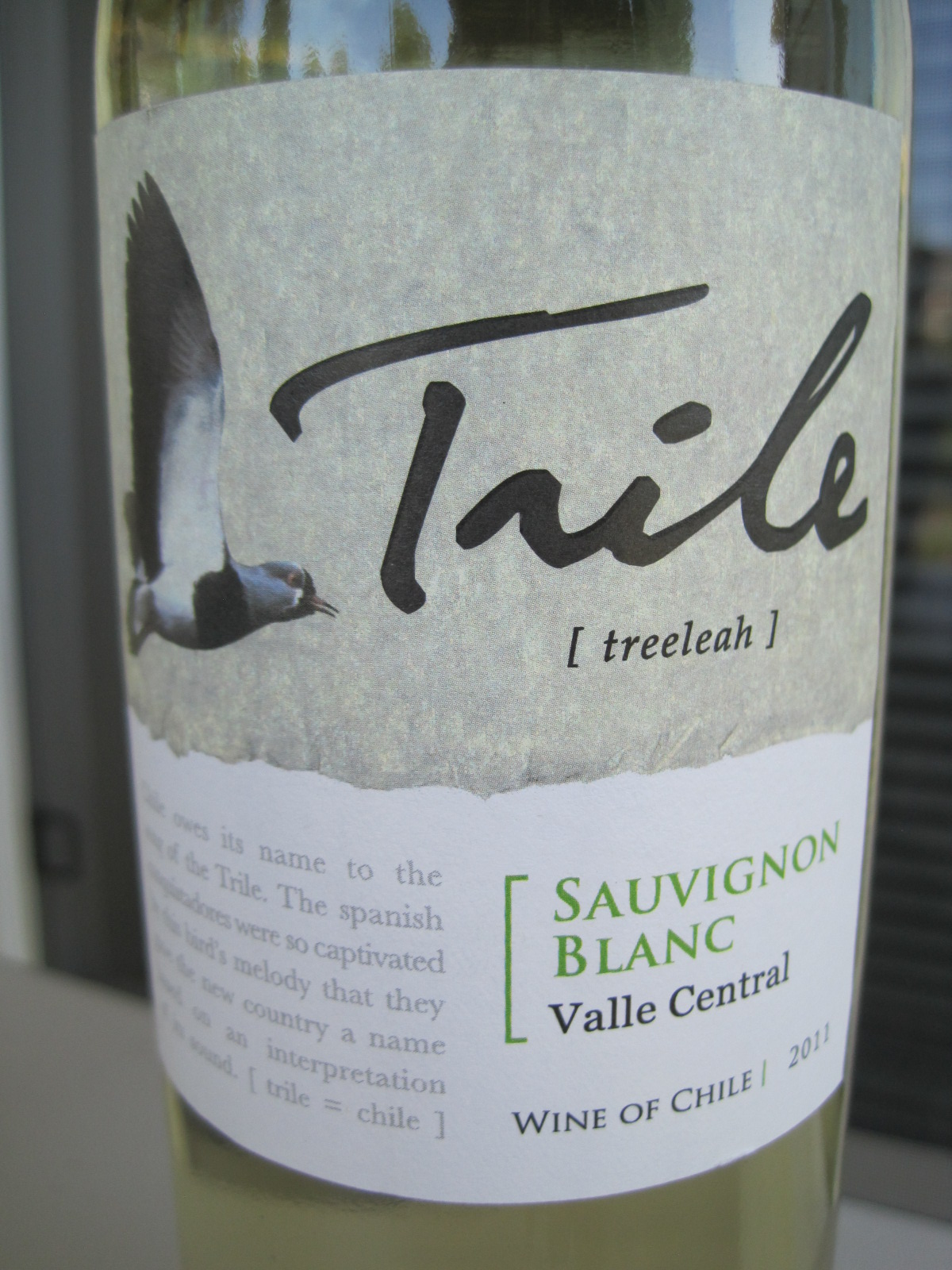
2010 Trile Sauvignon Blanc Valle Central Chile: I'm not sure what is going on with this wine. When I poured my glass and sniffed it, I smelled what can only be described as my old high school locker room. That kind of musty, gym-sock aroma that was very unpleasant. On the palate, all the flavors seemed muddled and masked. Tasting by a group of friends confirmed this, with everyone expressing dislike and confusion at what had happened. It's possible I got a bad bottle, with perhaps some bacterial contamination, so I won't post anything more on the matter. $35.00 on the website.


2010 Trile Cabernet Sauvignon Valle Central Chile: This pours a very pretty deep red, paling ever so slightly towards the rim of the glass. The primary aroma is green bell pepper, followed by an intriguing smokey, salted meat thing. I did get a hint of burning in my nostrils too, despite the listed alcohol being only 13%. On the palate it's pretty smooth cabernet, with green bell pepper flavors and more earthy, meaty flavors coming out. There may be some fruit lurking at the periphery but it was hard to find. This is a perfectly serviceable, simple cabernet to enjoy as that second or third bottle of the night. Drink now. $35.00 on the website.


**Editors Note: The pricing was recently changed on the Trile wines, from around $12 to $35. Apparently there was a pricing error from the winepassionate.com people.**

The question is whether these wines furthered the trend of high quality, inexpensive wines from Chile. I think the answer is yes. I suspect the sauvignon blanc is very fun and refreshing to drink, and that I just got a bad bottle. As for the cabernet, at only $12, it's a great wine to have on hand for those casual occasions when you've got multiple bottles open and a backyard full of friends. It's a bit green, with those bell pepper aromas indicating under-ripe fruit, but with a slight chill on the bottle, its perfectly quaffable.

If you haven't checked out the WinePassionate.com site lately, you should! Residents of California can get free shipping on any purchase of four or more bottles, which is a pretty great deal! To see my earlier post on Italian wines from WinePassionate.com, click the link.

These wines were media samples.

Beau Carufel

Saturday, July 14, 2012

California Wine Club, Shipment Three

This is the final shipment I received during my review of the California Wine Club, this time with a distinct Rhone theme. Upon opening this latest shipment, I was thrilled to see these two bottles waiting for me. Over the past several years I've become increasingly excited at the potential of California's Rhone-style producers and the chance to try two new wines was very appealing.

The producer of the Trenza and Tangent wines is Niven Family Wine Estates, who also produce Baileyana and other California brands.

2009 Trenza Mourvedre Syrah Grenache: With fruit sourced from Santa Barbara County, I had high hopes for this domestic Rhone-style blend. The bouquet is nice, with cherry and leather notes at first, followed by more subtle garrigue and pepper. I think the grenache dominates to begin, showing as bright red fruit and pepper, before the syrah's earthy, black olive notes kick in. All of this is enclosed by the mourvedre's firm, chewy tannin. I wish for a little more fruit on the finish but it's still a nice wine, one that I would happily pair with barbecue all summer long. As the wine opened up, we all seemed to enjoy it more and more. 14.4% abv. $13.99 via the California Wine Club.


2010 Tangent Voignier: The fruit in this viognier was sourced from vineyards in San Luis Obispo, with some coming from cooler sites and others from warmer sites. It's a pretty wine, with notes of stone fruit and white flowers, along with a hint of minerality. One thing I did notice though was how it smelled somewhat dilute, perhaps an indication of young vines or watering back of the juice. On the palate the pretty stone fruit flavors came through but again tasted somewhat muted and diluted. This is a very, very drinkable wine for the price, around $11to re-order it. I like that it isn't sweet and peach-syrup oriented like a lot of other low-priced viognier's can be. 14.1% abv


In the first two California Wine Club reviews, I was pleased with one wine and not so pleased with the other, however this time I'm pleased with both selections. The Trenza is a fantastic deal at $14, and I would happily buy multiple bottles for the summer grilling season. I liked the Tangent viognier as well, and feel that it would be best when paired with food. For the $11 Wine Club price, it's a bargain sipper that takes you off the beaten path, but not dangerously so.

So, the California Wine Club went 2 for 2 this time. After three shipments, I can see the appeal and popularity of this club, it's a great way to find unique producers. I do think they over-sell a bit, because when you put in producers like Fess Parker and Tobin James, both of which are widely distributed across the country, that dilutes the message (implied or otherwise) of "small, family owned wineries". Still, the wines were of reasonable quality and definitely crowd-pleasers. I'd happily give thePremier Club as a gift to friends or family whom I know enjoy reasonably priced wines multiple times each week.

You can find the California Wine Club on Twitter as @cawineclub and The Boring Wine Guy as @boringwineguy. Bruce Boring is one half of the founding team behind this club, the other being his wife Pam. The California Wine Club Facebook Page is also full of activity and a good place to talk about your experiences. The Boring Wine Guy is also on Facebook. If you use the code "beau12" at checkout, you will get four bottles instead of two. That might be the best deal of the whole club!

This sample pack was made possible by Mom Spark Media.

Beau Carufel