Much has been made about the trending of California Cabernet Sauvignon (and now Bordeaux even!) towards higher alcohol levels, more ripeness, and of course the increased use of oak. Some decry the trends while others seem to embrace the style, and it appears to be causing much debate within the wine community. About a week ago I was reading a fellow bloggers recent post, here, and he referenced an article by Dan Berger that dealt with a change of style in California Cabs over the past 20 or so years.
Mr. Berger is definitely in the camp that laments the changing style, he wrote the following: "First, let’s look back on what cabernet used to be. It was dry red wine. It was aged in oak not for oaky flavor, but for maturity and complexity. It was modest in alcohol – 12.5 percent for the vast majority; a few “over-the-top” wines reached 13.5 percent.
Also, it was designed to be aged a little bit, and a few a lot longer. When very young, the wines were tannic and needed taming. I still have some 1970s cabs in the cellar that are in great shape.
Moreover, once the wines got some bottle age and a bit of bouquet, they went nicely with food. Since they had good acid levels, food was a near necessity, and the list included steaks, chops, stews, roasted chicken, game and more."
After reading his excellent article, I started jotting down some ideas about why this has happened, why it's being debated and what the end result may be. As you can see, I continue to be fascinated with the "why" question. The description above sounds like a delicious wine to me, one that aligns with my taste preferences. It would seem to have elegance and structure with all the flavor elements being well integrated. In short, a wine that I would absolutely love to drink time and time again.
Unfortunately, my next thought was this: "Oh..but I also happen to love some of those big, extracted, juicy Cabs too..why is that?"
Well? I wish I knew! It's confusing because on one hand I feel proud to like the styles that a professional like Dan Berger likes, yet I feel a bit ashamed to admit that I also do love bigger, juicier examples, the very types he's writing off as not true expressions of California Cabernet Sauvignon.
In my limited experience in wine retailing, I've been able fortunate to observe a truly wide range of wine drinkers and what they buy. It's fascinating to say the least because I see more of the disparaged, current style selling than of those more traditional Cabs. That's not simply because it's being made, but because the consumer prefers it. All along the price spectrum, the wine drinker is demanding (in an economic sense) the bigger, bolder Cabernets from this state. That goes for a Novella Paso Robles Cab at $7 from Trader Joes all the way up to the high end "cult" Cabs from Screaming Eagle, Bond, Harlan et al. In the middle, $40-$100 cabs like Meyer, Trefethen, Whitehall Lane are all getting bigger and riper compared to the 1980's and 90's, because their consumers keep buying that style. What if, overnight (well, in one vintage), those wineries all switched back to the traditional style? Sales of their wines would stop. I'm not joking.
The bigger the wine, the bigger the score too, just look at Robert Parker's scores for massive wines. Look at what Jim Laube scores those wines at. In turn, those scores drive what people want to buy, which drives what styles are produced. At this point, that circle shows no signs of breaking, merely a potential for weakening as the Millenials move away from big-name critics scores and more into social scores. Aging Baby Boomers still have money and still buy "new" style California Cabernets, driving that market.
In the end, I jotted down that the "crisis" is a creation of our own making. We being the wine industry, to clarify things. So much wine is sold on scores, so much import is given to those scores, that it's concentrated the true power in the hands of a few. Their palates have dictated what we (consumers this time) have been drinking and how the Cabernet has evolved over 20 or more years. Mr. Berger is part of a long list of people complaining about the demise of their preferred Cabs, but it doesn't appear to have any effect for the majority of wine drinkers who buy the majority of wine made and sold in this country. That isn't to try to write him off, not at all, because his take is as fascinating to me as the person who unabashedly embraces the noveau style's perspective is.
I feel excited about what we will experience in the next 20 years of California Cabs.
Beau Carufel
Wednesday, April 28, 2010


Tuesday, April 20, 2010
A real threat to all wine drinkers out there.
By now a lot of you know about the bill HR 5034 that's been introduced in the U.S. Congress. There are several excellent summarizations of the bill and it's wide-ranging implications. One of them is over at Fermentation, Tom Wark's excellent blog. I urge any wine drinker to take the time to read through his analysis. If you need a quick synopsis or executive summary, head over to Dr. Vino's blog and see what he says. For once, this is something we all need to be aware of because it could end a distribution channel a lot of us use to get our wines. Here's a video that quite nicely summarizes what will happen should this idiotic piece of legislation make it into law. It's on youtube's website because I don't know how to make this dashboard shrink the size to fit the page width.
More importantly though, the potential effects on smaller wineries all across the country could be devastating. Small businesses are what drive this country, entrepreneurs who take the time, blood, sweat and tears to make their passions a reality. Small, family owned wineries exemplify this notion. They are the ones who don't have massive distribution across the country by the big guys. If you run the numbers, there are more of them than the big mega-wineries out there. While they may not pump out as much wine, you could argue their wines are more artistically driven, more expressive than one bottle out of a production run of 500,000 or more.
Without direct access to consumers, these small wineries are going to be either forced out of business, or worse, forced to sign contracts with the bigger distributors only to watch their wine languish in warehouses as the big distributors focus on moving ever larger quantities of the big producers wines. I have actually witnessed this happen. It's sad to think about especially given the quality and unique nature of wines from small producers but HR 5034 threatens to make this scenario a reality.
It's easy to dismiss the warnings and assume someone else will write to their Representative, we've all done it before. What I suggest though is to join the Facebook page, here, and see what people are actually saying. The contributors to that forum are winemakers, wine drinkers, bloggers, pretty much everyone with a passion for wine.
Basically I'm rehashing what other people/bloggers have already said, I suppose just to add my voice to those urging action on the part of wine drinkers. The ramifications of this ridiculous bill are severe and we should all take note, for a slippery slope exists. Can you envision a world where big distributors control the wine you drink? While that may seem far fetched, think about it. Those distributors buy Congressmen by paying lobbyists huge amounts to secure votes. We all tacitly acknowledge this is happening already in Washington.
Why wouldn't it happen in our wine world? I fully support the right of the individual to buy the wine they want from whomever they want, provided the buyer and seller are responsible adults of legal drinking age. This bill attempts to use some phony excuses to give States back the power to restrict the distribution channels, something the Supreme Court already struck down. It's nothing more than a power play by the big alcohol distributors who've managed to buy some immoral Congressmen.
It's something we all need to watch and voice our feelings about. Take the time do it, what's ten minutes out of your day? Do it while enjoying a glass of wine, tell your wine buddies to do the same thing. You can even make an event out of sending your Congressmen letters, a wine party! Right now is the time to make our voices heard.
Beau Carufel
More importantly though, the potential effects on smaller wineries all across the country could be devastating. Small businesses are what drive this country, entrepreneurs who take the time, blood, sweat and tears to make their passions a reality. Small, family owned wineries exemplify this notion. They are the ones who don't have massive distribution across the country by the big guys. If you run the numbers, there are more of them than the big mega-wineries out there. While they may not pump out as much wine, you could argue their wines are more artistically driven, more expressive than one bottle out of a production run of 500,000 or more.
Without direct access to consumers, these small wineries are going to be either forced out of business, or worse, forced to sign contracts with the bigger distributors only to watch their wine languish in warehouses as the big distributors focus on moving ever larger quantities of the big producers wines. I have actually witnessed this happen. It's sad to think about especially given the quality and unique nature of wines from small producers but HR 5034 threatens to make this scenario a reality.
It's easy to dismiss the warnings and assume someone else will write to their Representative, we've all done it before. What I suggest though is to join the Facebook page, here, and see what people are actually saying. The contributors to that forum are winemakers, wine drinkers, bloggers, pretty much everyone with a passion for wine.
Basically I'm rehashing what other people/bloggers have already said, I suppose just to add my voice to those urging action on the part of wine drinkers. The ramifications of this ridiculous bill are severe and we should all take note, for a slippery slope exists. Can you envision a world where big distributors control the wine you drink? While that may seem far fetched, think about it. Those distributors buy Congressmen by paying lobbyists huge amounts to secure votes. We all tacitly acknowledge this is happening already in Washington.
Why wouldn't it happen in our wine world? I fully support the right of the individual to buy the wine they want from whomever they want, provided the buyer and seller are responsible adults of legal drinking age. This bill attempts to use some phony excuses to give States back the power to restrict the distribution channels, something the Supreme Court already struck down. It's nothing more than a power play by the big alcohol distributors who've managed to buy some immoral Congressmen.
It's something we all need to watch and voice our feelings about. Take the time do it, what's ten minutes out of your day? Do it while enjoying a glass of wine, tell your wine buddies to do the same thing. You can even make an event out of sending your Congressmen letters, a wine party! Right now is the time to make our voices heard.
Beau Carufel
Tuesday, April 13, 2010
Wine Bloggers Conference 2010, Walla Walla Washington
I got some absolutely wonderful news today, I was awarded a scholarship to the 2010 Wine Bloggers Conference in Walla Walla, Washington. Words that jump out of my brain right now are: excitement, joy, surprise, motivation, encouragement, relief, and gratitude. All of those words help sum up this blog post.
For the past few weeks I've really struggled with this blog, writing then deleting a lot of posts. In retrospect, that was a bad idea, I should have saved them. My point is that I've felt a bit lost, where do I take this blog? It's in it's infancy to be sure, with a handful of followers and maybe a few more readers. That doesn't bug me, I hope in time it'll grow.
I've thought to myself that I'd really like to do more food, beer, and wine industry posts instead of just writing about wines I like and posting a picture of them. That probably won't grow my readers by much since so many others are doing it. Today I was discussing the blog and what direction to take it in with my Dad, when I realized I don't need to necessarily change direction as much as change scope. Adding more content by writing about the aforementioned subjects will do just that.
So, what does that all mean? Why am I so excited about the Wine Bloggers Conference? Well it's like this: Going there will teach me so much about writing, blogging, and creating content that when I get back I will be able to truly expand the scope but do it the right way. You who've read most of my blogs remember I wrote a piece a few months ago explaining why I wanted to go and how important the WBC Scholarship is.
Well, the evidence is right here on this blog. Being recognized as someone who deserves support makes me so much more encouraged and so incredibly grateful. I guess this is how we feel when we're truly passionate about something. In all honesty I can't wait to write more and hopefully bring a unique voice and perspective to my site.
So I just wanted to post up that great bit of news I got today and share it with everyone who reads this. I think I'll be seeing some of you in Walla Walla this year, we're going to have a superb time!
Beau Carufel
For the past few weeks I've really struggled with this blog, writing then deleting a lot of posts. In retrospect, that was a bad idea, I should have saved them. My point is that I've felt a bit lost, where do I take this blog? It's in it's infancy to be sure, with a handful of followers and maybe a few more readers. That doesn't bug me, I hope in time it'll grow.
I've thought to myself that I'd really like to do more food, beer, and wine industry posts instead of just writing about wines I like and posting a picture of them. That probably won't grow my readers by much since so many others are doing it. Today I was discussing the blog and what direction to take it in with my Dad, when I realized I don't need to necessarily change direction as much as change scope. Adding more content by writing about the aforementioned subjects will do just that.
So, what does that all mean? Why am I so excited about the Wine Bloggers Conference? Well it's like this: Going there will teach me so much about writing, blogging, and creating content that when I get back I will be able to truly expand the scope but do it the right way. You who've read most of my blogs remember I wrote a piece a few months ago explaining why I wanted to go and how important the WBC Scholarship is.
Well, the evidence is right here on this blog. Being recognized as someone who deserves support makes me so much more encouraged and so incredibly grateful. I guess this is how we feel when we're truly passionate about something. In all honesty I can't wait to write more and hopefully bring a unique voice and perspective to my site.
So I just wanted to post up that great bit of news I got today and share it with everyone who reads this. I think I'll be seeing some of you in Walla Walla this year, we're going to have a superb time!
Beau Carufel
Saturday, April 10, 2010
The "Why" of Why I Love Wine.
It seems like a simple question, when you're asked why you like wine, why you love wine, or why you're such a wine geek..It's tough to answer though, isn't it! It isn't tough to spew out a sentence or two with some generic phrases that leaves the questioner thinking "ummm so I still only know that you're really into wine, great answer there genius!". It IS tough to concisely explain why we love wine so much. I keep thinking there's got to be a good way to do it in three sentences. Not three run-on sentences, but three easy to understand sentences. Why did I pick three though?
We've all probably asked a "why" question about someone else's interest in wine. I know I have, and I can relate from personal experiences that I've gotten a wide variety of answers. Some people take the question as an excuse to ramble on for 15 minutes about terroir, expressionism, artistry, tastiness, and how it speaks to their soul. Others simply say "I like wine because it tastes good". And of course everything in between. Which answer or answers have you given? Perhaps you (attempt to) get more eloquent if you've in fact had some wine, because everyone knows we speak better after a few glasses.
I picked three sentences because that seems to be about the length of time that someone will actively listen to you after asking a question. I know of course that it varies from person to person, but we've all see someone's eyes start to glaze over or the wheels start turning in their head when we take too long to explain the mystical qualities of a good Barolo, something that we struggle (albeit nobly) to quantify for our simple questioner. Yea right! Viewed a different way, you have three chances to help someone understand why you love wine so much.

This is especially important because getting our friends, family, coworkers, neighbors, and anyone else to drink and enjoy wine is a rewarding experience. You are helping someone learn a new language, introducing them to a new world and broadening their horizons. Why give them the impression that you either don't know why you like wine or you like wine for reasons beyond their comprehension?
My point is that those of us with a wine background should continually strive to make wine more accessible. That isn't to say that it needs to be dumbed down, far from it. Wine's innate complexities will manifest to new enthusiasts, given enough time and tasting experience. This is so long as we who have been lucky enough to experience them haven't turned off those less experienced people who want to enjoy it and learn more, with our crummy/overwrought answers to their questions. It's a responsibility then, to choose our words carefully and be aware of who we're talking to. We should be happy they have taken an interest in our interest, yet aware of how intimidating wine can be. Historically wine has opened doors, been a great social lubricant. Let's keep it that way..
Or we can always just quote Sideways, right?
Beau Carufel
We've all probably asked a "why" question about someone else's interest in wine. I know I have, and I can relate from personal experiences that I've gotten a wide variety of answers. Some people take the question as an excuse to ramble on for 15 minutes about terroir, expressionism, artistry, tastiness, and how it speaks to their soul. Others simply say "I like wine because it tastes good". And of course everything in between. Which answer or answers have you given? Perhaps you (attempt to) get more eloquent if you've in fact had some wine, because everyone knows we speak better after a few glasses.
I picked three sentences because that seems to be about the length of time that someone will actively listen to you after asking a question. I know of course that it varies from person to person, but we've all see someone's eyes start to glaze over or the wheels start turning in their head when we take too long to explain the mystical qualities of a good Barolo, something that we struggle (albeit nobly) to quantify for our simple questioner. Yea right! Viewed a different way, you have three chances to help someone understand why you love wine so much.

This is especially important because getting our friends, family, coworkers, neighbors, and anyone else to drink and enjoy wine is a rewarding experience. You are helping someone learn a new language, introducing them to a new world and broadening their horizons. Why give them the impression that you either don't know why you like wine or you like wine for reasons beyond their comprehension?
My point is that those of us with a wine background should continually strive to make wine more accessible. That isn't to say that it needs to be dumbed down, far from it. Wine's innate complexities will manifest to new enthusiasts, given enough time and tasting experience. This is so long as we who have been lucky enough to experience them haven't turned off those less experienced people who want to enjoy it and learn more, with our crummy/overwrought answers to their questions. It's a responsibility then, to choose our words carefully and be aware of who we're talking to. We should be happy they have taken an interest in our interest, yet aware of how intimidating wine can be. Historically wine has opened doors, been a great social lubricant. Let's keep it that way..
Or we can always just quote Sideways, right?
Beau Carufel
Friday, April 2, 2010
Yummy! Who doesn't love a great Albarino?
2008 Abacela Albarino Estate Grown

Oh Albarino, how I love thee. Light but supple, dry but richly textured. It can wash across your palate or it can dance around like the lightest ballerina, leaving hints of flavor each time it touches down. For these reasons I can't get enough Albarino. I've had it with many foods from sushi to grilled chicken to fresh summer salads. Each time's been wonderful, adding, supplementing and enhancing the flavors of the dish.
I picked up this little gem at San Diego Wine Company the other day and paired it with some pre-made sushi rolls. After chilling it for about two hours, I felt it was ready to be tasted. Right away you taste wonderful floral and stone-fruit, paired with lime peel and ruby grapefruit. There could even be some nectarine and minerals present. One of the many things I like about good Albarino is that it can have weight but also be well integrated and light. I know that may seem like a contradiction but hear me out. One the nose, you get great intensity yet everything is balanced out, none of the scents were heavy handed. So to me that shows it's got some weight, some substance, without being something like a Chardonnay, where you smell heavier scents like butter, tropical notes and oak.
With that, I just wanted to taste the wine! I mean come on, that's the whole point right? Right away, great citrus blended with ripe stone fruits, like a pear that was dipped in white peach juice. I love this! It's got a life to it, a way of dancing across your palate (like I said in the first paragraph) and each time you get a new flavor. There are some really interesting minerals on the mid-palate, like a limey-limestone..or wait, how about this: take one of those dark, round, dark shale type stones you may find at the beach, douse it in lime juice, and lick it! That's it! How cool, I'm really enjoying this wine. I also found there's a creamy/oily sensation, it's positively luxurious! Great floral notes and a fleshy, weighted sensation across the back of your tongue help give the finish some depth and complexity.
I think it's easy for you, the reader, to tell that I thoroughly enjoy this wine. There are so many of the qualities I look for and desire in this wine, it's hard to find any faults. If anything, I'd like the finish to have been longer, with a better transition from the fleshy, creamy/oily to the tapering acidity. Beyond that I was hard pressed to detail anything I didn't like. That's because there was nothing else wrong with it. To me, the folks at Abacela did a superb job on this wine, all I can say is BRAVO! Solid A from me, this has to be one of the most certain scores I've ever given. For 15$, it's well worth buying a few bottles especially since summer is coming along soon.
Beau Carufel

Oh Albarino, how I love thee. Light but supple, dry but richly textured. It can wash across your palate or it can dance around like the lightest ballerina, leaving hints of flavor each time it touches down. For these reasons I can't get enough Albarino. I've had it with many foods from sushi to grilled chicken to fresh summer salads. Each time's been wonderful, adding, supplementing and enhancing the flavors of the dish.
I picked up this little gem at San Diego Wine Company the other day and paired it with some pre-made sushi rolls. After chilling it for about two hours, I felt it was ready to be tasted. Right away you taste wonderful floral and stone-fruit, paired with lime peel and ruby grapefruit. There could even be some nectarine and minerals present. One of the many things I like about good Albarino is that it can have weight but also be well integrated and light. I know that may seem like a contradiction but hear me out. One the nose, you get great intensity yet everything is balanced out, none of the scents were heavy handed. So to me that shows it's got some weight, some substance, without being something like a Chardonnay, where you smell heavier scents like butter, tropical notes and oak.
With that, I just wanted to taste the wine! I mean come on, that's the whole point right? Right away, great citrus blended with ripe stone fruits, like a pear that was dipped in white peach juice. I love this! It's got a life to it, a way of dancing across your palate (like I said in the first paragraph) and each time you get a new flavor. There are some really interesting minerals on the mid-palate, like a limey-limestone..or wait, how about this: take one of those dark, round, dark shale type stones you may find at the beach, douse it in lime juice, and lick it! That's it! How cool, I'm really enjoying this wine. I also found there's a creamy/oily sensation, it's positively luxurious! Great floral notes and a fleshy, weighted sensation across the back of your tongue help give the finish some depth and complexity.
I think it's easy for you, the reader, to tell that I thoroughly enjoy this wine. There are so many of the qualities I look for and desire in this wine, it's hard to find any faults. If anything, I'd like the finish to have been longer, with a better transition from the fleshy, creamy/oily to the tapering acidity. Beyond that I was hard pressed to detail anything I didn't like. That's because there was nothing else wrong with it. To me, the folks at Abacela did a superb job on this wine, all I can say is BRAVO! Solid A from me, this has to be one of the most certain scores I've ever given. For 15$, it's well worth buying a few bottles especially since summer is coming along soon.
Beau Carufel
Wednesday, March 31, 2010
A wee bit of internet wine-biz hilarity ensues..and a mini-review
If you're using the internet and love wine, I highly recommend this http://www.dailyfeastparody.com/ for an utterly hilarious parody of what happens in the twitter-verse. Thanks to Tom Wark (@tomcwark) for tweeting about it originally via his site. Take the time to read his other entries, you'll learn a lot!
2003 Conde de Valdemar Reserva Rioja

To be fair, I love Spanish wines. But...some of my first ever experiences came from drinking such stunners as Vega Sicilia Unico. Talk about setting the bar high, I still remember the depth and complexity, how it also had that one special quality to it that made me pause. Something that great wines have, which defines why they're great. I struggle to define or quantify what that essence was, yet I still recall the effect on me.
With that out of the way, I went into tasting this wine with a sense of excitement. It's relatively cheap, $14.99 at Trader Joe's, at least at the West Coast stores. I smelled darker notes immediately. Mocha, leather, a certain tarry quality, dried blueberries and a dusty/earthy scent. Kind of like a patch of bare ground that was rained on last week and is still a touch moist..But not earthy like a Rhone Valley wine or smelling of manure like a rustic (or really good) Rhone wine.
How does it taste? A bit more delicate than I expected, but it was a 2003 so perhaps that explains it. There was a soft bit of blueberry and blackberry, oak, round tannins, leather and a pleasant herbal flavor there. A bit of chunkiness disappointed me, previous readers know I'm all about seamless flavor transitions and am also big on flavor integration. I believe this wine was at it's peak or just past it, so it might have been disassembling by the time I got to it. The non-fruit flavors almost dominated the fruit notes, furthering that feeling of an off-peak wine.
There was a definite silky quality to the finish, which I did enjoy, a very nice tapering effect. I felt that at one point this might have been a bit more powerful but with age came an accessibility. On consecutive nights I paired it with home made pizza and beef stir-fry. Since the pizza had veggies as toppings, the wine held up just fine. With the stir-fry though, it was a bit overwhelmed and felt out of balance. There was too much going on, the food needed to be softer, quieter, but not necessarily more elegant.
Overall, a really nice bottle of wine. You might note that nothing wowed me, it seemed a bit past it's prime but had a wonderful finish and definitely an elegant quality which also appealed to me. My verdict: C+/B-, right now I'm leaning towards the C+.
Beau Carufel
2003 Conde de Valdemar Reserva Rioja

To be fair, I love Spanish wines. But...some of my first ever experiences came from drinking such stunners as Vega Sicilia Unico. Talk about setting the bar high, I still remember the depth and complexity, how it also had that one special quality to it that made me pause. Something that great wines have, which defines why they're great. I struggle to define or quantify what that essence was, yet I still recall the effect on me.
With that out of the way, I went into tasting this wine with a sense of excitement. It's relatively cheap, $14.99 at Trader Joe's, at least at the West Coast stores. I smelled darker notes immediately. Mocha, leather, a certain tarry quality, dried blueberries and a dusty/earthy scent. Kind of like a patch of bare ground that was rained on last week and is still a touch moist..But not earthy like a Rhone Valley wine or smelling of manure like a rustic (or really good) Rhone wine.
How does it taste? A bit more delicate than I expected, but it was a 2003 so perhaps that explains it. There was a soft bit of blueberry and blackberry, oak, round tannins, leather and a pleasant herbal flavor there. A bit of chunkiness disappointed me, previous readers know I'm all about seamless flavor transitions and am also big on flavor integration. I believe this wine was at it's peak or just past it, so it might have been disassembling by the time I got to it. The non-fruit flavors almost dominated the fruit notes, furthering that feeling of an off-peak wine.
There was a definite silky quality to the finish, which I did enjoy, a very nice tapering effect. I felt that at one point this might have been a bit more powerful but with age came an accessibility. On consecutive nights I paired it with home made pizza and beef stir-fry. Since the pizza had veggies as toppings, the wine held up just fine. With the stir-fry though, it was a bit overwhelmed and felt out of balance. There was too much going on, the food needed to be softer, quieter, but not necessarily more elegant.
Overall, a really nice bottle of wine. You might note that nothing wowed me, it seemed a bit past it's prime but had a wonderful finish and definitely an elegant quality which also appealed to me. My verdict: C+/B-, right now I'm leaning towards the C+.
Beau Carufel
Tuesday, March 23, 2010
2006 Juan Gil Jumilla Monastrell...brawny, sexy, juicy wine.

Big red wine alert! Spicy, ripe blackberry preserves with a dense core of blueberry. Notes of tar, wood, vanilla and star anise on the nose. On the palate, tannins surround your palate, building a cocoon of earth, ripe berries, and soft oak nuances that flow seamlessly into an elegant finish. This is an intense wine with a lot to offer, it's best decanted for an hour or two, to let everything integrate properly. You can literally feel all the flavor elements embrace your entire tongue, like water poured over a flat board, gently washing over each side equally. Right as it ends, while the wine elegantly tapers off into nothingness, you'll find soft notes of dark chocolate and graphite. I always find this an interesting expression of the Monastrell/Mourvedre grape.
Suffice it to say I'm impressed so far, but I figured you'd get that from the previous paragraph right? Now when you factor in the price, between $11-14 you will get a sure winner. Absolutely an A in my somewhat un-scientific grading system. I've enjoyed the Juan Gil wines, from all price ranges, for the past six years and am still really pleased with this one as a daily drinker. It's got a superb quality:price (QPR) and is pretty easy to find in a good wine store. On the back of the bottle I see it's imported by The Henry Wine group out here in California. My recommendation: If you see this wine on the shelf, buy it. Enjoy it with big, bold foods. I'm already dreaming of pairing my next bottle with something off the grill, perhaps grilled, soy-marinated veggie/steak kebabs. We shall see!
Beau Carufel
Tuesday, March 16, 2010
Lobster Ravioli and 2007 Acacia Carneros Chardonnay, will it work?
I don't drink a lot of California Chardonnay. There, I've gotten that out in the open. I felt it best to insert that disclaimer so that anyone reading this would realize a couple of things. First, I may not be the best at describing Chardonnays from California (or any wine for that matter). Second, since I don't drink many of them yet I do drink a lot of wine, maybe I have an inherent bias against our subject for this blog.
Since that is now out of the way, I can mention that I've lately become fascinated with two varietals, specifically examples from California. Those two would in fact be Syrah and Chardonnay, and Chard just happens to win out in the first to make it onto my small corner of the internet wine table.
2007 Acacia Chardonnay Carneros
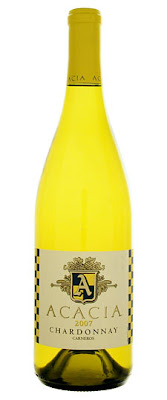 I paired this wine with Lobster Ravioli from Trader Joe's, simply because I was hungry and it was dinner time. However, I did taste and write down some notes beforehand, which will be integrated into the review. It was in the fridge for about an hour before I opened it, then sat in glass for ten minutes warming up to a more acceptable temperature.
On the nose I was able to discern American oak, pear, apple and a hint of pineapple. There did seem to be a sweet floral note perhaps honeysuckle but that was very faint, just a wisp through the nostrils. Quick aside but is there an un-sexier word than "nostril" in the English language? Please post if you know of one but that word to me is just absolutely not sexy or elegant in the slightest. Come on, there's no grace to it, no evocative imagery going through your head. Just one of the two openings to your nose.
Back on topic and I do apologize for that somewhat crude little rant. When I first tasted this wine, sans food, I noted a very nice acidic spine that held together flavors of pineapple, popcorn butter, apple and pear. At this point I was supremely happy because I had expected a giant butterball of a Chardonnay, as so many California examples are made. There was a great sense of balance, like each flavor would run its course across your palate then be replaced by another equally interesting taste. What kept the wine taut and composed was that acidity I mentioned, it prevented any one flavor from dominating. More on that later though.
With the ravioli, I drizzled some Extra Virgin Olive Oil (because I want those virgins to be extra!) and a bit of freshly grated Parmesan cheese. At this point I was pretty hungry and decided that my need for food overcame my need for finding hints of nutty cheese in the wine. With the ravioli the acidity was receding, replaced by that velvety mouthfeel that can only scream "malolactic treatement!" at you from inside the glass. However!! Just wait, before I go ripping on malo'd up Chardonnays, it actually worked. The dry cheese and slightly peppery olive oil were complemented by the buttery wine. Don't get me wrong, the acid was present and again doing something nice on the finish. It's just that when you paired all the flavors of the food with the wine, things changed.
What I noticed on the palate while eating the ravioli were a significantly more velvety mouthfeel. Pear and butterscotch, a slight dance of pineapple juice across the mid-palate and on the finish, before that acidity took over, some vanilla. If I had to guess (and this is a huge shot in the dark) I'd say this wine saw maybe 12-14 months in a combination of new and old American oak or new American oak and French oak barrels.
Needless to say, the pairing worked a little bit beyond my expectations. I was unhappy with the 14.4% alcohol levels though, I didn't think it needed that high to accomplish the mission of being a very drinkable, food friendly Chardonnay. You'll see the Acacia sell for between 12$ and 17$, at the 12$ level it gets a very solid B from me. Higher up in price and I'd down grade this to a C+.
Beau Carufel
Since that is now out of the way, I can mention that I've lately become fascinated with two varietals, specifically examples from California. Those two would in fact be Syrah and Chardonnay, and Chard just happens to win out in the first to make it onto my small corner of the internet wine table.
2007 Acacia Chardonnay Carneros

On the nose I was able to discern American oak, pear, apple and a hint of pineapple. There did seem to be a sweet floral note perhaps honeysuckle but that was very faint, just a wisp through the nostrils. Quick aside but is there an un-sexier word than "nostril" in the English language? Please post if you know of one but that word to me is just absolutely not sexy or elegant in the slightest. Come on, there's no grace to it, no evocative imagery going through your head. Just one of the two openings to your nose.
Back on topic and I do apologize for that somewhat crude little rant. When I first tasted this wine, sans food, I noted a very nice acidic spine that held together flavors of pineapple, popcorn butter, apple and pear. At this point I was supremely happy because I had expected a giant butterball of a Chardonnay, as so many California examples are made. There was a great sense of balance, like each flavor would run its course across your palate then be replaced by another equally interesting taste. What kept the wine taut and composed was that acidity I mentioned, it prevented any one flavor from dominating. More on that later though.
With the ravioli, I drizzled some Extra Virgin Olive Oil (because I want those virgins to be extra!) and a bit of freshly grated Parmesan cheese. At this point I was pretty hungry and decided that my need for food overcame my need for finding hints of nutty cheese in the wine. With the ravioli the acidity was receding, replaced by that velvety mouthfeel that can only scream "malolactic treatement!" at you from inside the glass. However!! Just wait, before I go ripping on malo'd up Chardonnays, it actually worked. The dry cheese and slightly peppery olive oil were complemented by the buttery wine. Don't get me wrong, the acid was present and again doing something nice on the finish. It's just that when you paired all the flavors of the food with the wine, things changed.
What I noticed on the palate while eating the ravioli were a significantly more velvety mouthfeel. Pear and butterscotch, a slight dance of pineapple juice across the mid-palate and on the finish, before that acidity took over, some vanilla. If I had to guess (and this is a huge shot in the dark) I'd say this wine saw maybe 12-14 months in a combination of new and old American oak or new American oak and French oak barrels.
Needless to say, the pairing worked a little bit beyond my expectations. I was unhappy with the 14.4% alcohol levels though, I didn't think it needed that high to accomplish the mission of being a very drinkable, food friendly Chardonnay. You'll see the Acacia sell for between 12$ and 17$, at the 12$ level it gets a very solid B from me. Higher up in price and I'd down grade this to a C+.
Beau Carufel
Friday, March 12, 2010
After reading this, I got to thinking..That's never good!
Brevity aside, I read this article by Eric Asmiov today which made me wonder about a few things. I'm not sure if Mr. Asmiov meant to bring up such questions but in any event I wanted to write a little about what often confuses me in this wonderful world (of wine). His article discusses the importance that consumers place upon the color of a red wine, going on to say that darker wines are perceived as being better, of higher quality. Within the article, he refutes this notion with some examples of red wines that may not have darker colors but still have high amounts of flavor and intensity.
What got me thinking was the notion that winemakers admit to making their wines darker in response to consumer preferences. I'll stop short of calling them sellouts, because they aren't doing anything egregious. The practical or economic side of the business says that you need to sell the wines you make so that you can afford to make more wines. Therefore if the consumer wants unnaturally dark reds, they'll get them. Sure I was bummed to read about that, even if Mr. Asmiov first talked to winemakers about this five years ago, but I try to understand from their point of view what's going on.
More to the point, how did the perception of darker = better quality/more flavor arise and is there anything that can be done to get the word out that this isn't the case? How do you change the inertia of such a large group of consumers? The first thing that popped into my head was that it would truly require a concerted effort by a majority of wine people. Something coordinated across the various industry areas that would inform and assist consumers in moving past the erroneous notion. Delving into that a bit deeper, I feel it would also have to be an effort with a positive message, not one that would alienate wine drinkers by making them feel like they were being lectured to.
There's already too much pontification in the wine industry, from holier-than-thou critics to arrogant winemakers and I really sense consumers are starting to feel that more and more. Perhaps that explains, at least partly, the trends towards wine drinkers getting their information from new, non-traditional sources. Ones that might be construed as less biased and less committed to the old ways. Stepping down off my soapbox, such an effort could work, I firmly believe it. I suspect it's just such a massive undertaking in organizing everyone and ensuring the message was the right one that no one's willing to give it a shot.
From here, as you'll see, I started thinking beyond one particular issue and my brain felt like it was kicking into a higher gear. Let me apologize and inform you that I did not intend to write such a long blog about this but once the ideas and questions (well mainly questions) started coming out, I couldn't stop them. As you'll see, I think the broader reach of my thoughts still resonates within the wine business specifically. Ok, time to get back on topic.
But why stop there, what can be done about other erroneous consumer ideas? I mean let's face it, sometimes the customer is wrong. Americans have such a weird idea of customer service, all in the name to separate people from their dollars, but it is what it is and fundamentally will not change. How the message or education is modulated therefore must be precise. Maybe that's why top advertising and marketing executives make so much money, they know how to be that precise. Speculation gets me nowhere though, it sure doesn't pay the bills!
I'm trying to distill my main point into something somewhat clear and concise. I think it expands on what Mr. Asimov first brought up though, the notion that consumers, who do drive the market, can be wrong or at least misinformed. Basically it boils down to this: What, if anything, can be done to dispel misperceptions that exist in wine buyers? Further, if something can be done, will it actually be done and will it work? Are we limited to a glacial rate of change and if yes, how does that impact the dynamics of the industry? I told you it was a bad idea when I got to thinking!
Beau Carufel
What got me thinking was the notion that winemakers admit to making their wines darker in response to consumer preferences. I'll stop short of calling them sellouts, because they aren't doing anything egregious. The practical or economic side of the business says that you need to sell the wines you make so that you can afford to make more wines. Therefore if the consumer wants unnaturally dark reds, they'll get them. Sure I was bummed to read about that, even if Mr. Asmiov first talked to winemakers about this five years ago, but I try to understand from their point of view what's going on.
More to the point, how did the perception of darker = better quality/more flavor arise and is there anything that can be done to get the word out that this isn't the case? How do you change the inertia of such a large group of consumers? The first thing that popped into my head was that it would truly require a concerted effort by a majority of wine people. Something coordinated across the various industry areas that would inform and assist consumers in moving past the erroneous notion. Delving into that a bit deeper, I feel it would also have to be an effort with a positive message, not one that would alienate wine drinkers by making them feel like they were being lectured to.
There's already too much pontification in the wine industry, from holier-than-thou critics to arrogant winemakers and I really sense consumers are starting to feel that more and more. Perhaps that explains, at least partly, the trends towards wine drinkers getting their information from new, non-traditional sources. Ones that might be construed as less biased and less committed to the old ways. Stepping down off my soapbox, such an effort could work, I firmly believe it. I suspect it's just such a massive undertaking in organizing everyone and ensuring the message was the right one that no one's willing to give it a shot.
From here, as you'll see, I started thinking beyond one particular issue and my brain felt like it was kicking into a higher gear. Let me apologize and inform you that I did not intend to write such a long blog about this but once the ideas and questions (well mainly questions) started coming out, I couldn't stop them. As you'll see, I think the broader reach of my thoughts still resonates within the wine business specifically. Ok, time to get back on topic.
But why stop there, what can be done about other erroneous consumer ideas? I mean let's face it, sometimes the customer is wrong. Americans have such a weird idea of customer service, all in the name to separate people from their dollars, but it is what it is and fundamentally will not change. How the message or education is modulated therefore must be precise. Maybe that's why top advertising and marketing executives make so much money, they know how to be that precise. Speculation gets me nowhere though, it sure doesn't pay the bills!
I'm trying to distill my main point into something somewhat clear and concise. I think it expands on what Mr. Asimov first brought up though, the notion that consumers, who do drive the market, can be wrong or at least misinformed. Basically it boils down to this: What, if anything, can be done to dispel misperceptions that exist in wine buyers? Further, if something can be done, will it actually be done and will it work? Are we limited to a glacial rate of change and if yes, how does that impact the dynamics of the industry? I told you it was a bad idea when I got to thinking!
Beau Carufel
Thursday, March 11, 2010
I did it, finally..I applied for a scholarship!
Although I've known about the Wine Bloggers Conference, up in Walla Walla this year, (weird name!) and have known about their scholarship opportunities for us burgeoning bloggers, I hadn't applied until today. Why? I didn't think I should! I've got all of 22 entries and eight followers of this blog, hardly numbers worth mentioning. But what starts as a trickle may turn into a torrent and that's what I hope for. Being able to attend this Conference would be so amazing for me, it could change how I write, what I write about, maybe even where I write about it! Think of the implications, for they are vast! (said with not a hint of sarcasm)
While I might be suffering from delusions of grandeur (and most likely I am), in all seriousness I'm writing this mainly to get my thoughts onto the screen. I'm straight up nervous about submitting my application, this is something I really think benefits all bloggers and will hugely help people who are just starting out writing about wine. What I mean to say is that there are tons of better qualified people who've been applying for the limited funding available, just to get the chance to take some real knowledge away from the event. It's going to be pretty epic, the even that will stick inside our brains for years to come.
The skills, tips, secrets and wine will make indelible impressions upon the newbie-bloggers out there. This is part of why I'm so incredibly stoked on this event. For me, if I get a scholarship, it's a way to channel my passion for wine into something more tangible. You know, like a JOB in the wine business? (Seriously I want one..) Words are critical in how we get the message out, how we get people to build within themselves then excitement we feel. While there does rage a debate on whether the blogosphere will yield any positive results for wineries in terms of bottles sold, I'm firmly of the belief that it will. It's simple, my generation (Generation X/Y, since I'm borderline) will increasingly turn to more "casual" reviewers, ones they do not perceive to be out to make an name or buck for themselves. Call it a new form of social equity if you will, but the perception is that we bloggers are trying to give back.
That phrase hits the nail on the head, because really, we as bloggers are trying to give back something from which we've derived so much. That is to say, we feel that our experience has been so rewarding and enlightening that paying it forward is the right thing to do. We recognize the new world order, where people google things instead of using the Yellow Pages. We also recognize that content is king, and putting out quality content gets you noticed by your friends, their friends, their friends friends. See where I'm going with this? To bring it home, bloggers are going to be a big part of the wine world (and the rest of the world too) and therefore we need events like the Wine Blogger's Conference to stimulate us, enlighten us and encourage us to keep making contributions to something we're obviously so passionate about!
So again, I'll link up the Wine Bloggers Conference Scholarship website and also of course, the Wine Bloggers Scholarship website to get you to visit it. Please if you can, donate, or at least visit and comment. Please keep reading wine blogs, be they established writers like Tom Wark or people getting into it like Emma Criswell. It keeps us going, motivates us, and makes our lives better because of our passion for wine and mainly, because of your response to that passion.
Beau Carufel
While I might be suffering from delusions of grandeur (and most likely I am), in all seriousness I'm writing this mainly to get my thoughts onto the screen. I'm straight up nervous about submitting my application, this is something I really think benefits all bloggers and will hugely help people who are just starting out writing about wine. What I mean to say is that there are tons of better qualified people who've been applying for the limited funding available, just to get the chance to take some real knowledge away from the event. It's going to be pretty epic, the even that will stick inside our brains for years to come.
The skills, tips, secrets and wine will make indelible impressions upon the newbie-bloggers out there. This is part of why I'm so incredibly stoked on this event. For me, if I get a scholarship, it's a way to channel my passion for wine into something more tangible. You know, like a JOB in the wine business? (Seriously I want one..) Words are critical in how we get the message out, how we get people to build within themselves then excitement we feel. While there does rage a debate on whether the blogosphere will yield any positive results for wineries in terms of bottles sold, I'm firmly of the belief that it will. It's simple, my generation (Generation X/Y, since I'm borderline) will increasingly turn to more "casual" reviewers, ones they do not perceive to be out to make an name or buck for themselves. Call it a new form of social equity if you will, but the perception is that we bloggers are trying to give back.
That phrase hits the nail on the head, because really, we as bloggers are trying to give back something from which we've derived so much. That is to say, we feel that our experience has been so rewarding and enlightening that paying it forward is the right thing to do. We recognize the new world order, where people google things instead of using the Yellow Pages. We also recognize that content is king, and putting out quality content gets you noticed by your friends, their friends, their friends friends. See where I'm going with this? To bring it home, bloggers are going to be a big part of the wine world (and the rest of the world too) and therefore we need events like the Wine Blogger's Conference to stimulate us, enlighten us and encourage us to keep making contributions to something we're obviously so passionate about!
So again, I'll link up the Wine Bloggers Conference Scholarship website and also of course, the Wine Bloggers Scholarship website to get you to visit it. Please if you can, donate, or at least visit and comment. Please keep reading wine blogs, be they established writers like Tom Wark or people getting into it like Emma Criswell. It keeps us going, motivates us, and makes our lives better because of our passion for wine and mainly, because of your response to that passion.
Beau Carufel
Subscribe to:
Posts (Atom)