This blog is about wine and food, and my love for both of them. Thanks for reading!
Tuesday, April 10, 2012
Italian Wine from Winepassionate.com
WinePassionate.com is a relative newcomer to the internet-wine-sales-scene. That hasn't stopped them from assembling a good selection of wine from Italy, Chile, California, and Argentina. Right now the focus appears to be Italy, with a range of wines from all across the "boot", and I think that's a good thing. Pricing is another nice part of the winepassionate.com site, with the wines ranging from about $8 all the way up to $46. They recently reached out to me with the offer to try a couple of their wines.
Aglianico is one of those obscure grapes that has a lot of history but not many wine drinkers in the U.S. drinking it. Sure, there are the ever-growing cadre of wine geeks who do seek it out, but the general public doesn't seek it out with any regularity. Perhaps that should change, just the way riesling went from relatively obscure to the darling of sommeliers (hint: it makes their jobs easier) all over this country.
When the chance to sample an aglianico came up, I was eager to get my hands on it. This one, a 2010 by Pandiani, is from the island of Sicily. It saw no oak, instead spending six months in steel tanks before being released. Aromas of dusty soil, currants, and plums waft up from the glass. The palate is nice, with well-integrated tannin, spices, ripe fruit, and enough acidity to keep the "flab" factor from coming into play. I paired it with some pulled pork sandwiches and that worked out beautifully. This aglianico is on special for only $12 right now, if you're interested click here to buy. (I make no money from any sales made, just FYI)
As Jay-Z says, "on to the next one..." and so it goes. I was also sent a $46 bottle of wine from La Sala. It's a Super Tuscan, which tells us that this wine contains grapes other than sangiovese, and is from Tuscany. In the case of the 2007 La Sala Campo All'Albero, 85% cabernet sauvignon and 15% sangiovese. After 12 months in small French oak barrels, the Campo All'Albero underwent an additional six months aging in bottle before being released.
"So what?", you might say. And rightfully so. Often that kind of aging information is meaningless without some context. Consider this then: we know cabernet sauvignon, when young, is a brute and needs oak to mellow out it's tannin and acid levels. Sangiovese can be the same way, therefore it's wise to age Super Tuscan style wines in oak barrels for some time before you release them.
We can therefore conclude that this wine, while from tannic grapes, will have the benefit of almost five years of age and some of that time in oak. Accordingly, I found the La Sala to have aromas of roasted nuts, oak, pepper, red currant, and cherry. On the palate it's still youthful, with tannin that firmly keeps the ripe fruit flavors in place. Nicely balanced and with a pleasantly drying finish, I kept wanting veal or other red meat.
$46 isn't cheap, and as you can see, this wine didn't blow me away, but it's damn good stuff and compares favorably to Super Tuscans that cost twice as much. If you're interested, click here to purchase. (Again, I make nothing from any sales)
In time, I hope the WinePassionate.com team expands their selection, with the caveat that it continues to focus on smaller brands not always available here. They can fill a great niche, given a bigger list from. Oh and they do a neat thing where every four bottles equals free shipping. It's a great way to spend under $50 and get four bottles of delicious wine, like the 2010 Pandiani Aglianico.
These two wines were media samples from the website.
Beau Carufel
Labels:
2007,
2010,
Aglianico,
Cabernet Sauvignon,
Italy,
sangiovese,
sicily,
Tuscany
Sunday, April 8, 2012
Von Holt Wines Should Be On Your Radar
When a former Secret Service agent, having served for over 20 years, retires and starts making wine, people are going to notice. Having a unique story helps creates authenticity, which in turn helps garner respect. Of course it goes without saying that the wine (in this case) must also be good. Von Holt Wines, started by Chris Von Holt and Pamela Miller, is garnering respect, due in part to their authentic wines.
Von Holt Wines is a new player in San Francisco's urban winery scene. Chris sources grapes from the coolest regions of the Russian River Valley and Sonoma Coast with the goal of creating wines that are textured, compelling, and authentic. Sure, that sounds like old hat, every producer makes those claims, but not nearly as many follow through. I got the chance to see if the Von Holt lineup was truly living up to it's claims, and after the fold I'll explain my findings.
I was sent three bottles of the current Von Holt releases, a couple of 2008 syrahs from Hoppe-Kelly Vineyard and Old Lakeville Vineyards, respectively, as well as the 2009 Suacci Vineyard Pinot Noir. Hoppe-Kelly is located in the Russian River Valley and Old Lakeville is in the enormous Sonoma Coast appellations. Suacci Vineyard is also in the Sonoma Coast AVA. I should also note that those are the first ever releases from the Von Holt label.
To emphasize how small Von Holt Wines' production is, here are the numbers; in 2008, the Hoppe-Kelly syrah was at 75 cases, as was the 2008 Old Lakeville. The Suacci pinot noir was producer in greater numbers, all of 225 cases. Not a lot of wine, to say the least.
2009 Von Holt Suacci Vineyard Pinot Noir: From the much-heralded 2009 vintage, this pours a beautiful ruby color that lightens towards the edges of the glass. It's got a mouthwatering bouquet of strawberry Jolly Rancher, earth, baking spice, and black tea. I noticed that the more this pinot sat in my glass, the better it smelled. On the palate, the Von Holt impresses with it's balanced flavors of red fruit and earth. There is ample acidity, creating a beautiful structure that should support the wine over the next ten years. Perhaps one of the most enjoyable pinot noirs you can buy right now. 13.3% abv. Price: $42.
2008 Von Holt Hoppe-Kelly Vineyard Syrah: This vintage is often cited as a great one for thicker skinned grapes like syrah, cabernet sauvignon, and zinfandel. I couldn't agree more. This 2008 pours a ruby-garnet, paling towards the edges of the glass. The bouquet is typical cool-climate syrah, with lots of peppery spice and black fruit, tar, and oak that threatens to dominate. That said, the oak will recede with time in the glass and/or more bottle age. On the palate, a well balanced mix of ripe blackberry and blueberry flavors bounce off earth and pepper notes. There's acidity in abundance, helping restrain all that ripe fruit. This is really good California syrah, especially considering the price. 14.2% abv. Price: $20.
2008 Von Holt Old Lakewood Vineyard Syrah: Pours a more consistent dark-garnet in the glass compared to the Hoppe-Kelly Vineyard bottling. Aromas of fresh baked pie, oak, and black peppercorn. The palate is bursting with cherry and blackberries that only get pulled back by that effective cool-climate acidity. A fine-grained tannin is present but never becomes bothersome, rather, it integrates well with the finish, creating a nice tapering effect that I love. When people rag on California syrah, this is what I wish they'd drink. It's a mind-changer, with the balance needed to pair beautifully with food. 14.3% abv. Price: $30
After tasting through the Von Holt wines I was struck by how delicious they were, for one. Also, I noticed that the wines exhibited a sense of balance and completeness. To explain, that means that while the ripe fruit flavors are present, each bottling possess enough acidity to prevent them from developing into fruit bombs. This is especially appreciated in the syrahs, which too often are overripe, sweet concoctions. Each wine had it's own personality, lending further credibility to our question of authenticity.
By sourcing good fruit combined with the skills of winemaker John Fones and adviser Ed Kurtzman, Chris Von Holt and Pamela Miller have created some outstanding examples of cool climate California red wines. Each wine I reviewed gets my highest recommendation, and I urge you to act fast. When last talked to, Chris said that all three of these bottlings were running out quickly. That's not surprising though, given the level of quality.
Oh, and check out those alcohol levels. That, folks, is how you make wine that's both full flavored AND balanced.
Von Holt wines is on Twitter: @VonHoltWines and Facebook: https://www.facebook.com/vonholtwines
These wines were received as media samples.
Happy Easter!
Beau Carufel
Von Holt Wines is a new player in San Francisco's urban winery scene. Chris sources grapes from the coolest regions of the Russian River Valley and Sonoma Coast with the goal of creating wines that are textured, compelling, and authentic. Sure, that sounds like old hat, every producer makes those claims, but not nearly as many follow through. I got the chance to see if the Von Holt lineup was truly living up to it's claims, and after the fold I'll explain my findings.
I was sent three bottles of the current Von Holt releases, a couple of 2008 syrahs from Hoppe-Kelly Vineyard and Old Lakeville Vineyards, respectively, as well as the 2009 Suacci Vineyard Pinot Noir. Hoppe-Kelly is located in the Russian River Valley and Old Lakeville is in the enormous Sonoma Coast appellations. Suacci Vineyard is also in the Sonoma Coast AVA. I should also note that those are the first ever releases from the Von Holt label.
To emphasize how small Von Holt Wines' production is, here are the numbers; in 2008, the Hoppe-Kelly syrah was at 75 cases, as was the 2008 Old Lakeville. The Suacci pinot noir was producer in greater numbers, all of 225 cases. Not a lot of wine, to say the least.
2009 Von Holt Suacci Vineyard Pinot Noir: From the much-heralded 2009 vintage, this pours a beautiful ruby color that lightens towards the edges of the glass. It's got a mouthwatering bouquet of strawberry Jolly Rancher, earth, baking spice, and black tea. I noticed that the more this pinot sat in my glass, the better it smelled. On the palate, the Von Holt impresses with it's balanced flavors of red fruit and earth. There is ample acidity, creating a beautiful structure that should support the wine over the next ten years. Perhaps one of the most enjoyable pinot noirs you can buy right now. 13.3% abv. Price: $42.
2008 Von Holt Hoppe-Kelly Vineyard Syrah: This vintage is often cited as a great one for thicker skinned grapes like syrah, cabernet sauvignon, and zinfandel. I couldn't agree more. This 2008 pours a ruby-garnet, paling towards the edges of the glass. The bouquet is typical cool-climate syrah, with lots of peppery spice and black fruit, tar, and oak that threatens to dominate. That said, the oak will recede with time in the glass and/or more bottle age. On the palate, a well balanced mix of ripe blackberry and blueberry flavors bounce off earth and pepper notes. There's acidity in abundance, helping restrain all that ripe fruit. This is really good California syrah, especially considering the price. 14.2% abv. Price: $20.
2008 Von Holt Old Lakewood Vineyard Syrah: Pours a more consistent dark-garnet in the glass compared to the Hoppe-Kelly Vineyard bottling. Aromas of fresh baked pie, oak, and black peppercorn. The palate is bursting with cherry and blackberries that only get pulled back by that effective cool-climate acidity. A fine-grained tannin is present but never becomes bothersome, rather, it integrates well with the finish, creating a nice tapering effect that I love. When people rag on California syrah, this is what I wish they'd drink. It's a mind-changer, with the balance needed to pair beautifully with food. 14.3% abv. Price: $30
After tasting through the Von Holt wines I was struck by how delicious they were, for one. Also, I noticed that the wines exhibited a sense of balance and completeness. To explain, that means that while the ripe fruit flavors are present, each bottling possess enough acidity to prevent them from developing into fruit bombs. This is especially appreciated in the syrahs, which too often are overripe, sweet concoctions. Each wine had it's own personality, lending further credibility to our question of authenticity.
By sourcing good fruit combined with the skills of winemaker John Fones and adviser Ed Kurtzman, Chris Von Holt and Pamela Miller have created some outstanding examples of cool climate California red wines. Each wine I reviewed gets my highest recommendation, and I urge you to act fast. When last talked to, Chris said that all three of these bottlings were running out quickly. That's not surprising though, given the level of quality.
Oh, and check out those alcohol levels. That, folks, is how you make wine that's both full flavored AND balanced.
Von Holt wines is on Twitter: @VonHoltWines and Facebook: https://www.facebook.com/vonholtwines
These wines were received as media samples.
Happy Easter!
Beau Carufel
Friday, April 6, 2012
Tempranillo Makes It Right
Paradoxically, sometimes the most humble of wines can be exactly what we need to re-energize our vinous pursuits. These wines forcefully remind us of an angle often forgotten, that of fun.
Take for example, the picture of a Spanish tempranillo above. I bought it for a tasting, intrigued that the back label said it was un-oaked. Young too, what the Spaniards would call a "tempranillo joven". We pitted this wine against five others, from the United States, Oregon, Washington, and Spain.
Out of all the wines, it tasted the freshest, and friendliest. Plums, cherries, and black peppercorns mingled with sun-dried tomatoes. Acidity made this wine into a light, food-friendly drink. Flavors, clearly defined, of red fruit, dusty earth, and peppery spice. High-toned indeed. Perfect for sipping while you munch on some jamon iberico and patatas bravas, or other pintxos.
Thanks, tempranillo.
Beau Carufel
Wednesday, April 4, 2012
Finger Lakes Red Wine, A Long Way To Go
Last month I was offered the chance to take part in a live, virtual tasting featuring the red wines of the Finger Lakes region in New York. I've done virtual tastings in the past and they've always been a great learning experience. Usually I get to explore a new (to me) region as well as further train my palate in wine evaluation. I jumped at the chance to participate in the Fingers Lakes Red Wines virtual tasting because I am intrigued by what is coming out of New York right now. The region is well known for its rieslings but less so for the reds.
There were eight of us from the media participating, along with a representative (usually the winemaker) from each winery also on hand to take questions. For an hour we media types were able to ask questions and learn about each wine while we tasted them one by one.
The wines we tasted are listed here:
2009 Lakewood Vineyards Lemberger
2009 Fox Run Vineyards Lemberger
2010 Anthony Road Wine Company Cabernet Franc/Lemberger
2010 Inspire Moore Winery Wisdom Cabernet Franc Reserve
2010 Damiani Wine Cellars Pinot Noir
2010 Three Brothers Wineries Barbera
2010 Billsboro Winery Syrah
2006 Shaw Vineyards Cabernet Sauvignon
We tasted in two flights, four wines a piece, with the first four listed above being in the first flight and the next four in the subsequent flight. I can see the reasoning behind this, since Lemberger is lighter than say syrah or cabernet sauvignon. Breaking up the eight wines also worked out for logistical reasons, but that's not really important to this blog.
At first I intended to post the tasting notes for each wine, but that was before the virtual tasting. Afterwards, I didn't really want to even write a post but feel obligated to do so.
Here's the problem: Out of those eight wines, one was enjoyable. The 2010 Billsboro Winery Syrah was pretty nice, and more importantly it was fault-free. Every other wine in the tasting had problems; volatile acidity, brettanomyces, baterial contamination, over-use of oak, and under-ripe flavors being chief among them. My impressions were echoed by other well known wine bloggers. Of course, there was the obligatory sample-whore praising every single wine, but those kinds of wine bloggers are in every tasting. Still, the fact that almost every wine was staggeringly difficult to drink really put a damper on the excitement.
Since I don't know much about New York wines, let alone the reds, I made some inquiries about why we got this lineup. One person I spoke to said: "The wines in this tasting don't necessarily represent the region's best reds. Not by a long shot.". Ouch. That's a strong indictment of the wines, said politely.
I tasted each wine over the course of three days and the Three Brothers Barbera improved a little bit. Therefore, along with the Billsboro Syrah, I found two (one and a half, really) in my first tasting experience of red wines from the Finger Lakes. To say that's an inauspicious start is an understatement.
There are many other producers in the Finger Lakes region and I am not drawing any conclusions as to the overall quality, because that would be unfair. Stylistically, I think I understand what the producers are going for, and in my opinion the flaws cover up what could be some very interesting flavor profiles. I also realize this article isn't going to win me any fans, but I feel compelled to write about my experience.
Beau Carufel
There were eight of us from the media participating, along with a representative (usually the winemaker) from each winery also on hand to take questions. For an hour we media types were able to ask questions and learn about each wine while we tasted them one by one.
The wines we tasted are listed here:
2009 Lakewood Vineyards Lemberger
2009 Fox Run Vineyards Lemberger
2010 Anthony Road Wine Company Cabernet Franc/Lemberger
2010 Inspire Moore Winery Wisdom Cabernet Franc Reserve
2010 Damiani Wine Cellars Pinot Noir
2010 Three Brothers Wineries Barbera
2010 Billsboro Winery Syrah
2006 Shaw Vineyards Cabernet Sauvignon
We tasted in two flights, four wines a piece, with the first four listed above being in the first flight and the next four in the subsequent flight. I can see the reasoning behind this, since Lemberger is lighter than say syrah or cabernet sauvignon. Breaking up the eight wines also worked out for logistical reasons, but that's not really important to this blog.
At first I intended to post the tasting notes for each wine, but that was before the virtual tasting. Afterwards, I didn't really want to even write a post but feel obligated to do so.
Here's the problem: Out of those eight wines, one was enjoyable. The 2010 Billsboro Winery Syrah was pretty nice, and more importantly it was fault-free. Every other wine in the tasting had problems; volatile acidity, brettanomyces, baterial contamination, over-use of oak, and under-ripe flavors being chief among them. My impressions were echoed by other well known wine bloggers. Of course, there was the obligatory sample-whore praising every single wine, but those kinds of wine bloggers are in every tasting. Still, the fact that almost every wine was staggeringly difficult to drink really put a damper on the excitement.
Since I don't know much about New York wines, let alone the reds, I made some inquiries about why we got this lineup. One person I spoke to said: "The wines in this tasting don't necessarily represent the region's best reds. Not by a long shot.". Ouch. That's a strong indictment of the wines, said politely.
I tasted each wine over the course of three days and the Three Brothers Barbera improved a little bit. Therefore, along with the Billsboro Syrah, I found two (one and a half, really) in my first tasting experience of red wines from the Finger Lakes. To say that's an inauspicious start is an understatement.
There are many other producers in the Finger Lakes region and I am not drawing any conclusions as to the overall quality, because that would be unfair. Stylistically, I think I understand what the producers are going for, and in my opinion the flaws cover up what could be some very interesting flavor profiles. I also realize this article isn't going to win me any fans, but I feel compelled to write about my experience.
Beau Carufel
Wednesday, March 28, 2012
Chateau Bonnet, Bordeaux, France.
Recently I sampled two wines from Chateau Bonnet, a producer Bordeaux, France. This is one of Andre Lurton's properties, a man who has been at the forefront of Bordeaux wines for a very, very long time. M. Lurton has involvement in seven different wineries throughout Bordeaux, which creates great opportunities to get the best fruit possible in each of the wines. Chateau Bonnet itself dates back to the 17th century, and is about 10 kilometers south of St. Emilion. The Lurtons took over this property in 1956.
The white, from the Entre-Deux-Mers region, is a blend of 50% sauvignon blanc, 40% semillon, and 10% muscadelle. These are the three white varietals allowed in white Bordeaux wines but it's rare to see them all together in one bottling.
Aromatically, this shows influences of the semillon with it's perfumed honeysuckle and sea-air aromas. I liked the hints of citrus lurking in the background, like a fresh cut key lime. There's a lovely wet-gravel mineral element at play too, perhaps a result of the muscadelle. While not an explosive bouquet by any means, there's a nice bit of elegance and finesse for such a relatively inexpensive white wine.
Like most other white Bordeaux I've tasted this year, the 2010 Chateau Bonnet retains great acidity, due in part to the lack of oak treatment. This vintage spent 4 months on the lees, but in steel tanks versus oak barrels. That lee-treatment contributes to a nice, full mouthfeel without excessive flabby elements. I enjoyed the interplay between the washed-limestone and lime juice flavors along with a hint of stone fruit meandering throughout the palate. For around $10, the complexity is impressive and shows what a good deal the Chateau Bonnet is.
I think this wine begs for grilled, lemon-herb marinated chicken. You could also get away with doing pasta and a cream sauce because the acidity is so vibrant. B and a BUY recommendation. Another French overachiever graces my glass, very cool!
The second wine from Chateau Bonnet was a rosé, their 2010. It's a 50/50 blend of cabernet sauvignon and merlot, coming in at all of 12.5% abv.
All sorts of delicious aromas waft up out of the glass, the predominant ones being strawberry, melon, and lime skin. There's a whiff of damp limestone at play too, along with some tart cranberry that also seems distant. Still, cutting through the flowery tasting notes, I can say that this wine smells delicious. It made my mouth water with every sniff and although I tasted on a cold Portland day, the aromas alone are indicative of spring and warm weather.
On the palate, lots of wild strawberry, cranberry, and limestone flavors dominate, with each of those contributing a deliciously acidic streak. This Bordeaux is light on its feet, and has just enough ripe fruit to create a flavor balance with the melon and limestone flavors. Texturally it is a lot of fun to explore, because a wine like this is one you feel on different parts of your palate at different times.
With that, at around $10 a bottle, it's a QPR winner. If you're into rosé, this is one to stock up on as we slowly move into spring. As you can tell, I enjoyed the flavor and texture in it, and think it would pair nicely with things like ceviche, grilled chicken salad, fish tacos, or even on its own.
Both the Chateau Bonnet white and rosé are available at New Seasons and other markets around the country. I did find them on wine.com too, but at $14 that's too much considering it's available for $9.99 at grocery stores. If you want your favorite wine store to carry them, the importer is W.J. Deutsch & Sons. Each one represents all that I love about simple, delicious French wines. They're quaffable, enjoyable, and perfect for sharing with your friends.
These wines were media samples for review purposes.
Beau Carufel
![]() |
| (img src: http://www.wjdeutsch.com) |
The white, from the Entre-Deux-Mers region, is a blend of 50% sauvignon blanc, 40% semillon, and 10% muscadelle. These are the three white varietals allowed in white Bordeaux wines but it's rare to see them all together in one bottling.
Aromatically, this shows influences of the semillon with it's perfumed honeysuckle and sea-air aromas. I liked the hints of citrus lurking in the background, like a fresh cut key lime. There's a lovely wet-gravel mineral element at play too, perhaps a result of the muscadelle. While not an explosive bouquet by any means, there's a nice bit of elegance and finesse for such a relatively inexpensive white wine.
Like most other white Bordeaux I've tasted this year, the 2010 Chateau Bonnet retains great acidity, due in part to the lack of oak treatment. This vintage spent 4 months on the lees, but in steel tanks versus oak barrels. That lee-treatment contributes to a nice, full mouthfeel without excessive flabby elements. I enjoyed the interplay between the washed-limestone and lime juice flavors along with a hint of stone fruit meandering throughout the palate. For around $10, the complexity is impressive and shows what a good deal the Chateau Bonnet is.
I think this wine begs for grilled, lemon-herb marinated chicken. You could also get away with doing pasta and a cream sauce because the acidity is so vibrant. B and a BUY recommendation. Another French overachiever graces my glass, very cool!
![]() |
| (img src: http://www.wjdeutsch.com) |
The second wine from Chateau Bonnet was a rosé, their 2010. It's a 50/50 blend of cabernet sauvignon and merlot, coming in at all of 12.5% abv.
All sorts of delicious aromas waft up out of the glass, the predominant ones being strawberry, melon, and lime skin. There's a whiff of damp limestone at play too, along with some tart cranberry that also seems distant. Still, cutting through the flowery tasting notes, I can say that this wine smells delicious. It made my mouth water with every sniff and although I tasted on a cold Portland day, the aromas alone are indicative of spring and warm weather.
On the palate, lots of wild strawberry, cranberry, and limestone flavors dominate, with each of those contributing a deliciously acidic streak. This Bordeaux is light on its feet, and has just enough ripe fruit to create a flavor balance with the melon and limestone flavors. Texturally it is a lot of fun to explore, because a wine like this is one you feel on different parts of your palate at different times.
With that, at around $10 a bottle, it's a QPR winner. If you're into rosé, this is one to stock up on as we slowly move into spring. As you can tell, I enjoyed the flavor and texture in it, and think it would pair nicely with things like ceviche, grilled chicken salad, fish tacos, or even on its own.
Both the Chateau Bonnet white and rosé are available at New Seasons and other markets around the country. I did find them on wine.com too, but at $14 that's too much considering it's available for $9.99 at grocery stores. If you want your favorite wine store to carry them, the importer is W.J. Deutsch & Sons. Each one represents all that I love about simple, delicious French wines. They're quaffable, enjoyable, and perfect for sharing with your friends.
These wines were media samples for review purposes.
Beau Carufel
Sunday, March 25, 2012
Spring Wine Tasting Roundup
Since spring is on it's way, I wanted to post up some tasting notes from samples I've received over the past few months. There's something for everyone here, from a delicious sauvignon blanc from New Zealand, a couple of fun reds from California, and a wonderful Rioja at an unbeatable price point. A quick check on www.wine-searcher.com will help you find any of these wines, and most are available nationwide.
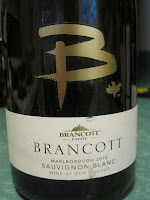
2010 Brancott B. Sauvignon Blanc Marlborough:
Aromas of grapefruit, cut grass, and wet rock immediately let you know it’s a New Zealand sauvignon blanc. There’s a whiff of passion fruit, ever so faint, weaving amongst the grassy bouquet.
There’s really nothing wrong with this wine, it’s clean with lots of acidity that shows up as more citrus elements intermixed with tropical fruit and a twist of minerality. A varietally honest sauvignon blanc, if one that’s somewhat generic. At the price, around $10 most places, it's a great everyday white wine for the spring weather.

2007 Brancott Terraces Pinot Noir Marlborough:
Lots of red fruit and wood initially, but the wood isn’t necessarily oak as much as tree bark. Notes of black tea, soil, and a red licorice component round out the bouquet. Interesting and enticing are the two words that sprung to mind.
Very clean flavors of cherry, raspberry, and forest floor are held together by an uplifting acidity that creates a very pleasant, light mouthfeel. The finish is airy but works well for this wine. Not an especially textured pinot noir by any means, but one that's very easy to drink and versatile.

2009 Francis Ford Coppola Director’s Cut Pinot Noir Sonoma Coast:
Nice bouquet of warm dark fruit, baking spice, vanilla, and a hint of wooden match. Seems a bit tight but it’s hard to imagine this wine needing age considering the price. I kept returning to the glass to smell it, because the way the baking spices and red fruit are integrated is quite alluring.
The palate is too light and uninteresting, with one dimensional notes of red fruit. The finish is evaporative and all too brief. I rarely say it, but this wine tastes cheap. A pity, since 2009 produced some exceptional pinot noir in California. After the wonderful bouquet, the mouthfeel is a huge letdown.
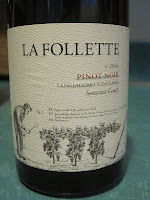
2009 La Follette Sangiacomo Vineyard Pinot Noir:
Smells of green herb, oak, but with pleasant notes of earth and spices. Not much fruit, and surprisingly no heat considering the labeled 15.5% abv.
Clunky acidity dominates the palate, with some raspberry and plum notes struggling to manifest. Bright, linear acidity traces a line through some forest-floor and vanilla flavors. I think this is a big pinot noir struggling to find it's place, and perhaps needs some age.

2006 Camp Viejo Reserva Rioja:
Strong aromas of sundried tomatoes, herbs, cherries, and dusty red soil. Very much what I would expect in a Rioja. Good complexity indicates the wine might be drinking near or at it’s peak. Some subtle smoked-meat is present but very faint, hopefully it would come through more after some time open.
Easy drinking, with a tannin framework surrounding flavors of dried cherry, soil, and dried herbs. Slightly rustic, in a charming way. Finishes cleanly, with some light acidity paving the way for another bite of food. A killer deal for under $10 in most markets. This is one to stock up on for those Wednesday night pizza sessions!

2009 Francis Ford Coppola Claret:
Black fruit, herbs, dusty soil and some woodsy aromas. Very straightforward and unoffensive. I did find a strange-ish campfire or barbecue aroma, it added to the bouquet, gave it a sense of uniqueness. Unfortunately the integration of the various grapes isn't happening as well as I'd like though, with disparate elements refusing to coexist.
Initially very expressive with black fruit and tannin, wood, and campfire but it quickly became a mess of sweet fruit. That jammy note stayed through till the finish, where a nice tannic streak came to the rescue. Although the finish was brief, I think the structure saved it. Tasted the next day with consistent notes.
2009 Mandolin Cabernet Sauvignon Central Coast:
Simple bouquet of red fruit, wood smoke, earth, and not much else. A bit disappointing, but for around $10 it's precisely what I would expect from a Central Coast cabernet at that price level.
On the palate, flavors of salted meat and cherries persist with flavors of sulfur (burnt match) and a leathery tannin component. Over time, the mouthfeel evolves nicely, lending some dried currant flavors that do wonders to make this wine more palatable. Tasted the next day, it was much more complete and enjoyable.

2009 Parlay “The Bookmaker” Red Table Wine California:
The bouquet is full of candied red fruit, herbs, and earth. Some funk is present, but it blows off quickly. Good complexity, and appealing scents kept drawing me back for more sniffs. There are a lot of grapes here including cabernet sauvignon, syrah, petite sirah, and petite verdot.
A very ripe, fruit-forward wine with lots of plum and black cherry. I noted a vanilla-wood taste as well, indicative of oak barrel aging (or oak chips). This is mouth-filling red that people who enjoy that style will probably love. Lacks acid for my palate though, and the finish is too sweet and ripe, needs to lighten up and taper off more gracefully. That said, for $20 it's a nice bottle of wine that delivers at the price point.
2009 Graffigna Centenario Reserve Malbec Mendoza:
Smokey baking spices, cherry preserve, and plums followed by oak-vanilla notes make up the bouquet. It's very typical for a low-priced malbec and smells delicious.
This wine is lush and soft, but goes nowhere with that. Rather insipid, and the tannin that builds through the mid palate essentially creates a framework for fruit that should be there but is nowhere to be found. Very disappointing. Tasted the next day with consistent notes.

2009 Mandolin Syrah Central Coast:
Stinky nose of sulfur and rotting wood. Very disappointing. Perhaps something went wrong during fermentation?
Overripe, gloppy fruit that is reminiscent of artificial plum flavoring. Hollow through to the finish where an acidic kick surprised me, but not in a good way. Expected a lot more from this wine considering how nice the cabernet sauvignon was.
The good, the bad, the ugly. With the prices of these wines ranging from $7 all the way up to almost $40, I should have expected nothing less. What struck me though was how "processed" some of these wines tasted. In winemaker-speak, they'd be called "heavily manipulated", to a wine geek they don't express any sense of place. Put more bluntly, most of the cheaper wines here tasted sterile, like they were designed to fit a preconceived notion of what the wine should taste like. That is the price we often pay for inexpensive wine though. I suppose though, that finding those rare gems that are at once inexpensive but also expressive is what makes them special.
All the wines in this feature were media samples for review purposes.
Beau Carufel
Aromas of grapefruit, cut grass, and wet rock immediately let you know it’s a New Zealand sauvignon blanc. There’s a whiff of passion fruit, ever so faint, weaving amongst the grassy bouquet.
There’s really nothing wrong with this wine, it’s clean with lots of acidity that shows up as more citrus elements intermixed with tropical fruit and a twist of minerality. A varietally honest sauvignon blanc, if one that’s somewhat generic. At the price, around $10 most places, it's a great everyday white wine for the spring weather.
2007 Brancott Terraces Pinot Noir Marlborough:
Lots of red fruit and wood initially, but the wood isn’t necessarily oak as much as tree bark. Notes of black tea, soil, and a red licorice component round out the bouquet. Interesting and enticing are the two words that sprung to mind.
Very clean flavors of cherry, raspberry, and forest floor are held together by an uplifting acidity that creates a very pleasant, light mouthfeel. The finish is airy but works well for this wine. Not an especially textured pinot noir by any means, but one that's very easy to drink and versatile.
2009 Francis Ford Coppola Director’s Cut Pinot Noir Sonoma Coast:
Nice bouquet of warm dark fruit, baking spice, vanilla, and a hint of wooden match. Seems a bit tight but it’s hard to imagine this wine needing age considering the price. I kept returning to the glass to smell it, because the way the baking spices and red fruit are integrated is quite alluring.
The palate is too light and uninteresting, with one dimensional notes of red fruit. The finish is evaporative and all too brief. I rarely say it, but this wine tastes cheap. A pity, since 2009 produced some exceptional pinot noir in California. After the wonderful bouquet, the mouthfeel is a huge letdown.
2009 La Follette Sangiacomo Vineyard Pinot Noir:
Smells of green herb, oak, but with pleasant notes of earth and spices. Not much fruit, and surprisingly no heat considering the labeled 15.5% abv.
Clunky acidity dominates the palate, with some raspberry and plum notes struggling to manifest. Bright, linear acidity traces a line through some forest-floor and vanilla flavors. I think this is a big pinot noir struggling to find it's place, and perhaps needs some age.
2006 Camp Viejo Reserva Rioja:
Strong aromas of sundried tomatoes, herbs, cherries, and dusty red soil. Very much what I would expect in a Rioja. Good complexity indicates the wine might be drinking near or at it’s peak. Some subtle smoked-meat is present but very faint, hopefully it would come through more after some time open.
Easy drinking, with a tannin framework surrounding flavors of dried cherry, soil, and dried herbs. Slightly rustic, in a charming way. Finishes cleanly, with some light acidity paving the way for another bite of food. A killer deal for under $10 in most markets. This is one to stock up on for those Wednesday night pizza sessions!
2009 Francis Ford Coppola Claret:
Black fruit, herbs, dusty soil and some woodsy aromas. Very straightforward and unoffensive. I did find a strange-ish campfire or barbecue aroma, it added to the bouquet, gave it a sense of uniqueness. Unfortunately the integration of the various grapes isn't happening as well as I'd like though, with disparate elements refusing to coexist.
Initially very expressive with black fruit and tannin, wood, and campfire but it quickly became a mess of sweet fruit. That jammy note stayed through till the finish, where a nice tannic streak came to the rescue. Although the finish was brief, I think the structure saved it. Tasted the next day with consistent notes.
Simple bouquet of red fruit, wood smoke, earth, and not much else. A bit disappointing, but for around $10 it's precisely what I would expect from a Central Coast cabernet at that price level.
On the palate, flavors of salted meat and cherries persist with flavors of sulfur (burnt match) and a leathery tannin component. Over time, the mouthfeel evolves nicely, lending some dried currant flavors that do wonders to make this wine more palatable. Tasted the next day, it was much more complete and enjoyable.
2009 Parlay “The Bookmaker” Red Table Wine California:
The bouquet is full of candied red fruit, herbs, and earth. Some funk is present, but it blows off quickly. Good complexity, and appealing scents kept drawing me back for more sniffs. There are a lot of grapes here including cabernet sauvignon, syrah, petite sirah, and petite verdot.
A very ripe, fruit-forward wine with lots of plum and black cherry. I noted a vanilla-wood taste as well, indicative of oak barrel aging (or oak chips). This is mouth-filling red that people who enjoy that style will probably love. Lacks acid for my palate though, and the finish is too sweet and ripe, needs to lighten up and taper off more gracefully. That said, for $20 it's a nice bottle of wine that delivers at the price point.
2009 Graffigna Centenario Reserve Malbec Mendoza:
Smokey baking spices, cherry preserve, and plums followed by oak-vanilla notes make up the bouquet. It's very typical for a low-priced malbec and smells delicious.
This wine is lush and soft, but goes nowhere with that. Rather insipid, and the tannin that builds through the mid palate essentially creates a framework for fruit that should be there but is nowhere to be found. Very disappointing. Tasted the next day with consistent notes.
2009 Mandolin Syrah Central Coast:
Stinky nose of sulfur and rotting wood. Very disappointing. Perhaps something went wrong during fermentation?
Overripe, gloppy fruit that is reminiscent of artificial plum flavoring. Hollow through to the finish where an acidic kick surprised me, but not in a good way. Expected a lot more from this wine considering how nice the cabernet sauvignon was.
The good, the bad, the ugly. With the prices of these wines ranging from $7 all the way up to almost $40, I should have expected nothing less. What struck me though was how "processed" some of these wines tasted. In winemaker-speak, they'd be called "heavily manipulated", to a wine geek they don't express any sense of place. Put more bluntly, most of the cheaper wines here tasted sterile, like they were designed to fit a preconceived notion of what the wine should taste like. That is the price we often pay for inexpensive wine though. I suppose though, that finding those rare gems that are at once inexpensive but also expressive is what makes them special.
All the wines in this feature were media samples for review purposes.
Beau Carufel
Labels:
2006,
2007,
2009,
2010,
Cabernet Sauvignon,
Claret,
Malbec,
Pinot Noir,
Rioja,
Sauvignon Blanc,
Syrah
Monday, March 19, 2012
Blind Tasting Oregon Pinot Noir, Round Two
The theme again was Oregon Pinot Noir, but the vintages and regions were up to us. As it happened, every pinot noir was from the Willamette Valley and the vintage spread was 2004-2010. Next time I am going to try to bring an older bottle and see if anyone mistakes it for a Burgundy.
I've been pretty down on 2009 Oregon pinot noir because most examples I've tasted were too ripe, flabby, and high in alcohol for my tastes. 2008 offers better age-ability and the 2007's are drinking fantastically well despite the many critics who gave the vintage a poor score. As an aside, I feel that the issue with the 2007 vintage illustrates another flaw in our continued reliance on supposedly "expert" wine critics who make proclamations which then have a very real impact on the sales of those wines.
Critic-bashing aside, I've been also very keen on 2010 pinot noir, because I love the acidity and more delicate fruit flavors compared to 2009. In the interests of integrity, I did try my best to throw my preconceived notions out the window for this blind tasting. It helped that the wines were in brown paper bags.
Below are the tasting notes for each wine, in order of tasting. I'll include my rankings, subjective as they might be, at the bottom of this post. The notes below are mostly unedited too, in the hopes that you'll see my thought processes as I tasted each wine.
1. 2010 A.F. Nichols Lillie's Vineyard Dundee Hills:
N: Aromas of grape stem, red cherry, and hints of herb and cola. Might be a touch of VA on the nose too, almost medicinal in nature. Smells young, this might be a 2010 or lighter-style 2009.
P: Light but with great acid, more of the grape stem quality. Red cherries and soil come through, very clean tasting. Good finish, a little bit sudden though. Lots of potential, could be great in a few years.
2. 2004 Left Coast Cellars Suzanne's Estate Reserve Willamette Valley:
N: VA? (ed: volatile acidity) Caramel..oak..darker fruit like wild strawberry mixed with black cherry. Some green stemmy qualities too. Could be a 2008, maybe older though? 2004/5?
P: Dried cherry, stemmy notes. Good acidity, really zings. Hints of rhubarb, minerality, and cola. A bit astringent on the finish, also somewhat evaporative. If this is young, it's got potential...if not, drink now..
3. 2009 Antica Terra Willamette Valley:
N: Earth and red fruit, smells young! Vibrant acidity but also some noticeable oak. Baking spices, something like damp forest floor too. Intriguing!
P: Ripe, rich style. 2009? Raspberry and strawberry fruits give it good acidity but it's just a bit too fleshy for my taste. Oak notes come through, not as strongly as on the nose. Easy drinking, good wine.
4. 2008 Vista Hills Tusculum Estate Dundee Hills:
N: Smells bad, like a skunk. Also some meaty, minty aromas. The skunky smell is distracting for me. Puzzling. Has some boozy thing too, an alcoholic burn in my nostrils.
P: Puzzling, there's a nice Oregon funk note, but also something almost Brettanomyces-like. Dark fruit and bramble on the finish. Tastes better than it smells but it's kind of rough going.
5. 2009 Lenne Yamhill-Carlton District:
N: Cherry/Strawberry candy, cherry pie, grape stems. Baking spices and lots of wood! Wowie.
P: Very ripe mouthfeel, interesting acidity, seems to weave in and out of the palate. Cola, cedar, and a peppery finish. Not that bad but it's not that good either. Most interesting aspect is the acidity and it's effect on the palate.
6. 2008 Elizabeth Spencer Special Cuvee Sonoma Coast:
N: Cherry preserves, a touch of alcoholic heat, but a lightness too. Ripe red fruits dominate but behind that is a spicy component which was immensely pleasing.
P: Light red fruits, it's muted compared to the aromas. Lower acid levels than the other wines, it is probably the California wine. Clean, easy drinking, touches of oak around the periphery.
Thanks for making it all the way down here! Here's my list, in order of preference. I've linked to cellartracker.com too so that you can get an idea of what the greater wine drinking community thinks too.
1. 2010 A.F. Nichols
2. 2009 Antica Terra
3. 2004 Left Coast Cellars
4. 2009 Lenne
5. 2008 Vista Hills
6. 2008 Elizabeth Spencer
In terms of rating, I held the Elizabeth Spencer out because it wouldn't be fair, but if I had to rate it, the third spot would be appropriate. Out of all the wines, the Antica Terra surprised me, and while I feel it is overpriced, the quality is undeniable. I'd never had Lenne or Vista Hills wines before, but know them by reputation, and I've heard good things about both producers. Stylistically, they're not what I look for in an Oregon pinot noir and I still struggle to figure out what that skunky smell was in the Vista Hills.
Blind tasting is a great way to find out where your bias lies, as long as you make the effort to toss out preconceived notions. While we don't blind-drink our wines, for educational purposes, blind tasting is perhaps the best way to get acclimated with a region new to you, or even to stay sharp on a region you're familiar with. In addition to all of that, blind tasting with your friends is a blast, as you all finish your own observations, the guessing game becomes a really fun activity. What blind tastings have you done recently?
Beau Carufel
Tuesday, March 13, 2012
Chateau La Nerthe: Tasting the Southern Rhone Valley
In February I had the opportunity to taste the current releases of the Chateau la Nerthe family of wines. This Chateau, dating back over 800 years, produces wine throughout the southern Rhone Valley. Besides the Chateau La Nerthe label, they also produce the Domaine De La Renjarde, Prieure de Montezargues, and La Petite Fontaine wines. As such, La Nerthe is both a producer and negotiant. The portfolio of Chateau La Nerthe is imported by Pasternak Wine Imports of New York.
The tasting, held at Mitchell Wines in Portland, featured seminars by Christian Voeux, winemaker, and Christophe Bristiel, export manager. The first seminar was led my M. Bristiel, discussing the southern Rhone's history, soil types, grape varieties, and production levels. It was informative and hopefully people left the seminar with a greater appreciation for the diversity in the Rhone Valley and specifically, the southern part.
M. Voeux took the stage next and begun to discuss the wines we would be tasting that afternoon. The tasting was comprised of nine wines, ranging from a rosé to white Chateauneuf du Pape through to multiple vintages of the red Chateauneuf du Pape. A Gigondas was also thrown in by the folks at Mitchell, to give some context.
2011 Prieure de Montezargues Tavel Rosé:
Very fresh, off the boat that is. Beautiful pink tinge with a clear meniscus. This is comprised of white and red grenache, cinsault, clairette, syrah, mourvedre, and carignan. It's the proverbial kitchen-sink blend and in this package, the grapes harmoniously join to create a wonderful rosé. Aromas of wild raspberry and strawberry, bananas, and minerality carry through to the palate. Bracing acidity and the textural impact of grenache blanc create a delicious and refreshing wine. Why can't more domestic rosé be as deliciously refreshing as this?
2010 Chateau la Nerthe Chateauneuf du Pape Blanc:
This is the entry level white Chateauneuf du Pape, though at over $40 a bottle it's not cheap. White Chateauneuf du Pape accounts for only a fraction of the total production of the AOC, contributing to the higher prices compared to other white wines of France. This example is surprisingly pale, almost like a Sancerre. A blend of grenache blanc, roussanne, clairette, and bourbelenc. The bouquet erupts with pear, apple, and citrus peel scents along with a whiff of briny air and wet stone. At once both rich and drying, the Chateau La Nerthe is smooth and carries the flavors of pear, golden apple, and melon along for the ride.
2009 Chateau La Nerthe Clos de Beauvenir Chateauneuf du Pape Blanc:
I'll get right to the point: This is a stunningly good wine. Yes, it's over $110 a bottle, but the blend of roussanne and clairette blanc create a gorgeous bouquet of wood-tinged cream, honeysuckle, rocky minerality, and orange pith. The palate is focused with notes of oak, lees, peach skin, white flower, and a lifting acidity that tapers off exquisitely. Comparable in complexity to white Burgundies, this wine will only get better with age.
2010 La Petite Fontaine Cotes du Rhone:
There's a reason wine geeks eschew a lot of sub-$10 California red wines. It's because of wines like this. At around $10 a bottle, this blend of grenache, syrah, mourvedre, and carignan is jam-packed with aromas of spice, wood smoke, bramble, and mint leaf. It's a friendly, everyday red wine that has great notes of tar, black cherry, raspberries, and earth. Finishing with a clean, quick note of cedar and spice, I was left admiring what the French can do that California seemingly can't.
2009 Domaine de la Renjarde Cotes du Rhone Massif d'Ucheaux:
Hailing from the 250 hectare appellation of Massif d'Ucheaux, this is 50% grenache, 25% syrah, 15% cinsault, and 10% carignan. Slightly more expensive than the La Petite Fontaine, it brings focused aromas of berries and spice, pepper, and tar. The mouthfeel is medium, with some tannin framing black fruit, red licorice, and finishing with a burst of white pepper. At around $15-20 on store shelves, this too showcases the continued Old World charm of sub-$20 wines.
2007 Domaine Santa Duc "Les Garancieres" Gigondas:
Thrown in to give some context, this decidedly "rustic" blend of 80% grenache, 15% syrah, and 5% mourvedre reeked of Brettanomyces contamination. Major fail.
2008 Chateau La Nerthe Chateauneuf du Pape Rouge:
The first of two vintages of the base Chateauneuf, this from a cooler year. It pours a dark, inky garnet in the glass and unleashes a gorgeous bouquet of savory, dark red fruits, spices, and earth. The cooler year's effect on the palate doesn't go unnoticed, with this CdP veering towards riper red cherry and spice that's strangely restrained. The finish is quick and evaporative, leaving you wishing for more. I suspect this will improve with some aging, though it's a tough sell at over $40 per bottle.
2007 Chateau La Nerthe Chateauneuf du Pape Rouge:
This vintage is considered the better of the two, thanks in part to an Indian Summer around harvesttime. Similarly colored to the '08, a beautiful dark garnet. The nose is all spicy red fruit, green olive, and pepper, proportioned nicely and interwoven very well. Initially I was struck by the simplicity of the red fruit notes, but after a few seconds the tannin showed up along with a stony, spicy mix of flavors that carried through to the finish. I think this is drinking beautifully right now and will get better over the next five to ten years.
2005 Chateau La Nerthe Cuvee Cadettes Chateauneuf du Pape:
Talk about ending on a high note! From a 1.2 ton:acre farmed vineyard, this is a wine that is only made in the best years and always held back for additional barrel and bottle aging. It's well over $100 a bottle on store shelves and is one of those "collectible" French reds. A blend of grenache, mourvedre, and syrah, this is classic Chateauneuf. A whiff of Brettanomyces on the nose adds intrigue to the green olive, black cherry, baking spice, and dusty minerality present. The mouthfeel is deep and profound, seemingly never to end. More of the olive and Brett notes, pepper-dusted red cherry, flashes of oak, and a round, smooth tannin that creates a finish which lasts for a full minute. Outstanding wine, if you can find it. This will continue to get better for another 10-15 years.
Attending this tasting was a great experience for me, as most of my Rhone education has come relatively piecemeal up to now. Being able to listen to the winemaker, M. Voeux, discuss each wine was very educational and helped me understand each wine that much more. I have knocked the 2005+ Rhones for being too extravagant, too alcoholic, and too ripe. Tasting these wines reminded me that it's dangerous to make such generalizations, and wines with balance, power, AND finesse exist in every vintage.
Beau Carufel
The tasting, held at Mitchell Wines in Portland, featured seminars by Christian Voeux, winemaker, and Christophe Bristiel, export manager. The first seminar was led my M. Bristiel, discussing the southern Rhone's history, soil types, grape varieties, and production levels. It was informative and hopefully people left the seminar with a greater appreciation for the diversity in the Rhone Valley and specifically, the southern part.
M. Voeux took the stage next and begun to discuss the wines we would be tasting that afternoon. The tasting was comprised of nine wines, ranging from a rosé to white Chateauneuf du Pape through to multiple vintages of the red Chateauneuf du Pape. A Gigondas was also thrown in by the folks at Mitchell, to give some context.
2011 Prieure de Montezargues Tavel Rosé:
Very fresh, off the boat that is. Beautiful pink tinge with a clear meniscus. This is comprised of white and red grenache, cinsault, clairette, syrah, mourvedre, and carignan. It's the proverbial kitchen-sink blend and in this package, the grapes harmoniously join to create a wonderful rosé. Aromas of wild raspberry and strawberry, bananas, and minerality carry through to the palate. Bracing acidity and the textural impact of grenache blanc create a delicious and refreshing wine. Why can't more domestic rosé be as deliciously refreshing as this?
2010 Chateau la Nerthe Chateauneuf du Pape Blanc:
This is the entry level white Chateauneuf du Pape, though at over $40 a bottle it's not cheap. White Chateauneuf du Pape accounts for only a fraction of the total production of the AOC, contributing to the higher prices compared to other white wines of France. This example is surprisingly pale, almost like a Sancerre. A blend of grenache blanc, roussanne, clairette, and bourbelenc. The bouquet erupts with pear, apple, and citrus peel scents along with a whiff of briny air and wet stone. At once both rich and drying, the Chateau La Nerthe is smooth and carries the flavors of pear, golden apple, and melon along for the ride.
2009 Chateau La Nerthe Clos de Beauvenir Chateauneuf du Pape Blanc:
I'll get right to the point: This is a stunningly good wine. Yes, it's over $110 a bottle, but the blend of roussanne and clairette blanc create a gorgeous bouquet of wood-tinged cream, honeysuckle, rocky minerality, and orange pith. The palate is focused with notes of oak, lees, peach skin, white flower, and a lifting acidity that tapers off exquisitely. Comparable in complexity to white Burgundies, this wine will only get better with age.
2010 La Petite Fontaine Cotes du Rhone:
There's a reason wine geeks eschew a lot of sub-$10 California red wines. It's because of wines like this. At around $10 a bottle, this blend of grenache, syrah, mourvedre, and carignan is jam-packed with aromas of spice, wood smoke, bramble, and mint leaf. It's a friendly, everyday red wine that has great notes of tar, black cherry, raspberries, and earth. Finishing with a clean, quick note of cedar and spice, I was left admiring what the French can do that California seemingly can't.
2009 Domaine de la Renjarde Cotes du Rhone Massif d'Ucheaux:
Hailing from the 250 hectare appellation of Massif d'Ucheaux, this is 50% grenache, 25% syrah, 15% cinsault, and 10% carignan. Slightly more expensive than the La Petite Fontaine, it brings focused aromas of berries and spice, pepper, and tar. The mouthfeel is medium, with some tannin framing black fruit, red licorice, and finishing with a burst of white pepper. At around $15-20 on store shelves, this too showcases the continued Old World charm of sub-$20 wines.
2007 Domaine Santa Duc "Les Garancieres" Gigondas:
Thrown in to give some context, this decidedly "rustic" blend of 80% grenache, 15% syrah, and 5% mourvedre reeked of Brettanomyces contamination. Major fail.
2008 Chateau La Nerthe Chateauneuf du Pape Rouge:
The first of two vintages of the base Chateauneuf, this from a cooler year. It pours a dark, inky garnet in the glass and unleashes a gorgeous bouquet of savory, dark red fruits, spices, and earth. The cooler year's effect on the palate doesn't go unnoticed, with this CdP veering towards riper red cherry and spice that's strangely restrained. The finish is quick and evaporative, leaving you wishing for more. I suspect this will improve with some aging, though it's a tough sell at over $40 per bottle.
2007 Chateau La Nerthe Chateauneuf du Pape Rouge:
This vintage is considered the better of the two, thanks in part to an Indian Summer around harvesttime. Similarly colored to the '08, a beautiful dark garnet. The nose is all spicy red fruit, green olive, and pepper, proportioned nicely and interwoven very well. Initially I was struck by the simplicity of the red fruit notes, but after a few seconds the tannin showed up along with a stony, spicy mix of flavors that carried through to the finish. I think this is drinking beautifully right now and will get better over the next five to ten years.
2005 Chateau La Nerthe Cuvee Cadettes Chateauneuf du Pape:
Talk about ending on a high note! From a 1.2 ton:acre farmed vineyard, this is a wine that is only made in the best years and always held back for additional barrel and bottle aging. It's well over $100 a bottle on store shelves and is one of those "collectible" French reds. A blend of grenache, mourvedre, and syrah, this is classic Chateauneuf. A whiff of Brettanomyces on the nose adds intrigue to the green olive, black cherry, baking spice, and dusty minerality present. The mouthfeel is deep and profound, seemingly never to end. More of the olive and Brett notes, pepper-dusted red cherry, flashes of oak, and a round, smooth tannin that creates a finish which lasts for a full minute. Outstanding wine, if you can find it. This will continue to get better for another 10-15 years.
Attending this tasting was a great experience for me, as most of my Rhone education has come relatively piecemeal up to now. Being able to listen to the winemaker, M. Voeux, discuss each wine was very educational and helped me understand each wine that much more. I have knocked the 2005+ Rhones for being too extravagant, too alcoholic, and too ripe. Tasting these wines reminded me that it's dangerous to make such generalizations, and wines with balance, power, AND finesse exist in every vintage.
Beau Carufel
Sunday, March 11, 2012
Portland Wine Tweetup, March 22nd, With Cave de Lugny
What are you doing on Thursday, March 22nd? If you're a Portland resident, I highly recommend joining us for a night of wine tasting at Taste on 23rd. The wines poured with be from Cave de Lugny, a producer located in Burgundy, France. We'll kick off the festivities at 7:00pm and taste wine, nibble appetizers, and tweet till 9:00 pm. The wine and appetizers will be provided free of charge, all we ask is that you enjoy yourself and tweet about the tasting!
Now, who is the "us"? I was approached by a company called Lush Life Productions to write this post (full disclosure: I'm not being paid to do this) and figured it would be a good way to meet more Portland area wine and food bloggers. As a newbie to the area, I'd love to get more involved in the wine culture here and the chance to drink some Burgundian wines with like-minded bloggers fits the bill perfectly.
What can you do to help? If you're so inclined, some tweets about this blog post would be greatly appreciated, as would any comments or suggestions down below. In other words, getting the info out to the masses! I'd like to get 40 or more people to show up, and your help would be greatly appreciated.
Who is Cave de Lugny? The short story is that Cave de Lugny is a co-op in Burgundy, producing red, white, and sparkling wines. Specifically, the co-op is located in Macon, the AOC of Burgundy which produces the most white wine of the entire region. At present, total production is about six million bottles, spread across red, white, and sparkling wines. Cave de Lugny was in fact Burgundy's first co-operative, founded in 1926. In terms of our discussion, a co-op, is where farmers bring their grapes to the winery where the winemaker takes over and produces the best wine possible. This system is in use in France, Spain, Italy, and many other places around the world, save for the United States.
During the Tweetup, we'll be using the hashtag #CaveDeLugny. All you do is append it to your tweets and then everyone following along will see what you're saying, doing, and most importantly, sipping! I'd also recommend following Pasternak Wine Imports Twitter Account @PasternakWine, they're the U.S. importers of Cave de Lugny. For those new to my blog, my Twitter accounts are @UCBeau and @BeausBarrelRoom, feel free to tweet at me anytime.
So then, that's my pitch to you! Will I be seeing you on the 22nd at Taste on 23rd?
Beau Carufel
Tuesday, March 6, 2012
Weekend Des Grands Crus - May 12-13 in Bordeaux, France
Are you going to be in Europe this May? If so, you might be interested in the Weekend des Grands Crus, taking place in Bordeaux on May 12th &13th. It's billed as a tasting of the 2009 vintage, and there will be more than 100 Chateaux pouring their wines during the weekend-long festivities.
Last month I got a press release for this event, and although I probably can't make it (unless someone else foots the bill), I figured I'd share the details for anyone planning a trip to France/Bordeaux in the spring.
"The Union des Grands Crus de Bordeaux would like to invite lovers of Fine Wine to an exclusive weekend in Bordeaux tasting top wines from key appellations. This is a rare opportunity to taste more than a hundred great wines, including the 2009 vintage, under one roof presented by the winemakers of these great chateaux. And after the tasting, we suggest you prolong your stay to attend one of the prestigious dinners taking place in some of these châteaux and join one of our vineyard tours."
///////////////////////////////////////////////////////////////////////////////////////////////////////////////////////////////////////////////////////////////////////////////////////
GRANDS CRUS TASTING
Over one hundred owners will be pouring two vintages of their great wines, including the 2009 vintage, in the heart of the city of Bordeaux, a UNESCO World Heritage site.
10.30-17.00 - Hangar 14, quai des Chartrons, Bordeaux
60€ (30 € for students and wine professionals)
DINNERS AT GRANDS CRUS CHATEAUX
Enjoy the hospitality of chateau owners at their estates over a prestigious dinnervand learn more about Grands Crus wines.
20.00 - Dinner at wine estates
140 €
SOIRÉE DES GRANDS CRUS
Join the new generation of chateaux owners at a chic wine bar accompanied by music from a leading DJ with a delicious buffet and great wines.
20.00-02.00 - Bordeaux (adults aged 18-40)
60 €
///////////////////////////////////////////////////////////////////////////////////////////////////////////////////////////////////////////////////////////////////////////////////////
On Sunday, May 13th the program will be as such:
///////////////////////////////////////////////////////////////////////////////////////////////////////////////////////////////////////////////////////////////////////////////////////
VINEYARDS TOURS
Full day
90 € (tastings,tours and lunch included)
Those who prefer bespoke tastings at wine estates can choose from three bus tours, departing from Bordeaux: (1) Médoc (2) Saint-Emilion and Pomerol (3) Pessac-Léognan, Graves and Sauternes.
or
OPEN DAY
Full day
Free
Visits to participating UGCB chateaux in Saint-Julien, Pauillac and Saint-Estèphe.
UNION DES GRANDS CRUS TROPHY
A tournament will be arranged for golfing enthusiasts and estate owners. Green fee and lunch included.
Golf du Médoc
85 €
//////////////////////////////////////////////////////////////////////////////////////////////////////////////////////////////////////////////////////////////////////////////////////
If you are able to go or even interested in going and need more information, here are the contact details for the Union des Grands Crus de Bordeaux: www.ugcb.net or grands.crus@ugcb.net
Beau Carufel
Last month I got a press release for this event, and although I probably can't make it (unless someone else foots the bill), I figured I'd share the details for anyone planning a trip to France/Bordeaux in the spring.
"The Union des Grands Crus de Bordeaux would like to invite lovers of Fine Wine to an exclusive weekend in Bordeaux tasting top wines from key appellations. This is a rare opportunity to taste more than a hundred great wines, including the 2009 vintage, under one roof presented by the winemakers of these great chateaux. And after the tasting, we suggest you prolong your stay to attend one of the prestigious dinners taking place in some of these châteaux and join one of our vineyard tours."
///////////////////////////////////////////////////////////////////////////////////////////////////////////////////////////////////////////////////////////////////////////////////////
GRANDS CRUS TASTING
Over one hundred owners will be pouring two vintages of their great wines, including the 2009 vintage, in the heart of the city of Bordeaux, a UNESCO World Heritage site.
10.30-17.00 - Hangar 14, quai des Chartrons, Bordeaux
60€ (30 € for students and wine professionals)
DINNERS AT GRANDS CRUS CHATEAUX
Enjoy the hospitality of chateau owners at their estates over a prestigious dinnervand learn more about Grands Crus wines.
20.00 - Dinner at wine estates
140 €
SOIRÉE DES GRANDS CRUS
Join the new generation of chateaux owners at a chic wine bar accompanied by music from a leading DJ with a delicious buffet and great wines.
20.00-02.00 - Bordeaux (adults aged 18-40)
60 €
///////////////////////////////////////////////////////////////////////////////////////////////////////////////////////////////////////////////////////////////////////////////////////
On Sunday, May 13th the program will be as such:
///////////////////////////////////////////////////////////////////////////////////////////////////////////////////////////////////////////////////////////////////////////////////////
VINEYARDS TOURS
Full day
90 € (tastings,tours and lunch included)
Those who prefer bespoke tastings at wine estates can choose from three bus tours, departing from Bordeaux: (1) Médoc (2) Saint-Emilion and Pomerol (3) Pessac-Léognan, Graves and Sauternes.
or
OPEN DAY
Full day
Free
Visits to participating UGCB chateaux in Saint-Julien, Pauillac and Saint-Estèphe.
UNION DES GRANDS CRUS TROPHY
A tournament will be arranged for golfing enthusiasts and estate owners. Green fee and lunch included.
Golf du Médoc
85 €
//////////////////////////////////////////////////////////////////////////////////////////////////////////////////////////////////////////////////////////////////////////////////////
If you are able to go or even interested in going and need more information, here are the contact details for the Union des Grands Crus de Bordeaux: www.ugcb.net or grands.crus@ugcb.net
Beau Carufel
Subscribe to:
Posts (Atom)


